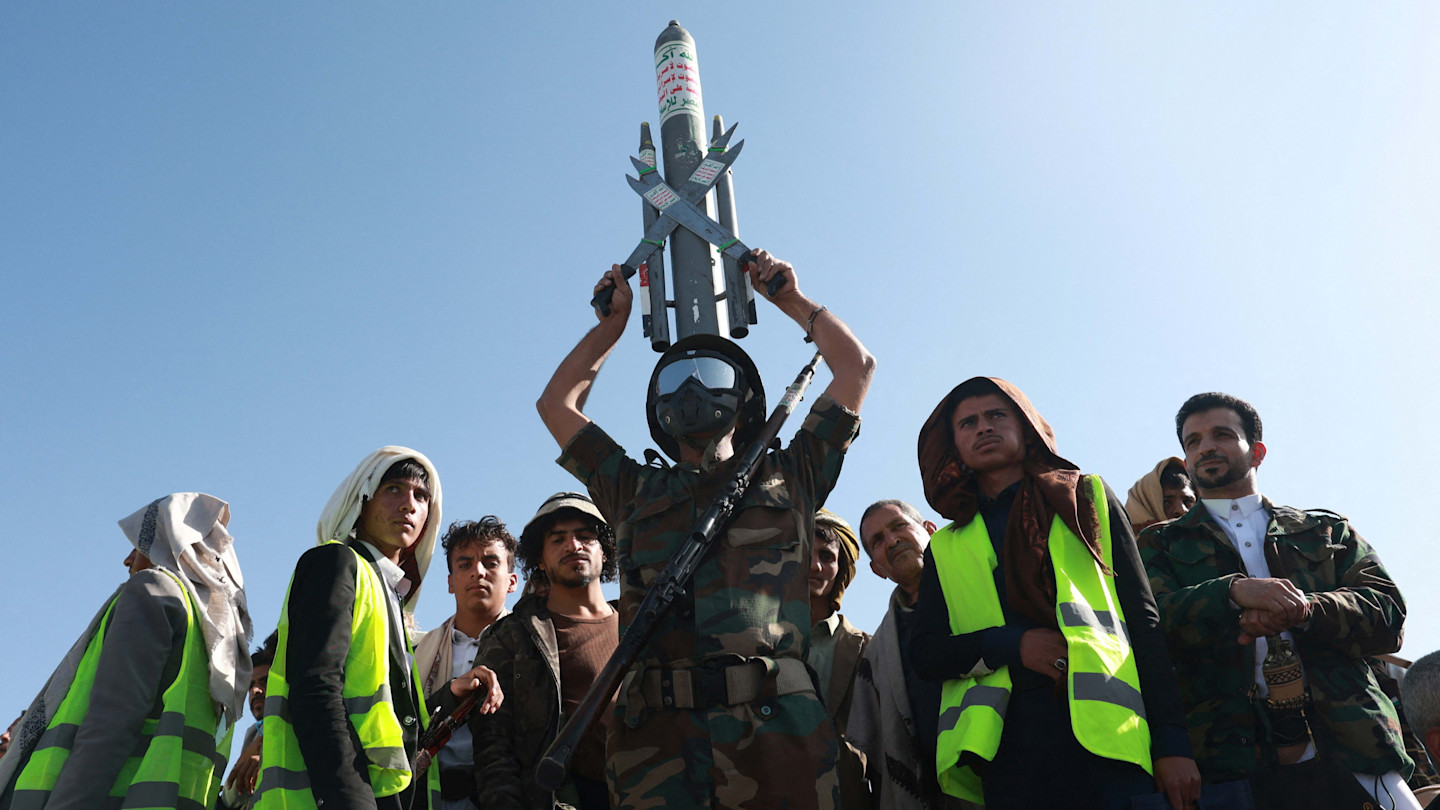
Lethal missile strikes on Riyadh’s international airport over the past week have demonstrated the growing military power of Yemen’s Houthi rebels, who have evolved from an insurgency into one of the Middle East’s most formidable non-state armed forces.
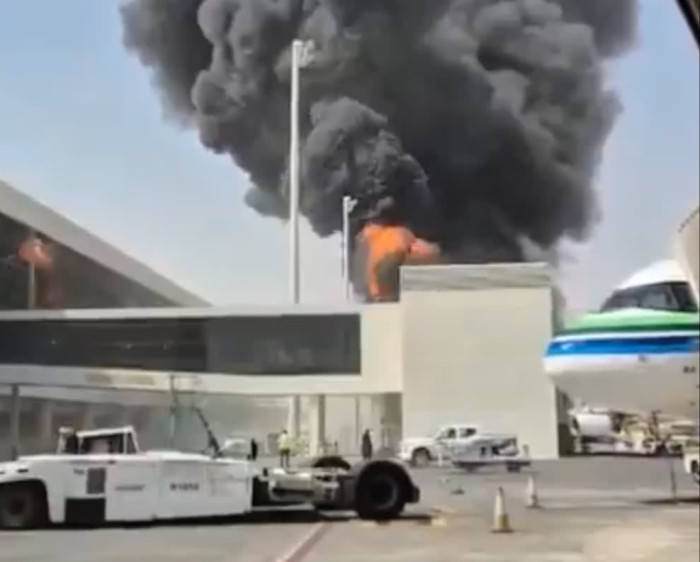
The latest attack on Saturday, the third on the airport in a week, killed 12 people and wounded more than 300, part of a tit-for-tat military escalation by the Houthis against the beleaguered Saudis, who support Yemen’s internationally recognised government.
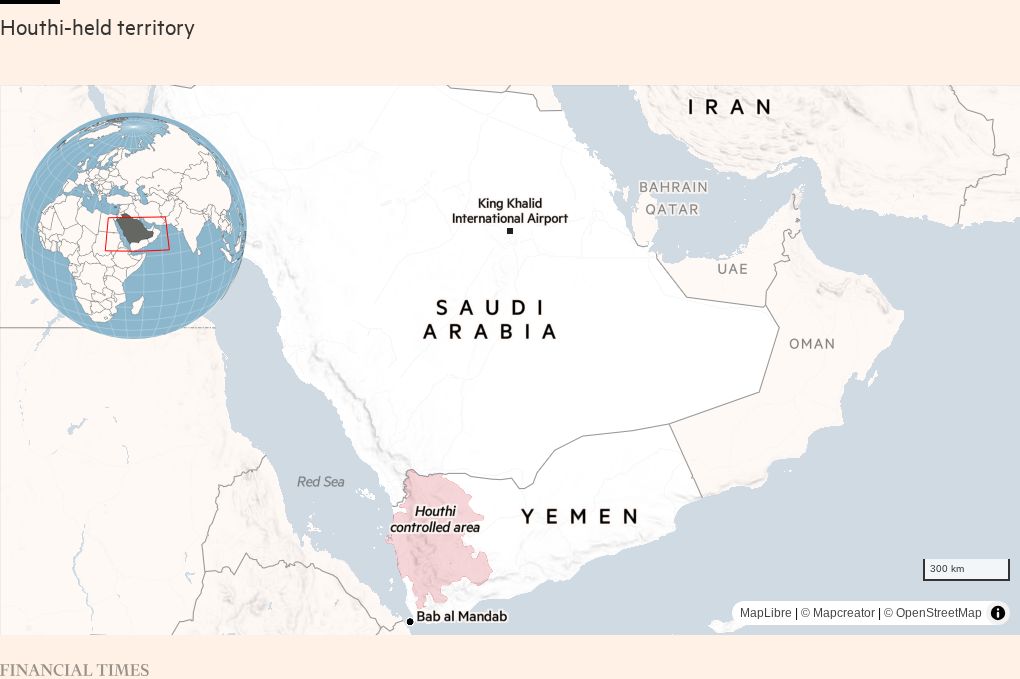
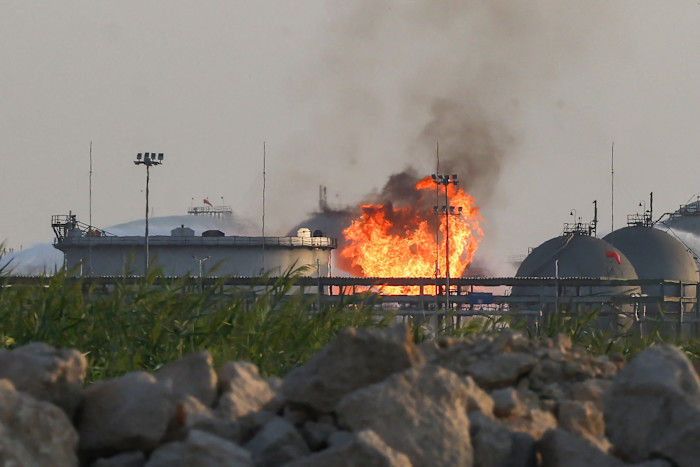
The Houthis have also targeted Saudi oil infrastructure and seized more territory along Yemen’s Red Sea coast in recent weeks, including the port of Mocha, and secured control over the entrance to the Red Sea by taking Perim Island in the strategic Bab al-Mandeb Strait — although the Saudi-backed Yemeni government forces have now launched a counteroffensive.
The Houthis announced a blockade on Saudi ports in July and have repeatedly targeted Saudi ships attempting to sail through Bab al-Mandeb, strangling Saudi oil exports.
“Everyone continues to underestimate the Houthis’ military power,” said Farea al-Muslimi, a Yemen expert at London’s Chatham House think-tank, adding that Houthis were routinely dismissed as little more than “guys in flip-flops”.
“Suddenly these guys in flip-flops can double or triple your winter heating bills.”
“They’re not just guys in flip-flops, they’re actually geeks,” he said, and they had spent a decade building military capabilities with Iranian assistance and producing their own weapons.
“They were importing weapons from Africa a decade ago, and now they are manufacturing and supplying weapons to the people they used to buy from.”
Having mostly sat on the sidelines after the US and Israel launched their war against Iran in February, the Iran-backed Shia movement entered the Gulf conflict in earnest in the late summer, after Saudi forces struck Sana’a airport as a Houthi delegation was travelling to Iran for the funeral of the country’s assassinated supreme leader.
The attack broke a truce between Riyadh and the Houthis that had largely held since 2022, and plunged the two sides back into war that culminated with the Houthis’ seizure of Mocha last month.
Yet analysts say the Houthis’ success reflects not only their increasingly sophisticated weapons but their superior organisation and the weakness of Yemen’s Saudi-backed internationally recognised government.
The Houthi group’s military foundations were laid when it captured Sana’a in September 2014, inheriting much of the Yemeni army’s arsenal, including the Republican Guard’s ballistic missiles and the navy’s anti-ship weapons.
“They didn’t start from scratch, they had a foundation,” said Mohammed al-Basha, head of the Basha Report, a specialist security consultancy in Washington. The Houthis also acquired experienced officers, missile technicians and military units, which they subsequently reorganised into a more consolidated force.
Iran’s Islamic Revolutionary Guard Corps and Lebanon’s Hizbollah provided training and technical expertise, while a generation of Houthi specialists subsequently travelled to Iran to improve their capabilities, particularly in anti-ship missiles and drone boats, which have been used against shipping in the Red Sea.
Al-Basha said the Houthis could now manufacture their signature Samad attack drones largely independently, using locally produced fibreglass and commercially sourced components, many imported from China.
More sophisticated ballistic and cruise missiles, however, remained heavily dependent on Iranian components and technology, he said.
Their arsenal includes the Palestine-2 ballistic missile, which the Houthis describe as hypersonic and which al-Basha said was derived from Iran’s Fattah family of ballistic missiles; the long-range Asef anti-ship ballistic missile; and Quds cruise missiles.
They also possess Iranian-designed Type 358 anti-aircraft hybrid drone-missiles, which have downed US and Israeli surveillance drones, and explosive-laden drone boats capable of attacking merchant vessels.
Extensive air strikes by the US, UK and Israel have largely failed to degrade the Houthis’ missile capabilities. In January 2024, the US and UK launched air attacks on Houthi missile launchers, radar installations and weapons storage sites following the Houthis’ campaign against commercial shipping in the Red Sea.
Israel has separately carried out waves of air strikes against Houthi-controlled territory since July 2024. But despite the bombardments, the Houthis have apparently retained the capability to launch advanced missile attacks: On May 4 2025, days after the Pentagon said it had hit 1,000 targets in Yemen since mid-March, a Houthi missile landed near the perimeter of Ben Gurion Airport in Tel Aviv. The US and the Houthis agreed a ceasefire two days later.
While the Houthis depend largely on Iran for their missile knowhow, they have apparently also begun to rely on AI. According to a security report published by Anthropic, users in Houthi-controlled northern Yemen tried to exploit its Claude AI model to develop and refine sophisticated missile systems.
Their growing sophistication was demonstrated by the fall of the Red Sea port of Mocha, the gateway to the Bab al-Mandeb Strait from the Yemeni side, where forces loyal to Tariq Saleh, a member of Yemen’s Presidential Leadership Council and nephew of former president Ali Abdullah Saleh, collapsed within days.
Al-Muslimi said the Houthis had combined intelligence gathering, communications hacking and effective battlefield co-ordination to overwhelm their opponents, with support from Iranian IRGC advisers. He added that they had a far greater supply of artillery shells than their opponents.
The FT's Ahmed Al Omran explains who the Houthis are and why they are at war with the Saudis in the wake of multiple attacks on the airport in Riyadh
Wolf-Christian Paes, an associate fellow at the International Institute for Strategic Studies and former member of the UN Panel of Experts on Yemen, argued that the government forces’ weaknesses were more important than the Houthis’ weapons.
Government commanders routinely inflated troop numbers through “ghost soldiers” who exist on payrolls but not on the battlefield, he said, while salaries are frequently delayed or diverted by senior officers.
The Houthis, by contrast, had better-trained commanders, stronger motivation and a cohesive political project, a number of analysts said.
“The recent successes that we’ve seen in the last four weeks or so have less to do with having great military equipment and more to do with the weakness of the other side,” Paes said.
The capture of Mocha also would hamstring government forces that had become increasingly effective at intercepting weapons shipments destined for Houthi territory, Paes said.
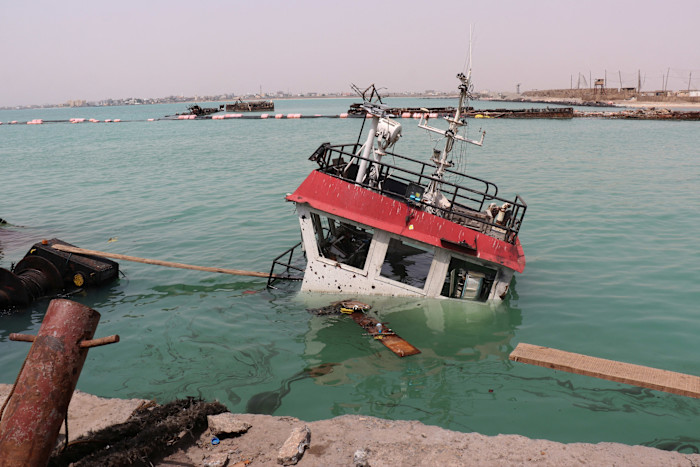
More tactically important, he said, was the seizure of Perim Island and territory adjoining Bab al-Mandeb Strait.
Paes said the advance would make it easier for the Houthis to launch explosive drone boats against passing ships, although their anti-ship ballistic and cruise missiles could already reach maritime targets from inland launch sites.
“Control of this island is potentially quite important,” said Paes. “With drone boats, distance matters. If they manage to keep that foothold that will make it easier for them to actually threaten shipping.”
The group’s foreign connections have, meanwhile, expanded beyond Iran. Russia has reportedly supplied targeting intelligence for Houthi missiles, although this could not be immediately confirmed.
Chinese factories have also become important suppliers of dual-use electronics and industrial components used in Houthi weapons manufacturing, though experts caution that other nations’ components are also routinely found.
Paes said that despite the group’s apparent military superiority, this did not mean its goal was to conquer all of Yemen, where it remains deeply unpopular in the south.
But its expanding control over the Red Sea and its ability to inflict damage on the world’s largest oil exporter give the Houthis the ability to be a global threat, even from the remote mountains of Yemen.