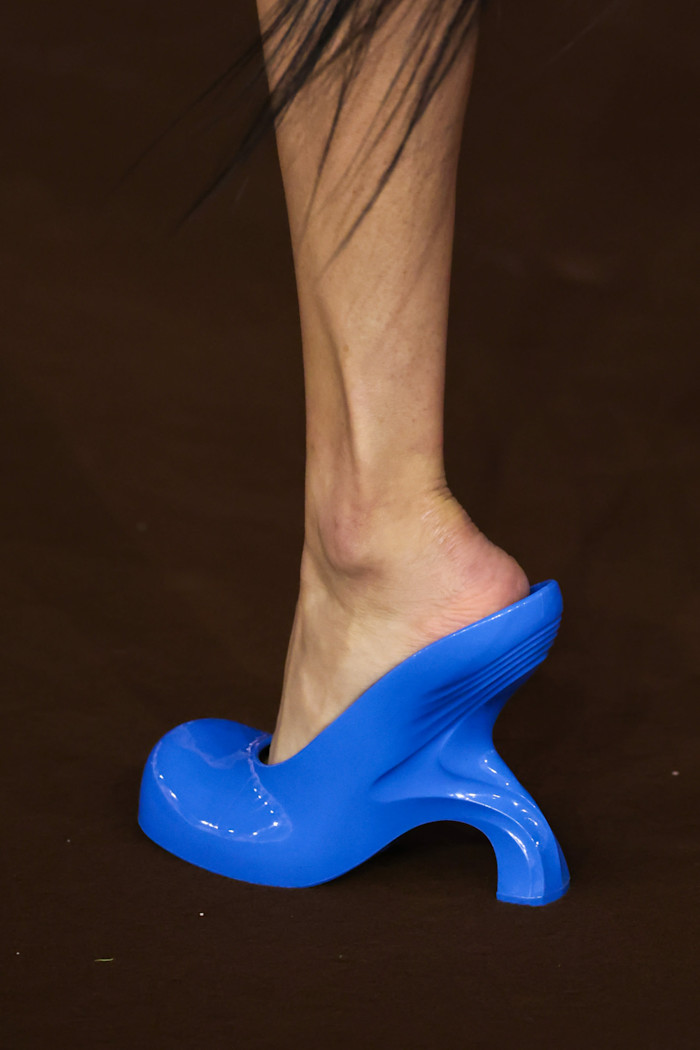
Scrolling through the avalanche of Paris Fashion Week content on Instagram this past month, past the memes of humanoid robots at the Vogue World runway and Pedro Pascal, Dua Lipa and Nicole Kidman lip-syncing to Adéla’s song “Nicole Kidman” at Chanel, one viral video in particular caught my eye. Taken by a guest at the Mugler show, the 16-second clip, captioned “shoe malfunction”, showed a model stumbling on the catwalk, losing her heeled shoes, bending over to put them back on, then eventually grabbing them in both hands and walking off the runway barefoot.
Of course, it wouldn’t be fashion month without at least one runway mishap. Models tripping in too-high shoes are commonplace. But for me, the video touched a nerve.
Having personal experience of hobbling down a runway in two sizes-too-big pumps during my shortlived catwalk career as a teenager — my feet strapped in by Sellotape and tissue paper — I can’t help but wince when I see a model limping along the catwalk.
A designer’s creative vision usually trumps safety concerns, but there is nothing like seeing a model struggling to stay upright in woefully impractical footwear to shatter the fashion fantasy — especially as fashion week hinges on the models, whose job is much more demanding than it is often given credit for.
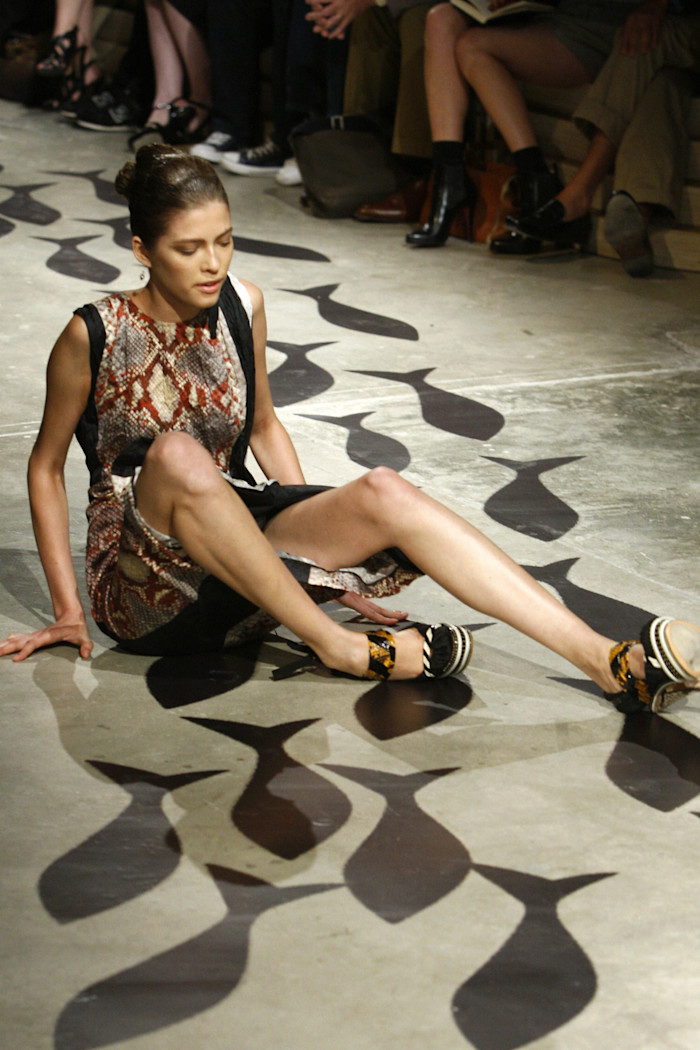
Models can set the tone for a show and shift the way the audience perceives the clothing — which is why the choice of footwear is so fundamental (Prada’s infamous spring/summer 2009 show in Milan, in which models wore a particularly lethal combo of silky pop sock and vertiginous heel, was such a hazardous affair that multiple models slipped and the brand was forced to reduce the heel height for commercial production).
“If a model is visibly struggling or actually falls, to me that’s a pretty clear indication that the shoe is unsafe and probably should never have seen the light of day,” says fashion influencer, writer and podcaster Brenda Weischer, aka @brendahashtag. “I do think it’s worth calling these moments out, just without showing or identifying the model,” she adds. “I think posting a model in distress is absolutely rude.”
I wasn’t the only one to feel deep sympathy for the model in the video (which has since racked up more than 500,000 views) — many of the comments were, in fact, supportive of the girl. “And not a single person got up to help,” wrote hairstylist Sam McKnight. “Shame on you.”
But scrolling through, the tone of some only affirmed what I felt about it: that for many, there is a deep-seated pleasure in seeing models “fail”, a certain glee in watching them brought down to the level of mere mortals. “How not to model,” one user wrote. “She should never walk another show!!” commented another.
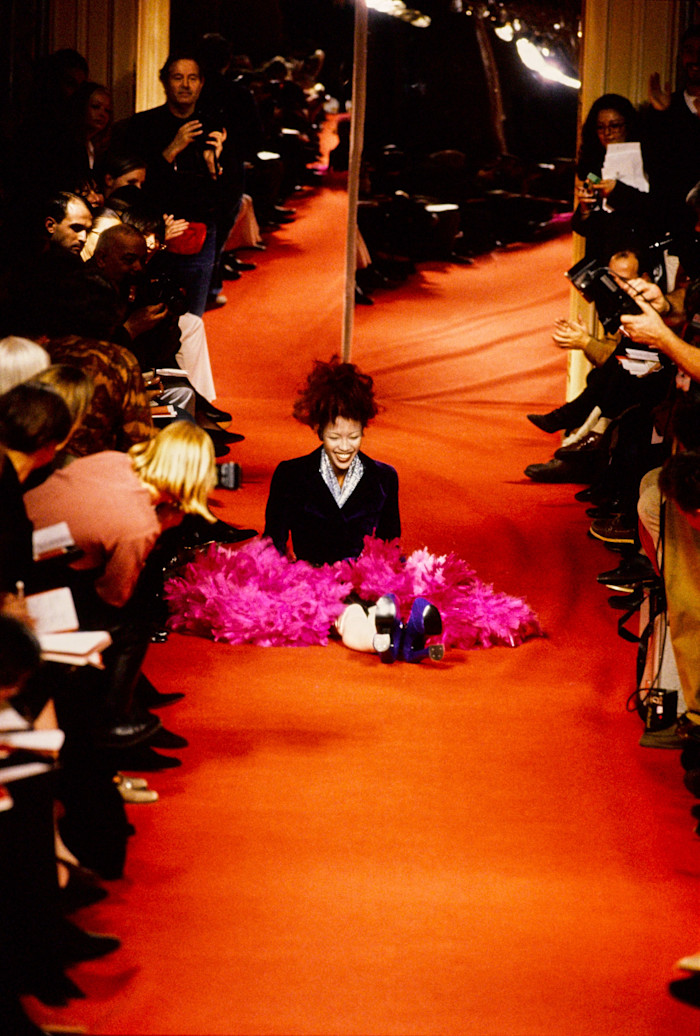
This isn’t an isolated video, either — the catwalk tumble is a well-worn trope in fashion history. YouTube is littered with compilations of models tripping, slipping and falling on the catwalk. And for some, the way in which a model styles out a fall is treated as a test of her professionalism and likeability: Naomi Campbell’s graceful fall on the runway of Vivienne Westwood in Paris in 1993, while wearing the designer’s aptly named Super Elevated Ghillie platforms, is the stuff of fashion legend (the shoes, along with a record of Campbell’s fall, are enshrined in London’s Victoria and Albert Museum).
“It’s a high-stress environment where people are trying to make magic happen and mistakes occur,” says Lynette Nylander, executive digital director at Harper’s Bazaar. “On the other side of the coin, sometimes I do think it offers a rare moment of humanity in what is sometimes almost a parody of real life. I’m always looking for something to break through the fourth wall.”
Fashion has long been an easy target for certain people outside the industry, often dismissed as frivolous, self-important and out of touch. Models, too, are routinely reduced to caricatures — clothes hangers, rather than professionals and people with feelings. Rather than taking viewers behind the smoke and mirrors of the fashion industry, the circulation of catwalk falls on social media feels like 2000s-era You’ve Been Framed-style slapstick.
The modelling industry has made meaningful, albeit still uneven, progress in recent years on working conditions and representation. Organisations such as the Model Alliance have pushed for greater protections and legislative reforms, including workplace rights such as meal breaks and overtime pay. Last week, LVMH and Kering agreed to strengthen their joint model charter, introduced in 2017, by setting the minimum age at 18 and establishing a zero-tolerance policy for harassment and abuse.
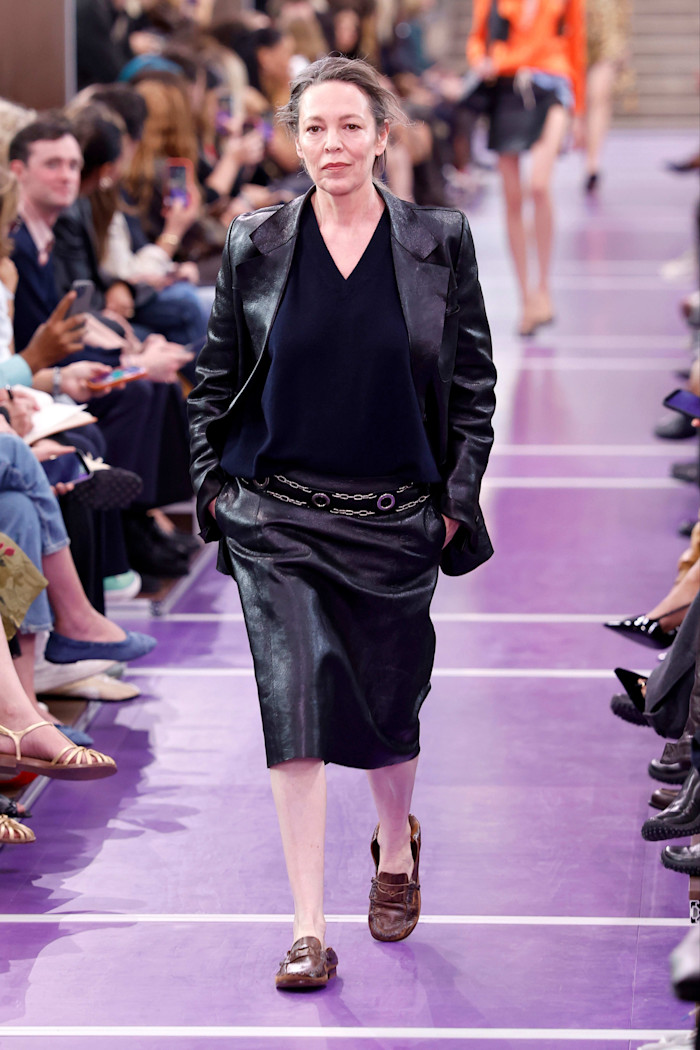
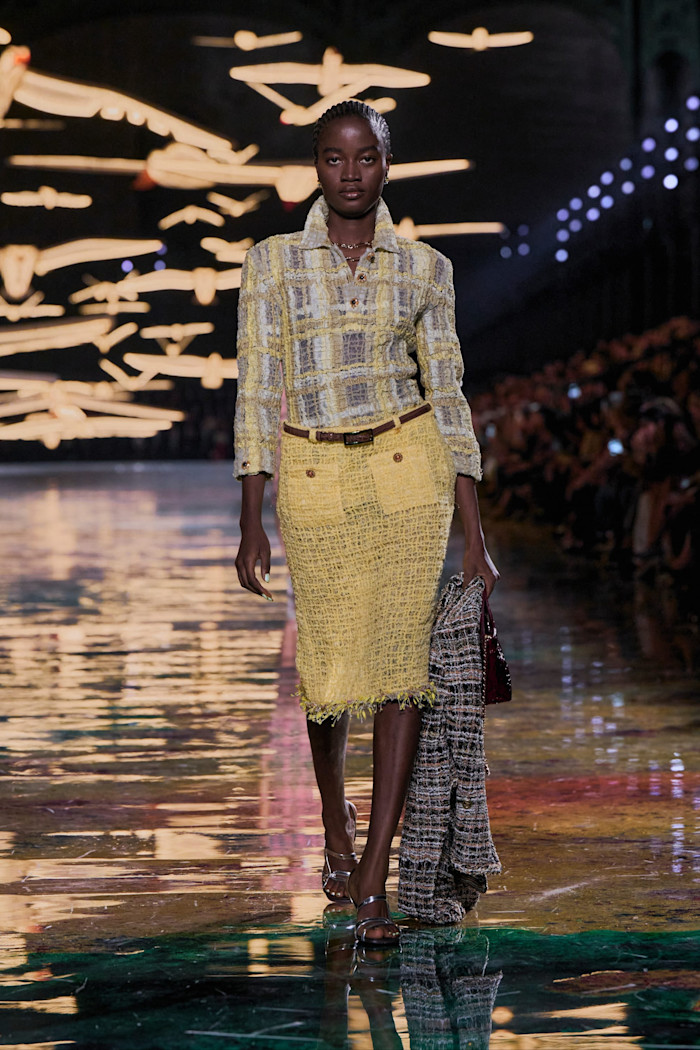
While there are still issues around underweight models and a rollback from body positivity, there have been other more optimistic signs. Older models, such as 50-year-old Stephanie Cavalli, who opened Chanel’s couture show earlier this year, are increasingly visible on the catwalk. And this season was also full of incredible model moments: the 43-year-old Viktorija Bauzyte opening Lanvin’s show; Bhavitha Mandava, a 26-year-old model from Hyderabad, who made history as the first Indian model to open a Chanel show last year, taking selfies with her parents on the Chanel runway after the show; a grey-haired Olivia Colman making her runway debut at Miu Miu (in sensible-looking loafers).
One of this season’s most joyful instances came from 22-year-old Nigerian model and influencer Rachel Ojuromi. She went viral sharing videos with her 328,000 Instagram followers of her striding through Lagos, turning its streets into her personal runway, dressed in exuberant outfits with a fierce strut to match. Some of the looks she recreated included runway ensembles from Matthieu Blazy’s Chanel and she manifested her dream last week when she became a Chanel model. “I wanted to make sure that nothing goes wrong,” she told British Vogue of her nerves before she stepped on the runway. “[But] I was having fun.”
Surely these are the stories we should be celebrating.
Follow us on Instagram and sign up for Fashion Matters, your weekly newsletter about the fashion industry