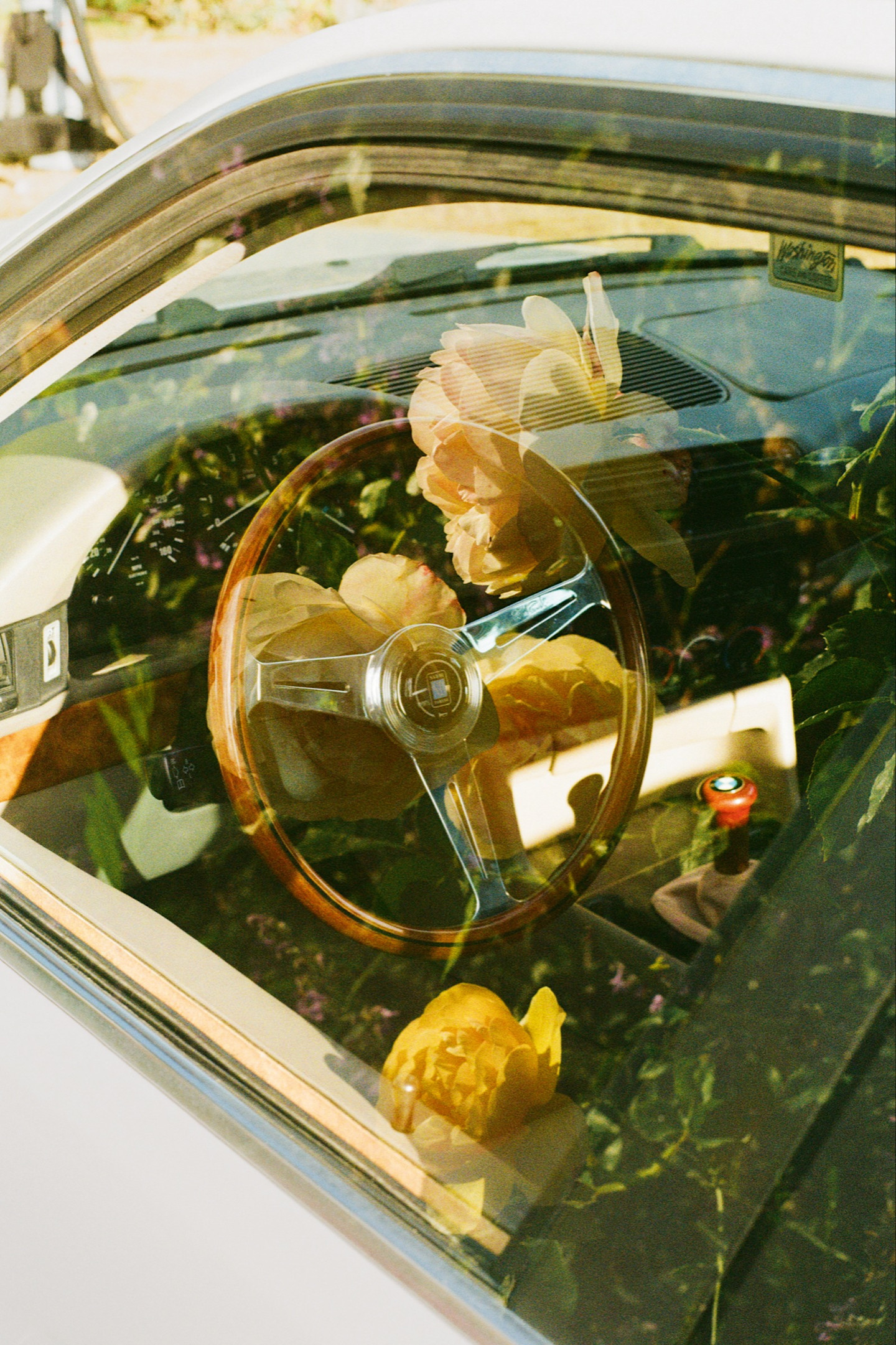
Happiness, according to Mad Men’s Don Draper, is the smell of a new car. It is the fulfilment of the capitalist promise, the gospel of materialism: freedom from pain through participation in commerce. The other day, at a petrol station on the Uxbridge Road in west London, an artery with its own distinctive bouquet, I bought one of those air fresheners in the shape of a tree, designed to dangle from your rear-view mirror where the fluffy dice once swung. Mighty Oak is the brand name, made in the UK by Pongo of Croydon. It is blue. The fragrance is New Car. Happiness for £1.25? Seemed like a pretty good deal. But my Mighty Oak has work to do.
My old car smells of wet dog, spilt coffee, the stale fumes of traffic jams, the organic residue of thousands of hours transporting muddy boots, damp towels and sweaty family members – each with their own lovable musk. I hung my Mighty Oak. It certainly pongs. Whether it pongs of new car, as well as New Car, I find hard to say. Not only is it competing with all those other odours, but also smell is subjective. One driver’s heady perfume is another’s noxious stink.
To fully appreciate the effort, expense and expertise that goes into making a new car smell like a new car (but not New Car) it is necessary to travel to BMW’s Geruchslabor – Odour Laboratory – in a basement in Bavaria, inside the vast BMW Group Plant Munich, where the luxury marque has been producing cars and motorcycles since 1922.
Here, interior air quality, material selection and “olfactory perception” are analysed, uniting the most modern technology with the most ancient – the human nose – to try to achieve the healthiest, most eco-conscious car interior, as well as one that smells as it should.
On the morning of my visit to the Geruchslabor, I was driven from my hotel to BMW HQ in a new iX3, the marque’s recently released all-electric SUV, the first model in its vaunted Neue Klasse overhaul. I don’t typically make it my business to press my nose to the upholstery of other people’s runarounds, but on this occasion I made an exception. The seats were covered in an artificial leather that smelled of… almost nothing? At its most pungent it was a barely perceptible, not unpleasant scent of… blah?
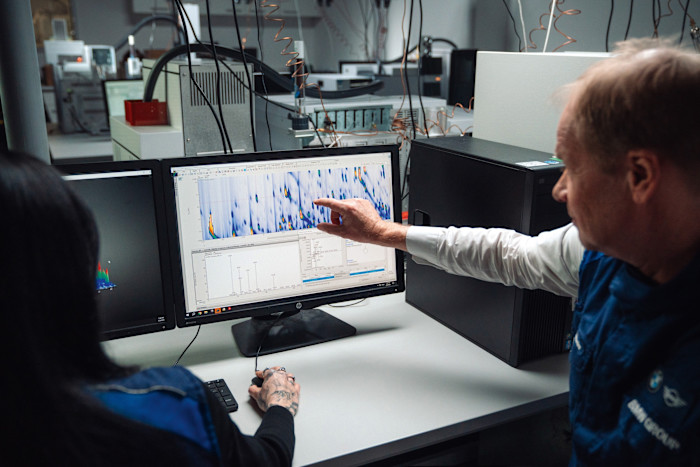
This, I was to learn, was exactly the response the boffins at the Odour Lab were seeking. The interior smell of a new car is the product of Volatile Organic Compounds (VOCs) – the emissions from plastics, adhesives and fabrics in car interiors. Ideally, these should give off only the most subtle scent. Smell, I was told, can conjure happy memories and other premium associations, but it can also cause alarm. As Andreas Wehrmeier, manager of interior air quality and evaporative emissions, explained: “We know what to expect from our noses. When we enter this room we may smell a bit from the carpet, we may smell a bit from the coffee, and both those smells fit the profile of this room, so we feel [reassured]. When we enter a new car, people expect a new-car smell. That is the result of the composition of the foams, the leather, the rubbers, the metals. When they don’t smell it, they say, ‘Is this car really new?’ So, you always want some kind of smell. But it has to be what you expected.”
BMW began testing emissions and scent profiles in its car interiors in 1999. Wehrmeier, a fair-haired man with a shy smile, has been there since the beginning. “What we are aiming for,” he says, “is authenticity.” No artificial fragrances are introduced to the cabin – there is no signature scent – so the materials and components used, the plastics and metals and foams and fabrics, must be tested for emissions, individually and together, and also for smell. This is made challenging by the focus on sustainability. Part of BMW’s decarbonisation target involves using recycled or “secondary raw” materials. In the new electric BMW i3, the engine cover and storage compartment is made of 30 per cent maritime plastic. The aim is to use as many recycled components as possible.
But using recycled materials presents a challenge: they might be toxic. “Things from the past may contain chemicals that were not forbidden [then] but are now,” says Wehrmeier. “A substance like lead is forbidden in automobile production, but when you’re recycling you may find it. We have to carefully check for that.” The materials might also smell, because “in their past lives as fishing nets or plastic bottles they came into contact with odours they may still carry”.

BMW is in the business of making cars with global appeal. In 2025 the Group, which also includes Mini and Rolls-Royce as well as BMW motorcycles, sold approximately 2.5mn new vehicles worldwide. But not every culture looks for the same olfactory experience from its cars.
Americans, Wehrmeier tells me, enjoy the smell of leather. Chinese consumers, coming from a country where until recently safety regulations were not always as stringent as they are now, are highly alert to the possibility of hazardous material and are wary of any odour. “The Chinese want to buy leather-equipped cars but don’t want to smell the leather,” says Wehrmeier. “The Americans want to smell it for as long as they own the car. Generally, [at BMW] we make one car for the world. But when we talk to the Chinese leather suppliers we ask them to wash the leather [to reduce the smell].”
The Chinese, Wehrmeier’s colleague Nils Hesse tells me, are not wrong to be cautious. “When we got the first Chinese cars to look at, we were only allowed to sit in them for five minutes because there were so many emissions that it really was unhealthy to be in there, even with windows open. This is only 10 to 15 years ago.” Wehrmeier goes on: “You want less smell, but not no smell. The Chinese had to learn that.”
Hesse, a snappy dresser with owlish specs, is vice-president of product sustainability, one of the BMW executives charged with ensuring the company hits its targets for decarbonisation. “Our customers are increasingly concerned about health and wellbeing,” he says, “and they expect products that are designed to take that into account. The way we think about our living spaces is changing, and that includes cars. We are taking responsibility for the passengers inside every BMW.”
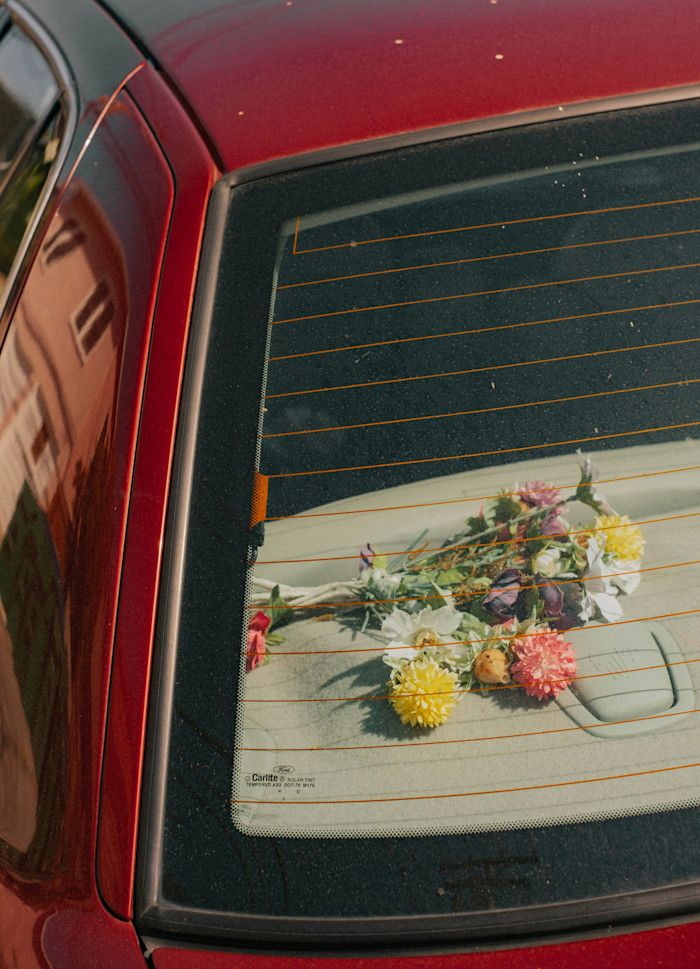
According to a survey by Turo, the average British motorist spends nine hours each week in their car. Over a lifetime, that equates to almost four years at the wheel. (Eight months of that stuck in traffic and – sad face emoji – 15 days “driving around lost”.) Unless your car is a convertible and the weather exceptionally clement, all of that time will be spent in an enclosed space, breathing in the emissions that penetrate from the outside – which, in modern cars, are filtered but otherwise hard to control – as well as those from the materials surrounding you: seats, dashboard, instrument panels. “Our task,” Wehrmeier says of the Odour Lab, “is to make sure you are healthier sitting inside the car than standing outside it.”
Until relatively recently, there was no regulation of the air quality inside cars. In the 1990s manufacturers began to wonder about the emissions of car interiors, in addition to tailpipe emissions. In the 2000s, BMW asked German toxicologists to come up with a standard they could aim to adhere to. In 2012 an ISO safety benchmark, a global industry standard, was adopted. Legislation followed in Korea and China. Wehrmeier cooperates with competitors at other car brands, and works with national and international organisations, to share his expertise.
Heat is one of the principle accelerants for interior emissions. Hesse remembers sheltering under a tree in Death Valley, California, where temperatures can top 50C, looking on as a BMW was parked for a couple of hours in direct sunlight, so measurements could be taken.
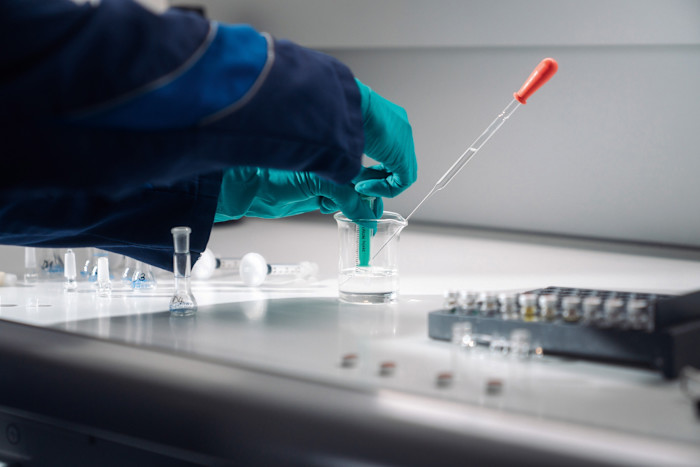
In Munich, in the Odour Lab, I watch as a new i3 is placed under a bank of hot lights. If there is a Teutonic equivalent to Heath Robinson, then it’s he or she who has designed the contraption secured to an open window with tin foil and then hooked up to a machine that measures hydrocarbon concentration. This process is overseen by the Odour Lab’s Dr Roland Kerscher, who explains some of the science to me. Essentially, they are assessing VOCs for toxicity and smell.
I am invited to bend my nose to some rubber samples. The first smell is fresh Bavarian air, as a control. The second I find hard to place. Perhaps desensitised by years of prolonged exposure to Old Car, my nose is a blunt instrument. A colleague steps up for a go and gets it immediately: “It smells like… food?” she says. “Something baked, like a pretzel?”
“Correct!” says Dr Kerscher. He asks us to rate the smell according to an Odour Rating Scale, taped to the wall. It goes from “1 = not perceptible” to “6 = not acceptable”. I go for “2 = perceptible, not disturbing”. Roland suggests maybe “3 = clearly perceptible, but not disturbing” would be more appropriate. (Nothing disturbing about the smell of a pretzel, although you wouldn’t necessarily want your new car to smell of it.)
Next up, jam jars containing rectangles of plastic recycled from fishing nets. The first is a “1 = not perceptible”. The second has a distinct whiff to it. I’m not saying mackerel, but it could be cod. We’re looking at a “5 = strongly disturbing”. That will not be reconstituted as a dashboard.
My tour of the Odour Lab prompts an immediate regression to incompetent physics student. I observe the processes of gas chromatography as well as high-frequency liquid chromatography, and I witness the use of a mass spectrometer. A chemical sample extracted from a car interior, sniffed by me and found to smell somehow “citrusy”, is analysed and found to contain limonene, which is found in the essential oils of lemons and limes. Most likely it was now showing up, Dr Kerscher says, because a recycled bottle of lemon-scented detergent had been used in the production process. This sample was not toxic, but it might not pass the new-car-smell test.
Wehrmeier tells me it goes both ways. Sometimes the laboratory analysis can detect toxic substances, typically those produced during industrial processes, that the nose cannot. But, equally, the human nose can sniff out substances that the most high-tech analysis may fail to pick up on – as anyone who has ever driven the Uxbridge Road in a heatwave will surely confirm. Wet dog, for example. Sweaty relative.
Those odours might smell reassuringly familiar to me, but possibly not to everyone. And perhaps that’s the point. BMW can supply the new car, and they can ensure it smells exactly right as you drive it off the forecourt for the first time. But whatever Don Draper has to say about it, it’s up to the driver to supply the happiness.