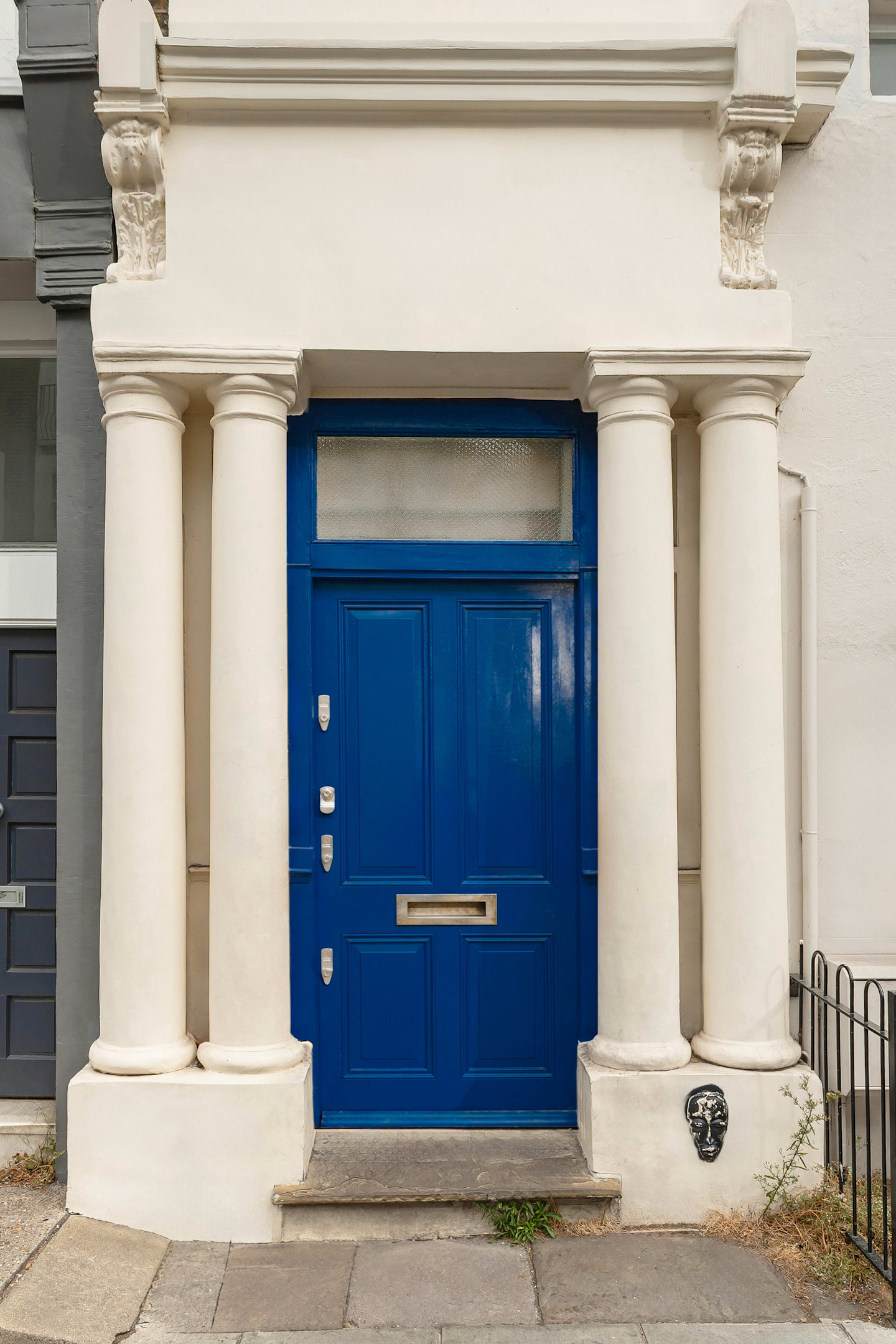
In the opening monologue of the 1999 romcom Notting Hill, William Thacker, owner of a struggling travel bookshop in Portobello, describes his west London home: “This is where I spend my days and years — in this small village in the middle of a city — in a house with a blue door that my wife and I bought together . . . before she left me for a man who looked like Harrison Ford, only even handsomer . . . and where I now lead a strange half-life with a lodger. . . ”
The reference to the blue door seems like throwaway scene-setting, but the entrance to 280 Westbourne Park Road became fabled. A place of pilgrimage, even. Now, after more than three decades of private transactions, it is on the market. When I went to the house last week, on a very average day, there was a small gathering. They were taking pictures of each other leaning on the doorframe, or couple selfies grinning in front of the house number.
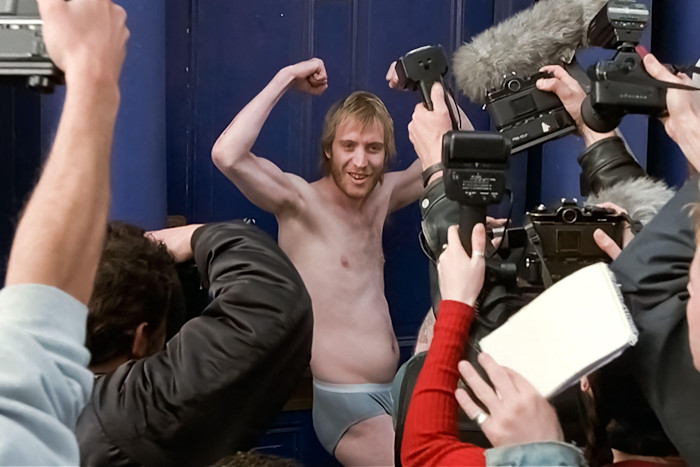
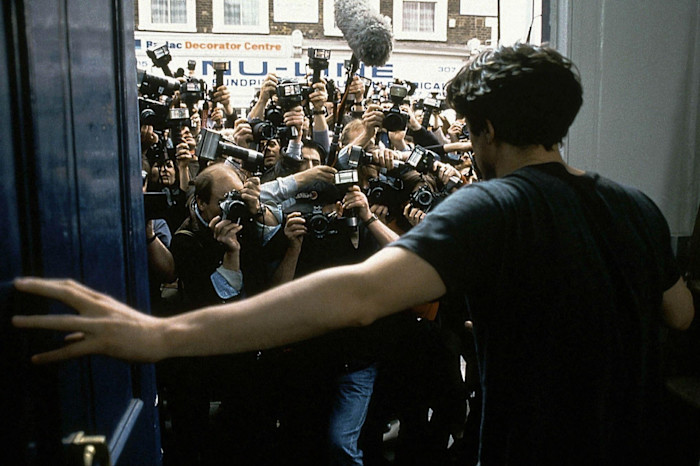
It’s a weird sight if you’ve forgotten how phenomenally successful Notting Hill was; it’s one of the highest-grossing, British films of all time, with worldwide box office sales of more than £225mn. Viewers fell hard for the story of Thacker’s romance with movie star Anna Scott (played by Hugh Grant and Julia Roberts), and while other locations in the film, such as the Ritz and Kenwood House, could be part of any love story, they felt a particular connection with that tatty front door.
If you’re a Londoner, you feel you know that space even before Thacker pushes open the door to his scruffy home. Doors like that inevitably lead to the grubby carpet and damp pizza flyers of a communal hallway or open on a direct sightline to a piled-high kitchen sink. The magic of a movie star choosing to cross that threshold into cash-strapped, rundown real life is what made that doorway significant. Anna Scott has seen reverse Narnia and she’s up for it. Chef’s kiss to Notting Hill’s production designer Stuart Craig for choosing the entrance so well.
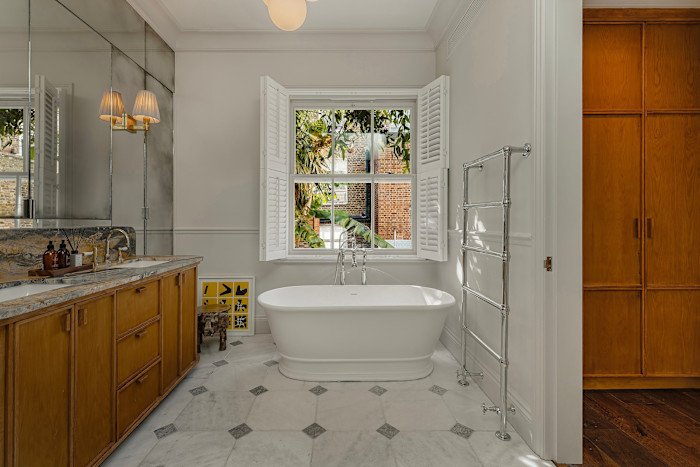
Which is why, when I stepped inside, I was completely unprepared for what lies behind the door of 280. I don’t expect life to be like the movies and I certainly don’t expect it to be better.
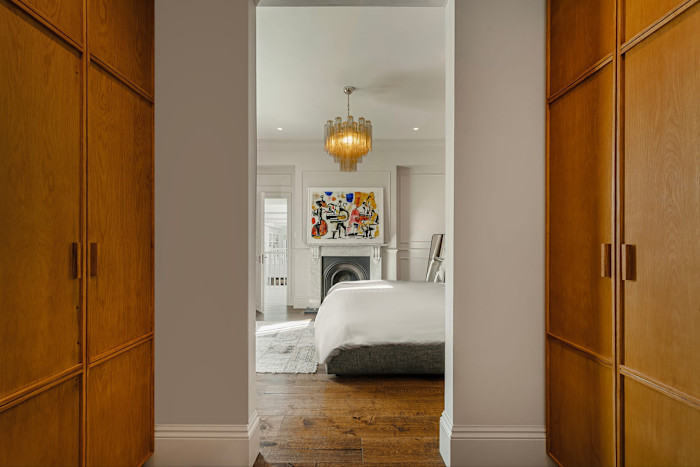
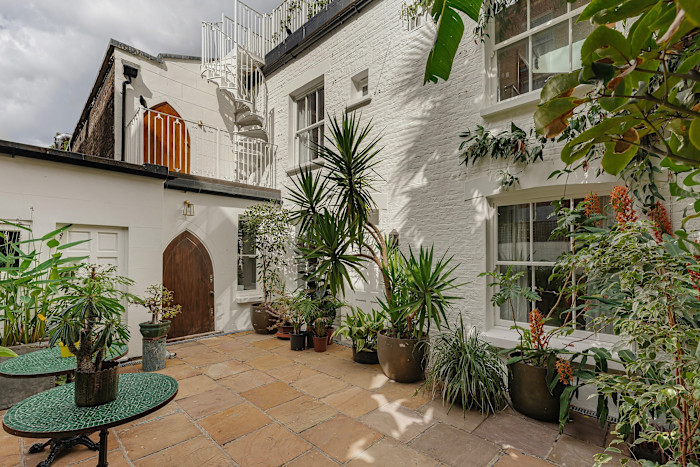
But once that blue door shuts, you’re in a small stone vestibule with arched doors that gives church vibes because that’s what it is: an entrance to a 19th-century chapel. Next, you walk into a courtyard full of palm trees and banana plants — the sort of magical courtyard you find in Milan.
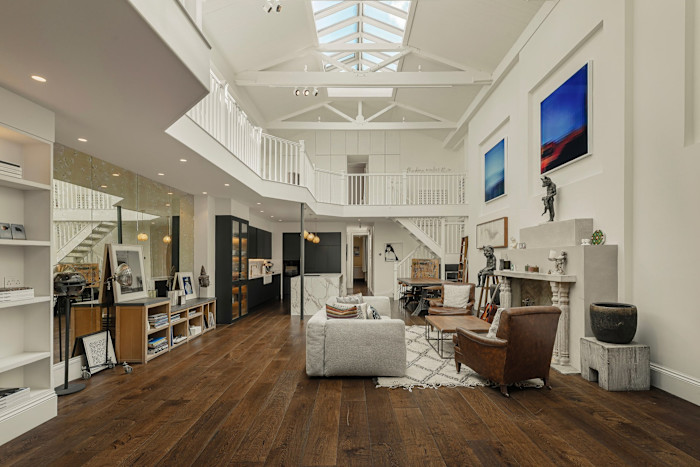
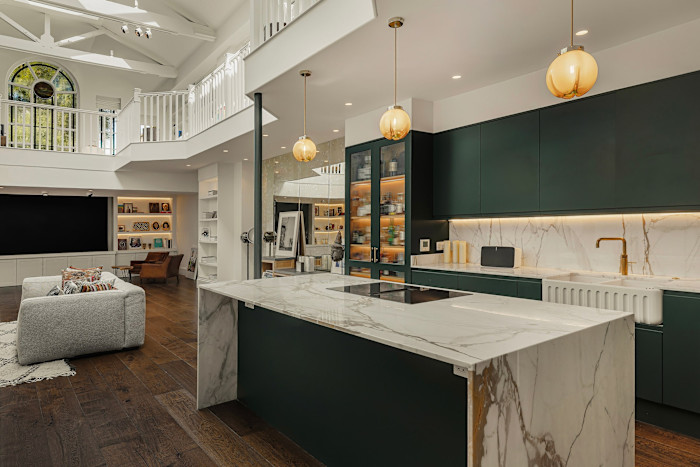
When you finally enter the actual house, the main living area is the converted chapel hall with double-height ceilings and stained-glass windows. An internal balcony runs round three walls; the estate agent tells me that DJs have set up here when the owners have held parties. I can instantly see it: it may have been built as a Baptist chapel but now this place is built for parties.
It’s well known that Richard Curtis, writer of the Notting Hill screenplay, owned 280. The story goes that Craig came back from a location recce with a photo of Curtis’s front door; the writer thought it was a joke, but Craig hadn’t known Curtis was the homeowner. Curtis and his partner, broadcaster Emma Freud, had bought and renovated the chapel in 1993 but moved soon after the film was released — and the front door became famous. Next in was Caroline Freud, Emma’s former sister-in-law, who lived there after her divorce from Matthew Freud (and before she married Earl Spencer and moved to Althorp). In 1999, Caroline auctioned the original front door for charity at Christie’s, to dissuade tourists, installing a black, numberless replacement. It didn’t really work and the next owner painted the door blue again.
A later resident was Jamie Allsopp, financier and restaurateur, cousin of Kirstie Allsopp and then husband of model Jacquetta Wheeler. The current owner — a tech entrepreneur — bought it in 2014 and is now selling because he’s moving to the US.
Gazing down from the rooftop patio at this ridiculously storied property, I tried to imagine who might be the next occupant. The agent said there’d been some talk of Ed Sheeran, which if this were a Richard Curtis film would be a great plot twist; tourists taking selfies with the door and only realising when it’s posted on Instagram that they’ve been photobombed by Sheeran.
This blue door in a small village in London turned out to have its own strange half-life. For millions, it’s a symbol of the possibility of love knocking on your crap front door when you least expect it. Twenty-seven years ago, in one scene in the film, Anna is furious with Will because the paparazzi have tracked her to his home and she thinks his lodger is to blame. “Do you think the entire British press got up this morning and thought, ‘I know where Anna Scott is, she’s in that house with the blue door in Notting Hill?’”
All these years later, people are still standing outside it, wondering who’s in there.
Find out about our latest stories first — follow @ft_houseandhome on Instagram