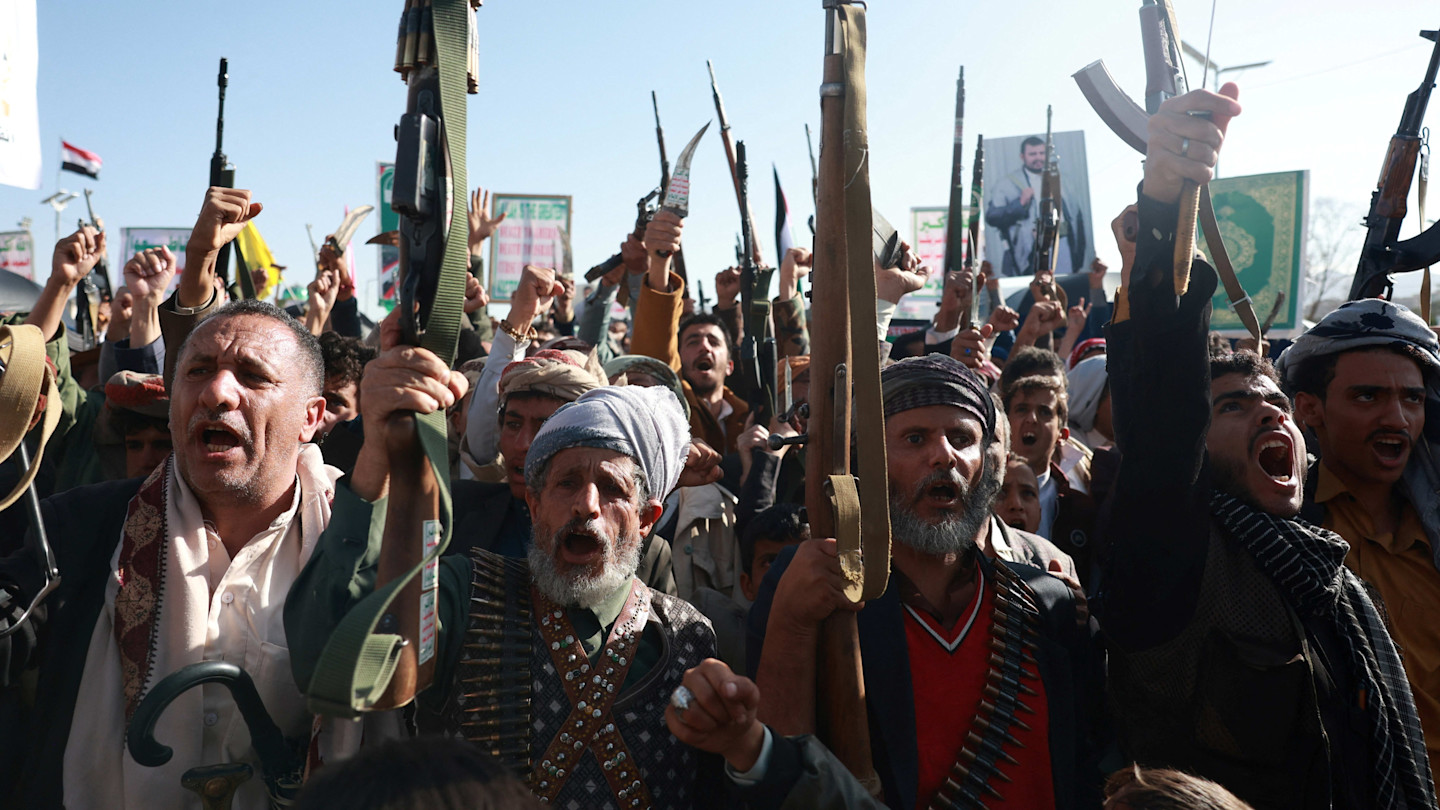
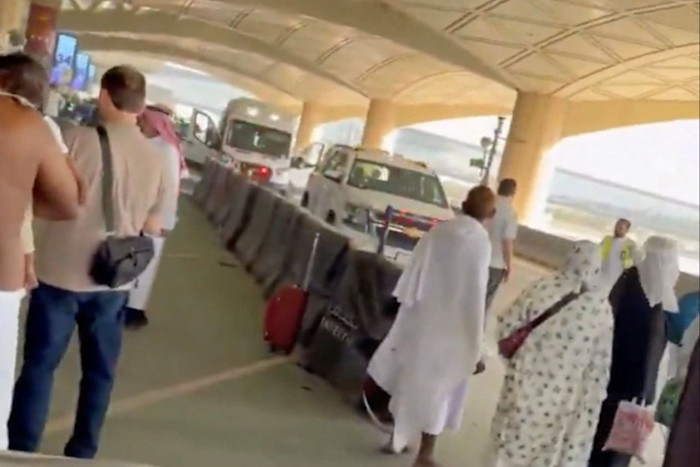
Several senior international oil executives called off plans to attend an energy conference in Riyadh this week after a Houthi missile attack on the capital’s airport on Saturday that killed 12 people and injured more than 300.
Saudi Arabia said the strike — the third on King Khalid International Airport in a week — was a “cowardly terrorist attack” that would be met with a decisive response.
On Sunday, in a fourth attack on the airport killed one Pakistani resident and injured 11 other people, the civil aviation authority said.
As energy officials gathered at the ornate Ritz-Carlton Hotel on Sunday, a spokesperson for the Houthis issued renewed warnings to airlines, workers and passengers not to use Saudi airports or airspace. The airport in Riyadh remained closed on Sunday and the embassies of the US, Germany and other countries have advised their citizens to avoid it.
The Houthis said they had attacked Riyadh’s airport using ballistic missiles, cruise missiles and drones, as well as targeting Dammam airport and two Aramco oil sites in the Eastern Province. The group would “continue their operations deep inside Saudi”, Houthi military spokesman Brigadier General Yahya Sare’e said.
The chief executives of ExxonMobil, TotalEnergies, Shell and BP were all expected to attend the World Petroleum Council’s energy congress, which began on Sunday in Riyadh, but withdrew, according to two people with knowledge of the matter.
“We made every effort to participate in WPC,” BP said. “Unfortunately, due to travel disruption, we are unable to be there in person. We greatly value our longstanding partnerships across the region.” Shell declined to comment while Exxon and TotalEnergies did not immediately respond to requests for comment.
The kingdom’s flagship conference, the Future Investment Initiative, is also scheduled for this month. It typically attracts top executives from around the world. Saudi officials said both events would still take place.
Saturday’s attack is another reminder of how the war against Iran launched by the US and Israel in February has triggered retaliation by Tehran and its allies, spread violence across the Middle East and pushed up global energy prices.
“The repeated Houthi attacks on Riyadh airport and the heavy civilian toll carry, in my view, a deliberate message: raise the cost of Saudi decisions by threatening civilian lives, economic activity and confidence in the country’s security,” Maged al-Madhaji, co-founder of Sana’a Center, an independent Yemeni think-tank, wrote on social media platform X.
“The Houthis act with the audacity of a gambler who knows their opponent has much to protect,” he added.
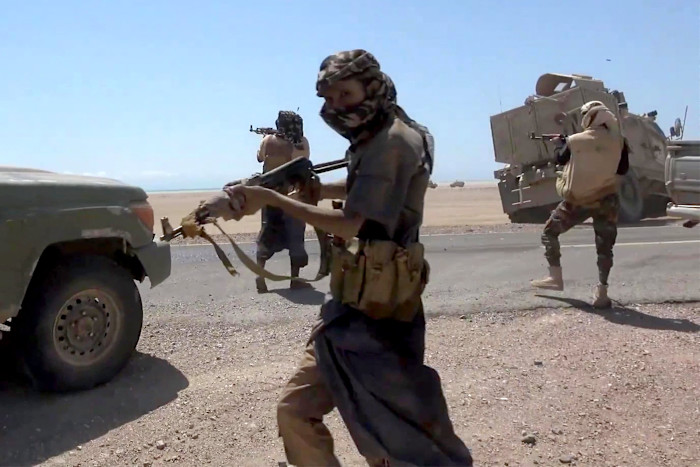
The latest escalation comes after Yemen’s internationally recognised government, backed by Saudi Arabia, last week launched a counteroffensive against the Houthis.
The group in September took control of areas overlooking the Bab al-Mandeb Strait — which gives shipping access to the Red Sea and the Suez Canal — in a lightning offensive, giving the rebels the ability to monitor and attack Saudi ships and roiling global energy markets.
In the face of the Houthi threat, Saudi Arabia has been asking allies to provide defensive support. French President Emmanuel Macron said last month his country would send soldiers, radars and defence systems to protect Yanbu oil terminal on the Red Sea, which became a vital outlet for crude exports after the shutdown of the Strait of Hormuz.
Saudi Arabia, Pakistan and Nato member Turkey last week said they had triggered a mutual defence pact for the first time, which would aim to ensure the “rapid deployment” of Pakistani and Turkish “military forces and capabilities” to Saudi Arabia.
US President Donald Trump has so far been reluctant to join the Saudi campaign against the Houthis as American interceptor stockpiles remain depleted after months of war with Iran.
Asked whether the US would consider striking the Iran-backed rebels, he said on Saturday: “We’re going to look at it. We just found out about the recent attack, so we’ll make a decision. We move very quickly.”
He called the attack on Riyadh’s airport “a terrible thing” and said he was planning to speak with Crown Prince Mohammed bin Salman. Trump also said that “we have communication with the Houthis”. The group previously said they would not attack the US.
Ali Shihabi, a Saudi commentator familiar with Riyadh’s thinking, said the kingdom’s large area size and multiple facilities that need protection posed a challenge.
“There is critical infrastructure in the east, there’s the pipeline, there’s facilities in the west. Air defences are coming in from the Turks, from the French and others are considering it,” he said. “Of course it’s a worry, but this is war and it won’t get normalised but a thicker skin will be developed to accept this comes with war.”
Saudi Arabia intervened in Yemen’s civil war in 2015 in an attempt to restore the internationally recognised government after the Houthis took over the capital, Sana’a.
A 2022 truce between Saudi Arabia and the Houthis had largely held even during the early months of the US-Israeli war with Iran. But the truce collapsed in July after the Houthis, under mounting economic pressure, declared a blockade on the kingdom’s Red Sea ports, attacking Saudi tankers and targeting its oil infrastructure.
Additional reporting by Andrew England, Malcolm Moore and Peter Campbell