This article is an on-site version of our Inside Politics newsletter. Subscribers can sign up here to get the newsletter delivered every weekday. If you’re not a subscriber, you can still receive the newsletter free for 30 days
Good morning.
After spending six months putting Manchester’s name up in lights, Andy Burnham managed to tear the city down immediately after his conference speech in just two words.
I have been on leave for most of the time since then, but the growing noise around the city’s connections to Abu Dhabi has been unavoidable.
Inside Politics is edited by Harvey Nriapia today. Read the previous edition of the newsletter here. Please send gossip, thoughts and feedback to [email protected]
Build ’em up and Burnham down
When the prime minister said he would be “really concerned” if Abu Dhabi were to sell Manchester City after the Premier League’s findings that the club had artificially inflated its finances, I was surprised for more than one reason.
First, Burnham has long displayed a populist knack for railing against “the big guy”, be that in the Hillsborough campaign, his fights with the government during the Covid-19 pandemic or his attacks against the Environment Agency over an illegal rubbish dump in Makerfield.
Second, he had not previously highlighted Abu Dhabi’s investment relationships with the city in his “Manchesterism” narrative (nor China’s, for that matter).
I always thought that was because he found the politics of the links instinctively unpalatable or that he didn’t pay much attention to them at the time. So to highlight it now seemed a baffling own goal.
My sense is that his comments stemmed from a genuine concern about the United Arab Emirates pulling investment. But how likely is that?
Manchester City Council quietly let its George Osborne-era housebuilding joint venture with the club’s owners, Manchester Life, lapse at the end of last year, as then council leader Bev Craig, now the city-region’s mayor, never seemed as comfortable with it as her predecessor Richard Leese.
She was less at ease with the political trade-offs — doing business with a regime with questionable rights records, the optics of building what in its early stages was above-market-rate housing with no “affordable” units, the existence of an offshore holding company — and I suspect calculated that the 2026 Manchester market was capable of regenerating without the club owners’ help.
Regardless, the last site planned under that agreement is already under construction, so there is nothing on that score for Abu Dhabi to pull.
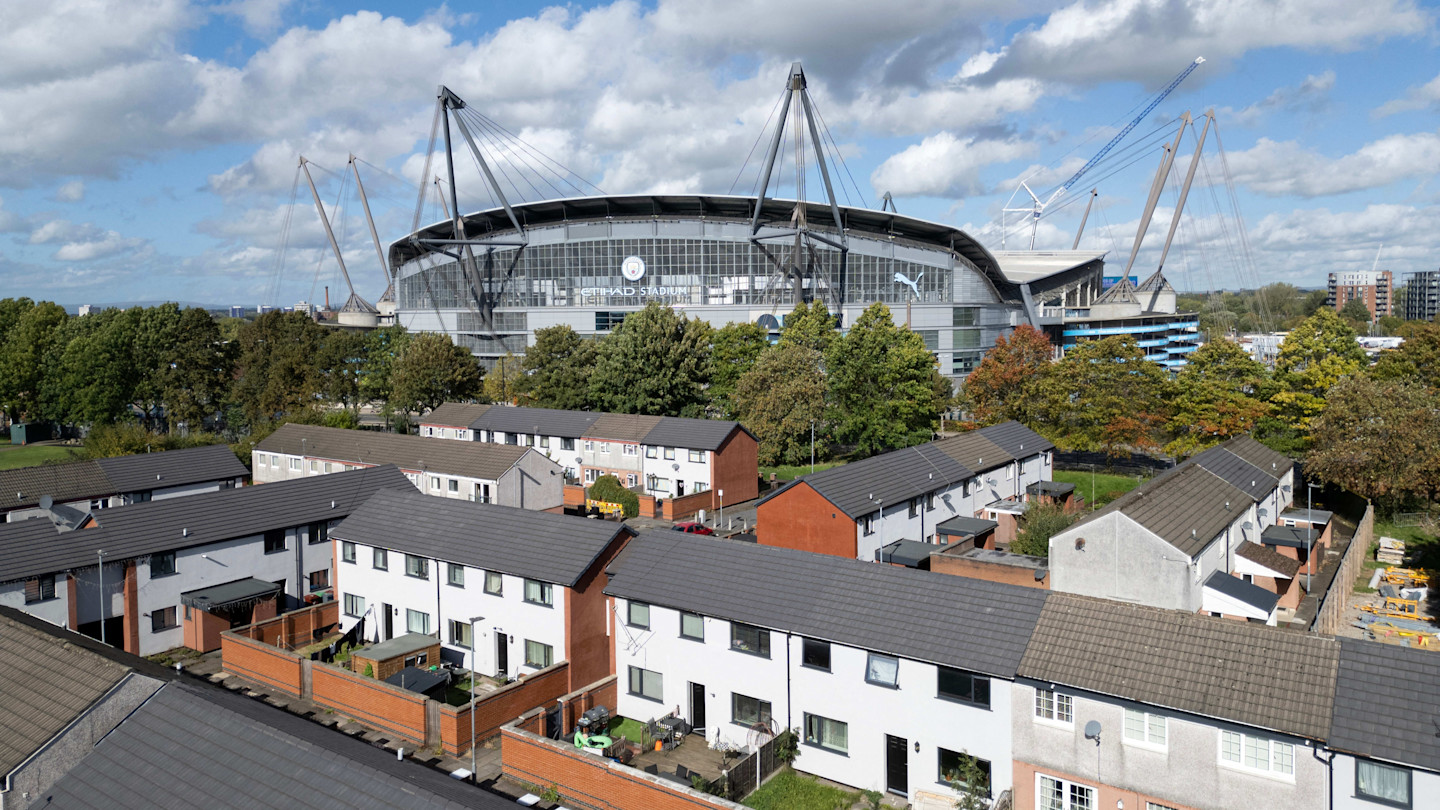
Abu Dhabi has already made extensive investments in and around the Etihad Stadium: a huge hotel was unveiled recently, the Co-Op Live arena is up and running, various other facilities have been open for years. It could pull further investment on the ground or, yes, sell the club.
But the idea that Manchester is first in the line of fire from any threats to pull UAE investment from the UK seems wide of the mark. The bigger risk is surely to the Oxford-Cambridge corridor and science and infrastructure projects elsewhere.
The third reason it seemed such an unforced error is that Burnham, when mayor, never appeared to have had much to do with Abu Dhabi. His words have put blood in the water, prompting demands for records of his meetings with the UAE, when it’s not obvious that was how he was spending his time.
“He’s created an illusion that as mayor he was involved in this and he absolutely bloody wasn’t,” says one veteran of Manchester’s dealings with Abu Dhabi. Ironically, this lack of proximity, they suggest, may be “partly why he didn’t see the bear traps” of wading into the issue.
Doing things differently
As the Telegraph pointed out this weekend, Burnham nonetheless was in the chair when the Greater Manchester Combined Authority (GMCA) approved millions of pounds of loans to developments ultimately owned by Abu Dhabi. The cash came from the Greater Manchester housing investment loan fund, which was set up before he became mayor.
This recyclable pot, agreed under the city-region’s 2014 devolution deal with Osborne, was intended to accelerate the housing market in a city centre that was still viewed with caution by investors. Nonetheless, the scheme’s loans for skyscrapers were already raising sufficient questions by 2016 that, as mayoral candidate, Burnham, always good at nudging a half-open political door, promised to repurpose the finance entirely for affordable housing.
It didn’t happen.
The fund continued as it had done before: making loans to market-rate developments, including premium tower blocks and Abu Dhabi-backed schemes. As a result, it had become a political albatross for Burnham long before he left for Number 10.
It is difficult for some people to reconcile the idea of public money going into luxury development schemes when the developers appear to have enough money to build by themselves, even if the interest earned generates a return for the public purse.
The courts have twice dismissed claims that they unlawfully gave preferential treatment to one developer, most recently this summer. But even failed litigation keeps those optics in the headlines. And now Burnham is prime minister, promising an epoch-defining wave of affordable housing while arguing that Manchester ended neoliberalism.
Neither of those considerations troubled the late Sir Howard Bernstein, the real architect of both the fund and the city’s deals with UAE investors.
Nobody so far seems to have established that rules were broken. But with the city under the microscope, Bernstein’s own overlapping roles are not helpful optics either.
For a few years before Burnham was elected, Bernstein had two hats. He was chief executive of the city council, where he carried out land deals, drew up master plans and signed regeneration partnerships, such as the one with Abu Dhabi. He was also chief executive at the GMCA, which managed the loan fund.
I would watch a master plan appear on a council agenda, a planning application follow shortly afterwards and then, up the road, Bernstein’s other organisation would approve a loan. The cranes would appear and then a skyscraper.
It isn’t clear to me that this broke any rules, although I’m happy to be corrected. Equally, it’s not necessarily great practice, just as in the British corporate world chief executives and chairs are typically different people. Even at the time, this structure added to an impression that too much public business was quietly being agreed behind closed doors.
When Bernstein left the council, he went to work for both the parent company of Manchester City, his boyhood club, and Manchester Life, the joint venture he set up with Abu Dhabi while on the council side of the fence.
There are no blanket business appointment restrictions for council chief executives after they leave the post, unlike in the civil service. Nonetheless, Bernstein’s relationships are being pored over in light of Burnham’s remarks.
And what of the deals themselves? More than one person with experience of Bernstein’s approach believes he, on occasion, underplayed his commercial hand to get things delivered at pace. But this is hard to assess without seeing the full details of the agreements.
Is it possible that he could have played a harder ball with Abu Dhabi? That may come out in the wash if a final financial breakdown of the Manchester Life venture ever surfaces.
But the same people all make a second point: post-industrial urban regeneration is hard, public cash was scarce and Manchester made trade-offs to get things built.
How you assess value depends not only on the raw financial returns for the public purse but what was created as a result. Moreover, consider the counterfactual: what would have been built there otherwise?
I remember the dereliction of Ancoats after the financial crash, the “danger” signs on Regional Development Agency fences that lingered around its wasteland long after the RDA had been scrapped by the coalition government. Today, that neighbourhood regularly makes top 10 “best places to live” lists.
None of these are new arguments, of course. The merits of Manchester’s regeneration model have been debated at length.
What Burnham has done is thrust them into the national arena by making the city his blueprint for the country, before declaring open season through his remarks about Man City.
It won’t have been his intention, but there is a risk Manchester’s reputation becomes the collateral damage of “Manchesterism”.
Top stories today
‘Not an option’ | John Healey risks delivering a “work of fiction” Budget if he does not explain how he will fill a £35bn hole in the government’s spending plans, the Institute for Fiscal Studies warned.
Means business | Andy Burnham will step up engagement· with business this week, hosting a speed-dating-style reception in Downing Street with executives fearful of tax rises in the Budget.
Guardrails | The government is mulling plans for compulsory safety reporting· and monitoring of frontier AI, as ministers fret about autonomous models.