“Come all the way back.” That was Roland Lescure, France’s finance minister, responding to Andy Burnham’s suggestion that Britain needs to rethink its relations with the EU.
Lescure was not a lone voice. His boss, President Emmanuel Macron, says the reversal of Brexit is an “excellent” idea. Pedro Sánchez, Spain’s prime minister, suggested that Britain would be welcomed back with “open arms”.
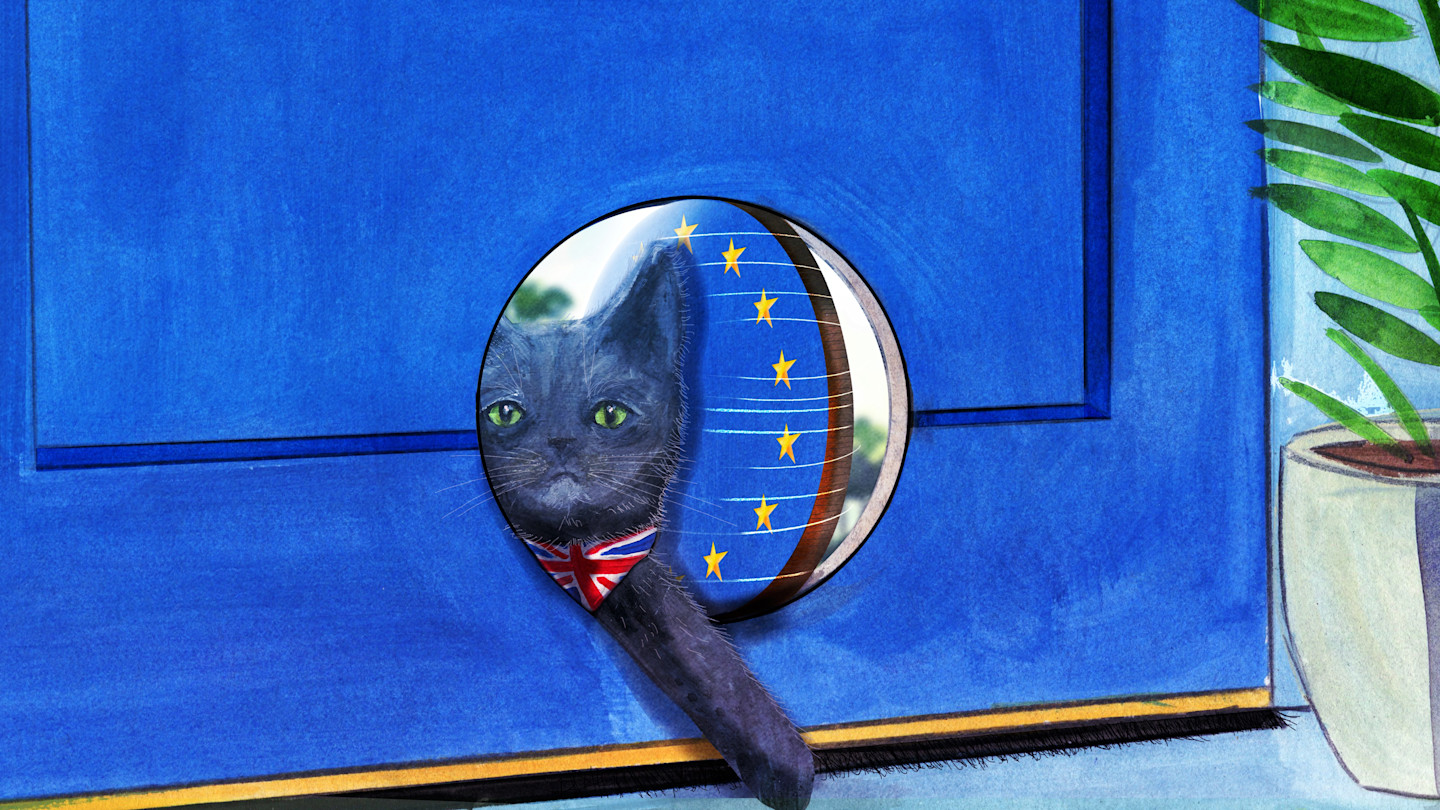
So could we be looking at a cat-flap Brexit? Our feline friends have a habit of screaming to get out of the house — before demanding, with equal fervour, to come back in again. Will Britain one day stroll back through the EU cat flap?
Clearly, the door to the EU is rather better fortified than the average cat flap. There would be formidable obstacles to overcome before Britain could rejoin. But the political, economic and strategic case for reversing Brexit is gathering strength and momentum.
Start with the politics. Behind his folksy exterior, Burnham is a shrewd and ruthless political operator. He knows that opinion polls now suggest that 59 per cent of British people want to rejoin the EU, with just 32 per cent opposed. And yet no major political party is currently advocating rejoining. That looks like the political equivalent of an open goal. The commentator Sam Freedman points out that polls suggest that “a strong manifesto commitment on the EU could add four to seven points to Labour’s vote percentage.”
Key advisers to the prime minister concluded long ago that Brexit has acted as a drag on the British economy — and that rejoining the customs union or the EU’s internal market would not be enough to repair the damage. Every big goal that Burnham has — from fixing social care to spending more on defence — is hamstrung by a lack of money. If rejoining the EU could raise the growth rate then a lot of other issues would become easier to solve.
Finally, there is the strategic case. Donald Trump’s diesel deal with Russia has underlined his profound differences with Britain over Ukraine. The US president has also steadily undermined faith in the future of the Nato alliance. The British know that their future security is likely to depend on working more closely with European allies. That would be significantly easier if Britain were inside the EU — and had automatic access to common European defence spending.
But actually rejoining the EU could be a daunting process. The old deal that Britain had before — in particular the budget rebate — would not be on offer. Opt-outs from the Schengen border-free zone and from the single European currency could no longer be assumed. Both currency and borders remain very sensitive issues in the British debate.
Burnham would have reason to fear that a soft majority in favour of rejoining the EU would fall away, as the reality of what that entails became apparent. Despite the encouraging words from Macron, some of Burnham’s key advisers are particularly wary of France — which they regard as easily the most hardline of the EU nations in its attitude to Britain. Some even fear a replay of the 1960s, when Charles de Gaulle blocked Britain’s first application to join the EU.
The France that would sit in judgment on a British application to rejoin the EU would also no longer be the country of Macron and Lescure. A victory for Marine Le Pen in next year’s presidential election might change the debate about British re-entry in unpredictable ways.
If Le Pen plunged the EU into chaos — or dragged France to the far right — then rejoining might seem like a less attractive option for the UK. The threat of a debt crisis in France or elsewhere in the Eurozone might also make the EU seem less attractive. On the other hand, outside the Eurozone, Britain itself might be even more exposed to the bond markets than France. And some of Le Pen’s demands for a rollback of some EU powers are reminiscent of the traditional British position. A looser EU that was no longer driving towards “ever closer union” might even be easier for Britain to rejoin.
The bigger question that the EU and its constituent governments have to answer is — do they really want Britain back? And even if the answer to that is ‘Yes’ — are they prepared to invest the time and energy required to make it happen?
The scars left by Brexit have only just begun to heal. The Europeans will also want evidence of a settled consensus in Britain. Negotiating a re-entry treaty — only to have Nigel Farage come to power and rip it up — would be a nightmare for all concerned.
On the other hand, the attractions for the EU of Britain rejoining are also considerable. At a time when Brussels is scorned in Washington and Moscow, a British vote to rejoin the club would be a powerful vote of confidence in the future of the European project.
The world is also a much more threatening place for Europeans than it was in 2016, when Britain voted to leave. Renewed UK membership would add some economic and military weight that the EU could certainly do with. Unlike many other potential member states, the British would also be substantial contributors to the EU budget.
Beyond the difficult technical negotiations involved in reversing Brexit, it is the bigger strategic question that really matters. Do both sides see a common interest in Britain rejoining the EU? If the answer to that is a clear yes — then it can and should happen.