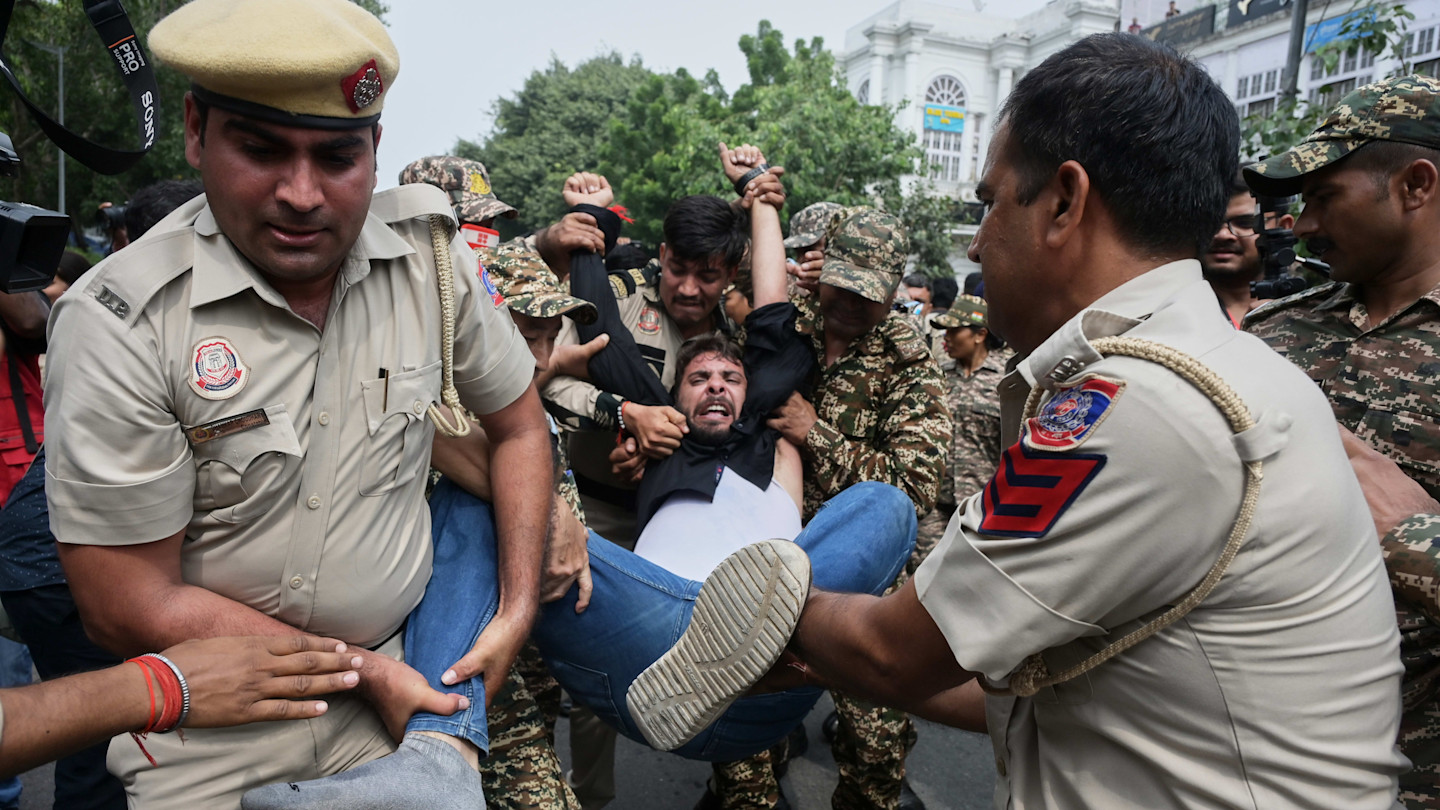
As New Delhi was rocked by unrest this weekend, youth leader Saurav Das emerged from jail asking why the prime minister was so keen on “protecting” the election commissioner who is the target of protesters’ ire.
Does Gyanesh Kumar, the country’s top election official, “know something about the 2024 elections”, Das asked on Sunday, referring to the polls in which India’s prime minister hung on for a third term despite losing his outright majority in parliament.
The taunt made clear how difficult it will be for Prime Minister Narendra Modi to quell the turmoil, which has roiled the Indian capital over the past week. In July, youth protests over exam leaks forced the resignation of the education minister, in what was then a rare defeat for India’s powerful prime minister.
But the target this time — the institution that oversees elections in the world’s largest democracy — is much broader, making it more difficult for Modi to find the right response.
“Conceding” to the demand for Kumar’s resignation could open the door to questioning the legitimacy of the government, said Ruchi Gupta, executive director of the non-partisan Future of India Foundation. “The government has a trust deficit that it needs to address.”
Video description
Demonstrators stage flash protests across New Delhi on Monday
For now, authorities have responded with force. Tens of thousands of security forces have been deployed and scores of protesters have been arrested. Over the weekend, police locked down the capital of more than 20mn, barricading roads, closing metro stations and shutting off mobile internet services.
Rahul Bhatia, India analyst at Eurasia Group, said that Modi’s first and most likely course of action was “projecting a sense of business as usual, continuing a heavy-handed approach to ensure demonstrations don’t gather momentum”.
“The second option would be to pressure Kumar to resign. This would be a bitter pill for the government to swallow, especially after they had to sacrifice education minister Dharmendra Pradhan in July,” he said.
“It would also open up the possibility of more ministers and state chief ministers resigning.”
The protesters’ objections centre on a controversial revision of the voter rolls that began last year and which saw 130mn names purged.
The commission has defended the exercise as a regular procedure to “purify” the rolls of duplicates, deceased voters or immigrants who are ineligible to vote.
But critics say the overhaul may have unfairly benefited Modi’s Bharatiya Janata Party, which since then has won a slew of state elections. They allege that the commission wrongly deleted tens of millions of voters, particularly Muslims, at the behest of Modi’s Hindu-nationalist party — an accusation the BJP denies.
Seven more Indian states are due to hold elections in 2027, including the most populous state, BJP-led Uttar Pradesh, raising further concerns ahead of nationwide elections in 2029.
Kumar has not been seen in public for weeks, while the prime minister himself — who has yet to comment on the protests — spent the weekend in the southern state of Tamil Nadu, where he inaugurated metro stations and prayed at Hindu temples.
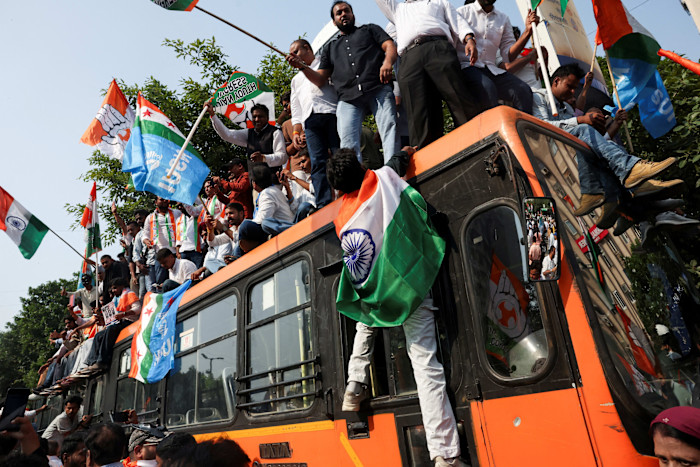
The shifting focus of the protests, which are led by the youth upstart Cockroach Janta Party, has aligned the group with India’s established opposition. Rahul Gandhi, whose Indian National Congress Party continued the protests on Monday, has also alleged vote irregularities and accused Modi of undermining key institutions.
“The opposition is asking one question: show us proof that you have not cheated in the elections,” Gandhi said as he rallied thousands in central New Delhi on Monday.
BJP spokesperson Sudhanshu Trivedi on Sunday accused Gandhi of wanting to push “India into anarchy and division” by levelling “baseless and unwarranted allegations against” Modi’s government.
But the CJP, which emerged as a satirical online movement in May, has managed to unite disenchanted Indian youth, offering a rallying cry for discontent with Modi’s administration in a country where the median age is 28 and many young people struggle to afford education or find adequate employment.
Analysts at BMI, Fitch Group’s risk consultancy unit, said the movement would continue to “grow over the coming weeks” though they noted “uneven participation beyond major cities”.
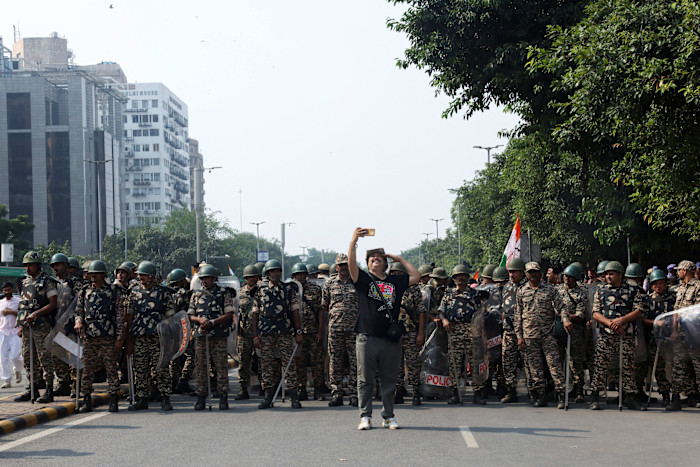
“The saturation point has been reached. The youth will keep coming out,” said Uday Bhanu Chib, the national president of the Indian Youth Congress, a unit of Gandhi’s party.
“The reason is that the youth are no longer afraid of this government. Our strategy is very simple: we will keep doing protests until we get justice and we change this government.”
Abhijeet Dipke, the 31-year-old CJP founder who was temporarily detained on Sunday, expressed a similar sentiment after he was released: “Put us in jail not once, but a hundred times.”
Despite the mounting pressure on Modi, analysts cautioned against drawing parallels to Gen Z-led uprisings that deposed governments in neighbouring Bangladesh and Nepal in recent years.
“The opposition must seek to unseat the government through elections, which are still two and a half years away,” said Gupta, pointing India’s democratic institutions, though she added that “the government’s overreaction has helped mainstream the youth movement”.
With protest chants of vote chor, gaddi chhod — “vote thief, leave the throne” — ringing out this week in the streets of New Delhi and Bengaluru, the prospect of a rapid resolution seems distant.
Mohsin Khan, a 21-year-old student, said the fight had grown much bigger since he joined the CJP to demand the education minister’s resignation in July. He travelled from Bengaluru to join the protests in New Delhi, where he said he was insulted by police, roughed up and detained.
“Vote theft is a real, genuine issue. My mum was deleted from the list,” he said. “The government has to go.”