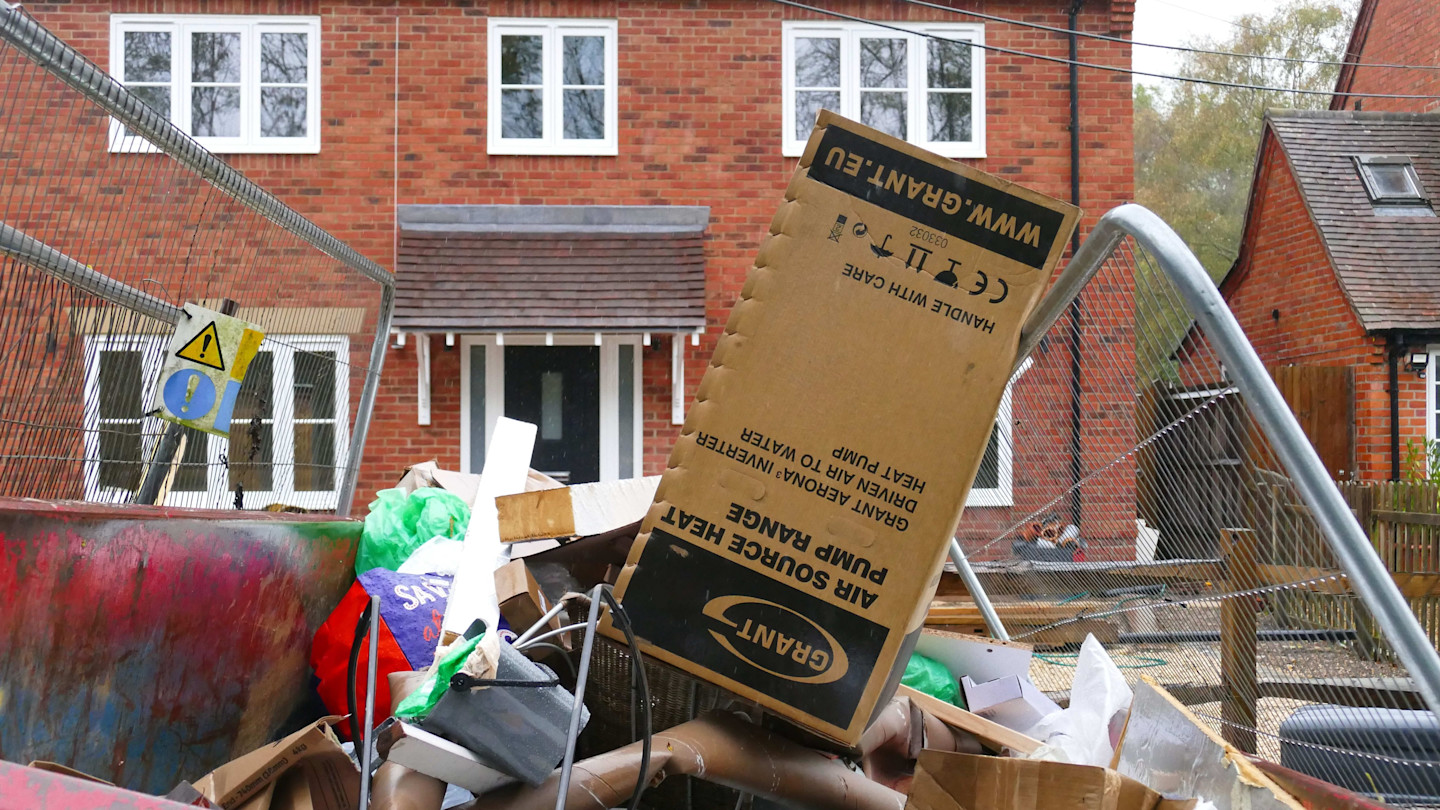
Labour ministers are facing an industry backlash against plans to cut hundreds of millions of pounds from the government’s Boiler Upgrade Scheme in England and Wales, which provides grants of up to £9,000 to help households switch to heat pumps.
The energy department is drawing up cuts to various areas of expenditure as it is forced to find £2bn of savings in the next few weeks as part of a Downing Street drive to find extra money for defence spending.
Potential cuts include not only heat pumps but home insulation grants, support for the nascent hydrogen industry and “carbon capture” schemes.
Sir Keir Starmer, the former prime minister, in June ordered all departments to make a 1 per cent cut to capital spending to pay for the Defence Investment Plan.
But he singled out the Department for Energy Security and Net Zero to find an additional £2bn of cuts.
The energy department was considered ripe for cuts as it was one of the winners of last year’s spending review, receiving an annual 16 per cent increase in its capital settlement to fund projects such as Sizewell C, carbon capture and insulation.
Starmer also ordered the transport department — another capital-rich ministry — to find cuts through pauses to road improvement projects and other schemes.
Miatta Fahnbulleh, the energy secretary, is now under pressure to make savings of £100mn in the current year, £600mn in 2027-28, £700mn in 2028-29 and £600mn in 2029-30.
She is considering a raid on the £15bn Warm Homes Plan, a programme to upgrade 5mn homes with insulation, solar panels and low-carbon heating.
That would include cutbacks to the £2.7bn Boiler Upgrade Scheme (BUS), which is part of the WHP and includes subsidies for electric heat pumps.
Ministers are also considering cuts to programmes including the “hydrogen transport pot” and possible delays to so-called Track 2 carbon and capture schemes which have not yet had the go-ahead, according to people familiar with the talks.
The energy department refused to comment on Monday.
Industry figures criticised Fahnbulleh’s proposals to cut heat pump subsidies, which were first reported in Politico and the Guardian.
“Industry players have invested in recruitment, they’ve invested in supply chains, and this is just a big slap in the face to them and to consumers having to deal with high bills,” said Camilla Born, chief executive of campaign group Electrify Britain.
Heat pumps are critical to cutting energy bills and progressing towards national climate targets, but are not being installed at a fast enough pace, the UK’s independent Climate Change Committee has previously warned.
The pumps are more efficient than fossil-fuel boilers and can run at times when electricity is cheaper, but upfront installation costs are high.
Mel Evans, head of climate at Greenpeace UK, said heat pumps helped to cut emissions, fuel imports and energy bills.
“When there are billions in windfall profits piling up in the accounts of the oil majors behind our economic misery, why would the government cut funds benefiting ordinary families instead of taxing polluters fairly?” she said.
The charity Nesta warned that cutting the BUS budget would send a “damaging signal” to business when heat pump installations were growing as a result of soaring gas prices in recent months.
Nesta said installations had only grown modestly in recent years but applications jumped in July and August, partly due to the sharp rise in fossil-fuel prices after the war in Iran and cuts in levies and VAT on electricity bills.
Greg Jackson, chief executive of Octopus Energy, said cutting the BUS would be “remarkably short-sighted”.
“Britain’s exposure to gas cost the Treasury £80bn in the last energy crisis,” he added. “The Boiler Upgrade Scheme budget is just 0.5 per cent of that, and is key to getting off gas.”
Deploying heat pumps was “critical” for both energy and national security, said Jess Ralston, energy analyst at the Energy and Climate Intelligence Unit.
“Raiding long-term policy introduces sudden, severe uncertainty that could mean setting back the growing heat pump industry just as it needs stability to scale,” she said.
“This would be the opposite of getting off the fossil fuel rollercoaster that ministers have talked about.”

Where climate change meets business, markets and politics. Explore the FT’s coverage here.
Are you curious about the FT’s environmental sustainability commitments? Find out more about our science-based targets here