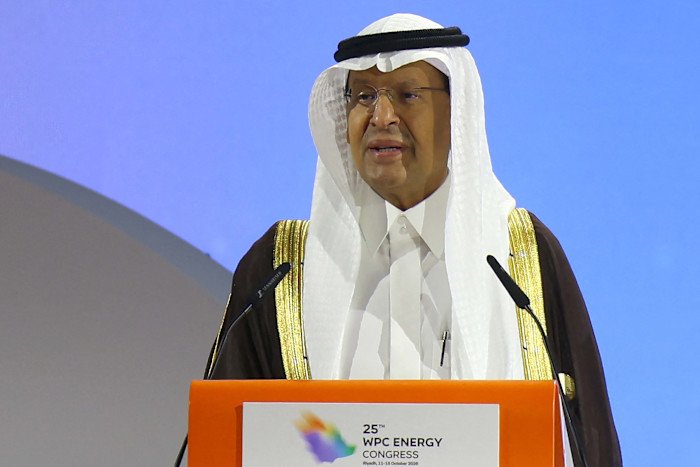
Saudi Arabia’s energy minister struck a defiant tone as he opened a major energy conference in Riyadh hours after missiles struck the city’s main airport for the fourth time in a week.
“The word fear in the Saudi dictionary does not exist,” said Prince Abdulaziz bin Salman in his opening address at the World Petroleum Congress on Monday.
A wave of strikes by Iranian-backed Houthi militants on Riyadh’s airport in the days leading up to the event made it impossible for many international executives to attend·. Almost all flights to the airport were cancelled.
“To everyone who has travelled to Riyadh, thank you,” the minister said. “Your presence matters. When circumstances become more difficult, dialogues become more important.”
Energy executives from Saudi Arabia, Qatar and Kuwait were seated in the front row during the Saudi minister’s address, while the audience included noticeably fewer attendees in western-style clothing than would ordinarily be expected at an event such as this.
The chief executives of ExxonMobil, TotalEnergies, Shell and BP were all expected to attend the conference but withdrew, according to two people with knowledge of the matter.
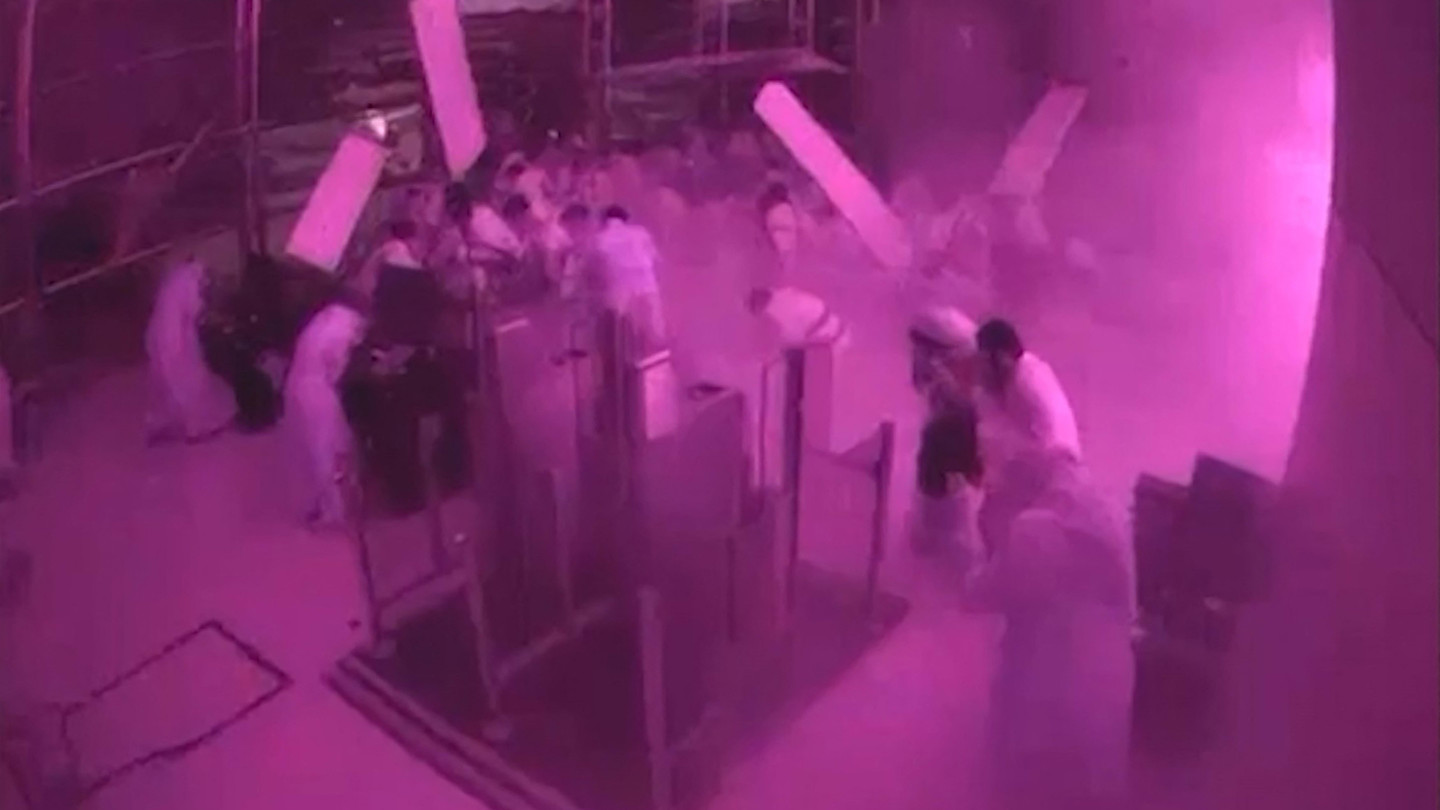
King Khalid International airport was targeted in a fresh wave of attacks on Sunday. The Saudi-led coalition fighting Yemen’s Houthi rebels said a cruise missile was intercepted and destroyed in the vicinity of Riyadh’s airport, while Terminal 4 was hit with an “unknown projectile” that caused a fire, a spokesman said. One Pakistani resident was killed in the attack and 11 others were injured.
The worst attack to date was on Saturday, when a missile strike on Terminal 3 killed 13 people and injured more than 300 — the deadliest assault on Saudi Arabia in more than a decade. Saudi television channels broadcast dramatic CCTV footage of the attack showing passengers running at the moment of impact as debris fell from the terminal’s ceiling.
Video description
The moment a Houthi missile struck King Khalid International airport on Saturday
The previous Thursday, four people including a Saudi pilot were killed and several others injured at the airport, following another attack the previous day. Saudi authorities have blamed Yemen’s Houthi rebels for all the strikes.
The kingdom’s civil aviation authority said on Monday that operations at the Riyadh airport would remain suspended to “allow the completion of procedures to ensure the safety and operational readiness of the airport’s facilities”.
A notice to operators issued by the authority, seen by the FT, said it intends to remain closed until October 17. The authority did not immediately respond to a request for comment.
Meanwhile, in the oil-rich Eastern Province, King Fahd International airport in Dammam also came under attack on Sunday, the Saudi General Authority of Civil Aviation said, without offering details. The authority called it a “continuation of blatant attacks targeting civil aviation facilities in the kingdom” and said a damage assessment was under way, as the coalition announced that it had intercepted a drone in the area.
A ballistic missile targeting the south-western city of Khamis Mushait, home to a military air base, was intercepted in the early morning hours of Monday, the coalition said.
More than 6,000 flights into Saudi Arabia have been cancelled since Thursday’s attack, according to Cirium. On Monday, Riyadh airport was still closed, while Dammam had reopened but with a large number of cancellations showing, according to Flightradar24.
Following last week’s attacks, international airlines including Lufthansa and Air India suspended services to Riyadh. Many major carriers including BA and Air France had not restarted services after halting them in February at the start of the war against Iran launched by the US and Israel.
The EU’s Aviation Safety Agency (EASA) has warned airlines to avoid large areas of Saudi Arabia’s airspace until at least the end of this week.
Guidance updated over the weekend said carriers should “not operate at all flight levels and altitudes” over Jeddah, the Red Sea or a large north-western part of the country covering Riyadh and Dammam.
“Recent attacks have demonstrated the ability and intent of the Houthis to strike targets deeper inside Saudi territory,” EASA said. The new attacks have a “greater focus on aviation infrastructure than previously, increasing risks to aircraft”.
The World Petroleum Congress takes place every three years, rotating between host countries. This year’s gathering was originally scheduled to take place in April but was postponed as a result of the regional war.
Speaking at the International Energy Forum Ministerial Meeting on Sunday, bin Salman called Riyadh “the capital of energy security” and said Saudi Arabia was resilient.
“We are like a phoenix,” he said. “We come out of the ashes all the time and every time.”