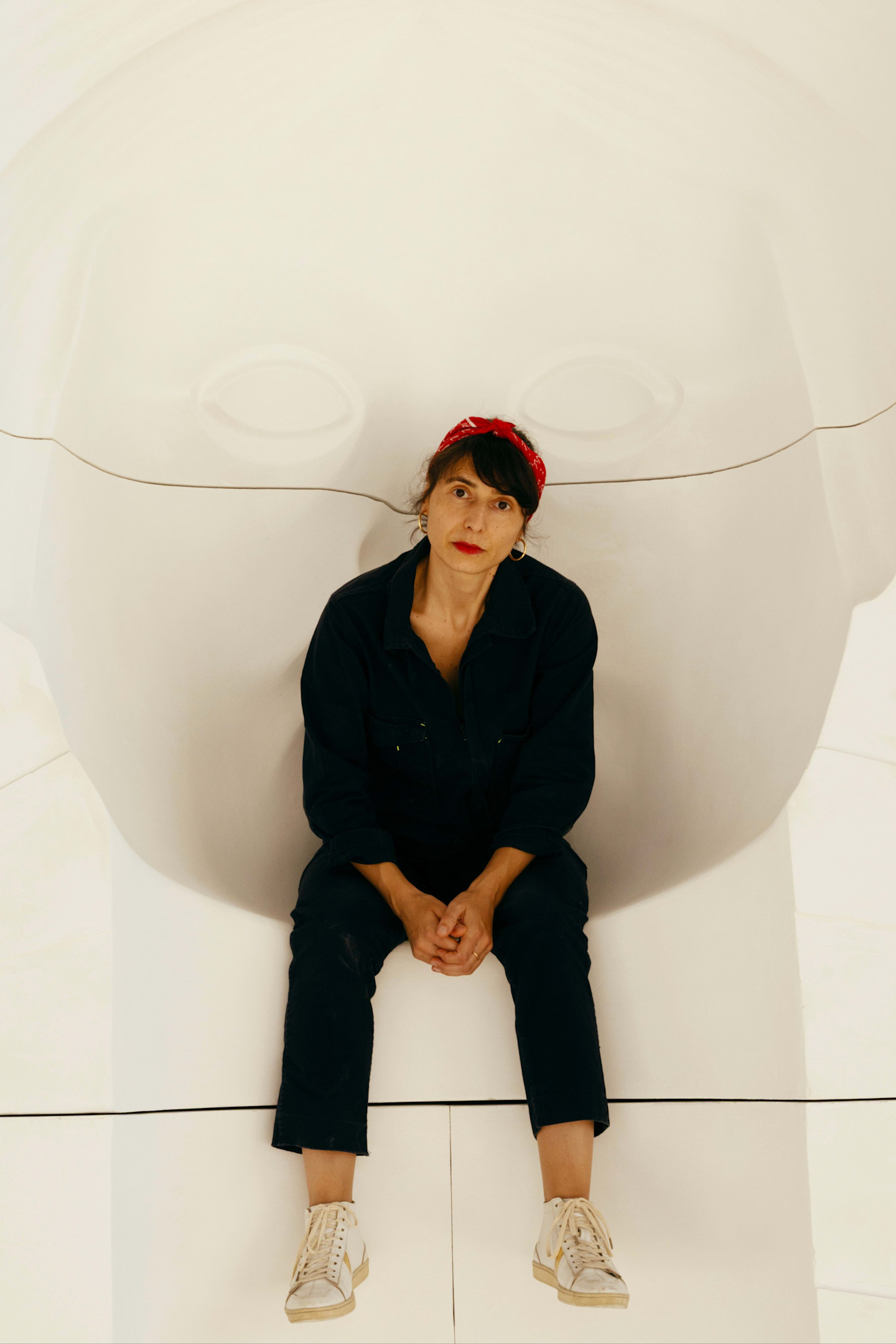
I was invited to the Petit Palais museum in Paris about two years ago, and walking through its galleries I realised that most of the sculptures represented women — often as muses or models — but only 4 per cent of the artworks were created by women. It prompted the question: where were the women artists?
My exhibition Visionaries shines a light on female sculptors from the late 19th and early 20th centuries who have been forgotten. I hired researchers from Aware (Archives of Women Artists, Research & Exhibitions), and we spent a year digging into the history of women sculptors from the period until we had about 60 biographies. We found the women’s voices through letters, journals and autobiographies, and their faces through archives of images. The challenge for me was to find as many such pictures as possible, because I intended to sculpt their portraits in three dimensions — you need at least a face and a profile, which we did not always have. There is a lot of interpretation in my sculptures.
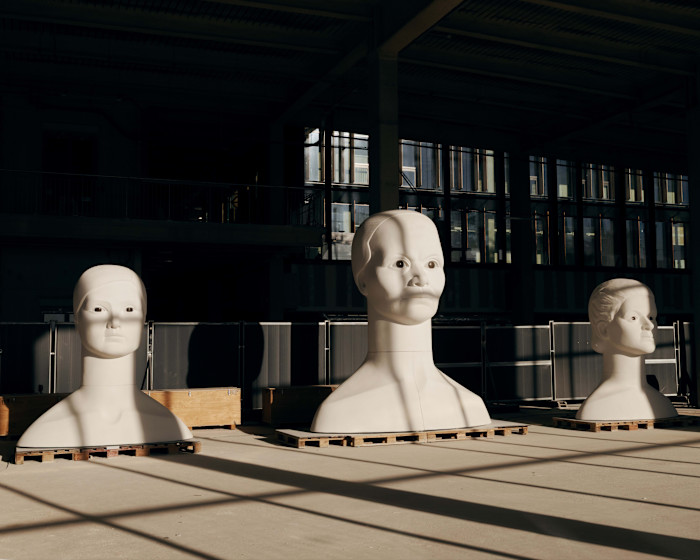
I made busts of 18 of the women over a year and a half. I started to sculpt in clay, then Franck, my right arm of 15 years, would turn them into plaster casts, before we added marble eyes. The show starts with a 17-metre-long sculpture outside the museum called “Mothership”; she takes the shape of a pregnant woman, but also a shipwreck. Once you enter the museum, you are welcomed by the busts of those 18 visionary women — the biggest is 3.5 metres tall. After that, we created a conversation between my past works and the permanent collection of the Petit Palais, based on the idea of women as myths: I’m showing my Venuses, Holy Daughters and Terracotta Daughters. And we inserted flat marble eyes on pedestals throughout the museum — for the whole show, you can follow the marble eyes.
Of all the sculptors represented at the Petit Palais, only four of them were women. And of those four women, I only knew about two. One was Camille Claudel, the most well known of all, but she was only rediscovered in the 1980s, long after her death (in 1943), and mostly then because of her relationship with Rodin. The other was Sarah Bernhardt. I knew she was an actress, but she also made life-size and monumental sculptures, even inventing a hat with candles so she could work late into the night after her theatre performances. One woman I did not recognise, Hélène Bertaux, was vital to my own career as an artist, because it is thanks to her years of activism that women were finally granted access to public art schools. I studied wood sculpture at a public art school in Paris, so Bertaux’s story resonated a lot with me.
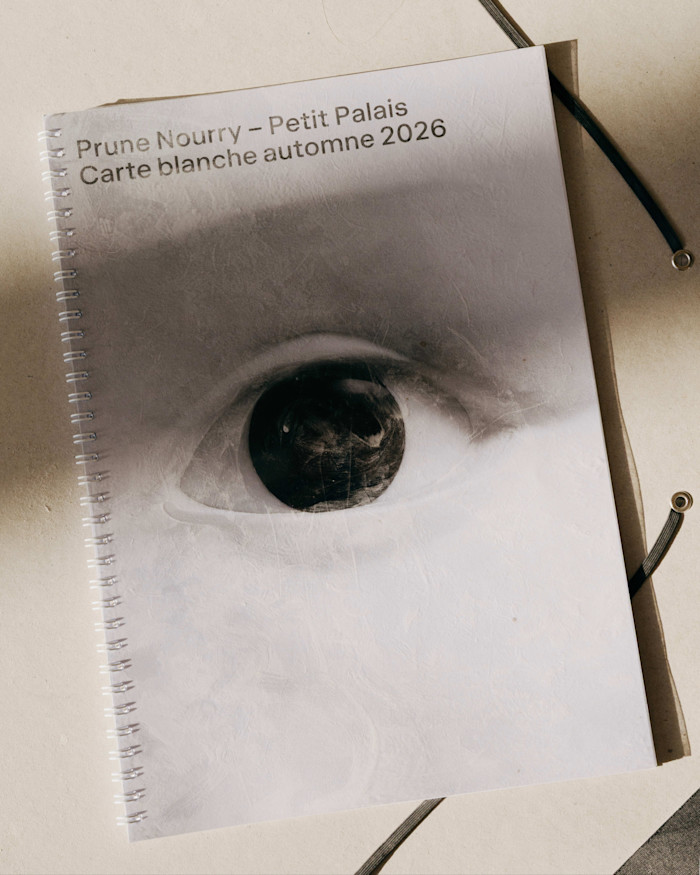
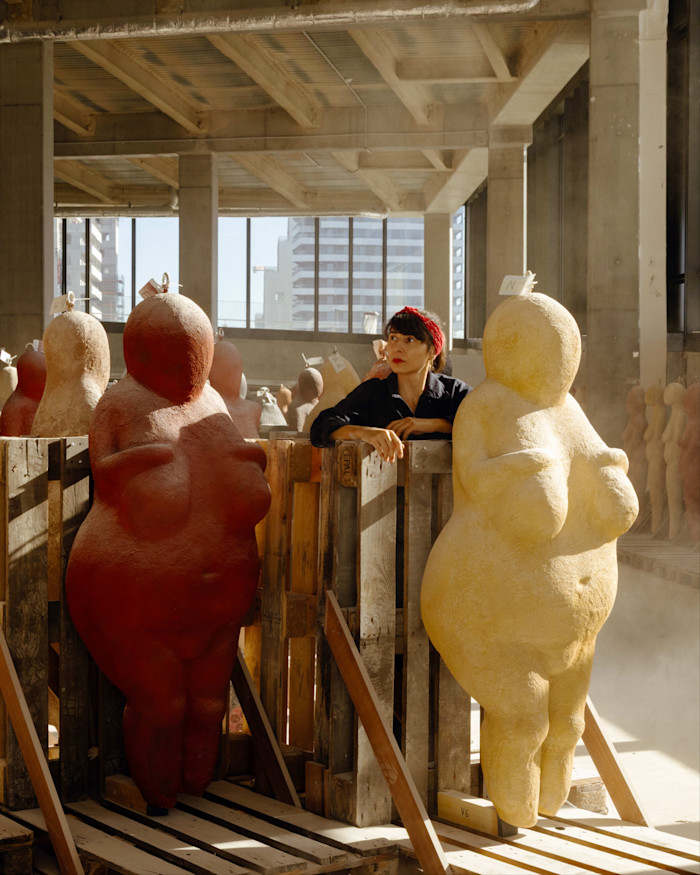
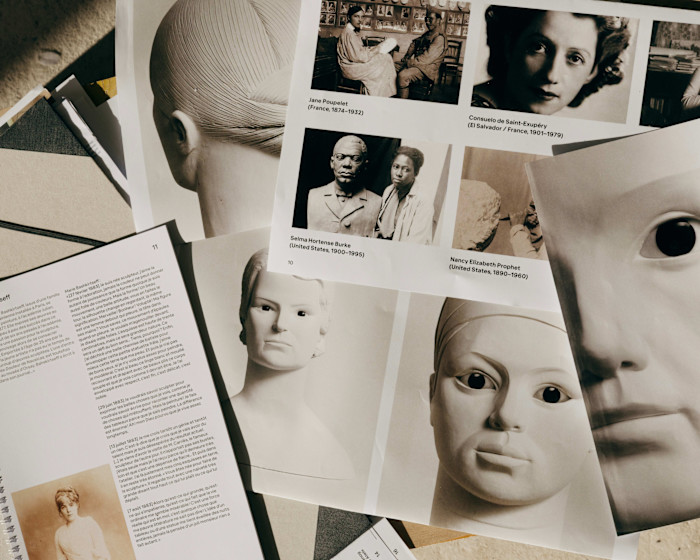
It was important to show the diversity of cultures that nourished Paris at the time. For instance, Marie Bashkirtseff was an incredible Ukrainian artist who kept a journal, which is why we know a lot about her. She foresaw her own early death, and felt an urgent need to create. She died of tuberculosis at 25. When I was 31, I learnt I had breast cancer and I had that same feeling — that I had almost foreseen it — as well as the frustration that I had not achieved everything I wanted. The universality within these stories is incredible.
The work of Afro-Indigenous sculptor Nancy Elizabeth Prophet, born in Warwick, Rhode Island, struck me because of the intensity of her calling as an artist. She worked as a housekeeper for years to be able to pay for a trip to Paris, where she would spend days and days without eating, so that she could purchase the materials she needed. That is the kind of fire that you feel as an artist, whatever your gender.
Video description
Nancy Elizabeth Prophet sculpting a clay bust in the 1940s
The Beaux-Arts school was closed to them until 1897, so women who wanted to be sculptors needed their parents to pay for private academies like La Grande Chaumière or Colarossi, where you would learn from a male artist like Bourdelle. When you see photographs from those academies, there are many women, yet most of them are unknown today. I decided to create sculptures in negative — shaped like a mould — to represent them. There are three like this within the show. Each represents a group of women: one for the art students, another for those institutionalised in psychiatric hospitals — as Camille Claudel was — and the third for those women who stopped working to support the work of their husbands.
That’s the power of sculpture. It’s a tool to embody someone I’ve met, or the absence of a person I could never meet. And to draw other people’s eyes to that person, that story, that symbol. The whole show is about eyes. It’s about learning to look in a direction where art history hasn’t looked enough, and also to see through the eyes of those women at that time — to reflect on today, and realise how much we owe them.
As told to Marion Willingham
October 20-January 24, petitpalais.paris.fr; prunenourry.com