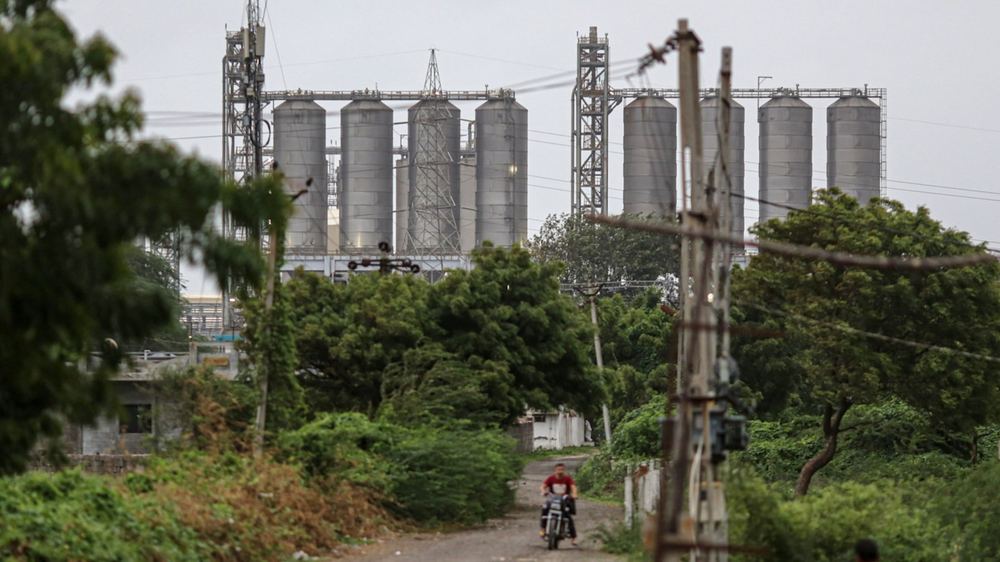
To its proud owners, it is the “Jamnagar Jewel”. The world’s largest oil refinery, located on India’s western coast and owned by Reliance Industries, takes crude from sources including Russia and Venezuela and pushes refined fuels on to global markets, away from disruption in the Middle East.
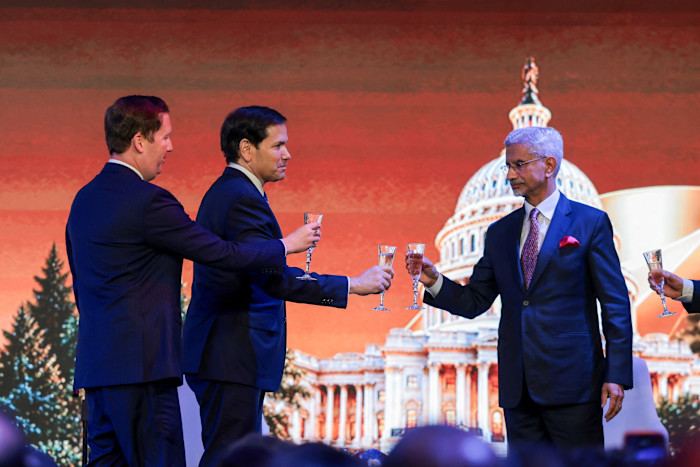
On Wednesday, US secretary of state Marco Rubio will visit Jamnagar as part of a three-day trip to India as the Trump administration seeks to push down high global diesel prices. Rubio will meet Reliance’s billionaire owner and chair Mukesh Ambani after talks with his Indian counterpart S Jaishankar in Mumbai on Tuesday.
His visit comes as soaring fuel prices as a result of the war in Iran and disruption in the Strait of Hormuz have become a major issue ahead of US midterm elections next month.
“The US needs diesel, and quickly,” said Rajeev Lala, director of upstream strategies at S&P. “India’s west coast refining system offers that.”
Rubio told reporters in Mumbai on Tuesday that India was a “refining superpower” and could help relieve market strains. Asked why a secretary of state was visiting the chief executive of an oil refinery, he said: “You have a company with a massive amount of refining capability — I think I should go talk to them.”
The US and India are also mired in negotiations over a long-delayed trade deal to lower US tariffs on Indian exports. Rubio said on Tuesday that the deal was “very, very close” with “a small number of items to wrap up”.
Sergio Gor, Washington’s ambassador to India, earlier linked Rubio’s visit to a planned Reliance investment in a new oil refinery in Brownsville, Texas. “Our embassy is open for business,” Gor said. Trump announced the Brownsville refinery project in March, but questions have emerged about the size of Reliance’s investment.
One of Asia’s wealthiest men and the head of one of India’s biggest conglomerates, Ambani has courted the Trump family over the years. Donald Trump Jr, the president’s son, visited Jamnagar in November last year, while his daughter Ivanka Trump and her husband Jared Kushner attended the lavish three-day pre-wedding celebrations of Ambani’s son Anant there in 2024.
Although India is a major oil importer, its privately owned refiners — principally Reliance — are currently enjoying big profits producing and exporting diesel, thanks to a shortage of refined fuels as a result of the global energy shock.
The diesel “crack spread” — the difference between the wholesale price of the fuel and the cost of the crude needed to make it — stands at about $63 per barrel, three times its pre-war level, said Sumit Ritolia, lead refining analyst at data provider Kpler.
Output is also expected to increase. Ritolia said he expected India’s October diesel exports to rise to about 730,000 barrels a day, up from 653,000 b/d a year earlier, with Reliance accounting for about 550,000 b/d.
“It’s not that Jamnagar will increase its diesel production twofold, fourfold post Rubio’s visit,” he said. “Jamnagar is already running at maximum because, at this margin, who doesn’t want to run?”
The Indian government last week provided an additional boost to exporters, nearly halving a tax on diesel exports from Rs16 ($0.16) a litre to Rs8.50.
Extra diesel supply would not be destined for the US, which is itself a major diesel exporter, but could help reduce global prices that are around double their pre-Iran war benchmarks.
“India could be a part of the solution to the US’s immediate [energy] needs,” said Ashok Malik, chair of the India practice at The Asia Group consultancy.
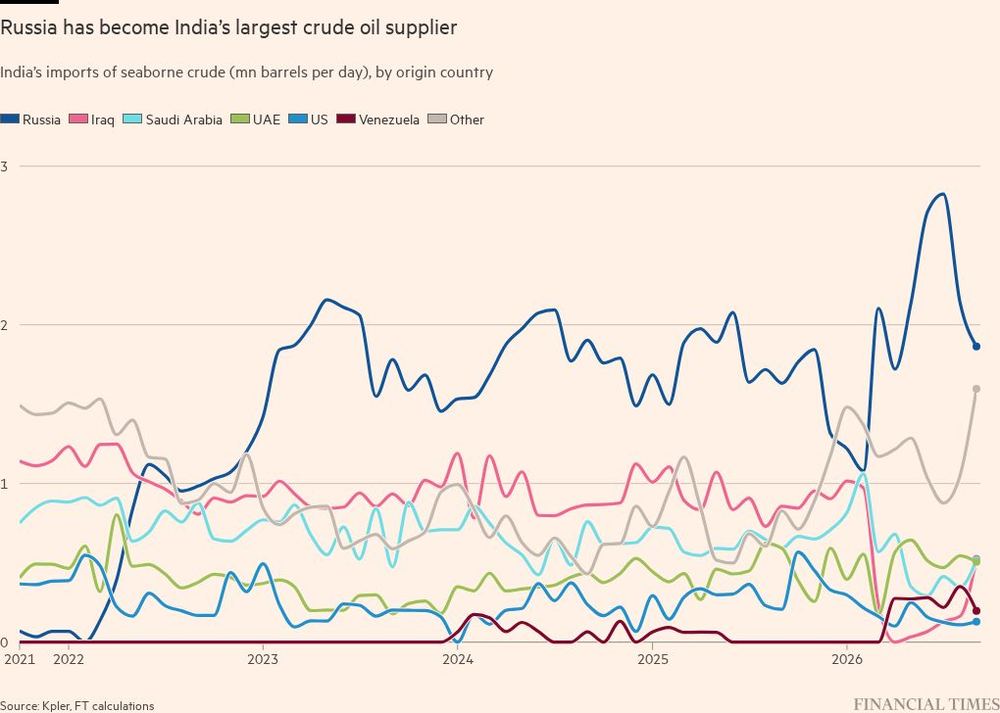
As with many Indian refiners, some of Jamnagar’s supply comes from Russia. According to figures from the thinktank Centre for Research on Energy and Clean Air, Russian crude made up 24 per cent of Jamnagar’s imports by volume between January and September this year, with a total value of $5.8bn. The refinery alone accounted for about one of every 12 tonnes of seaborne Russian crude during that period.
India’s imports of Russian oil have been a significant source of US-India bilateral friction. Last year, President Donald Trump threatened to double tariffs on Indian goods to 50 per cent unless New Delhi phased out Russian crude imports that he blamed for helping fund Vladimir Putin’s war in Ukraine.
But this year, Trump has struck a dramatically different tone on Russian energy as he battles to bring fuel prices down before the midterm elections on November 3.
This month, he struck a deal with Putin to release Russian diesel on to global markets, which will bring extra revenues to the Kremlin.
Then last week, Trump waived tariffs of up to 100 per cent on buyers of Russian oil, which Congress had authorised in an attempt to put pressure on Moscow and which had alarmed India, as a major buyer of Russian crude.
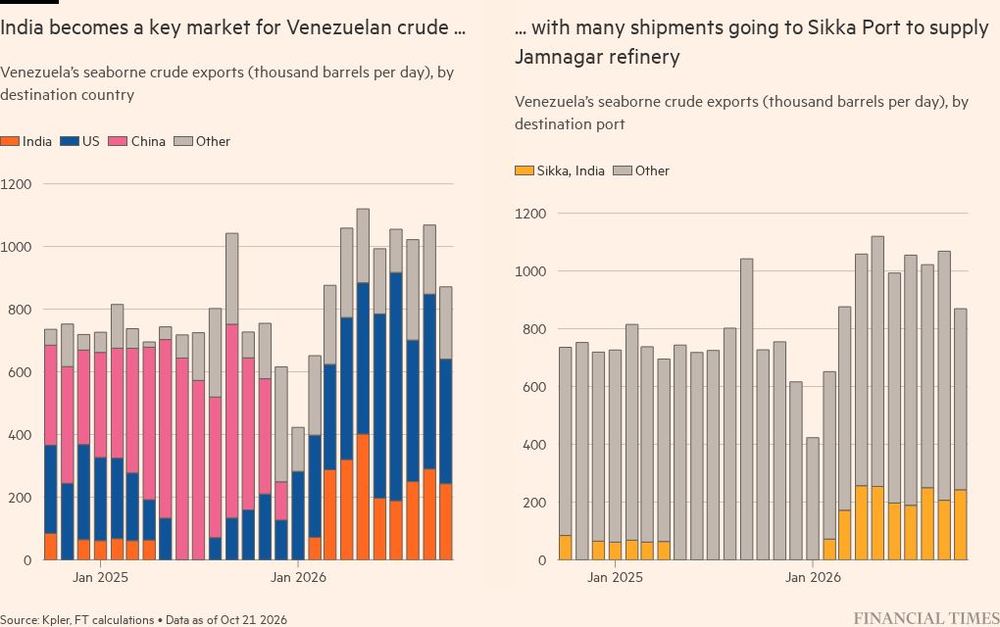
Rubio may attempt to persuade Reliance to buy more Venezuelan heavy crude to replace Russian supply. Venezuela’s US-backed interim government has been seeking to boost exports to revive the moribund economy, following Washington’s capture of the revolutionary socialist leader Nicolás Maduro in a commando raid in January.
Kpler’s Ritolia noted that India was already the second-biggest buyer of Venezuelan crude after the US, with imports of about 290,000 b/d in recent months, 90 per cent to Jamnagar.
“They’ve done so in the past,” Rubio when asked about Reliance refining more crude from the South American nation. “As more and more Venezuelan oil comes online, it’s something they can do.”
Asked about whether Reliance could invest directly in Venezuela to raise oil production, Rubio said: “We’ve talked to them about it in the past. We’re going to go see what their hold-up is and what opportunities exist.”
A Reliance spokesperson declined to comment ahead of the Rubio visit. India’s oil ministry did not respond to a request for comment.
“Obviously because of the energy piece, the Ambanis definitely have a role to play,” a trade lobbyist briefed on some of the US-India talks.
“Reliance and the Reliance interests in the US market . . . make them an important stakeholder in whatever that is happening from Rubio’s point of view.”
Additional reporting by Krishn Kaushik in Mumbai. Data visualisation by Haohsiang Ko in Hong Kong