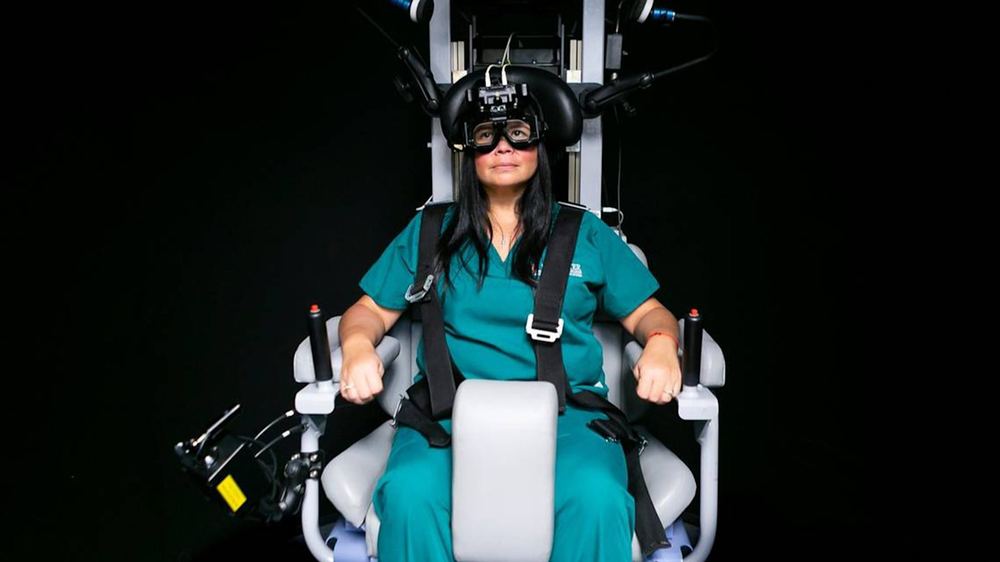
First one undercover CIA officer suddenly fell ill, then a second, then others, followed by yet more. Each exhibited the same mysterious, concussion-like symptoms, and all reported having been struck by some kind of invisible blow. Had America’s enemies launched a new tool of warfare, or was it instead a case of social contagion?
In The Havana Syndrome, Michael Rey and Oriana Zill de Granados, two veteran US television producers on CBS’s 60 Minutes who have spent years investigating the events, present the clearest picture yet of this series of strange, clandestine attacks. No one has spoken with more victims than they have, and no one has followed the syndrome’s journey more closely.
It all started one day in December 2016. An undercover CIA officer called Adam was relaxing at home in Havana. (“Relaxing” may be an exaggeration: US intelligence officers in the country know they’re always being watched.) Then, out of nowhere, the officer was struck by a splitting headache. He felt dizzy, heard a strange sound and experienced an odd sensation of pressure to his body. Although it was unsettling, the officer went on with his job. Then, a couple of weeks later, the very same sound, headache and dizziness struck him again. By early 2017, the other CIA officers in Havana had been affected too.
Then CIA officers and their family members in other countries began being struck by debilitating headaches accompanied by strange sounds: an officer in a Moscow hotel room; an officer’s wife in the Chinese city of Guangzhou; officers posted in Beijing, Hanoi, Vienna and other capitals. One officer was hit when staying at a London hotel. Yet others were struck down in the Washington area. In the Austrian capital, no fewer than five children of CIA officers succumbed to the sudden illness, and so did a string of pets in various cities.
These were not passing pains. Patients were left with symptoms including headaches, tinnitus and vertigo. All needed medical treatment, many had to be medically evacuated to the US, and some of the officers were forced to retire. A few even sustained permanent brain damage.
But what was the mystery disease? Although most of the patients were weathered CIA officers who had survived tough conditions in places such as Iraq, the US government seemed to believe they had succumbed to mass hysteria. Perhaps the prospect that adversaries had taken to physically attacking US personnel was too terrifying to contemplate; it was easier to dismiss the cases as psychological contagion.
It is especially chilling to discover how political expediency took priority over the wellbeing of Americans serving their nation. At one point, the duo reports, CIA director Gina Haspel refused to bring evidence of Russian involvement to President Donald Trump’s attention: “Haspel shouted that if she took reports like this to President Trump she’d be fired as director.”
The authors describe their early investigations into the mysterious syndrome when it seemed only CIA men in Havana were affected, and take the reader back to the months when it turned into a global phenomenon. Aided by colleagues, including the investigative journalist Christo Grozev, they trace many of the attacks, and conclude that they really are attacks rather than mass hysteria.
The team discovers, for example, that the apparent attacker of Joy, the wife of a CIA officer posted to Tbilisi, who “was hit by a piercing sound in her left ear and was blasted by a wave of pressure that knocked her sideways”, is the son of the commander of Unit 29155, the Russian GRU’s division in charge of foreign subversion.
Yet this compelling book is not without its issues. There are a few infelicities, such as a reference to “the Russian KGB”. (The KGB was a Soviet institution; Russia’s intelligence agencies have other names.) And the story is arranged in a disjointed fashion as non-chronological vignettes; chapter one, for example, features a case in Tbilisi in 2021, while chapter three concerns a case in Russia four years earlier. For the most part, the chapters don’t build on each other, so that no flowing story emerges and readers will find themselves flicking back and forth.
Yet despite its flaws, The Havana Syndrome offers our best insight yet into what is still officially an unresolved matter.
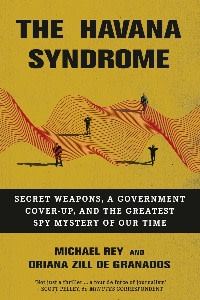
The Havana Syndrome: Secret Weapons, a Government Cover-up, and the Greatest Spy Mystery of Our Time by Michael Rey and Oriana Zill de Granados WH Allen £22/Crown $33, 336 pages
Elisabeth Braw is the author of ‘The Undersea War: The International Battle for Supremacy at the Bottom of the World’
Join our online book group on Facebook at FT Books Café and follow FT Weekend on Instagram, Bluesky and X