
Stadium design has undergone a transformation over the past two decades. Sports venues have evolved from functional arenas built to maximise capacity into sophisticated destinations designed to generate revenue, attract new audiences and become part of the communities around them. Few architects have played a bigger role in that shift than Christopher Lee, managing director of Europe, Middle East and Africa at Populous, the global sports architecture company.
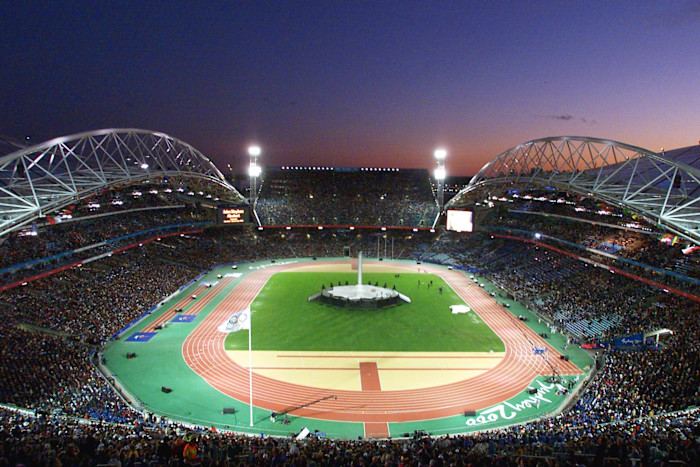
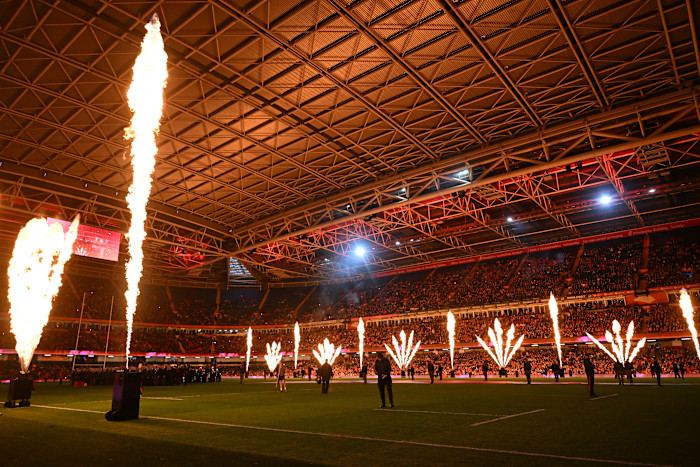
Born in Australia, Lee began his career working on venues including the stadium for the Sydney 2000 Olympics and Cardiff’s Millennium Stadium [now the Principality Stadium], which opened in 1999 with the UK’s first fully retractable stadium roof. He went on to lead the design of Arsenal’s Emirates Stadium and Aviva Stadium — home of Ireland’s national rugby team — before working on projects across the Americas, including stadiums for Monterrey in Mexico and the 2014 World Cup in Brazil. Appointed managing director of Populous’s Emea business in 2015, he has also been involved in projects for Tottenham Hotspur, Fulham and AS Roma.
His career has coincided with a fundamental shift in how clubs view their stadiums, with greater emphasis on premium hospitality, the fan experience and commercial opportunities beyond match days. At the same time, the growth of women’s sport, advances in technology and rising expectations around sustainability are creating new challenges for architects and venue operators.
In this interview, Lee discusses the evolution of stadium design, balancing commercialisation with football’s traditions, why clubs are increasingly competing with the high street and how women’s sport could reshape the venues of the future.
Josh Noble: If we go back 20 years, was the brief simply how many more bums can we fit in a stadium or was there more to it?
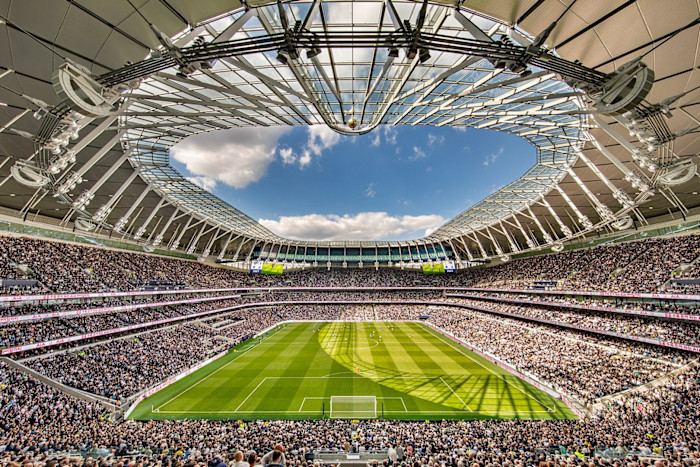
Christopher Lee: Twenty years ago, we were on the edge of moving beyond increased capacity as the main driver of revenue. You’re talking about the timeframe of Arsenal, Benfica and the Aviva Stadium. The Emirates Stadium was interesting because it wasn’t just about bums on seats. Clearly there was a capacity they needed, but in many ways it was one of the first Premier League stadiums to think about experience. How can we create an environment for everybody?
We were designing it back in 1999. Things like the Diamond Club, the concept of a high-end environment in a stadium, hadn’t really been done before. Danny Fiszman [the late director of Arsenal] said, “I’m going to take 10 of my best boxes, centre-line west, and make them into a club.” That was the beginning of thinking about experience rather than just increasing capacity.
JN: How has the design process changed since then?
CL: We certainly start in a different way. We’ve developed a strong strategy group that does research and demographic analysis to work out what our customers actually want, rather than what we or our clients think they want.
That brings in trends from around the world, what’s happening in the National Football League or National Basketball Association. Increasingly, venue design is mixed: live events and arenas influence NFL stadiums, which influence Premier League stadiums, and the other way around. NFL clients look at Tottenham and think, that’s an amazing stadium, an amazing game day. Previously, you might have gone to look at Liverpool or Manchester City and decided what you liked or didn’t like. Now there’s a much wider range of influences.
JN: What are the prerequisites for a new Premier League stadium today that might not have existed 20 years ago?
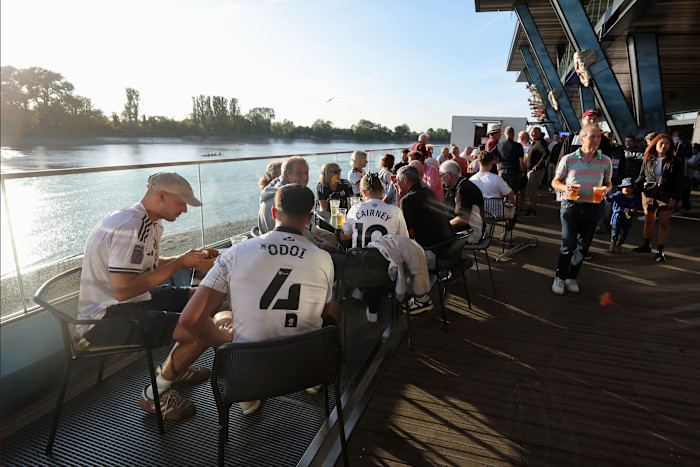
CL: It’s driven by the club’s aspirations, demographics and location. Fulham’s Riverside Stand is incredibly bespoke to Fulham, its location, its demographic and its clients’ aspirations. That isn’t applicable elsewhere.
The consistent element is creating great experiences. In some locations that’s more about match day, in others, like Fulham, it’s about non-match days or the crossover between the two. The big change is that it’s incredibly tailored. There was lots of discussion in the 2000s about cookie-cutter stadiums, and at some level people were right. Some engineering-led firms did take that approach. You ended up with a standardised football stadium and whatever space was left over. Now the starting point is the location, the club and the people who will use it. I think it’s much more tailored.
JN: So we’re moving away from the era of the “soulless bowl” towards something rooted in place and culture?
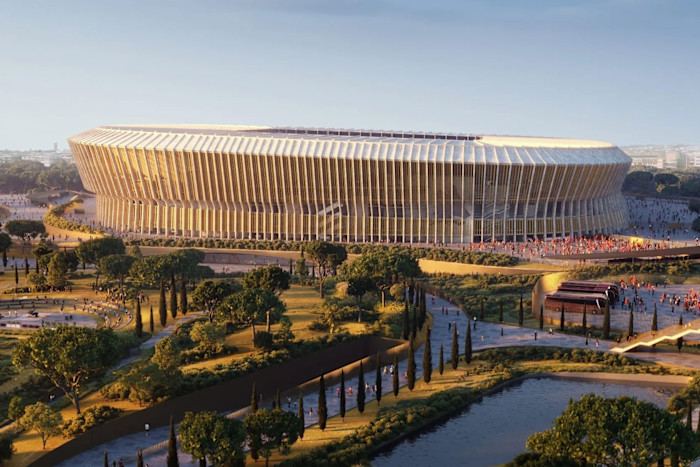
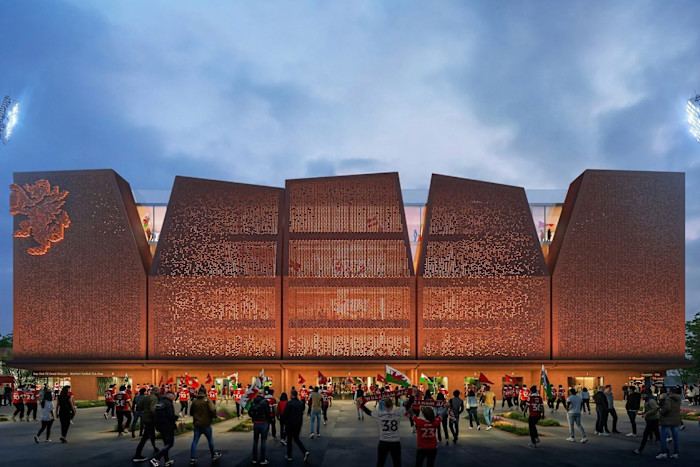
CL: Yes, culture and location. What we might design for AS Roma is entirely different from what we might design for Wrexham, as it should be. Some people still refer to these buildings as infrastructure. I think that’s the wrong term. They’re cultural assets. They have meaning and impact and soul. A stadium for Roma should feel Roman, while a stadium for Wrexham should feel like Wrexham. That sense of place isn’t something you can simply add at the end of the design process.
We don’t want infrastructure, that’s a highway. We want places. Even in a secular society, they’re much closer to churches or cathedrals than town halls. They’re special, and we want them to be special. We want a Tuesday night to be special. It’s not like going to the Vue cinema.
JN: Have fans’ expectations changed significantly?
CL: At their core, I don’t think they have. Despite digital, AI and online worlds, we still crave the live experience, that special moment shared with a community. Look at the growth of live entertainment after Covid. AI and the metaverse haven’t replaced our desire to share exciting moments with 10,000 or 50,000 people.
Consumer trends have changed, though. There’s an increase in quality, what some call a premiumisation of experience. Whether we’re following our local team or a Premier League club, we expect higher quality. The interesting bit is how you deliver that without losing authenticity. How do you create an experience in Tottenham’s South Stand that feels Tottenham, is better than [the old stadium at] White Hart Lane, but doesn’t become [the luxury department store] Selfridges’ Food Hall? It could easily tip into that.
JN: How do you carry a club’s history, culture and shared experiences into a new venue?
CL: You can create a soulless bowl and say, here’s your new ground. But there are lots of clues. At Tottenham, we brought artefacts over, used bricks from the old South Stand and bits from the Shelf [a famous terrace at White Hart Lane]. The centre spot [of the old pitch] is still marked. They’re clues that make you feel this is a continuation. The physical details matter, but they only work if they connect to something the supporters recognise. It’s not a question of recreating the old stadium brick for brick.
But ultimately it’s about a feeling. I’ve designed a lot of stadiums, but probably my greatest moment was opening night at Tottenham. I was sitting next to a man in his eighties who had been going to White Hart Lane for 60 years. We walked out into the bowl and he said, “Oh my God, it feels like coming home.” I thought, that’s pretty magic. Someone who’d spent his entire life at White Hart Lane felt at home in the new stadium.
That’s what we try to create. It’s about understanding culture, how fans work, what they like and what’s special about the club’s location, then designing experiences around that.
JN: Old grounds have their own shared discomforts: queues, leaky roofs, cold concourses. Can you create that same unity with greater comfort?
CL: Just because our experience of football growing up was bad doesn’t mean the experience of football has to be bad. We’ve associated awful beer, cold pies and nowhere to go to the toilet with football, but I don’t think that’s what football is.
You can create great environments that are authentic and feel real. They might be more polished, but it’s about understanding authenticity, whether that’s in Rome or Riyadh, and creating a building that feels like home.
JN: Italy’s stadiums have suffered decades of neglect, but redevelopment is gaining momentum. Are the requirements different from those in England?
CL: Broadly, yes, but it comes down to the club. Italy has seen remarkably little new stadium development since the 1990 World Cup [in Italy], with Juventus one of the few major clubs to build a new ground. Ten years ago, if you told an Italian you were going to have dinner at the stadium, they’d rather eat at a local service station because the food was better. They did not have the facilities, space or environment.
With Roma, we’re drawing on the food and drink culture of the city — what’s happening on the streets of Rome. It’s a collection of genuinely Roman experiences. Attitudes can change quickly. People used to go to a local bar and rush to the stadium at the last minute because it was cold, damp and the food was rubbish and overpriced.
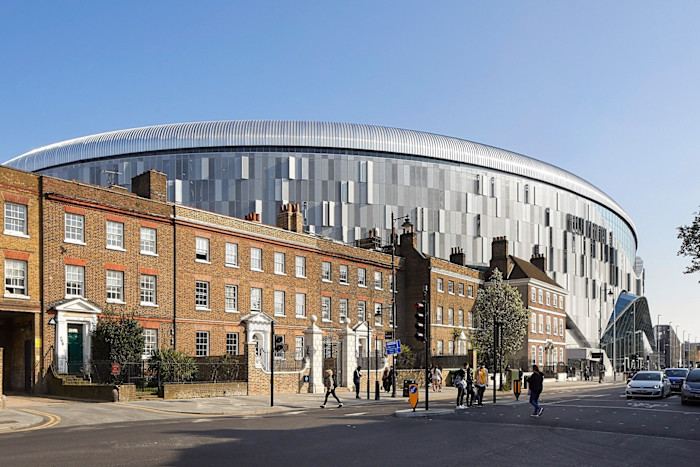
I said to Daniel Levy, (then Tottenham Hotspur chair): our competition isn’t Arsenal. We’re competing with the high street. If we can’t provide quality at least comparable to the local pub, we’ve lost. Tottenham now has 17,000 or 18,000 people there two hours before a game, and a similar number two hours afterwards. Instead of arriving at the last minute and leaving immediately, people are spending more of their day there. The food and drink have to compete with what’s outside the ground, not just with what other football clubs offer. I don’t think it’s rocket science.
JN: Are non-match-day facilities designed primarily for fans or for a wider public?
CL: It depends on location. There’s a lot of discussion about mixed-use districts around stadiums, but that’s been happening for 20 years. Look at Wembley. Investment in tubes, trains, buses and parking for a stadium lets you create destinations that operate seven days a week and integrate the venue into the community.
In the 1960s and 1970s, particularly in North America, stadiums were moved to the outskirts because they were seen as bad neighbours. Then they needed hectares of parking and became foreign objects. Luckily, in the UK our stadiums were embedded in communities, and clubs have worked hard to keep them there, even when they move slightly.
You can leverage the infrastructure and the space in and around a stadium to make the asset sweat. Fulham is a great example. Go down on a Tuesday evening and it’s full, with people out on the boardwalk. On game day it’s the same place, just in game mode. And that matters commercially. You’re building enormous amounts of space for hospitality, bars and restaurants, so it makes sense to use it beyond the few hours of a match. The surrounding infrastructure is part of that opportunity, too. That’s the broader model.
JN: But being rooted in a city can make redevelopment difficult. Is that holding back clubs such as Chelsea, Crystal Palace and Newcastle?
CL: No, because you’ve seen a huge refresh of English stadiums. But our clubs aren’t franchises. They’re not like the American model, where you can buy one and move it from one coast to the other. They’re absolutely rooted in their communities.
I grew up in Australia. We’d barely have heard of Tottenham, other than this funny-sounding football club, Tottenham Hotspur. But to move Tottenham to the backblocks of Enfield wouldn’t be the same. It was similar with the Emirates. We looked at sites further and further out, but at some point the club becomes something quite different.
JN: What about transport? Some owners want to rebuild but lack the rail or tram connections, leaving them dependent on government.
CL: Yes, but it’s also an opportunity. Look at Co-op Live by Manchester City, with the tram and transport links. That unlocks an enormous ability to regenerate areas. Infrastructure demanded by a venue can create destinations and regeneration around it.
JN: Barcelona’s redevelopment is putting considerable emphasis on VIP facilities. Is premium hospitality viable beyond the biggest clubs?
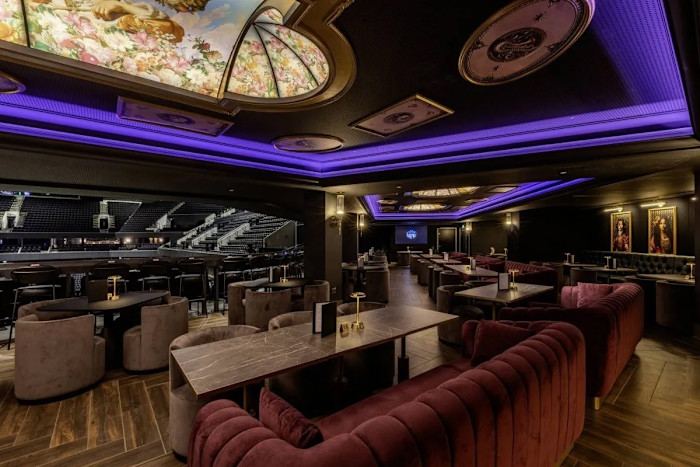
CL: I think the old idea of corporate hospitality, a sandwich between the people in the real seats above and below, is very outdated. Now it’s about curating different experiences. You might have a space targeted at millennials or Gen Z, or something much more high-end, with the ability to move between them.
There’s a commercial ladder. At 25, with a little money, you go into one space. The following year you’ve been promoted and can afford another. But it’s also about flexibility. You might want a Michelin-star restaurant, or fried chicken and craft beer. On Tuesday with your mates you might choose the chicken and beer; on Saturday with your wife you might upgrade. Providing those experiences, and the ability to move between them, is where venues need to go. It’s not simply a division between ordinary seats and corporate boxes. Different people want different things, and the same person might want something different depending on the occasion. That gives clubs a much wider range of experiences to offer.
JN: Does that apply to League One clubs and other sports as well as elite football?
CL: Yes. Consumers are more willing to spend on a great experience. The ability to provide different experiences at different price points is broadly applicable almost anywhere. At one level it’s always been there. Even in the late 1980s, there was a directors’ box and some corporate suites. It’s evolved with what consumers want.
JN: Club owners face changing regulation, priorities and business models, with a greater focus on revenue and perhaps even profitability. Has that changed your conversations?
CL: The venue is one of the few levers clubs have. Everything else is relatively negotiated or fixed. If you can make £100mn from your stadium or £150mn, that’s quite a big lever.
Clubs are sensitive to that, but there’s a push and pull. Consumers want better quality and are willing to pay for it. Our clients are saying they should provide these facilities. There’s a virtuous circle: great experiences create revenue, which helps build the club. The stadium is one area where a club has real room to change the economics. If a better experience persuades people to arrive earlier, stay later and spend more, that’s valuable to the club as well as to the supporter. The two aren’t necessarily in conflict.
JN: Where will the next big innovations in stadium design come from over the next decade?
CL: Sustainability is a clear trend. In the past, perhaps it received more lip service than reality. Now it’s front and centre for clients, and not just environmental sustainability. At arena projects such as Co-op Live in Manchester or Climate Pledge Arena in Seattle, clients are saying this isn’t nice to have, it’s a commercial imperative. If customers don’t feel a venue chimes with their beliefs, they won’t come. Football isn’t quite there yet, but I don’t think it’s far off.
There’s economic and social sustainability too. How do you make a meaningful impact on communities, create jobs and leverage the venue? Covid accelerated that conversation.
The other great unknown is what digital technology and AI will do to match day. We’re moving towards more invisible technology and seamless experiences: travel plans, ticketless entry, gates you can walk through, grab-and-go food and drink. Much of that is already in venues.
The things we hated, bad transport, queueing in the rain, massive queues for toilets or food, could largely disappear. When you want a beer, you get one. When you need the toilet, you can go. Interactive signage will help.
I’m less convinced technology will fundamentally change the experience of the event itself. There may be more second-screen use, but sitting in our seats watching the game live, not augmented, and sharing it with real people around us is something I think will always be true.
JN: If AI can reduce queues at the men’s loos, I’m all for it. Could growing sports such as women’s football and European basketball need entirely new kinds of venues?
CL: Women’s football is at a really interesting point. Five years ago, clients were asking us to build bespoke 20,000- or 25,000-seat women’s stadiums. Then the game grew so quickly that they said, no, we’ll play in the main stadium. As it keeps growing, the question of dedicated venues comes back. If we’re designing specifically for women’s football, how should that be different?
We’ve done a big paper with YouGov. The demographic is clearly different. It’s not as female-oriented as you might think, but there are more children and different expectations. One of the great things about the women’s game is the intimacy with the players. How do you maintain that as venues get bigger? That’s an important question because simply moving the same experience into a larger men’s stadium doesn’t necessarily preserve what people love about it. Our strategy work looks at who is actually coming, rather than assuming the audience is predominantly female. There are more children and a different mix of spectators, so you need to understand what that means for the venue.
Inevitably, I think you’ll end up with quite different venues. The challenge is to create somewhere that can accommodate growth without losing the closeness between fans and players. We’re seeing that question around the world, especially with the growth of women’s soccer in America. We’re designing a number of bespoke venues there, as well as women’s training facilities. That’s super exciting because it opens up the possibility of designing around the women’s game itself, rather than treating it as an adaptation of the men’s game.
Basketball offers opportunities too. Europe has a strong basketball tradition, and there’s untapped desire to consume sports that aren’t traditionally part of the English landscape. As with women’s football, the interesting opportunity is to think about the audience and the experience from the outset, rather than assuming every sport needs the same type of building.
JN: You mentioned ideas crossing the Atlantic. Will European venues become increasingly American?
CL: It’s much more of a feedback loop. When we were designing Tottenham, we looked at lots of NFL stadiums. American sport and its commercial models were, and probably still are, more advanced than English Premier League football. We’ve certainly been influenced by them.
But now NFL owners tour Tottenham or Fulham and say, that’s really interesting. And it’s not just America. What’s happening in Dubai or Seoul influences what we’re doing and how consumers think. That’s the exciting part of cross-fertilisation.
This transcript has been edited for brevity and clarity