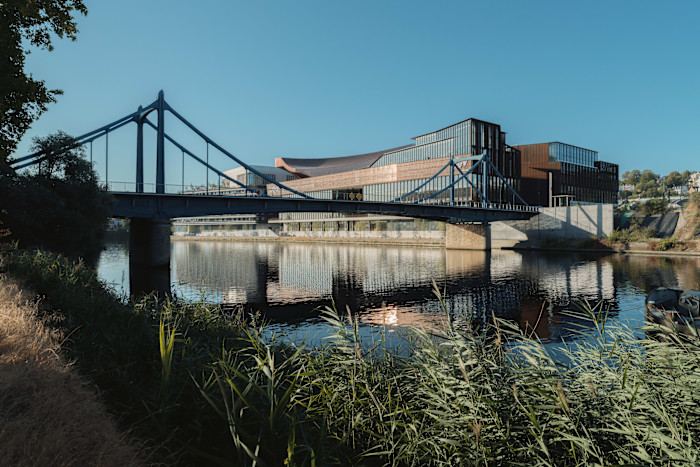
In recent years Paris has taken a turn against the car. Not its residents, necessarily — many of whom are still fiercely wedded to their autos — but its administration, which has been assiduously winding back the French capital’s postwar autopian reimagining and remaking it as a place for piétons.
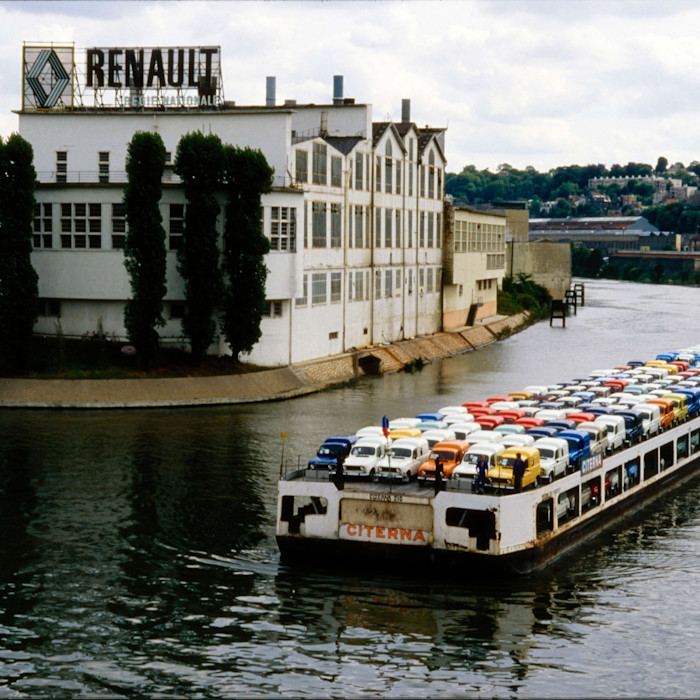
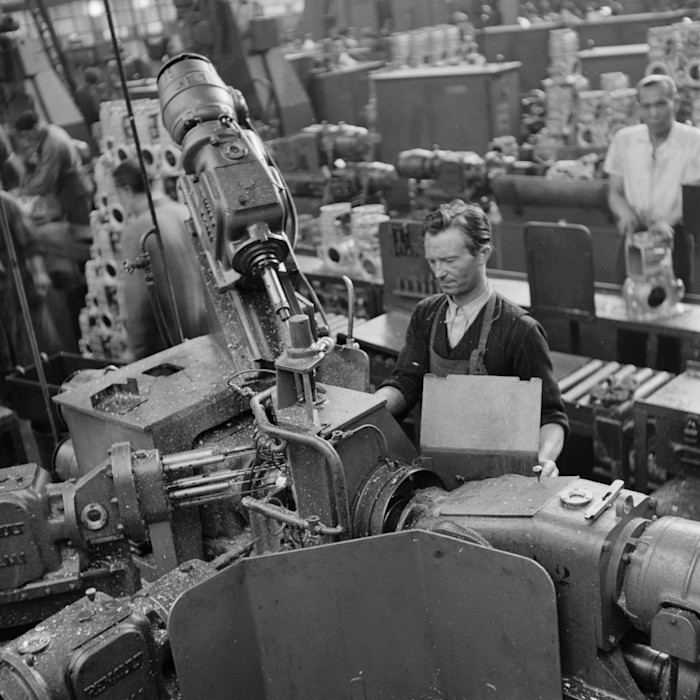
Not only was Paris formerly a place of congestion and pollution, enclosed by the concrete wall of the Périphérique ring road, it was also a place of production. Sprawled across the banks of the Seine to the west of the city, and on the 28-acre Île Seguin in between, was once Renault’s huge factory. Philosopher Simone Weil laboured here in 1934-35, leaving the comfort of academia to work alongside the proletariat and recording her brutal, dehumanising experiences in Factory Journal and later The Worker’s Condition.
In 1968, striking workers from the factory joined forces with revolting students and crossed the bridge to march on central Paris. In 1992, the last cars rolled out and the factory was shuttered; the historic factory buildings were demolished in 2004-05, stripping every last trace of industry from the banana-shaped island.
For decades there was a churn of proposals about how exactly to turn this site into a cultural complex for the well-to-do suburb of Boulogne-Billancourt. Billionaire François Pinault commissioned Tadao Ando to design a major art museum but, tangled in red tape and regulation, took his art and his architect to the Bourse de Commerce.
In 2009, Jean Nouvel (who had called for the retention of the industrial structures) was appointed to develop a master plan for the site. He proposed a landscape of shimmering, ephemeral modernity, a sweep of cultural buildings in an eco-landscape.
What has been realised is not that. First came a ghastly concert hall (La Seine Musicale) by Shigeru Ban, which looks like a curling stone on a concrete plinth. Then followed chunky structures of Corten steel and copper, not Nouvel’s sci-fi futurism but rather a kind of superficial retro-industrial nostalgia.
This massive clump of new buildings (developed by the Emerige group and its founder, art collector Laurent Dumas, at a cost of around €450mn) seems utterly at odds with the scale of the island. They dwarf even the largest industrial structures that once stood there. Passing through the chasm of impeccably pre-rusted steel and sunglassy glass, you reach Le Large which, despite its scale, pops up at the back of the site.
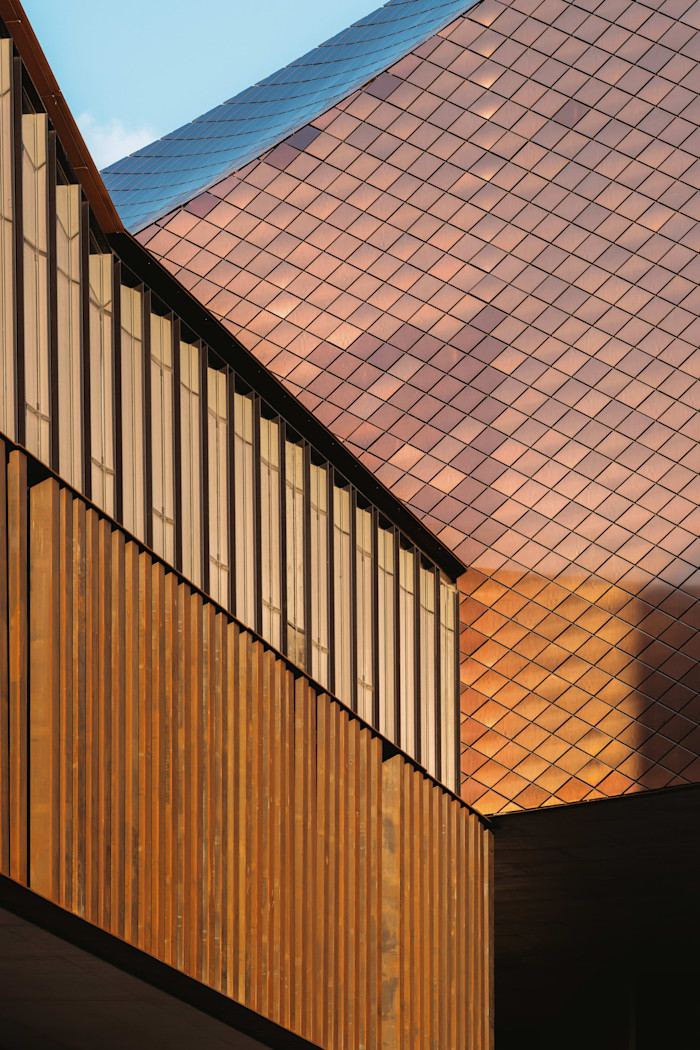
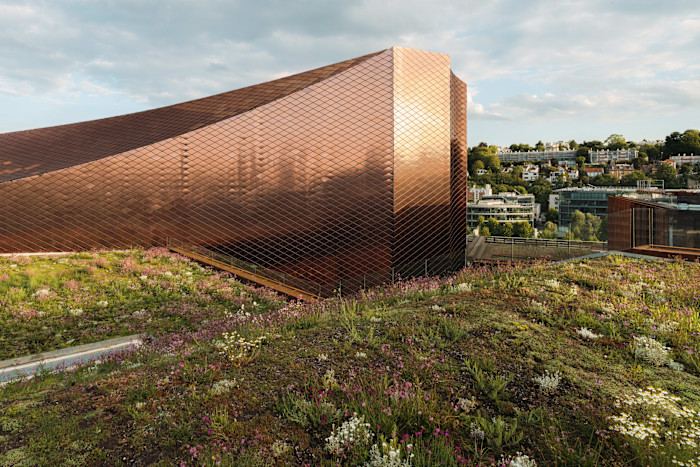
Clad in scales of coppery metal (actually aluminium), it is squeezed between a multiplex cinema and a stark commercial block. I tried but failed to see any rationale behind its form, its base connected to the rest of the complex, its upper section a curving, baroque doorstop. It’s difficult to entirely understand why this elaborate form might work better than a simple box or, frankly, a retained and restored industrial building, which would have been far richer and more interesting.
The architects are RCR Arquitectes (with local practice CALQ). Based in an exquisitely reused bell foundry in the small Spanish city of Olot in Girona, RCR were the surprise recipients of the Pritzker Prize in 2017. They had built a reputation for a hyperlocal architecture of meticulous intervention and spatial and material quality. It does not seem to scale up well. The references to industry are boilerplate and obvious; those to cars seem to make little sense.
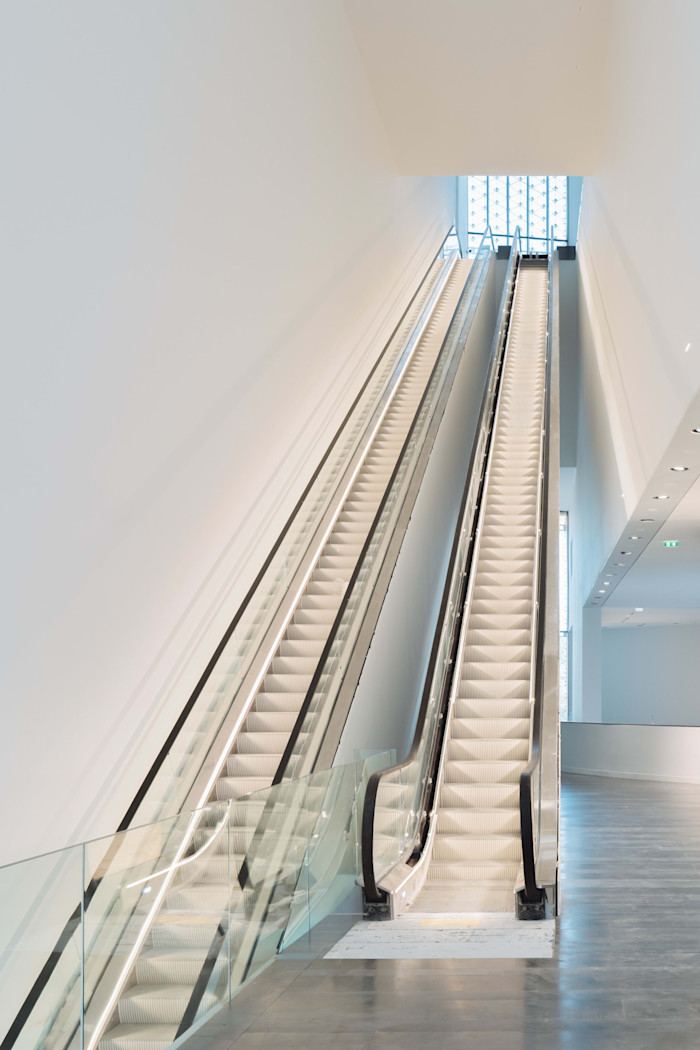
Perhaps the rhomboid scales reference the old Renault logo? No idea. Either way, up close you notice that some scales are solid and some are perforated in a grid of fine holes. Visitors enter beneath a large archway into a very white lobby where a small reception desk and a capacious space await. A set of the now idiotically ubiquitous seating/steps that you find in every contemporary public building rises towards a full-height window. From there you can take a single escalator of a length usually seen only in eastern European metro stations that double as nuclear shelters, all the way up to the fourth floor.
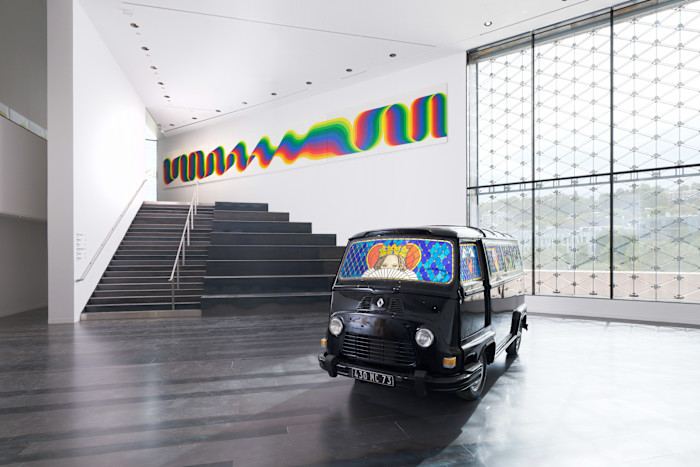
That deposits you into another fiercely white space, a hall of seemingly unnecessary complexity with a generous outdoor terrace entered by an oddly discreet side entrance. The floors are of steel and are very beautiful, plates of oxidised metal revealing the industrial milling processes by which they were made. But despite the elaborate forms, landings, mezzanines and terraces, the bland whiteness of the walls and the sheer scale of the space make it all somehow generic, too stripped of texture or grain to affect.
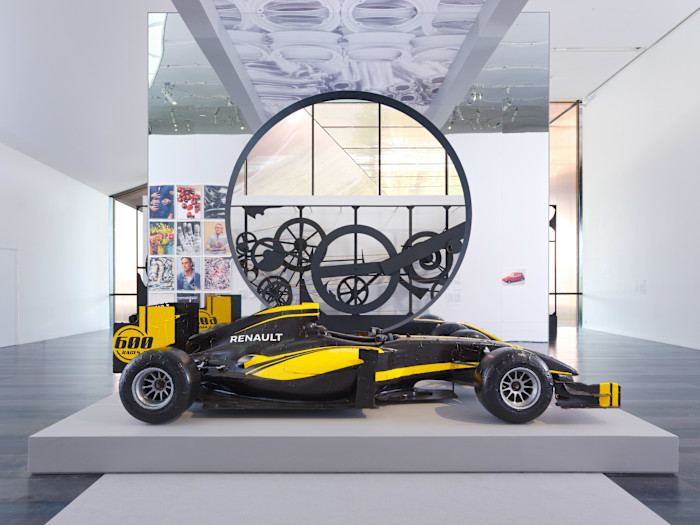
Given that this is a kunsthalle, a space for temporary exhibitions, you might excuse the architects a little as they were clearly aiming for curatorial flexibility. But it is instructive that for the inaugural exhibition Moteur Imaginaire (cars, of course), curator Cecilia Alemani has had to stuff the space with walls to contain even these notably large-scale sculptures and installations.
I should note here that the exhibition itself is very enjoyable. Renault, it transpires, had a remarkable programme of commissioning artists over the years. Their famous logo was designed by op-art pioneer Victor Vasarely, the late Julio Le Parc (currently on show at Tate Modern) contributed a wonderful mural (a vivid introduction to the show here) and a Fernand Léger hung in the workers’ canteen; there are other striking works by Simon Hantaï, Arman, Jean Dubuffet and Jean Tinguely. The rest is a slightly manic mix embracing everything from Harun Farocki’s movie clips of workers leaving factories to Judy Chicago and Ivana Bašić’s feminist body-auto-horrors. It’s not all good but it does make an impression.
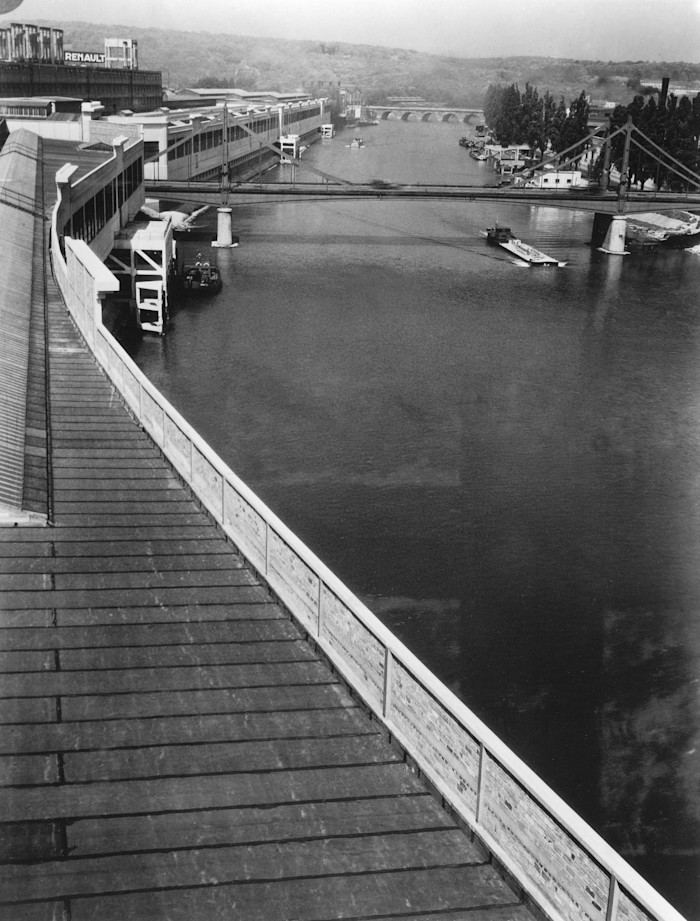
The interior is where those perforated rhomboid scales do their showing off. What looks opaque from the outside transpires to be transparent from inside. Acting as mesh screens, they afford striking filtered views of the Seine and the modernist blocks of Boulogne-Billancourt. Among the very best things on show here is a series of photos taken by a 22-year-old (then) unknown, Robert Doisneau. They are captivating, particularly the shots of the epic factory spaces that were the predecessors of this building. Peer at the glass-walled factories of the 1930s and weep. They far outstrip anything here in elegance and radical intent.
Edwin Heathcote is the FT’s architecture critic
Find out about our latest stories first — follow FT Weekend on Instagram, Bluesky and X, and sign up to receive the FT Weekend newsletter every Saturday morning