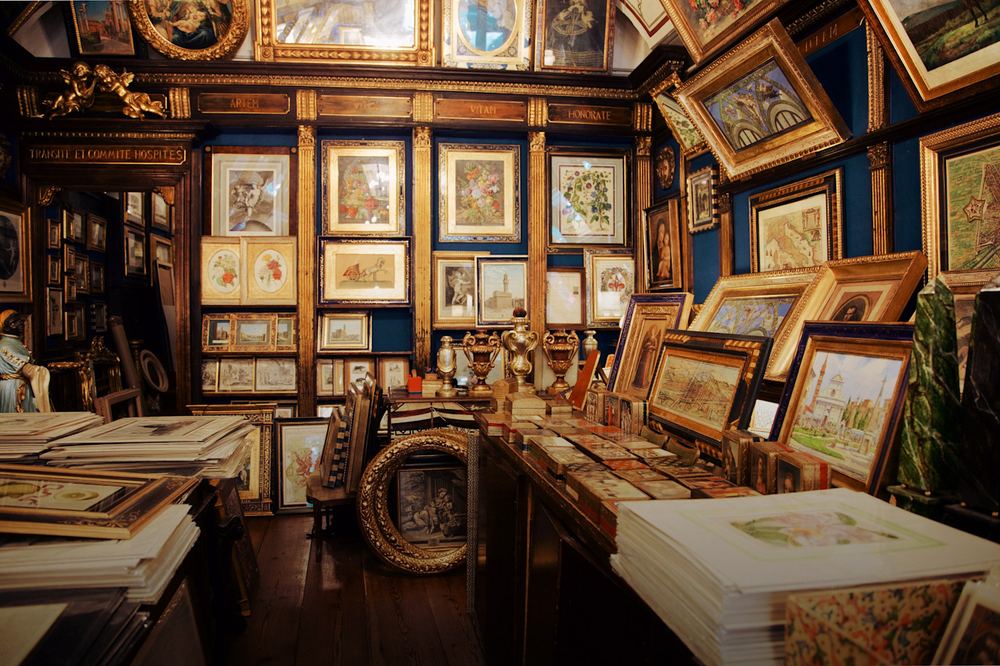
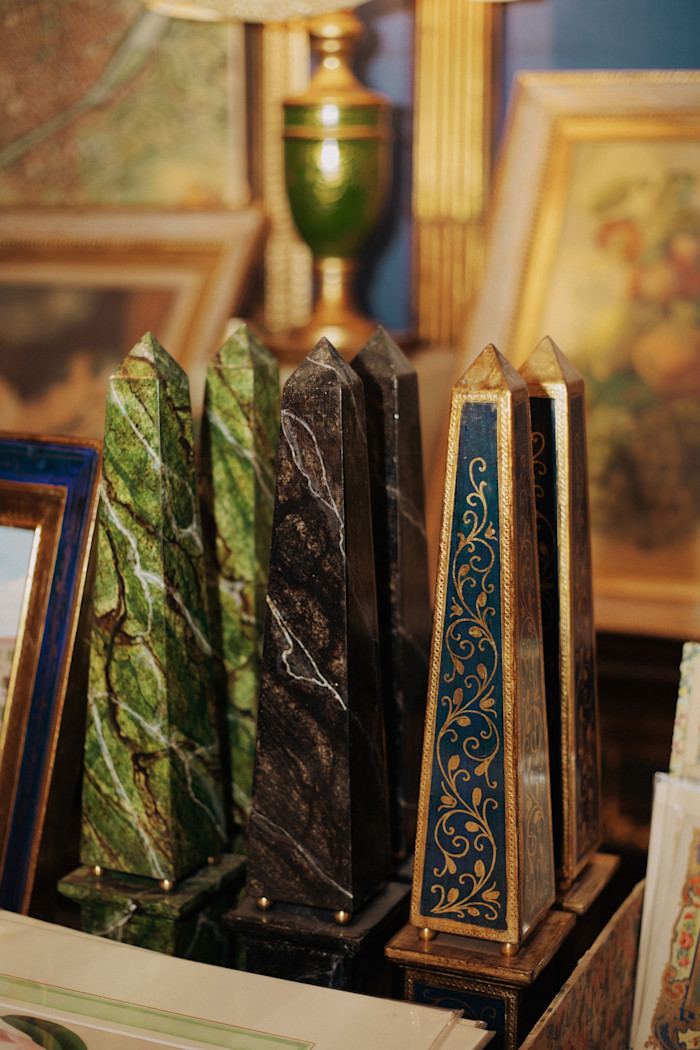
Even if you’d never heard of it, even if you’re not in the market for a gilded frame or antique print, you’ll still want to go inside. Giovanni Baccani’s blue painted shopfront stands out amid the austere façades that line Florence’s Borgo Ognissanti like a lump of pure turquoise dropped on dull stone. It’s a hard one to resist, made harder still by the displays in its vitrines – an inventory of goods that’s a showcase of Florentine artisanship. Inside, the vaulted cathedral-style ceilings are detailed with hand-painted foliage motifs, and the blue upholstered walls are densely lined with ornate carved frames holding prints, maps and 19th-century copies of 17th- and 18th-century still lifes. Hand-carved boxes and smaller standing frames amass on tables and fill shelves. There are stacks and stacks of unframed original prints, their sturdy card mats elaborated with ink and watercolour borders, certificates of authenticity subtly affixed to their backs. Wood lamps cast warm light from behind hand-stretched silk shades. Everywhere, gilt details gleam gold, silver and champagne.
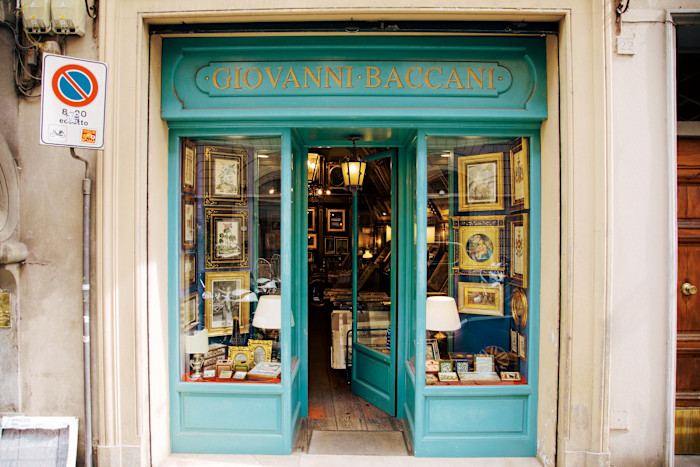
The Blue Shop, as this old-world atelier is also affectionately known, is today run by father-son team Giovanni and Lorenzo Baccani. The roots of the business stretch back almost 150 years to Via Porta Rossa, halfway across the city’s historic centre. There, brothers Bruno and Giovanni (the latter was the present owners’ grandfather and great-grandfather) first founded a book and correspondence seller, Libreria Cartoleria Baccani. When they decided to go their separate ways at the turn of the last century, Giovanni set up shop in nearby Via della Vigna Nuova in 1903; his grandson and namesake moved operations to the current premises in 2009.
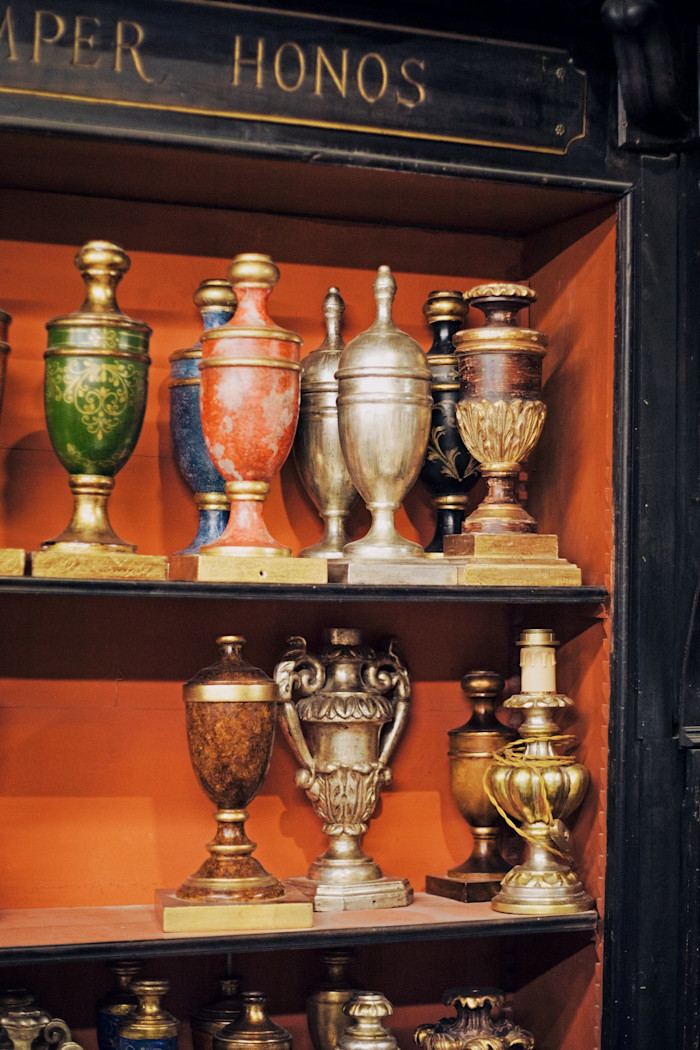
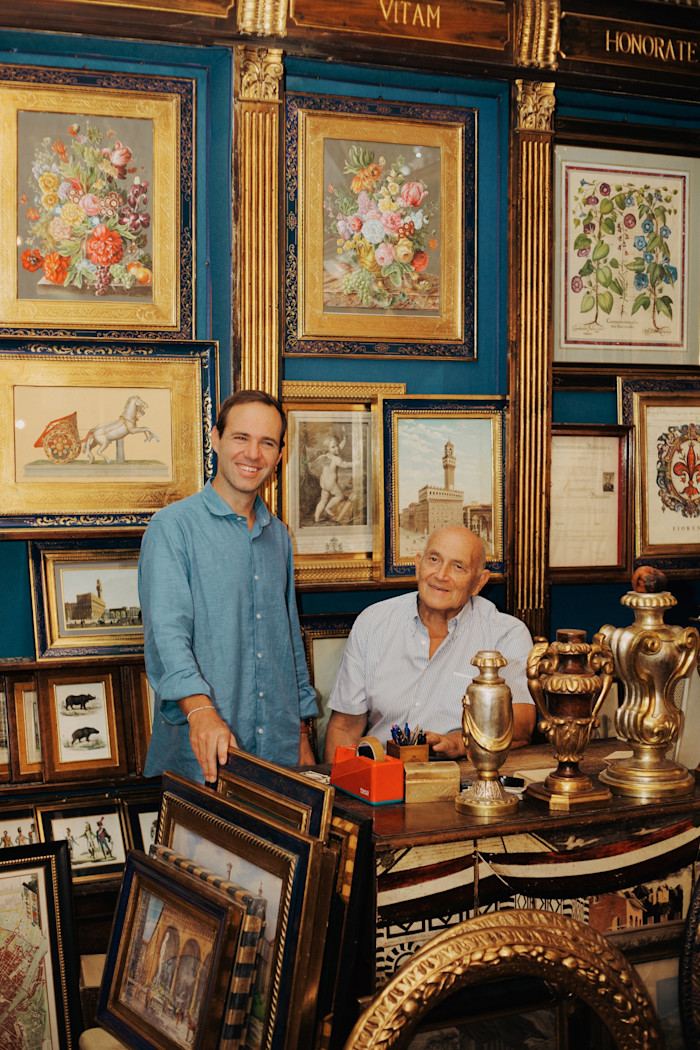
Their history – history in general – plays an outsized role in the output, and outlook, of the current owners. “We don’t advertise; we don’t promote,” says 75-year-old Giovanni, who evinces a very Florentine combination of charm and irascibility. “My publicity is: you come in, you appreciate the things we make, you appreciate the way we receive you here. Some people complain about the prices” – which range from €48 for a small antique botanical print to around €4,000 for a 16th-century view of Florence. “They don’t understand that there are years of skills and tradition and training behind it. And that there’s not a trace of industrial production. They’ll point at a hand-carved wooden lamp base and ask if it’s plastic!” He huffs and shakes his head. “Everything in this store that’s not an antique is made by hand. We are the only ones left who produce these goods the way we do.”
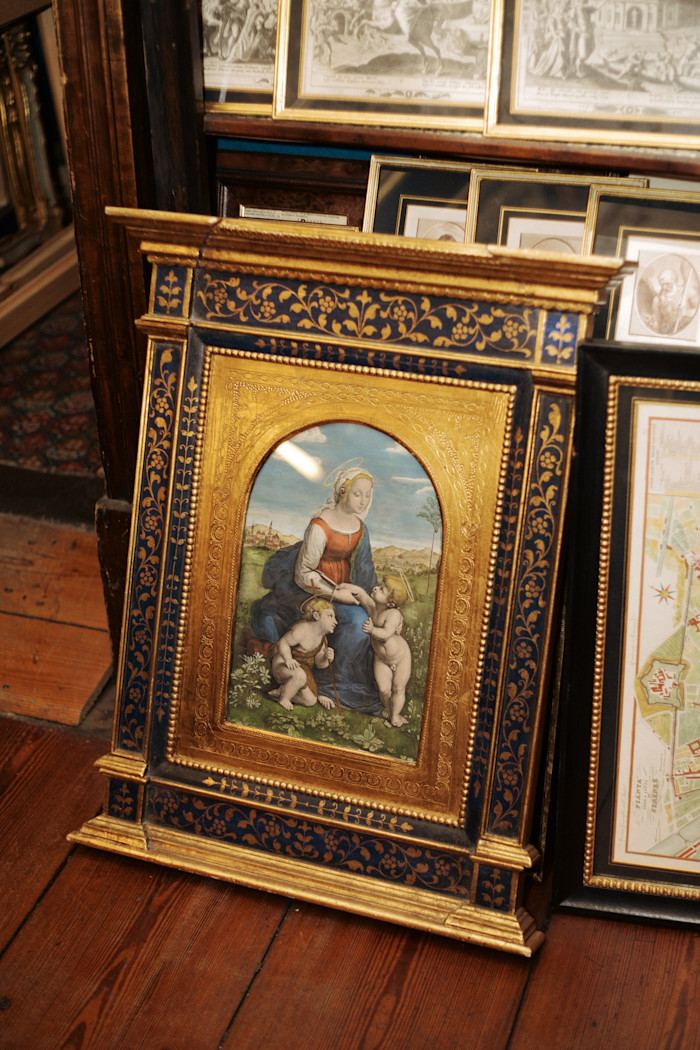
Lorenzo, who qualified as a lawyer before joining the family business, leads me down a corridor into the pleasantly cluttered office and, beyond it, the atelier, where three artisans are at work. The Baccani clientele, he explains, breaks down roughly into three factions: first, individual shoppers, who come in and fall in love with a series of maps, or ask for a frame to be made into a mirror. “We can customise or tailor almost anything,” he says. That set of 18th-century exotic-botanical studies he’d seen me admiring on my first visit, for example: “If you didn’t like the mat designs, we’ll make a new set with borders and colours totally to your specification.”
Then there are the decorators and architects, who “buy or commission multiple pieces or collections for large design projects”, both in Italy and abroad. Among them are hotel designers. “We’ve worked with the Hotel de Russie and the Eden in Rome, as well as the Gritti Palace [in Venice] and the St Regis here in Florence.” Finally, the external retailers, who buy in bulk for resale; among them is the National Gallery shop in London. There’s also an online store, though the majority of business still comes from the physical shop.
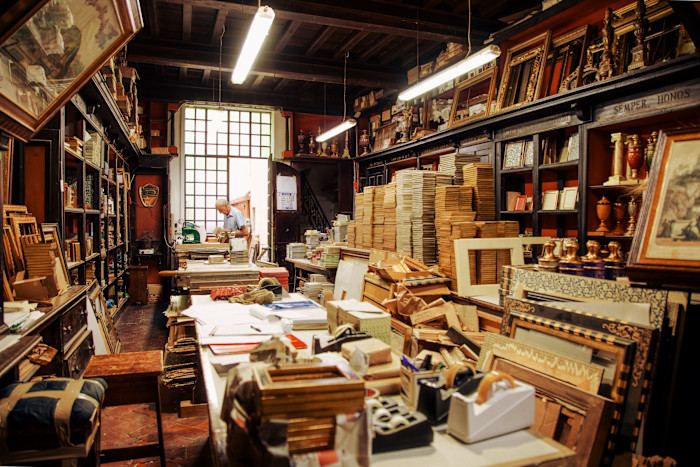
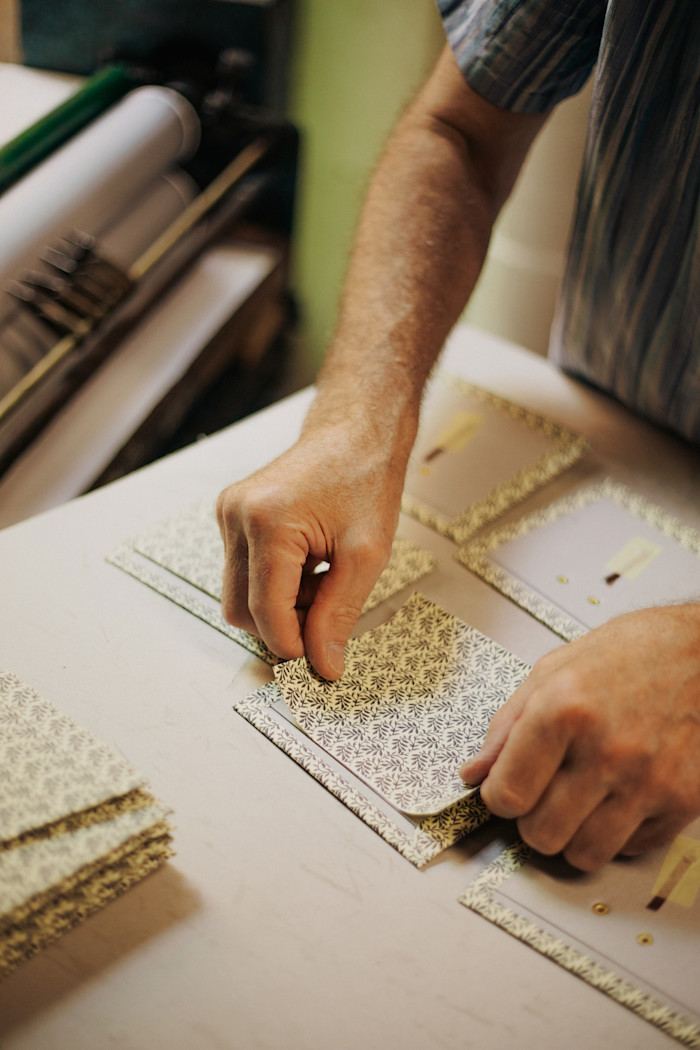
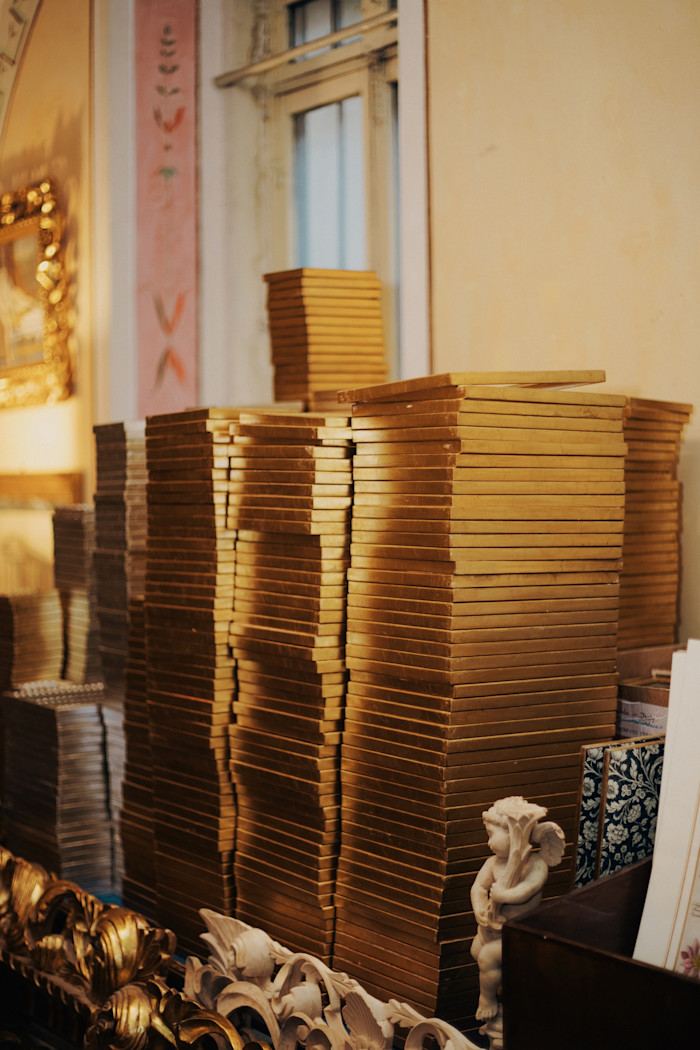
“All ages, all nationalities, all types and spending levels” is how Giovanni describes the store’s clientele. Many pop in when they happen across them, he says, the chime of the doorbell alerting father or son to their presence. (As if on cue, the doorbell rings, the door opens slightly by itself and then slams shut – for the third time in five minutes. “Definitely that ghost,” Giovanni mutters to his son. Later, when a framed map hanging in the corridor suddenly half-falls off its support, I joke that it’s that door ghost again. “Oh, there’s more than one,” Lorenzo says mildly.)
“The thing that’s still surprising to us – though given how much Florence has changed perhaps it shouldn’t be – is the extent to which Florentines themselves dismiss us, and independent family-owned artisan businesses like us,” says Giovanni. “Today if you look around, places like this… there are so very few of them left, unfortunately.” But Livia Frescobaldi, author of Inside Florence: A Tale of Palazzi and Botteghe, and a scion of one of Florence’s oldest and noblest families, rates G Baccani highly enough to have allocated it a full four pages in her glamorous coffee-table compendium of the city’s most sought-after artisans and interiors. Baccani probably needn’t worry; his little Blue Shop has some big champions.
Giovanni Baccani, Borgo Ognissanti 22R, 50123 Florence; giovannibaccani.it, @giovannibaccani