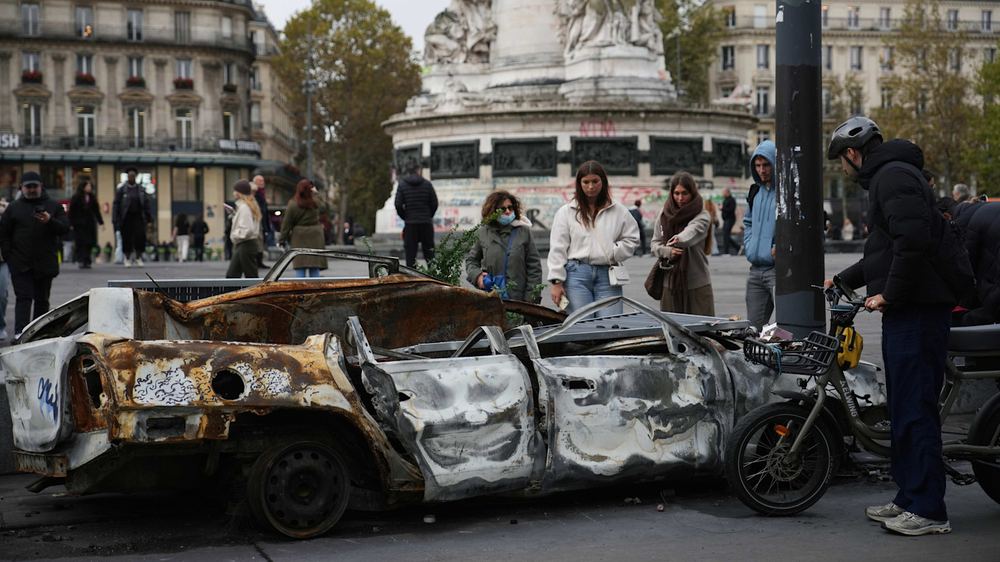
EU regulators are examining possible foreign online interference and disinformation campaigns around the French riots and similar outbursts of violence and looting in other European countries in recent days.
According to security officials, pro-Russian and far-right social media accounts linked to previous disinformation campaigns have spread violent videos in an attempt to sow more chaos. Iran and Algeria are also suspected of being behind some of the messaging, experts said.
“We want to know how co-operative the platforms are,” said an EU official. “It is possible that Russian information campaigns . . . are happening, but platforms should not algorithmically amplify them.”
According to David Colon, researcher at Sciences Po who specialises in disinformation, “pro-Kremlin influencers” linked to the Russian campaign Storm-1516 have “amplified the events and spread a number of false narratives”. He also mentioned the Russian influence network called Matryoshka.
But, he stressed, the pro-Russian influencers “are not at the origin of the demonstration, nor . . . have they had an impact on the course of the events”.
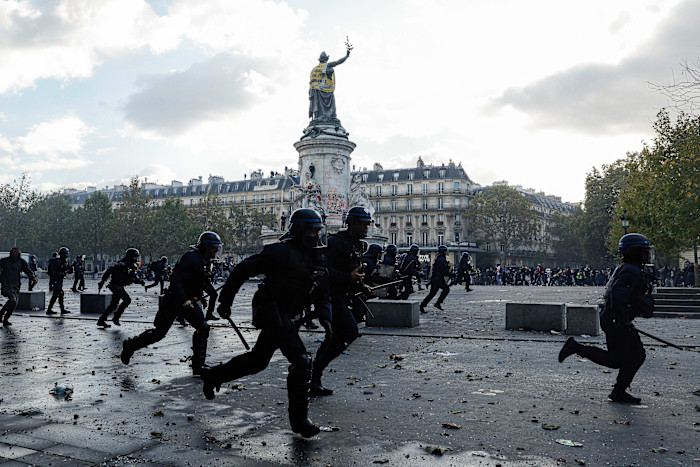
Governments, including in France, have asked intelligence agencies to look into whether Russian agents played a more active role in stoking street violence directly.
One senior European intelligence official said there was no concrete evidence of such provocations. Russian disinformation efforts were mostly responding reactively and online, they said, but added that French investigations were in their early stages.
In Italy, where violent protests also took place this weekend, defence minister Guido Crosetto blamed the unrest on “a hybrid war that someone is waging on our nations through unconventional tools called TikTok, social media and YouTube without the west realising it, or even reacting”.
The European Commission met French authorities this week to discuss co-operation with social media platforms including Elon Musk’s X that have allowed racist and violent messages to go viral. Belgium, where protests also turned violent over the weekend, was also set to discuss the role of China’s TikTok, an interior ministry spokesperson said.
Regulators are asking online marketplaces such as Amazon and Vinted to block the sale of goods that appear to have been looted.
The FT identified several accounts that posted violent content, including footage falsely claiming to have been recorded in France and which gathered millions of views.
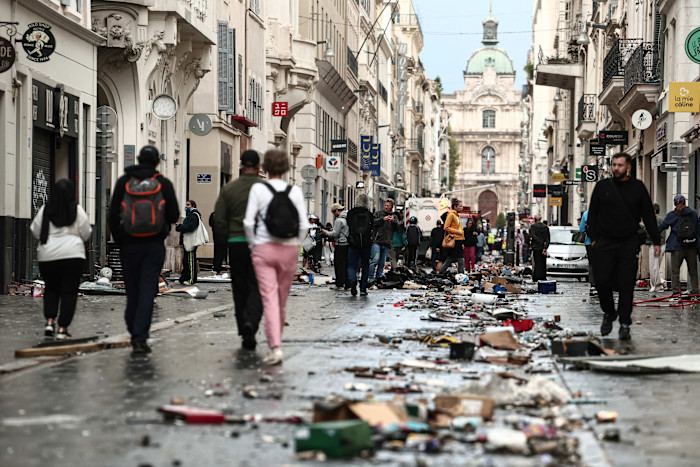
One X account with 5,000 followers posted a video of protesters throwing fireworks that was viewed almost 6mn times. The footage was in fact recorded in 2024 during protests in Tbilisi, Georgia.
A spokesperson for Vinted said that it had taken “immediate action” since the weekend to take down listings related to looting, as the sale of stolen goods on the platform was “strictly prohibited”. “We are actively collaborating with law enforcement and the French authorities,” they added.
X, Instagram, TikTok and Amazon did not respond to requests for comment.
According to the EU’s diplomatic service, France is the second most targeted country in continental Europe after Ukraine for state-backed information manipulation.
Russian agents have staged physical provocations in France before: in 2023, people suspected of being Russian agents sprayed blue Stars of David around Paris, evoking memories of the persecution of Jews during the Holocaust. The aim of the graffiti, which was initially portrayed as an antisemitic incident in the press, was to sow divisions, according to disinformation watchdog Viginum.
Viginum did not respond to a request for comment.
Colon at Sciences Po said there were indications of Iranian and Algerian influence operations in France.
“The interplay between influencers, algorithms and foreign state operations can lead to extreme volatility . . . triggering violent behaviour driven by the viral spread of emotionally charged content,” he said.
Colon mentioned Franco-Iranian influencer Shahin Hazamy as an example of accounts suspected of having links to Iran. Hazamy is currently appealing against a sentence by a first-instance court for condoning terrorism over posts in favour of Hamas, the Palestinian militant group deemed terrorist by the EU.
Hazamy posted various videos about the French protests, including about police officers beating up protesters, one of which received 4mn views on X.
Hazamy strongly denied accusations of being a foreign agent and said these allegations were themselves being spread by individuals with ties to foreign states, including the United Arab Emirates and Israeli lobby groups.
“My political stance in support of Palestine is routinely exploited to discredit me,” he said, adding he was an independent journalist.
Authorities would be looking in particular at far-left groups that appear to be the driving force behind many of the outbreaks, the intelligence official said. Weaponising such movements is “part of the playbook” the official said, but stressed that for now the simplest explanation was homegrown political radicalism.
Officials have generally cautioned that, while there were indications of disinformation and foreign influence by state actors, it was unclear whether they had a significant impact.
“You have an authentic mobilisation of people who are angry at institutions because of their proper grievances, and foreign state actors try to amplify this,” said another European intelligence official. “Their role should not be overestimated. It would be much too simple to say this was the fault of the Russians.”
Co-operation between police and online platforms to identify violent protesters or looters was also being discussed, the EU official said. On Monday, the European Commission met French media watchdog Arcom and on Tuesday representatives of all member states’ authorities responsible for digital enforcement met.
The Commission said for now the situation was managed by national authorities, but Brussels would step in if the risk became “systemic” and online platforms failed to co-operate.
“Platforms must make sure that their algorithms are not misused in such a context. This includes any attempt to amplify such violence and incidents,” said spokesperson Thomas Regnier. “Violence that is happening offline must not be algorithmically amplified or incentivised online.”
Additional reporting by Leila Abboud in Paris and Amy Kazmin in Rome