This spring, some of Netflix’s top executives gathered for an annual review to discuss the streaming giant’s business. And one of its key metrics was flashing red.
The company tracks how often subscribers log on to its services, a metric known as qualified play days, or QPDs. But the figure was sliding — a troubling sign that its programming was struggling to hold viewers’ attention.
The atmosphere inside Netflix quickly shifted, an employee briefed on the meeting said, with teams beginning to brace for job cuts.
Last week, those fears became reality. Co-chief executive Ted Sarandos spent the past week overseeing one of the most dramatic shake-ups in Netflix’s history, firing about 1,000 employees including the executives responsible for its television shows and movies.
For years, Netflix was the envy of Hollywood, a streaming juggernaut whose seemingly unstoppable growth forced the world’s biggest entertainment companies to rethink their businesses. But nearly two decades after launching its streaming service, the company is confronting a familiar Hollywood problem: a lack of hits.
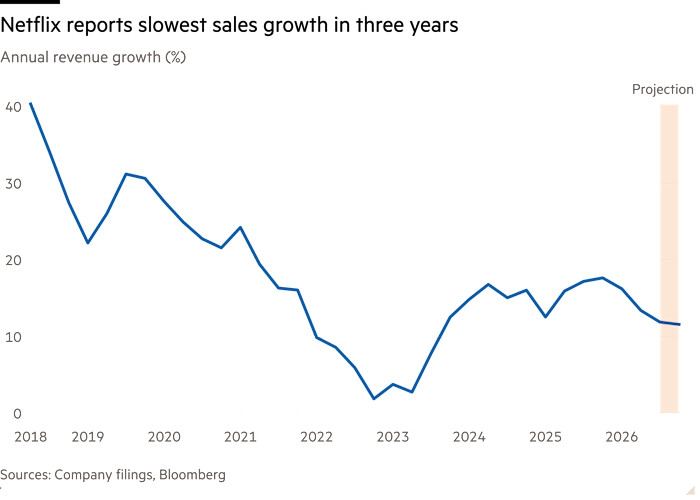
Despite the group reporting slowing revenue growth·, the co-chief executive insisted the underlying business was sound.
“Our business and our business flywheel are working. There is no need for a fundamental shift in the strategy,” Sarandos told analysts on a call. “We do need better execution in the US. It’s just not growing as fast as it could or as fast as we’d like.”
Shares in Netflix were down 4 per cent in early trading on Wednesday.
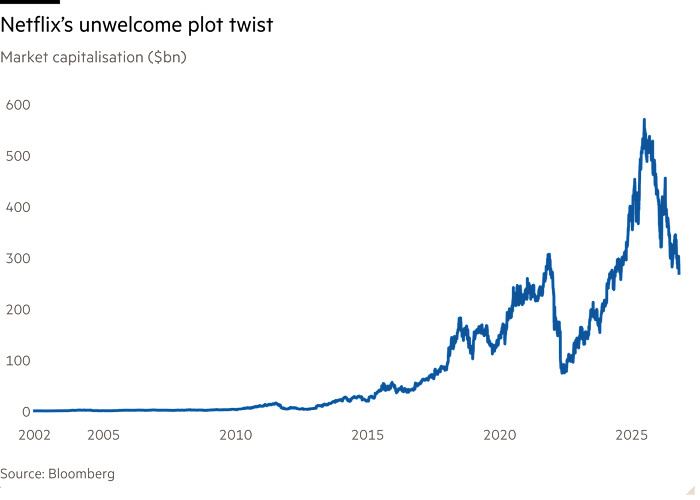
The comments clashed with the turmoil engulfing Netflix, which has lost roughly $300bn in market value since its peak last year. Sarandos has ousted his top creative lieutenants and brought in a former Disney executive to turn things around.
“Ted is never going to admit it’s his mistake, so others will take the fall,” said a longtime Hollywood executive.
A person close to the company said: “Ted is making decisive leadership moves to improve the US slate and position Netflix for its next phase of growth. He’s never been one to protect the status quo, and these decisions reflect that.”
Sarandos, who had been in charge of Netflix’s content for years before ascending to the co-chief executive role in 2020, has been frustrated with the company’s inability to produce new hits and persuade subscribers to spend more time on the service.
Despite spending roughly $20bn a year on programming, the amount of time people spend watching Netflix grew just 2 per cent in the first half of 2026. In the US, the company failed to add net new subscribers in any month during the first nine months of the year, according to data from analytics firm Antenna.
A Netflix spokesperson said Antenna’s methodologies were not representative of its business performance and their conclusions are inaccurate.
Last week, Netflix fired about 6 per cent of its workforce, or 1,000 employees, with Sarandos telling staff it was a necessary evil so that it could invest in “high-impact” areas.
Bela Bajaria, Netflix’s chief content officer, was dismissed hours after helping oversee the mass lay-offs. The company’s film chief Dan Lin was also dismissed, although he was back in the same room with Sarandos over the weekend attending the Academy Museum of Motion Pictures gala, alongside Taylor Swift, Charlize Theron and Teyana Taylor.
The dismissals reflected Netflix’s famously unsentimental corporate culture. Under its “keeper test”, managers are encouraged to quickly part ways with employees they would not fight to retain.
Yet company executives and industry insiders said Sarandos was the architect of the strategy Bajaria carried out — broadening the company’s mass appeal and spearheading growth outside of the US as its domestic market reached saturation. Her dismissal raised an uncomfortable question: whether changing the executives responsible for delivering that strategy would be enough to revive the company’s fortunes.
Netflix’s shares have more than halved from their 2025 high, with the sell-off accelerating after its failed bid to acquire rival Warner Bros Discovery raised questions about whether it had enough content to keep up momentum on its own.
The slowdown in viewership has unnerved investors, who fear it could signal an extended deceleration in revenue growth. Netflix on Tuesday warned sales growth would continue to slow, touching levels last seen in 2023.
“Netflix is now a show-me story,” said Rich Greenfield, analyst at LightShed Partners. “They have to prove that revenue growth can reaccelerate, with or without improved [viewer] engagement.”
“If 2027 revenue growth reaccelerates towards the mid-teens, this is simply a narrative challenge rather than a business challenge,” he said. “If revenue growth decelerates towards 10 per cent or less, there’s a real problem.” Currently, it sits at 11.8 per cent·.
Under Bajaria’s stewardship, Netflix broadened its programming to include reality shows, live entertainment and sports through deals with the NFL, WWE and Fifa.
Behind the scenes, Netflix’s creative executives were under competing pressures to deliver bigger hits while reining in spending. One recently dismissed employee described being expected to give Hollywood’s top showrunners the “razzle dazzle treatment” while working with much tighter budgets.
While Netflix previously sought to balance mass-market entertainment with ambitious, experimental programming, the emphasis had increasingly shifted towards commercial success — meaning it lacked an equivalent of HBO’s wildly popular White Lotus on its slate. “When you try to hit everyone, you lose the intended audience,” the employee said.
Sarandos acknowledged Netflix’s sometimes uneasy relationship with Hollywood, telling investors on Tuesday that one of the biggest priorities for its new content chief, Peter Rice, would be understanding “talent relations”.

Rice, a veteran of Disney and Fox who has deep relationships across Hollywood, arrives as Netflix is beginning to reconsider some of the practices that previously distinguished it from traditional studios. The company will release director Greta Gerwig’s Narnia in theatres next year, with Sarandos saying the company’s “theatrical strategy has evolved”.
Even after its stock slump, Netflix remains the world’s largest paid streaming platform, with 325mn paying subscribers at the end of 2025. Its cancellation rate is the lowest in the industry, according to Antenna. The company has paved a proven business model for entertainment in a digital age, making $11bn in net income from $45bn in revenue last year.
Greenfield warned the entertainment business is unpredictable, citing surprise hits such as Squid Game. A stronger slate of shows next year could quickly change perceptions of Netflix’s prospects, even if they were commissioned by the executives who have just been fired.
“I have lived through many cycles where you fire someone and then they go on a hot streak after they’re fired,” he said.
Netflix is looking ahead to La Bola Negra, a Spanish-language film that is quickly gathering buzz as a potential Oscar nominee. Co-chief executive Greg Peters highlighted new seasons of The Diplomat and Wednesday as potential big draws for audiences.
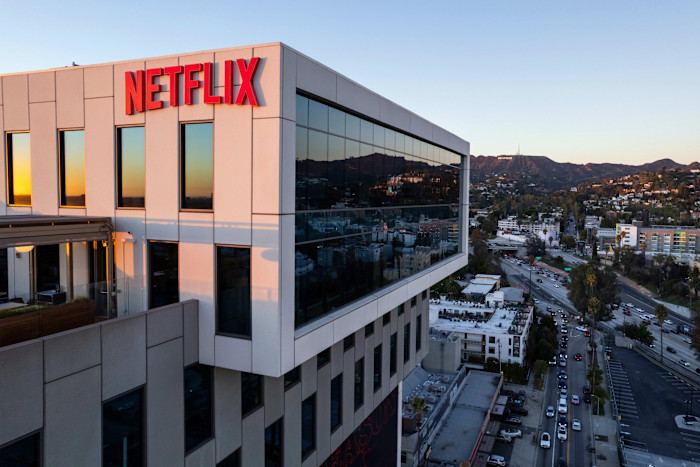
Sarandos is not alone in his quest for a hit. Inside Netflix’s office on Sunset Boulevard, employees said the feeling was mutual.
“It would [have been] great to have better content to work with,” one former employee said. “As a member, as someone who watches Netflix, I wasn’t getting the content that I liked to watch.”