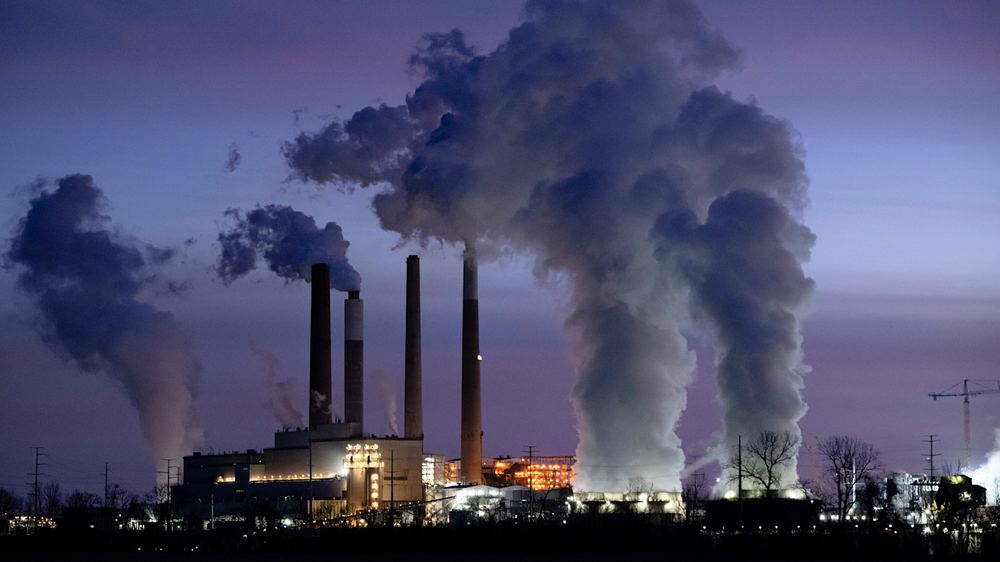
The world is running headlong towards a long-term temperature rise of 2.8C based on present government policies, the latest UN report shows, with the US standing out among developed economies with sharply higher energy-related emissions.
Under President Donald Trump’s policies, a rebound in coal generation to meet increased US power demand drove the rise, after mainly trending down over the past decade. Emissions also rose in Indonesia and China, but were lower in India and the European Union.
The UN report confirmed that there was no longer any chance of preventing global warming of 1.5C above pre-industrial levels, the lower limit enshrined in the 2015 Paris accord between almost 200 countries.
But it laid out a scenario in which the so-called overshoot above this level is minimised, and potentially reversed by the end of the century.
“We climate procrastinated and accordingly we are saying this window has closed, but we can open it again,” said Inger Andersen, executive director of the UN Environment Programme. “This is the only way we can get back to a semblance of a reality that is still largely manageable.”
Returning the temperature rise to below the 1.5C level would require emission cuts of 45 per cent by 2035, the report said. This goal is three times the 11 to 15 per cent of cuts in the same timeframe that are laid out in countries’ current national climate plans.
It would also require an increase in permanent CO₂ removals through techniques that faced significant “socio-economic and technological challenges”, the report noted.
Last year, global greenhouse gas emission declined by 0.1Gt compared with 2024, the latest data show, thanks in part to a slight decrease in emissions from wildfires at that time. The change was not sustained or significant enough to say that emissions have started a long-term decline or even reached a plateau.
Emissions from burning fossil fuels rose last year roughly at the same rate as they have over the past decade.
Following the US’s decision to quit the Paris Agreement, new national climate targets submitted since last year had a “near-zero” impact on expected emissions and warming, the UN said.
The planet was on track for 2.8C of warming based on present government policies, 2.7C if countries acted on unconditional policies in their latest climate plans, or 2.6C if those plans that were conditional on financial support were put into action.
The outlook under existing government policies was unchanged from the previous UN report but the temperature rise forecast based on conditional or unconditional plans had worsened.
More promisingly, the UN noted that renewable electricity capacity and the build-out of solar panels had grown much faster than was expected at the time of the Paris Agreement.
“Every year of delay makes the way back steeper,” said UN secretary-general António Guterres. “Overshoot is not surrender, we can still keep it small.”
Where climate change meets business, markets and politics. Explore the FT’s coverage here.
Are you curious about the FT’s environmental sustainability commitments? Find out more about our science-based targets here