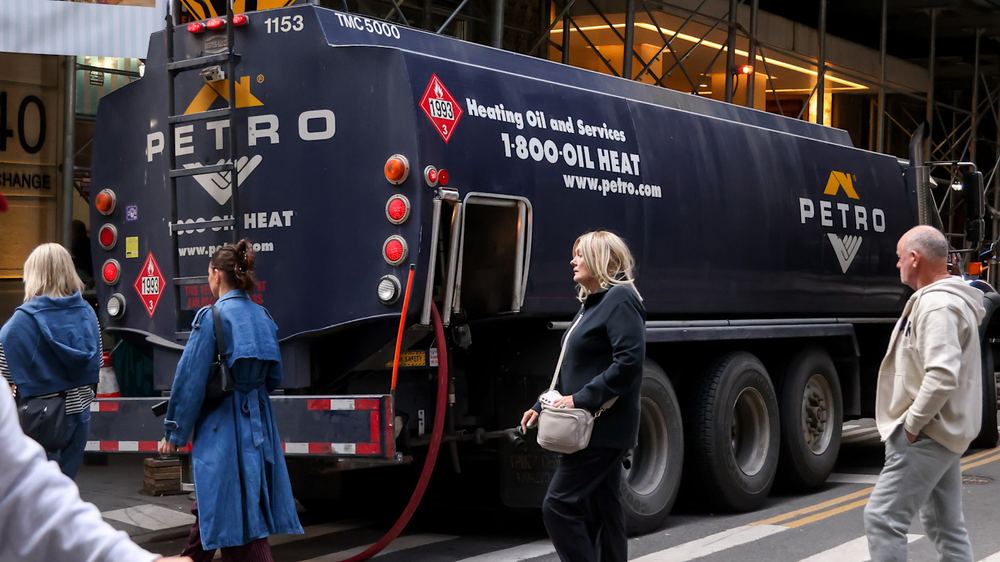
Households across the US north-east are wrestling with soaring costs for heating oil as winter approaches, turning to antiquated heat sources such as firewood as fallout from the Iran war spills into elections just weeks away.
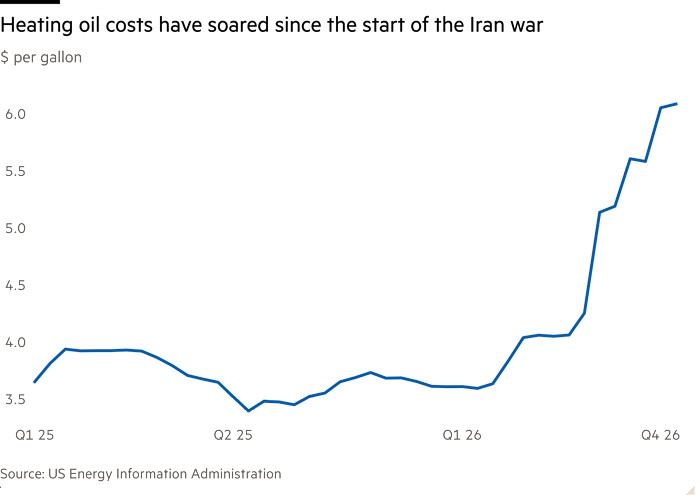
The price of the distilled petroleum used in boilers and furnaces has jumped 50 per cent since the closure of the Strait of Hormuz in February — prompting the region to rethink its opposition to natural gas. Prices, at $6.14 per gallon, are the highest on record, according to the US Energy Information Administration. Heating oil prices closely track diesel.
According to the National Energy Assistance Directors Association, low-income households in the north-east will face an extra $1.1bn in heating costs this winter, a 50 per cent increase.
Dan Coyne, chief executive of charity United Way of Southern Maine, said calls to his service for emergency heating assistance had surged, with people saying they are forgoing heat to pay for medication and rent. People were making difficult choices “to stretch every dollar they have”, he said.
Tony DiMarco, who runs a “wood bank” in Freeport, Maine, said some Mainers were installing wood furnaces to alleviate rising heating oil costs — which is in turn making wood more expensive. His service is seeing demand earlier than ever in the year, from people all over the state.
“It speaks to desperation that people are experiencing,” he said. “We’re gonna see more chimney fires, we’re gonna see air quality reduced, and people will have to make tough decisions about whether they eat or heat.”
The amount of wood DiMarco has handed out has doubled compared to the 2025 heating season, while Midcoast Wood Bank, in Topsham, a town in the south of the state, says it expects deliveries to rise 67 per cent. With winter approaching, data from the Energy Information Administration shows monthly sales of wood pellets have risen by a third since last year.
Heating oil is a liquid petroleum product, which is refined from crude oil and burned in furnaces or boilers to heat homes and buildings. It is typically dyed red to identify it as exempt from federal, state and local taxes applied to vehicle fuels.
The issue is defining the close Senate race between five-term incumbent Susan Collins and logger Troy Jackson, who is leading by two points, according to an Insider Advantage poll released in mid-October.
Jackson has attacked Collins’s support for the Iran war, saying that “energy costs are hitting record highs because of the war in Iran that Susan Collins voted five times against stopping”.
Collins has appealed to President Donald Trump for help bringing down costs, asking the president in late September to tap the US’s emergency heating oil reserve to “protect Mainers from very high prices” and touted her efforts to release $38mn in home heating assistance.
The president has been trying to contain the economic fallout of the Iran conflict before the November elections, striking a deal with Russia to release 300,000 tonnes of diesel in early October.
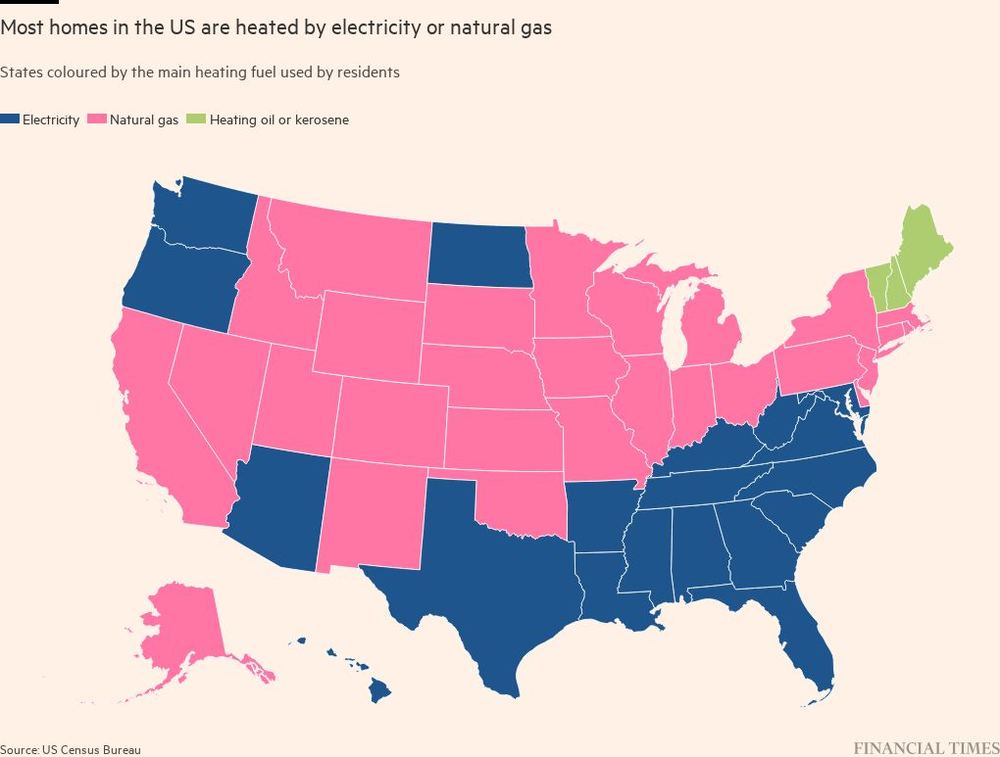
Unlike most of the US, which uses natural gas and electricity to heat homes, the north-eastern states are heavily dependent on heating oil — used by half of all homes in Maine, along with more than a third in New Hampshire, Vermont and Connecticut.
Since heating oil is sold by the gallon by independent dealers, its market structure offers fewer protections than ones dominated by electricity and natural gas utilities, which can be made to offer payment plans, discounted rates and protections against shut offs.
“Heating oil dealers are not monopolies, so you can’t say, ‘You must deliver to Grandma,’” said Mark Wolfe, executive director of the National Energy Assistance Directors Association.
In the 2010s and 2020s, states such as Massachusetts, New Hampshire and New York stymied the development of pipelines to bring gas into and around each state.
Now, the heating oil price surge has brought the north-east’s repudiation of natural gas into focus. Even before the Iran crisis, homes across the region had started transitioning to natural gas, with the proportion of homes in Maine heated that way rising from 3.5 per cent to 8.3 per cent from 2000 to 2024. Homeowners have also embraced heat pumps, which run off electricity.
Energy costs are high across the board, with electricity up 11.2 per cent and natural gas 9.3 per cent since January 2025.
“It’s a crisis what’s happening in New England,” said Toby Rice, chief executive of EQT. “You can stop a pipeline but you can’t stop demand.”
On Monday, the US Department of Energy said it would give $42mn in Defense Production Act funding to the Constitution Pipeline, which will run from Pennsylvania to New York.
While governors of Massachusetts, Connecticut and New York have softened their states’ stances on expanding gas pipeline capacity, it may be too late for consumers to benefit.
“Today there’s not much alternative,” said Andy Lipow, president of Lipow Oil Associates. “If they wanted to switch, they’d to get hooked up to a natural gas system that may or may not exist in their area.”
Visual data by Eva Xiao