Treasuries rallied after comments by US President Donald Trump on the war against Iran sparked a slide in oil prices that caused traders to price in lower chances of a Federal Reserve interest-rate hike this year.
The surge lowered yields across maturities by eight to 11 basis points on Thursday, to the lowest levels of the week. Short-term interest-rate contracts that reflect expectations for the Fed — and had fully priced in a quarter-point increase in the US policy rate by December — shifted the assessment to the first quarter of 2027.
Benchmark oil prices fell more than 3% toward the lowest levels since mid-April after Trump in a social media post said he was cancelling strikes against Iran that had been planned for tonight and that a “time and place of the signing” of an agreement regarding the war would “be announced shortly,” without providing further details.
The bond rally followed a brief setback in which yields were edging higher after weak demand for an auction of 30-year bonds.
“It’s a pretty big rally in duration despite a soft 30-year auction,” said Zach Griffiths, head of investment grade and macro strategy at CreditSights. “I’m a little surprised the market would get this big of a boost as it seems like we’ve been doing this dance for quite some time with little in terms of meaningful progress on a peace deal.”
Trump in the past month has repeatedly made comments and social media posts suggesting an accord to end the war is within reach.
Yields were about two basis points lower on the day before Trump’s latest suggestion that the US-Israeli war on Iran that began in late February could end soon. European bonds also advanced.
Oil prices, which have tracked shifting sentiment about the prospects of ending the war, earlier Thursday extended their retreat from multiyear highs reached in early April. A report that United Arab Emirates and Iranian officials held a pivotal meeting this week overshadowed Trump’s threat to significantly escalate the conflict by seizing Iran’s key oil hub.
“Investors seem hesitant to put too much conviction in the negotiations being finalized given the back-and-forth nature of headlines we have seen throughout the war,” said Molly Brooks, a US rates strategist at TD Securities.
The oil-driven moves in bonds were complicated by the release of US inflation data showing bigger increases in wholesale prices in May than economists had estimated. Core prices excluding energy and food rose less than estimated, however.
“Many are telling us they think the worst of the inflation data is in,” said Tony Farren, managing director in rates sales and trading at Mischler Financial Group. Lower-than-expected increases in core inflation despite higher energy prices “has changed the mindset of the Treasury market at least temporarily.”
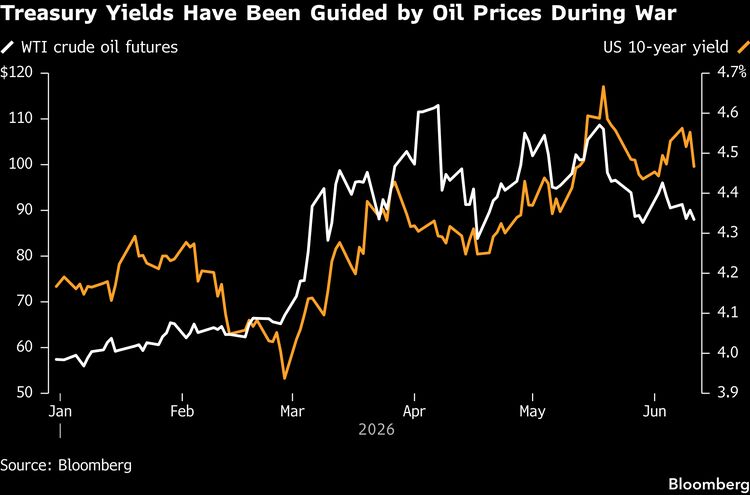
Thursday’s rally returned Treasury yields to levels that prevailed before strong May employment data released June 5 altered expectations for the Fed, whose policy-setting committee meets next week for first time since Kevin Warsh succeeded Jerome Powell as head of the US central bank.
Fed officials are widely seen leaving their target range for the federal funds rate unchanged at 3.5%-3.75%, where it’s been since December. However, quarterly revisions to their forecasts for interest rates and the economy may reflect the war-driven surge in energy prices that still has many investors looking for a quarter-point rate increase by year-end and seeing strong chances of another one by mid-2027.
An auction of 30-year bonds at 1 p.m. New York time, the third and final sale of longer-term Treasury debt this week, was awarded at 5.020%. While last month’s 30-year bond auction on May 13 drew 5.046%, the highest for a sale of the tenor since 2007, the result was higher than indicated by pre-auction trading, a sign that demand fell short of expectations.
The 30-year yield reached its highest level of the year, near 5.20%, on May 20 after quickening inflation and strong US economic and stock market performance backed the growing consensus for a Fed rate increase. It fell as much as nine basis points Thursday to 4.94%, the lowest since May 8.
The European Central Bank raised interest rates Thursday for the first time since 2023 in an expected move that its president, Christine Lagarde, said was necessary because of the energy price shock.