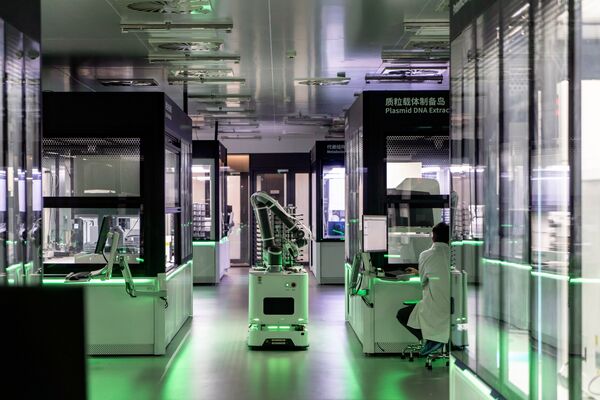
The US should be doing all it can to preserve its lead in pharmaceutical innovation against a resurgent China. Instead, it’s punishing a company whose main business is helping American firms discover, test and commercialize their medical research.
On Monday, the Pentagon added Chinese biotechnology contractor WuXi AppTec Co. to a list of businesses allegedly working with the People’s Liberation Army — limiting its ability to do business with the federal government. Two of China’s biggest tech giants, Alibaba Group Holding Ltd. and Baidu Inc., as well as the No. 1 electric-vehicle maker BYD Co. were also included. All have rejected the association.
The announcement was a realistic acknowledgement that three weeks after the bonhomie displayed in Beijing between Presidents Donald Trump and Xi Jinping during a state visit, the two nations will continue to butt heads over China’s industrial rise. In the biotech industry, it’s already starting to match the US as a drug development center.
WuXi AppTec, which calls its inclusion in the Department of War’s Section 1260H list a “mistake,” is a convenient scapegoat. Established a quarter-century ago in Wuxi, a picturesque city in eastern China, it’s now one of the biggest contract development and manufacturing organizations in the world providing services from drug discovery to manufacturing. Think of it as the pharmaceutical equivalent of chipmaker Taiwan Semiconductor Manufacturing Co. in terms of providing outsourcing services.
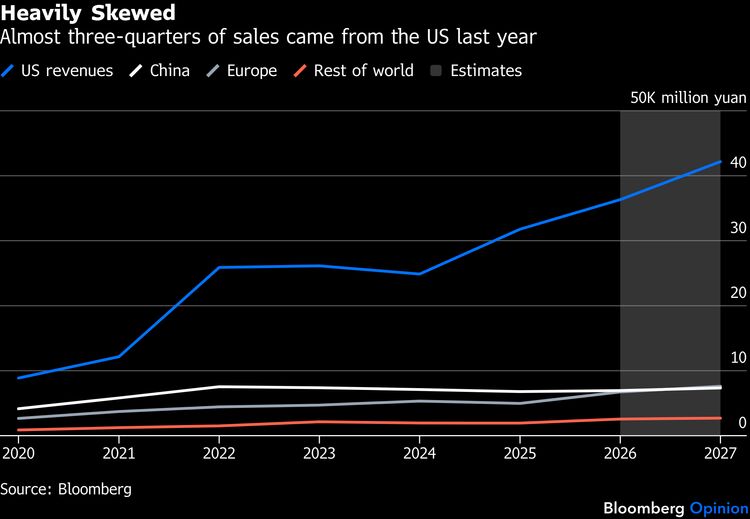
Unusually for a large Chinese company, about 70% of revenue at WuXi AppTec came from the US last year. That’s because it was set up that way.
Chairman and Chief Executive Officer Ge Li, a naturalized US citizen , started the firm after spending the 1990s in America getting his chemistry PhD and working for a biotech startup. When his idea to outsource the time-consuming and expensive discovery process to China was rejected , he decided to press ahead anyway. Li became one of the many “sea turtles” who went abroad and returned to China make their fortunes. Li’s former employer was the first customer .
The business model reflected a more hopeful time. At the turn of the century, the prevailing wisdom was that integrating China into the global economy would gradually make it wealthier, more open and ultimately more politically liberal.
Plugged into the international drug development supply chain, WuXi AppTec thrived and spawned copycats. The contractor is thought to have been involved in the production of a quarter of all medicines used in the US.
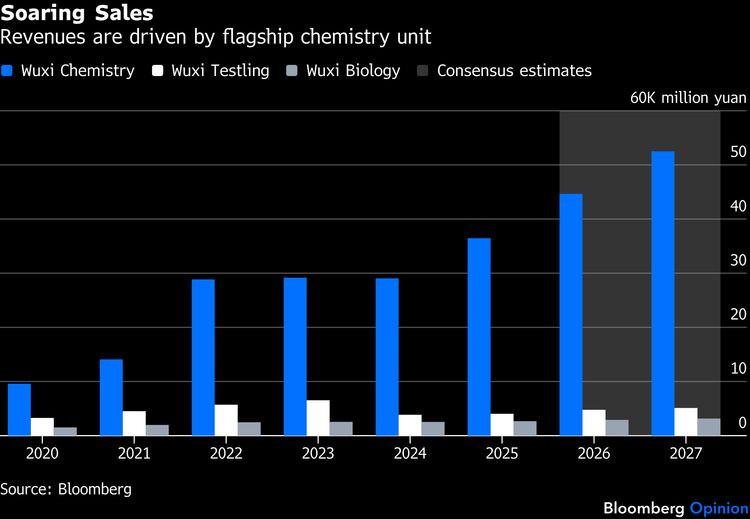
Sales have been driven by its chemistry division, home of the “Tides” business producing peptides for blockbuster GLP-1 diabetes and weight-loss drugs. It was generating much of the active base ingredient used in Eli Lilly & Co.’s obesity drug Zepbound as of 2024, Bloomberg News reported .
But China failed to become freer and more democratic. Its ascent to superpower status, mirrored by an unexpected rise as a pharmaceutical innovator, has strained relations with Washington, which views it as a strategic rival to be contained. This is the best way to understand initiatives like the Section 1260H list.
Inclusion doesn’t trigger any immediate punishment, but it does pose reputational risks. Banks, regional governments or potential partners may not want to do business with the companies named. On the other hand, they can also choose to ignore the warning.
Even though WuXi AppTec had been facing the prospect of a related restriction since 2024, customers stayed. Its order backlog grew by 30% last year, mostly due to US demand, according to Jamie Maarten of Bloomberg Intelligence.
Rather than sanctioning a contractor that is helping Big Pharma deliver medicines faster and more cheaply, the US would be better served focusing its attention elsewhere.
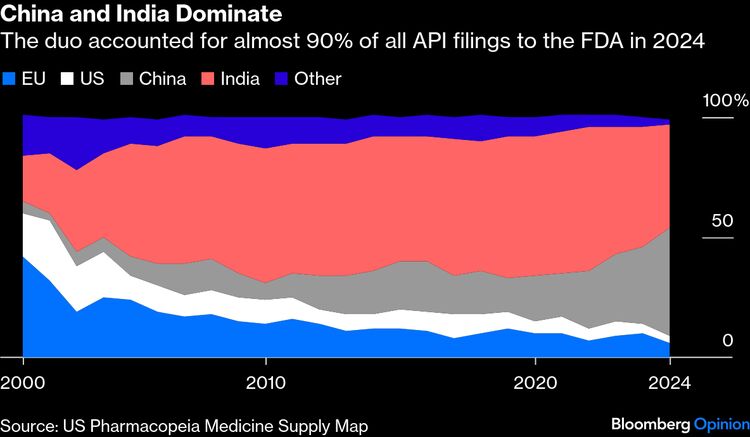
For one, China controls the foundational raw materials, known as active pharmaceutical ingredients or API, needed to make an array of medicines. Washington should be doing the work to investigate the full extent of America’s dependency and take selective action to build alternative supply chains in critical areas, such as the most common antibiotics. It should also be funding research that can lead to commercial breakthroughs and incentivize foreign scientists who make them to stay in the US.
WuXi AppTec has many advantages including cost. But, unlike TSMC, it also has a number of rivals. It competes with contractors like Lonza Group AG of Switzerland, the CDMO division of Massachusetts-based Thermo Fisher Scientific Inc. and South Korea’s Samsung Biologics Co. Washington should be rallying allies to create supply chains independent of China.
Until it can do so, sanctioning a firm that contributes to American leadership in drug development is a mistake. It risks undermining the very strengths Washington is trying to protect.
More From Bloomberg Opinion:
- This Pancreatic Cancer Drug Is So Good, It Got a Standing Ovation : Lisa Jarvis
- China’s Pharma Dominance Is Just Beginning : Juliana Liu
- Kimchi Can’t Save Us From Microplastics : Lara Williams