A joint call from France and Germany for new measures to curb Chinese imports will strengthen the European Commission’s position as it tries to rebalance trade ties with Beijing.
In a paper and letter to Commission President Ursula von der Leyen, the European Union’s biggest economies proposed quicker mechanisms to protect domestic industries under threat from Chinese rivals. The most striking part of the plan is a new tool that could allow the bloc to shut down Chinese firms’ access to its $8 trillion market of traded goods and services, if needed.
While the paper doesn’t single out any country, the description of the trade practices in question almost exclusively fits China.
European leaders are aiming to agree on a package of measures to control a spiraling trade deficit with China which is endangering millions of jobs across the bloc. The deficit has surged since the end of the Covid-19 pandemic and European officials say that has, in large part, been driven by unfair practices in China, such as state subsidies.
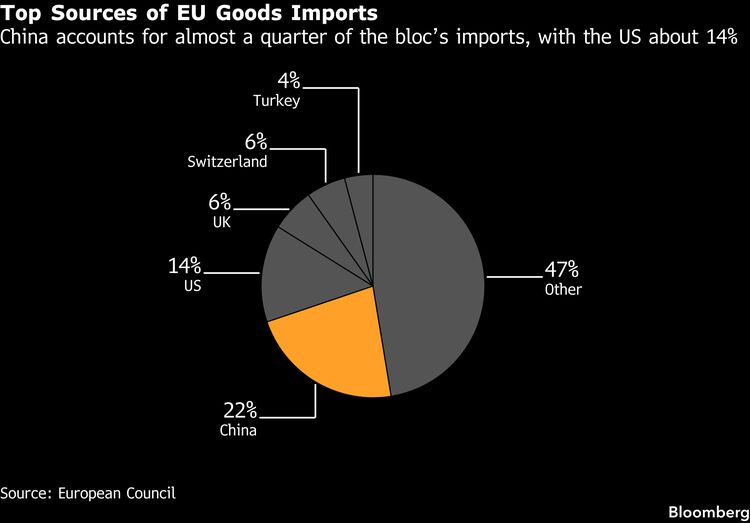
The new tool to cut off market access is intended to show that the EU is serious about rebalancing its relationship with Beijing but officials are hoping that they will never have to use it. EU Trade Commissioner Maros Sefcovic heads to Beijing later this week in an attempt to negotiate a framework to stabilize the commercial flows and avert a full-blown trade war.
While the two sides are still talking about concessions the Chinese side could make to appease the Europeans, few officials are expecting any outcomes that will change the trajectory of the relationship.
The continued talks are important to manage escalation, officials said, and Sefcovic is one of the few European officials that maintain an open channel of communication to the Chinese. At the highest levels, the government-to-government dialogue has essentially been frozen and the relationship has reached a historic low point.
Officials familiar with the discussions in European capitals stressed that what is even more important than the substance of the document is the signal it sends to China: that Europe’s most powerful nations are united in their approach and efforts to divide them will fail.
The risk for Brussels is that Beijing tests that Franco-German conviction in the coming months, the officials added. China could try to delay any EU action by stringing out dialogue and offering modest concessions that do little to shift the fundamental dynamic, they said.
The new stance between Berlin and Paris is a clear departure from previous rounds of negotiations with Beijing, where Chinese officials were able to directly bargain with and pressure individual EU member states instead of going through the commission.
All the same, the use of trade tools will ultimately depend on political will and that is yet to be demonstrated.
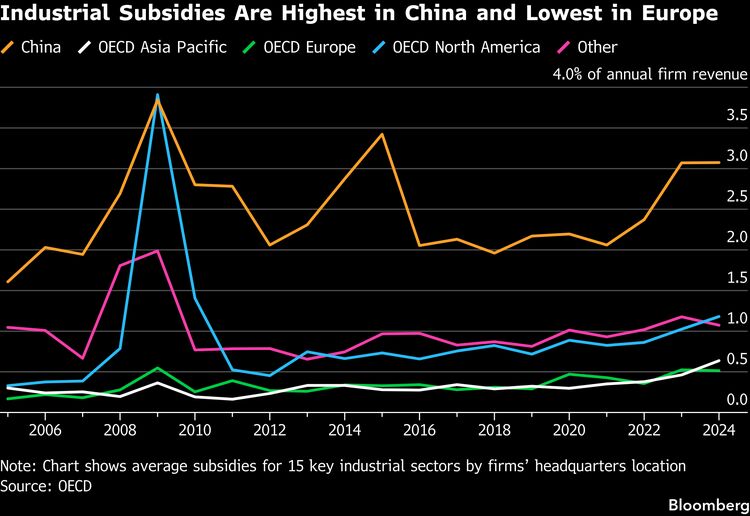
Beijing’s control over key materials like rare earths gives Chinese officials considerable leverage in the event of an escalation, but also increases the urgency for the EU to bolster its policy toolkit.
For some officials, the position paper shows there is a level of assertiveness that wasn’t there just six months ago. For others, there are still some questions around whether the same momentum will exist when it’s time to announce specific actions — and especially when the Chinese respond with retaliatory measures to inflict pain on Europe’s economies.
German Shift
The last time the EU took action against China, when the commission implemented tariffs targeting Chinese electric vehicles, the French government supported the move and the German government opposed it due to concerns about German companies’ sales in China.
As the two partners worked out a common stance this time, officials were intent to not repeat the 2024 scenario, people familiar with the matter said. Berlin’s position has been bolstered by a shift in the views of German industry, which is becoming increasingly worried about the challenge from China.
Thilo Brodtmann, the head of Germany’s machinery industry association, lauded the joint paper and urged quick action.
“The European Commission should capitalize on the Franco-German momentum and swiftly translate the proposals into concrete measures if the ongoing negotiations with China do not yield tangible progress in eliminating these distortions of competition,” he said in a statement Monday.