By Martin Ivens | Updated on Oct 12, 2026 at 05:00 AM
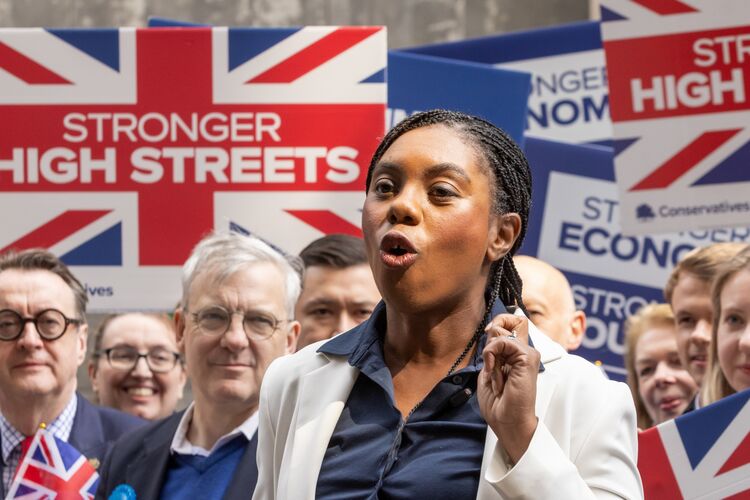
“Blessed are the rich,” is an unlikely credo for a modern British politician, but Tory leader Kemi Badenoch dared to speak up for the highly taxed, affluent professional classes in her Conservative Party conference speech last week.
That was her first big gamble, signaling a significant change of strategy for the Tories. The party is quietly extending a hand to prosperous, socially liberal center-right voters who once voted for it out of self-interest, if not natural inclination, but stopped when it abandoned fiscal responsibility.
After the Brexit referendum in 2016, Tory leaders preferred to target working-class voters in the so-called Red Wall seats of England’s North and Midlands, and were rewarded when they abandoned Labour in large numbers at the 2019 general election, answering Boris Johnson’s call to “Get Brexit Done.” That well has dried up. These post-industrial communities shifted further right to Nigel Farage’s anti-immigrant Reform UK after Johnson’s government imploded in scandal, and they’re in no hurry to return.
Badenoch threw the dice a second time in her speech when she took on Reform’s angry mob and proudly proclaimed herself a Black Englishwoman.
Her anti-racist message struck a blow for decency. Some prominent Reform figures deny that non-White citizens can be considered English, Scottish or Welsh, but only British. They want to make an issue of the Conservative leader’s Nigerian heritage and help Farage win back voters lost to the even further-right splinter party, Restore Britain.
Let her opponents wrestle in the sewer, if they must. The UK’s record on ethnicity and race is better than most — as Zack Polanski, the leader of the Greens, found to his cost on Thursday when voters in Holborn and St. Pancras rejected him in a by-election after his party adopted an anti-Zionist platform barely distinguishable from anti-Semitism. Opinion polls show Polanski has seized the crown of Britain’s most detested politician from Farage.
That said, Badenoch isn’t just being saintly. Both last week’s wagers balance hard political pragmatism with principle.
Her defiance of ethno-nationalism distances her party from the xenophobic right, something that should pay off as Restore Britain forces Reform to adopt positions that the vast majority of voters find abhorrent. And her tax-cutting pitch isn’t merely a pure expression of Thatcherite zeal. She’s shrewdly aiming for southern and suburban Liberal Democrat and Labour voters worried about their bank balances as Andy Burnham’s government tilts leftwards. Her rejection of ugly racial division is useful with this cohort, too.
In one eye-catching move, the Tory leader proposed to scrap inheritance tax on family homes following earlier promises to abolish stamp duty on primary residences and to get rid of a “mansion tax.” She also pledged to restore a sales-tax exemption on private-school fees, recently ended by Labour, and to allow those earning more than £100,000 ($132,000) to qualify for tax-free childcare and free childcare hours.
Burnham’s party will denounce all of this as “tax breaks for millionaires,” but the measures would partly offset an absurd 60% marginal tax trap triggered when someone’s salary falls between £100,000 and £125,000. Currently, UK earners are better off turning down pay rises above £99,999.
Britain’s dirty political secret is that those with a salary around the median wage of £39,000 are lightly taxed compared with other G7 countries. The Resolution Foundation think tank calculates that a single person with average earnings pays only 30% of their income in tax, well below their European equivalents. In the UK the top 10% of earners are paying nearly 60% of the country’s income-tax receipts.
Still, there are probably smarter ways to cut inheritance tax than doing it via family homes. A more efficient answer might be to raise the tax-free allowance on inheritances overall to £900,000, for example, or by cutting the levy from 40% percent to 17.5%. Badenoch’s proposal gives older people an incentive to stay in houses they might otherwise sell, or even to buy bigger ones. That’s hardly helpful for young people who’ve been locked out of the property market.
So it’s only two cheers for the Tory leader’s economics. Her multi-billion-pound spending commitments on defense and prison building, financed by notional cuts to the welfare budget, also look questionable when you consider her opposition to Burnham’s sensible suggestions on tackling a ballooning state-pension bill. The Tories always have one eye on their elderly support base.
Badenoch’s denunciation of Reform, however, does show the kind of bravery that might help in other fights — including on the UK’s crippling welfare bill.
“I don’t want to live in a country run by people who threaten journalists, call veterans traitors and debate whether my mixed-race children are English,” she said, “I don’t want to explain to my son, when we are watching our brilliant England football team, that some people don’t think our Black players are English”. She may not have hit the oratorical heights of Martin Luther King, but it will do for most fair-minded people.
A line must be drawn against a toxic political culture that has overwhelmed the center-right in many European countries. But, to repeat, these are gambles. If Badenoch woos centrist voters, she may lose working-class ones — despite her uncompromising stance on immigration. Her ethnicity may be a stumbling block with a neanderthal minority.
Centrist votes won’t just fall into her lap either. While Badenoch’s promise to scrap environmental agencies went down well with party loyalists, it could unnerve voters in leafy constituencies who care about the countryside and the quality of their air and water.
A bigger problem will come if Burnham puts closer ties with the European Union, or even a second referendum to reverse Brexit, at the heart of Labour’s next general-election campaign. Good luck to Badenoch trying to win back more moderate voters if she’s stuck with having to defend Brexit. And good luck trying to fight off Farage if she accepts the need for a reversal.
Badenoch’s project is clearly still a work in progress — and the politics of a divided right and a more cohesive left bloc favor Burnham if he were to call an early election. But at least the Tory leader has finally given her party a sense of direction and staked a claim to being a credible alternative to Labor. She’s the only one on offer.