Good morning. It’s a big week. The Reserve Bank of India’s Monetary Policy Committee has begun its meeting, and will announce its interest rate decision tomorrow. Economists and analysts expect a 0.25 per cent increase in the repo rate. If it happens, this will be the first rate rise in three years. Quarterly results season also kicks off this week, with Tata Consultancy Services leading the pack on October 8. Will there be a turnaround in the markets? Tell me what you think.
In today’s newsletter, airlines’ stand-off with Adani’s Mumbai airport. But first, the Essar Group is taking an $18bn bet on US steel.
Essar goes back to steel with a big bet
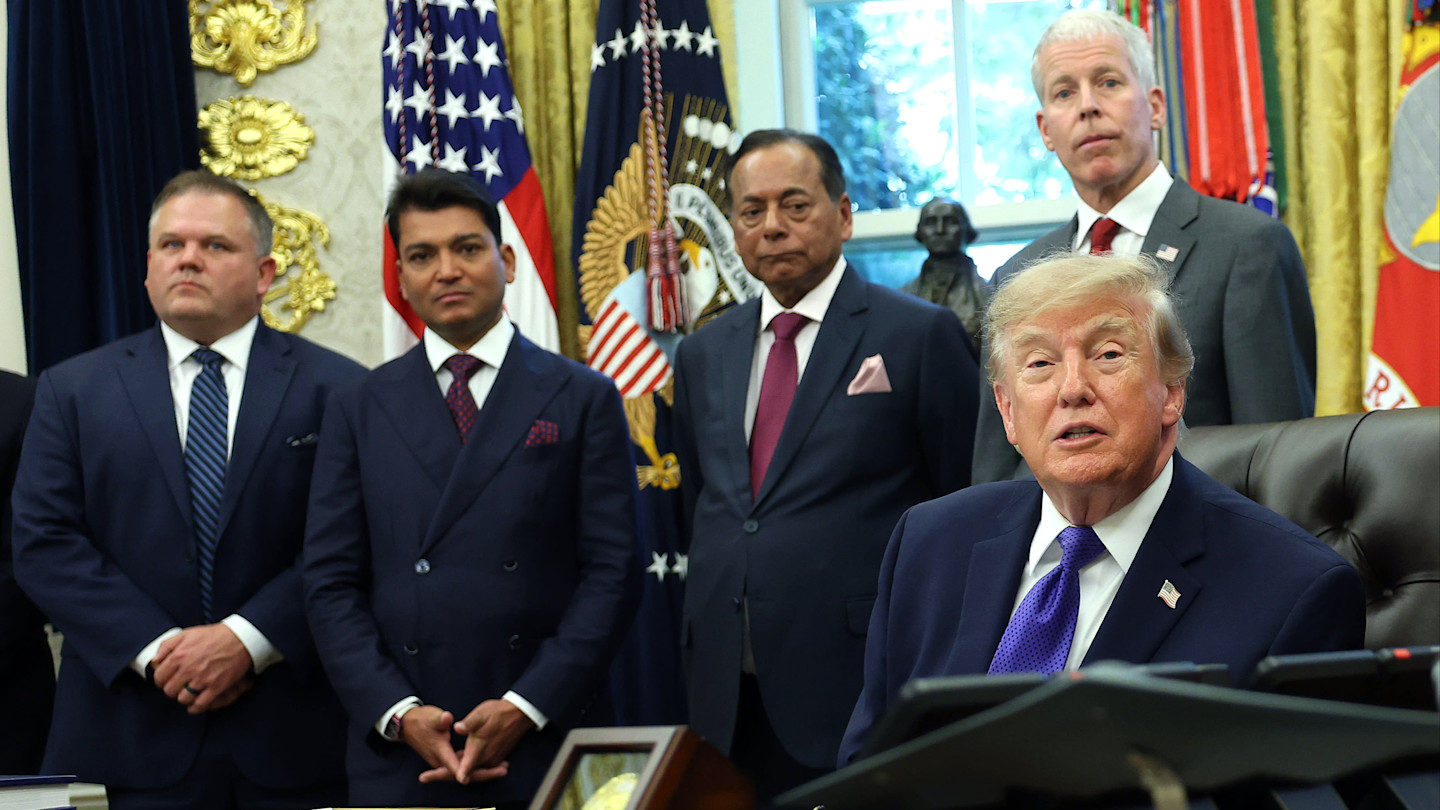
After seven years, India’s Essar Group is re-entering the steel business, this time with an $18bn investment in the US. Through its American entity, Mesabi Metallics, the group plans to build a fully integrated steel complex, US President Donald Trump announced last week, calling it the “largest steel plant in American history”. The investment has two parts: a proposed $15bn integrated steel facility in Iowa and about $3bn already being invested in an iron ore mine in Minnesota.
This marks a significant turnaround for the group, which had borrowed heavily through the commodity boom of the 2000s, investing in steel, oil, power and ports. But weaker commodity prices, project delays and regulatory problems changed the business dynamics, leaving it highly leveraged. In 2017, with billions of dollars of debt in its books, Essar Steel entered insolvency proceedings under India’s new bankruptcy code. A protracted legal battle followed, eventually ending with the Supreme Court upholding the resolution plan of ArcelorMittal, which acquired Essar for about $6bn. The group sold several other assets too, most significantly Essar Oil, whose Vadinar refinery and related assets were sold in 2017 to a consortium led by Russia’s Rosneft for $12.9bn. The proceeds were used to pare down debt and steady the ship.
In the past few years, the group has quietly rebuilt its global portfolio. It owns the Stanlow refinery in north-west England and has investments across energy, infrastructure, mining, technology and other businesses.
The Iowa plant is significant because it marks Essar’s second attempt at the business that both made its name and nearly sank the group. The political environment in the US is certainly favourable: steel manufacturing is a priority for the Trump administration, which has imposed a 50 per cent tariff on steel imports. Trump explicitly credited his tariffs for this investment, while commerce secretary Howard Lutnick presented the project as proof that American steel could be produced competitively at home.
But whether the economics have changed is a harder question. The forces that pushed steelmaking outside the US — high operating and construction costs, availability and cost of financing, and the difficulty of executing large industrial projects — have not improved substantially. But a $15bn greenfield mill is a bet that could need a decade or more to play out. So we will know the answer later rather than sooner.
Do you think Essar’s investment in US steel is a good idea? Hit reply or email me at [email protected]
Recommended stories
The Indian Flydubai pilot, Captain Smit Machchhar, is praised after he averted a disaster.
India throws a month-long birthday bash for Narendra Modi.
Will Auroville, India’s ‘City of Dawn’, survive a bitter political struggle?
Russia’s new drive to crush Ukraine.
Wall Street’s IPO fervour cools on tepid demand and valuation worries. Several listings have been paused in recent weeks.
The FT’s stock picking game has started. Take on other subscribers in a race to win £1,000.
Stand-off over Mumbai airport
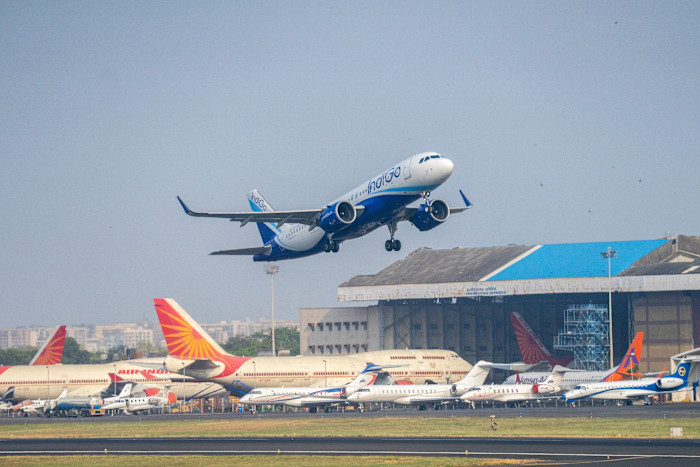
Multiple airlines and the Adani Group’s Mumbai airport operator are in a stand-off over moving flights to the new Navi Mumbai airport while Terminal 1 at the main airport is rebuilt. The first flashpoint is today, the deadline for airlines to tell Mumbai International Airport Ltd (Mial) which slots they want discontinued. If they don’t, Mial will choose for them.
From October 25 there will be a roughly one-third cut in international departures from Terminal 2, which is currently the main terminal for international flights. Mial plans to temporarily discontinue 265 of the 770 weekly international departure slots. The affected flights will be moved to the newly commissioned Navi Mumbai airport — also operated by the Adani Group — about 35km away from Mumbai airport. The changes will affect 46 airlines, with IndiGo losing the largest number of weekly departures, at 74. Air India will lose 33, while Emirates and Etihad will lose 10 each.
Iata, the International Air Transport Association, has written to the government opposing the move, with the airline lobby calling it a “forced relocation”, and arguing that carriers were not suitably consulted. International airlines that have limited flights to India are particularly affected because their operations are run on tighter resources that cannot be easily spread over two distant airports. Passengers too have been vocal about their complaints: the new airport lies outside the city, is poorly connected by public transport and the trip will take longer and cost a lot more.
Over the weekend, Adani said only 9 per cent of passengers would be affected, and now that the Navi Mumbai terminal was operational, the “planned closure and phased demolition of Terminal 1 can no longer be deferred”. The company says the redevelopment is necessary because of safety concerns around the 60-year-old terminal. On Sunday, carriers responded by asking the operator for records of consultations on the rebuilding of Terminal 1, as well as the basis for calculating the roughly 33 per cent reduction in international departures.
Airlines are right to be miffed. Their winter schedules were approved in June, when no such reduction in international capacity was on the table, and they planned their fleets and routes accordingly. The episode also sharpens the conflict-of-interest concerns carriers have voiced about the Adani Group’s possible entry into airlines, which I wrote about last week.
Do you think airlines are right in objecting to Mial’s directives? Hit reply or email me at [email protected]
Go figure
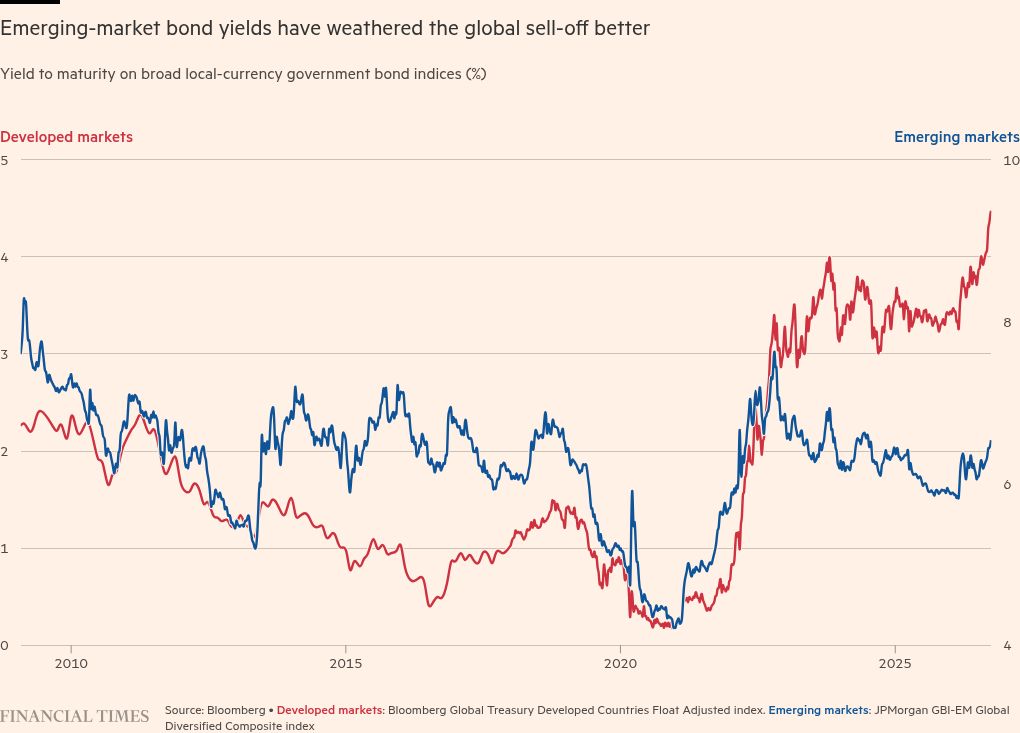
Emerging markets are weathering the global sell-off in bond markets better than developed world peers, as investors bet that many countries are now less vulnerable to the threat of higher US interest rates drawing capital away. Yields on 10-year US Treasuries have surged from 4.8 per cent to 5.3 per cent in the past month. Yet, in South Africa, Chile and other large developing nations, sovereign yields have risen much less.
Quick question
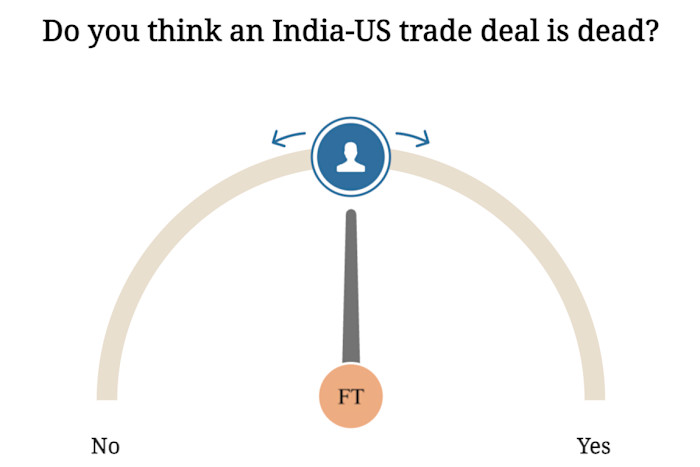
India’s finance minister Nirmala Sitharaman has said the trade deal talks with the US have hit a “plateau”. Do you think this means there will be no deal? Tell us here.
Your view
Last week I wrote about Adani’s interest in starting an airline, and whether the government will approve an airport operator’s plans to fly its own airline. India Brief reader Ashish Tiwari had this to say.
Airport operators should not be allowed to own an airline. It will likely bring conflict of interest, and may allow the operator to assign better slots, parking facility etc to their own carrier instead of IndiGo or Air India. It will not be a healthy competition.
(Edited for length and clarity)
Thank you for reading. India Business Briefing is edited by Mark Garrison. Please send feedback, suggestions (and gossip) to [email protected].