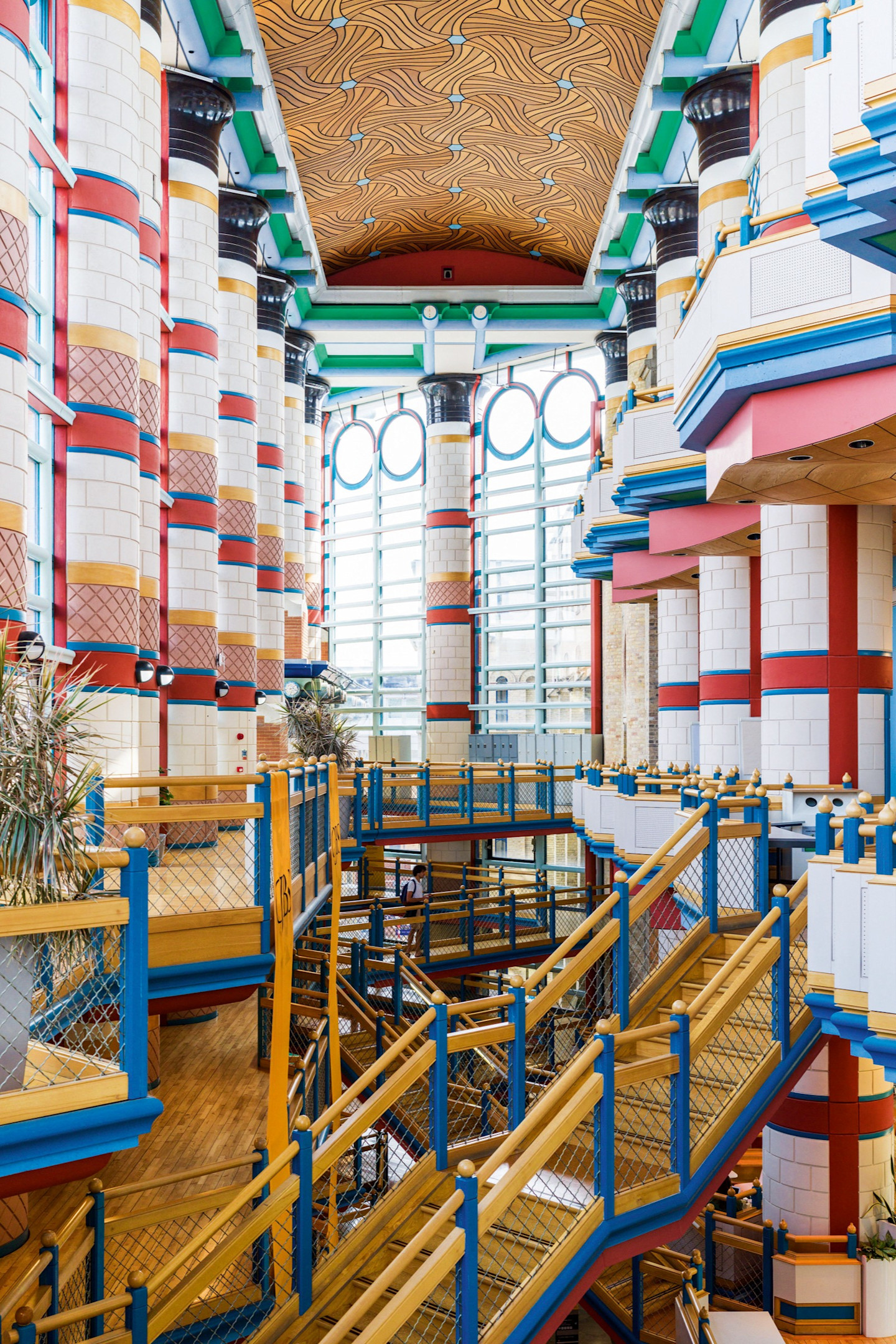
“Postmodernism is simultaneously the ironic, the iconic and the critical,” wrote architectural historian, theorist and designer Charles Jencks. It is the only art and design style that embodies a tongue-in-cheek self-critique – a Russian doll of historical references, humour and outrageous kitsch. At its best, postmodernism is an absolute blast, a dazzling speedball of knowing vulgarity and garish colour. Or rather, it was. Mostly it is gone.
Postmodernism’s self-consciously kitsch interiors, a pop response to modernism’s austerity, have almost entirely disappeared. They went out of fashion in a flash, their success and ubiquity matched by their precipitous decline. When I was studying architecture in the 1980s, PoMo was au courant – and we all, of course, hated it. Yet its confidence in architecture’s ability to thrill and provoke has proved enduringly, and perhaps surprisingly, infectious. Today its palimpsest of high and low culture is being reassessed.
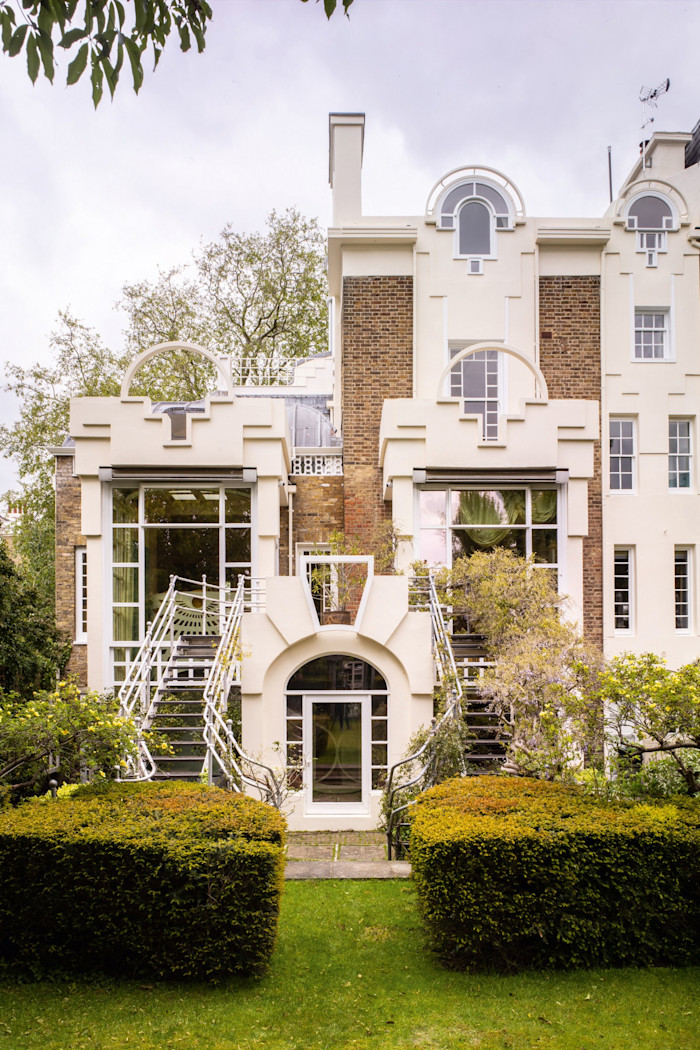
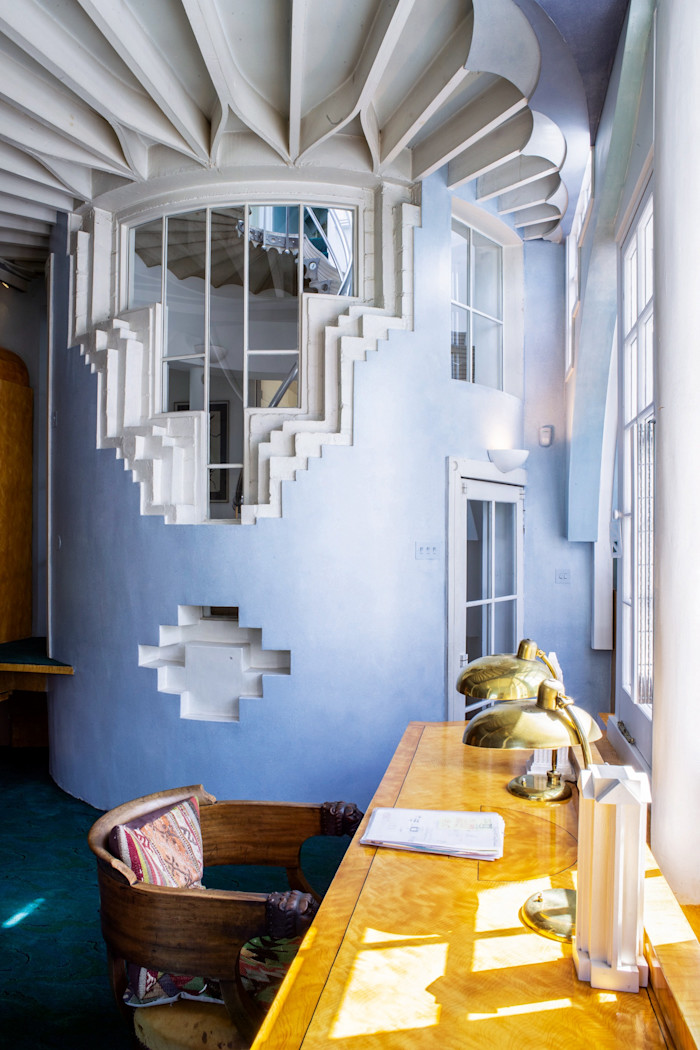
One of the few tenacious survivors is Jencks’ own home, The Cosmic House in London’s Holland Park. It is a property I have a personal interest in; Jencks was a friend who anointed me the house’s “Keeper of Meaning” – a characteristically enigmatic position that I am still attempting to understand. What I do know is that the theatrical intervention in the 1840s villa, designed by Jencks, his wife Maggie and architect Terry Farrell between 1978 and 1983, is an incredible Gesamtkunstwerk with a Grade I listing (the highest order of protective care).
Ever since the style first properly emerged in the late 1970s, postmodernism has been both phenomenally popular and enthusiastically reviled. It’s an aesthetic that encompasses the scenographic staging of Karl Lagerfeld’s Memphis Milano-stuffed Monte Carlo home and the Egyptian kitsch of John Outram’s Sphinx Hill house (1999, now the UK’s youngest listed property). Across cinema, graphic design, fashion, retail and hospitality, people fell for its cheery pop aesthetics in a big way. Many architects, on the other hand, did not. Even those now credited with the movement’s invention washed their hands of it. American architect Robert Venturi’s work with his wife Denise Scott Brown, for example, was cited by Jencks as a proponent of early postmodernism – a label he vehemently rejected.
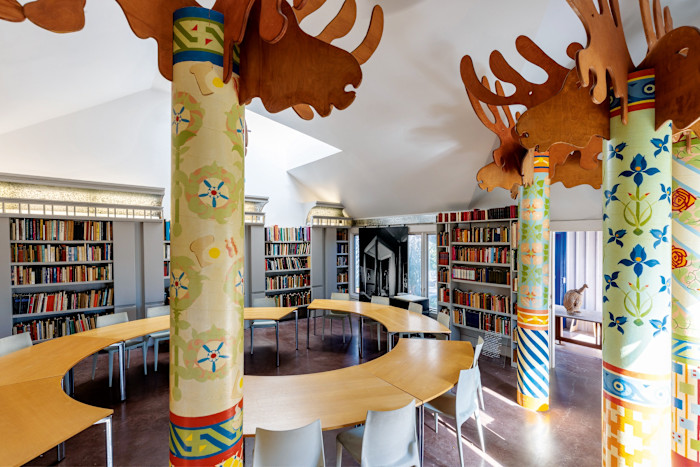
It was Venturi who responded to arch-modernist Mies van der Rohe’s aphorism “Less is more” with “Less is a bore”. If the one-time Bauhaus director spent his time stripping architecture back to its essentials, the postmodernists played dress-up with it. Look at Charles Moore’s 1980s compound in Austin, Texas: a relatively austere 1940s bungalow on the outside; a supercharged riot on the inside, featuring jig-cut moose heads and palm trees alongside op-art-patterned floors and shelves filled with folk art. Also in Texas is John Outram’s outrageous Duncan Hall at Rice University in Houston. Completed in 1996 (very late for a PoMo masterpiece), it is an amalgamation of ancient architectural influences and hi-tech elements. Shapes resembling circuit boards and microchips merge with cosmological motifs.
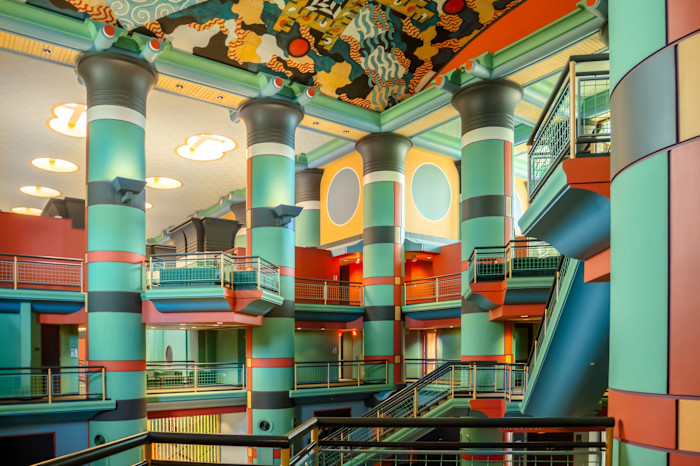
Outram, a British architect who is now 92, accepted the postmodernist label. The Cambridge Judge Business School that he designed in 1995 is extravagant yet deeply thoughtful: one of postmodernism’s greatest surviving landmarks. Based around the “Robot Order” (Outram’s own sixth classical order, conceived after the five of ancient Greece and Rome), it is a blast of colour and symbolism that was widely derided.
PoMo’s many naysayers saw these interiors as superficial. Reaching peak popularity in the era of Thatcher and Reagan, the Big Bang, big shoulders and big money, they were often associated with neoliberalism (when, in fact, many of its practitioners were of the liberal left). In the 1986 film Ruthless People, postmodernism’s garish ostentation is a visual metaphor for Danny DeVito’s cartoonish greed. In the 1988 comedy horror Beetlejuice, the Maitlands, a young couple played by Alec Baldwin and Geena Davis, find themselves dead, trapped in their attic, as their homely Victorian house is radically remodelled by ghastly yuppies. The aesthetic villain here is PoMo; chintz our comfy hero.
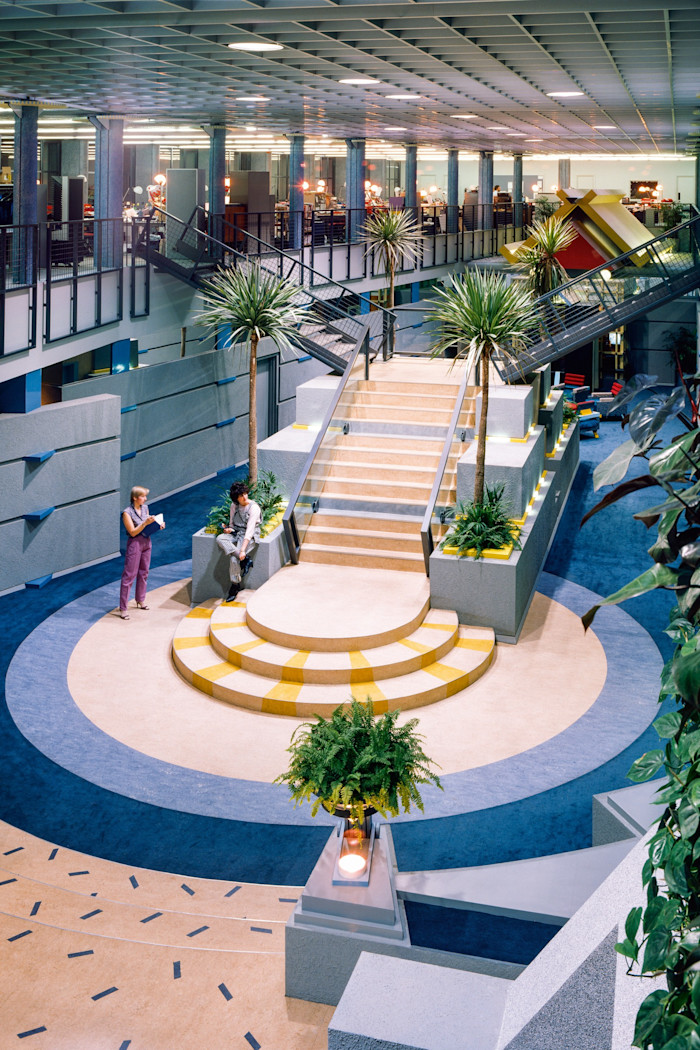
Some, admittedly, took things too far: Michael Graves’ kitsch Team Disney Building in Burbank (1990), featuring the seven dwarves as giant caryatids, was a load more than even the staunchest defenders of the style could bear. Much, though, was breathtaking – and sadly destroyed just as postmodernism was being reassessed. There was the gridded, ghostly neo-Egyptian public lobby of 60 Wall Street, designed by Kevin Roche and John Dinkeloo in 1989, clad in marble and punctuated by potted palms. Permission to gut it was given in 2023. The iconic public lobby of 550 Madison, designed by Philip Johnson in 1978 with its pedimented Chippendale-top, went the same way.
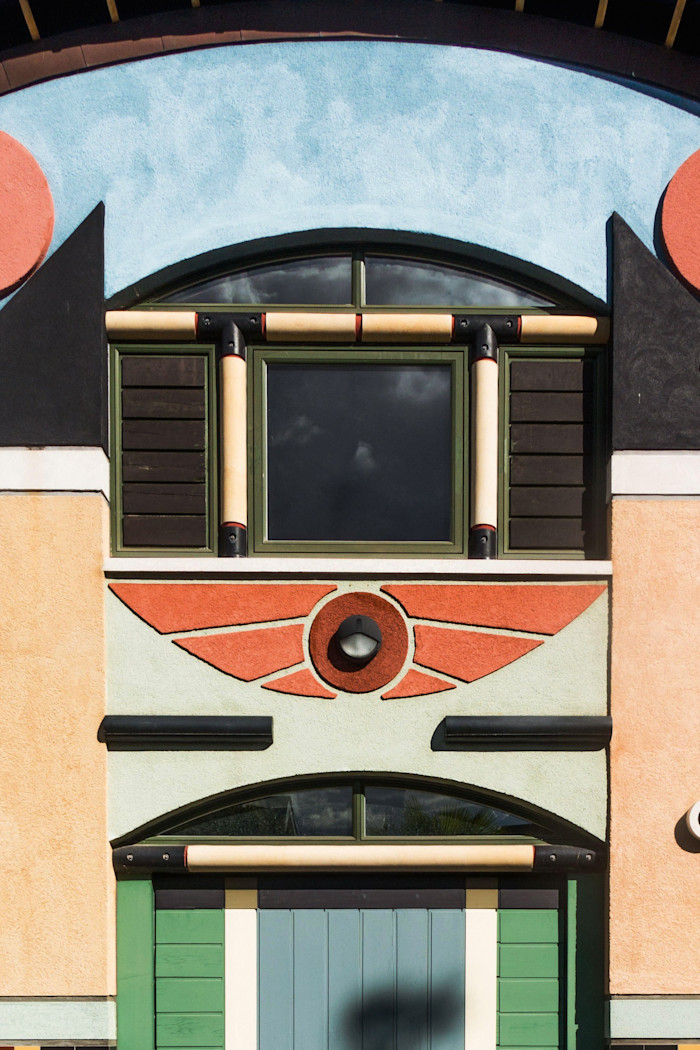
In London, Terry Farrell’s canal-side TV-am studios in Camden was converted from a garage in the early 1980s and famously topped with egg cups as gable ornaments. Farrell (who was working on The Cosmic House at the same time) designed a cheap, brilliant interior with a Memphis-type desk, faux-deco details, violet-coloured walls, an operatic stair and an oversized arch made of steel tubing as its entrance. It was gutted in 2012.
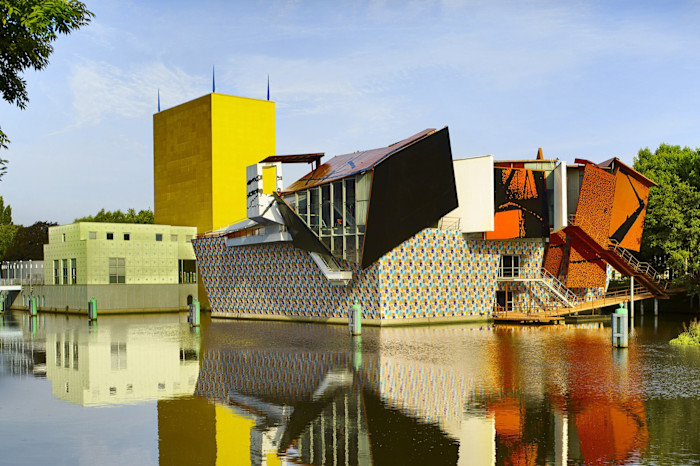
If the postmodern interior is almost extinct in the wild, it is at least clinging on in captivity. Four years ago, Milan’s Triennale museum acquired the proto-PoMo interior of the 1960s Casa Lana by Ettore Sottsass. It is a surprisingly restrained but highly inventive scheme. In Hong Kong, the M+ now houses the striking 1988 Kiyotomo sushi bar by Shiro Kuramata, with its vaulted ceiling, wood cladding and granite counter. The Brooklyn Museum has a whole Michael Graves apartment, while the Groninger Museum in the Netherlands is itself a postmodern explosion – a messy polychromatic exuberance designed by Alessandro Mendini, Michele De Lucchi, Philippe Starck and Coop Himmelb(l)au.
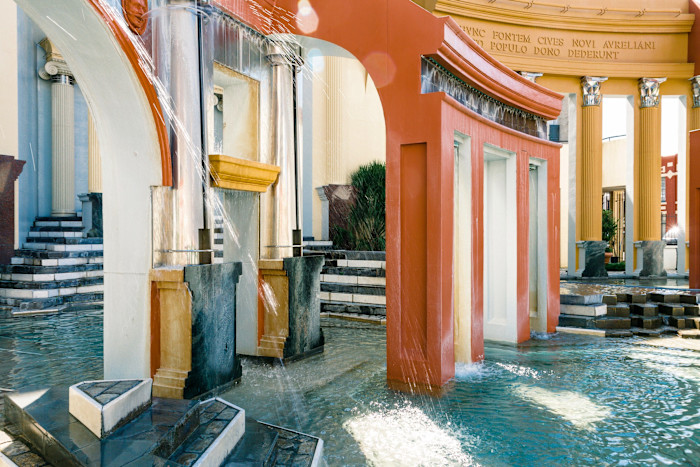
In New Orleans, Charles Moore’s Piazza d’Italia (1978) has recently been restored. The urban plaza is at once public and intimate, evoking an Italian city in the way a Vegas casino might. It is a shining example of what makes postmodernism so enduring. Now, stuck behind a huge tower block, it is both strange and cheering. Such once-ubiquitous spaces are now real rarities, bold statements dripping with irony and historical references. They display a dedication to the possibilities of pleasure in architecture. The least we can do is preserve the last few fragments.