Banks have spent the last few decades frantically closing branches, cutting real estate overheads and trying to keep up with fast-growing digital fintechs. Now, though, some have come up with a radical new strategy: to open branches.
UK banks have been among the most extreme in the world in slashing their high-street presence. Across the country, there are now barely 4,000 bank and building society branches, down 80 per cent in 40 years.
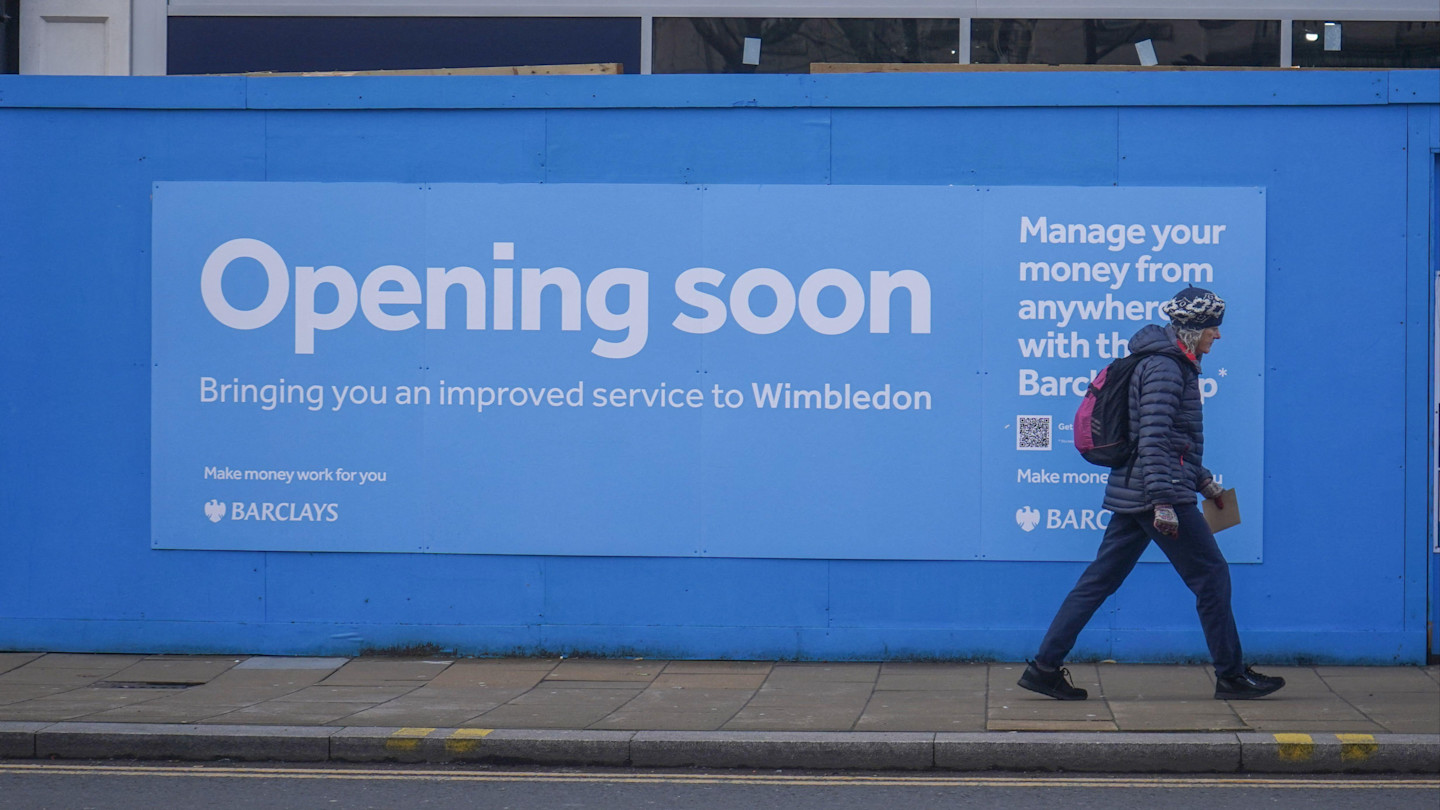
Barclays, which has been the most aggressive in closing branches of late (shrinking its estate from nearly 1,000 in 2019 to 206), is now keen to highlight a reversal of strategy: over the past fortnight it has opened two branches — one in Bishop’s Stortford, north of London, and one in Poole on the south coast — declaring itself “the first large bank that’s opened a branch in about a decade”. (The stripped-back stores, to be joined by Beverley in Yorkshire next month, have a handful of cubicles and a couple of ATMs but no counters, and appear chosen to attract retail customers and small and medium-sized enterprises in three reasonably affluent locations.)
Yet this is no aberration. In the US, the trend has been under way for some time. In 2024, JPMorgan Chase said it would open 500 branches. Last year Bank of America announced 150 new “financial centers”. PNC is adding 300 branches.
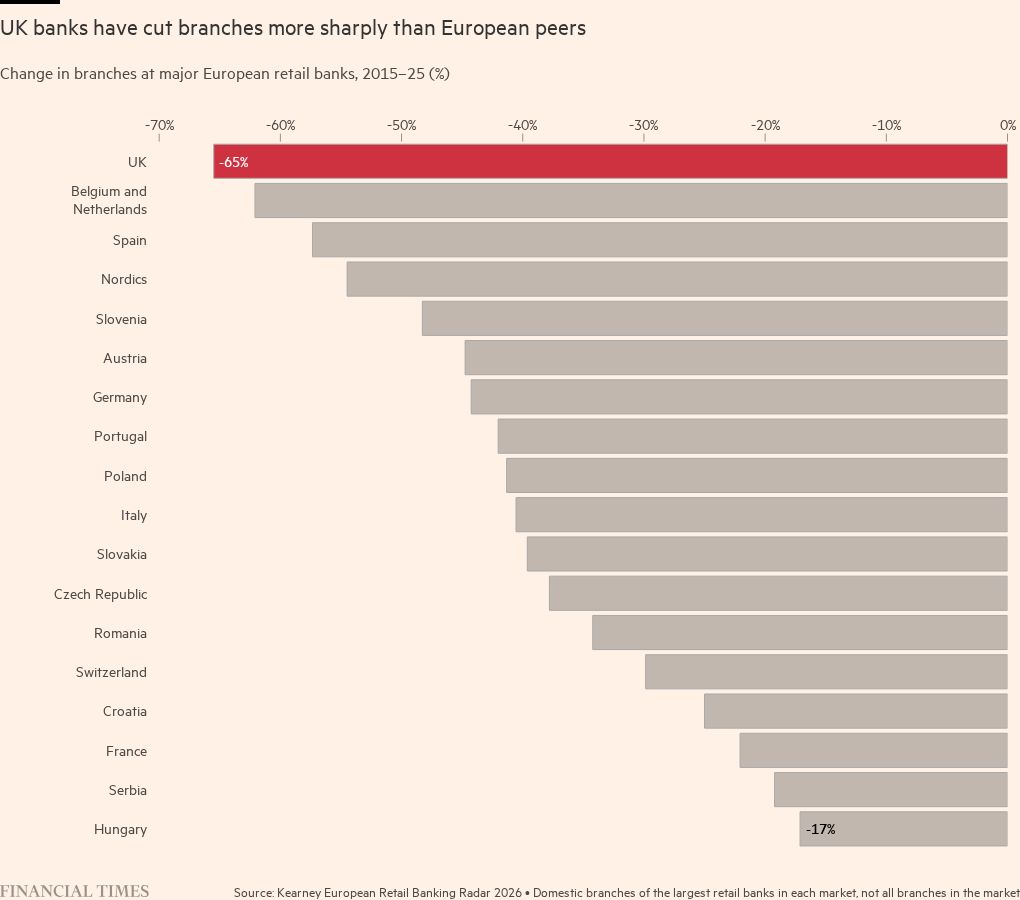
In Europe, a general trend of declining branch numbers has continued — down 42 per cent over the past decade, according to consultancy Kearney. Aside from the UK, the most acute reductions have been in the Netherlands and Spain, while France experienced the smallest decline — at barely half the average EU rate.
In the UK, though, some smaller operators with throwback business models have been expanding. Sweden’s Handelsbanken has steadily built out a British network of 120 outlets, each run by a highly autonomous branch manager. Metrobank, despite financial and regulatory stresses, has continued to expand its footprint and now has about 80 outlets, reminiscent of the large, slick “stores” that its US co-founder Vernon Hill pioneered with his US Commerce Bank chain.
Some institutions have tried to make their branches more appealing in original ways. Although Santander has continued to trim its UK network (and is expected to close more outlets once it integrates its TSB acquisition), it has also begun adding “work cafés” to a number of its city-centre branches — an attempt to tap into the trend for co-working spaces.
Others have made a virtue of retaining large branch networks. Nationwide, Britain’s biggest building society, has nearly 700 branches and has pledged not to close any until at least 2030. The mutually owned group, which makes a point of empowering branch managers, reckons this has helped it top the table of current account switching (with more than double the net switching tally of the next most popular, Lloyds). It is also playing on its community-friendly image by adding new facilities: defibrillators and bleed-control kits are being fitted outside all its branches by the end of this year.
But much of the pro-branch thinking is about the core business that can be done in these spaces. As banks seek to deepen their relationships with customers, many are realising that branches — if they are transformed from the old model of tellers doing low-value cash transactions — can be a great route to broaden the business they do with each customer.
New UK rules giving banks greater scope to provide advice on investments and other topics should open up an opportunity to sell the kinds of products that customers might be wary of committing to in an online-only environment.
That is certainly a key focus of US branches, where many bank customers also have brokerage accounts and may feel more comfortable opening them or discussing investments in a branch.
But there is also something less concrete going on. Particularly striking is data suggesting that US banks sell more products to their customers in areas where they have a high-street branch: PNC, for example, reckons it is six times more effective at marketing to purely digital customers if they live near a branch. Who’d have thought it? There’s brand value in having a shop with a massive sign over the door — even if it does make for a rather expensive form of advertising.