Good morning. A scoop to start: Brussels is considering taxing large US tech companies through a broad levy on large corporations· to raise revenues for the EU budget while avoiding a backlash from the Trump administration.
Today, our economy correspondent examines Brussels’ “voodoo calculations” being pitched to EU capitals discussing the next budget, and our industry correspondent previews today’s negotiations on what puts the “Europe” in “Made in Europe”.
‘Voodoo calculations’
The European Commission is desperately trying to convince EU countries not to slash its future budget, arguing that it technically will not end up costing more money — if capitals agree to new EU taxes, writes Paola Tamma.
Context: EU leaders meet next week to advance talks on finding an agreement on the 2028-34 shared budget. Ireland, which holds the presidency of the Council, is set to circulate a new compromise budget on Saturday.
The key question is how much Dublin will cut to appease large net contributors, led by Germany, that have threatened a no-deal scenario unless they see “hundreds of billions” in cuts, while avoiding alienating a majority of EU countries that want to keep the €2tn budget as it stands.
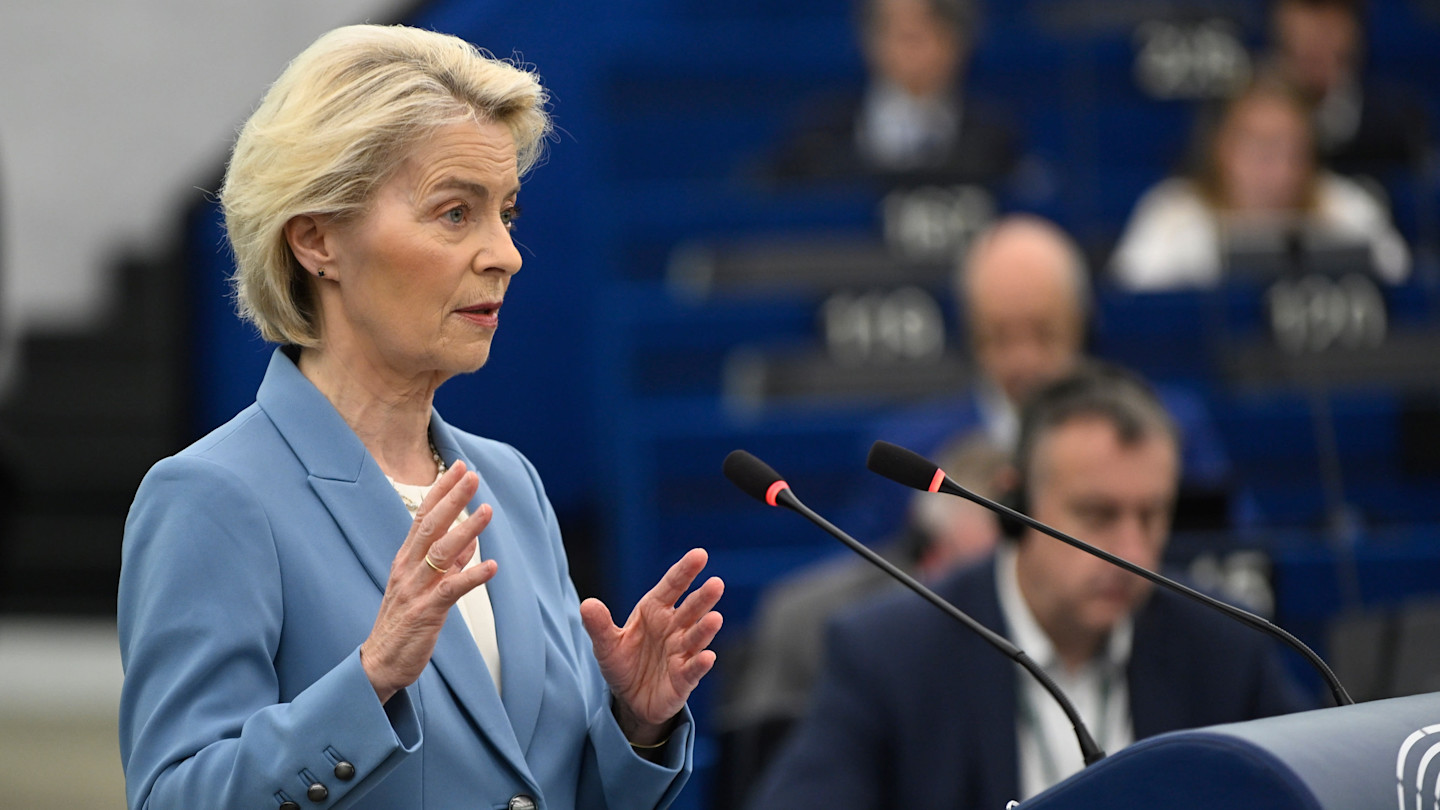
Commission president Ursula von der Leyen said yesterday: “I would like to caution against large cuts. It would risk cutting deep into critical priorities.”
In an internal document seen by the FT, von der Leyen’s Commission argues that EU countries’ dues will actually shrink as a proportion of the size of the bloc’s economy, compared to what they pay now, due largely to updated economic forecasts.
“The relative size of total EU-27 national contributions is expected to decline in the next [EU budget]” to 0.76 per cent of EU gross national income under the current negotiating compromise, compared to this year’s call-in rate of 0.84 per cent.
But this number excludes so-called “new own resources” or proposed EU-level taxes that should collectively raise €60bn a year, and includes higher revenues from the bloc’s carbon market, a tax on carbon-intensive imports, higher tobacco duties, as well as a tax on non-recycled e-waste and a corporate levy.
But diplomats argue that far from being magic money, EU taxes are still essentially a transfer from national taxpayers to Brussels, often reducing domestic budget revenue.
“This creates a parallel universe from the budgetary realities in member states that is not helpful for the discussion,” said one EU diplomat.
When including new own resources, the size of the proposed new budget increases to 1.19 per cent of EU gross national income, from 1.02 per cent in 2027.
“It’s voodoo calculations,” said a second EU diplomat.
Chart du jour: Crude awakening
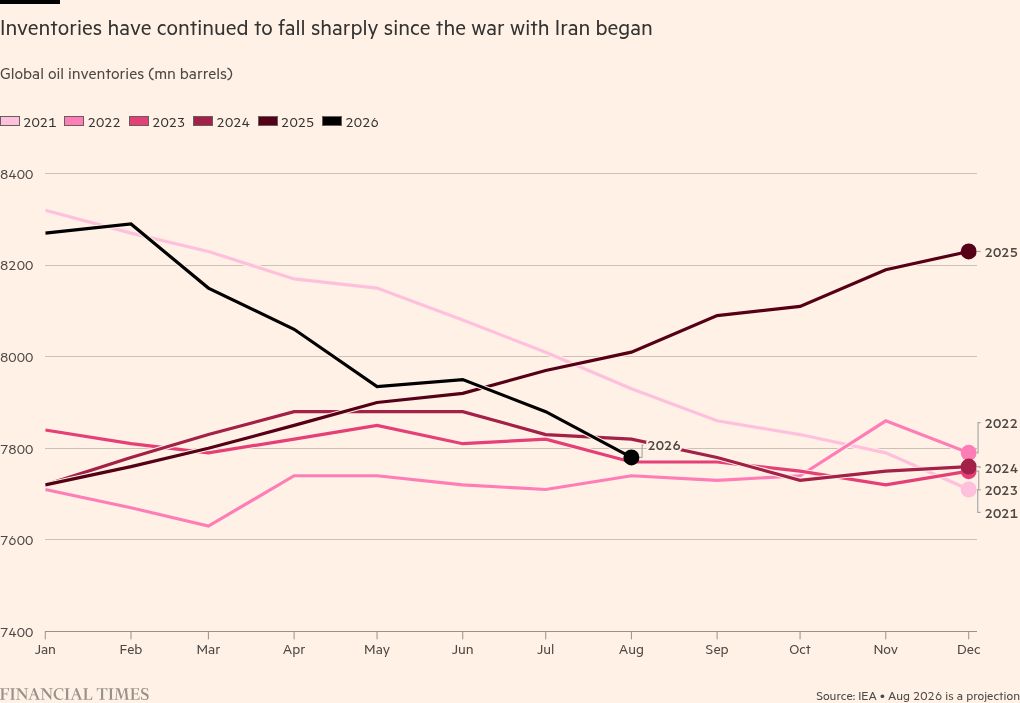
The US-Iran war’s disruption to oil supply, oil prices and the world economy has been surprisingly manageable so far, writes Martin Wolf·.
Definition
EU capitals will delve into what “Made in Europe” means in a critical discussion among ambassadors today, with member states still divided over whether to include trade partners in the scope of the Industrial Accelerator Act (IAA), writes Ian Johnston.
Context: The IAA is designed to create demand for European metals, electric vehicles and clean technologies by limiting public procurement and subsidy schemes to products “Made in Europe”, helping manufacturers to withstand intense Chinese competition.
France has made clear its preference for a stricter vision of “Made in Europe”, while Germany has advocated for the broad inclusion of allies with free trade agreements. The discussions are being followed closely by Europe’s embattled automotive and battery sectors, as well as by partners such as the UK, Japan and Turkey.
But interested parties will face a longer wait for clarity as ambassadors are not expected to make a decision on what union origin means tomorrow. Ongoing Franco-German discussions on the IAA and various car regulations are also complicating the outcome.
Progress on the text has been painstaking due to the sheer complexity of the Commission proposal in March and the stark political differences around the Council table. A Spanish proposal for layers of European status has also caused issues. “It’s a mess,” said one diplomat from a traditionally liberal member state.
To make headway, Ireland has circulated a document asking member states which vision of “Made in Europe” they can support and the extent to which they are ready to accept disruption to some supply chains in order to achieve the IAA’s goals of boosting manufacturing.
Few diplomats expect a breakthrough but the Irish presidency of the Council hopes discussions can lay the ground for an agreement next month.
“It’ll help inform the final agreement,” said a presidency spokesperson. “We have to have something that’s understandable and implementable for public bodies and our partners.”
What to watch today
Summit of heads of state or government from the MED9 group, in Split, Croatia.
US secretary of state Marco Rubio meets Greek foreign minister George Gerapetritis in Athens.
Now read these
‘Complete rollback’: The EU is moving to dilute pesticide rules after lobbying from chemical companies· and agricultural groups.
German spy scandal: Berlin’s BND intelligence agency had been seeking a return to the top table. Then prosecutors accused its ex-chief of treason·.
Pedro Sánchez: Spain’s prime minister has made a career out of high-stakes gambles. His triggering of snap elections could be his last, writes the FT.·
Are you enjoying Europe Express? Sign up here to have it delivered straight to your inbox every workday at 7am CET and on Saturdays at noon CET. Do tell us what you think, we love to hear from you: [email protected]. Keep up with the latest European stories @FT Europe