The writer is professor of strategy at King’s Business School, King’s College London
Over the past decade, Formula 1’s race map has been quietly redrawn, with its European heartland shrinking as owner Liberty Media globalises the sport and pursues higher revenues.
Europe has gained Madrid in September — with the Spanish capital returning to the F1 calendar after 45 years — and, next season, Portugal’s Portimão. But it has lost Italy’s Imola and will lose Zandvoort in the Netherlands from 2027; while Belgium’s Spa-Francorchamps, one of the sport’s iconic circuits, will alternate annually with Barcelona in Spain.
The return of the Turkish Grand Prix in 2027 — held on the Asian side of Istanbul — means Asia will host nine races next season, overtaking Europe with eight, for the first time.
While F1 CEO Stefano Domenicali has reassured fans that the German Grand Prix will return, many traditionalists see a clear trend: Europe is losing its primacy as F1 embraces higher-bidding hosts.
But they are grieving over the wrong map.
F1 has always had two geographies. The first is where the show takes place: the races. That geography is globalising fast, and understandably so: Gulf hosts pay Liberty Media roughly $50mn a year for their races, according to analyst estimates, double that of most European promoters.
The second is where the cars are made: the industry. That geography is historically clustered. Since the second world war the design and manufacturing of F1 cars has concentrated in a strip of English countryside between Oxford and Northampton.
Although Italy’s Motor Valley, in Emilia-Romagna, remains home to Ferrari, Racing Bulls and Dallara in F1, the British cluster remains the sport’s main centre of gravity for now.
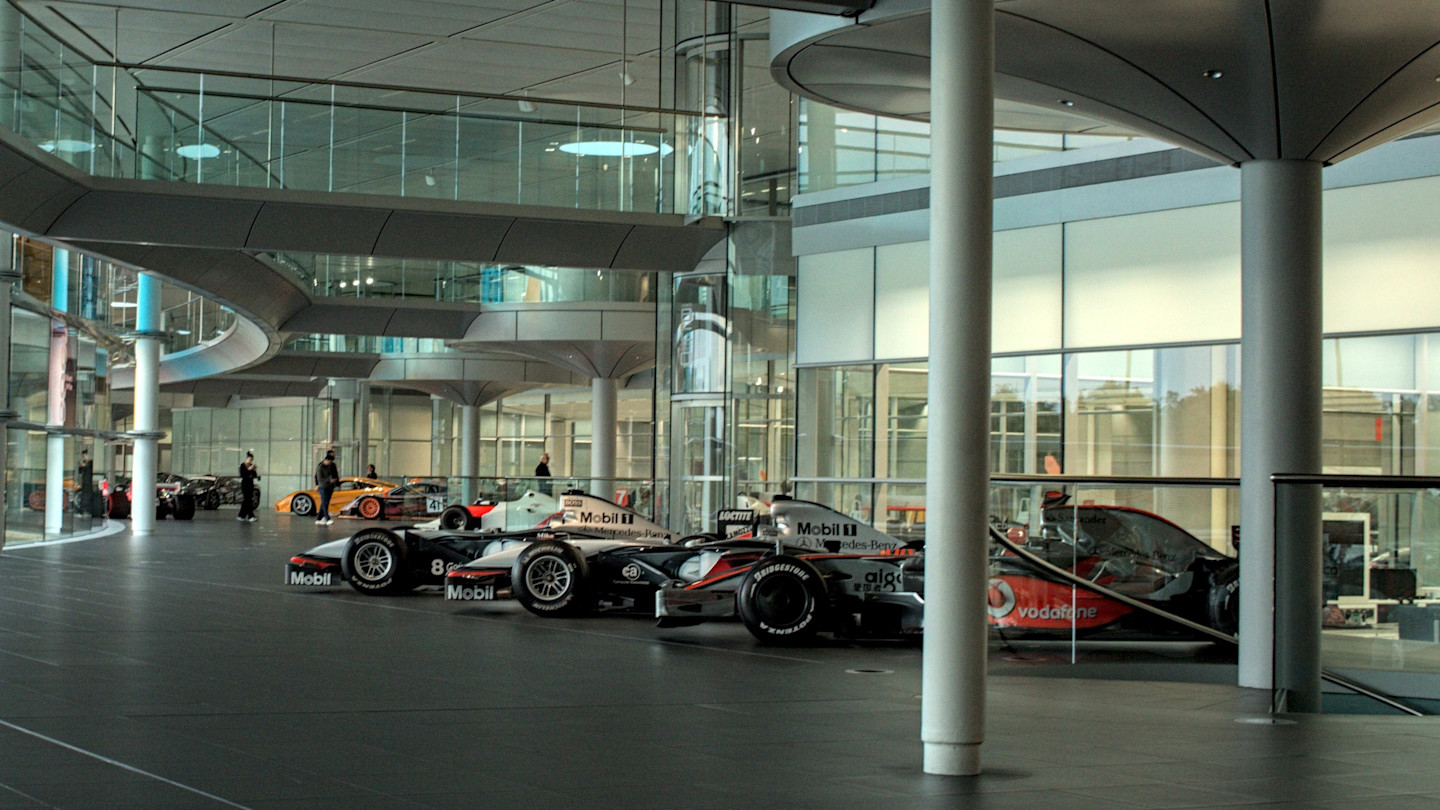
Motorsport Valley, as the strip is known, is home to the headquarters of six of the 11 teams: Mercedes in Brackley, Red Bull in Milton Keynes, Aston Martin at Silverstone, Williams in Grove, Alpine in Enstone and McLaren in Woking. Even teams headquartered outside the UK keep a foot in the Valley: Haas runs key operations from Banbury; Racing Bulls has a technical centre in Milton Keynes; while newcomers Cadillac and Audi have established a UK base at Silverstone and a technology centre in Bicester, respectively. The Motorsport Industry Association values the wider UK motorsport and engineering services sector at £16bn a year and estimates that it supports 50,000 jobs.
None of this was planned. The cluster’s origins can be traced back to amateur enthusiasts racing home-built cars on disused wartime airfields, Silverstone among them. Charles Cooper and his son John built tiny rear-engined racers in a garage in Surbiton, winning back-to-back F1 world championships in 1959 and 1960. Colin Chapman assembled his first Lotus in a north London lock-up and went on to claim seven constructors’ titles.
Two mechanisms still power the Valley today. Talent rises vertically, from karting paddocks and club racing into professional teams; and it moves horizontally, as engineers circulate between rivals, spreading knowledge that no patent can capture. Passion anchors people to place. That is what makes clusters sticky, and why this one has survived every change of regulation, ownership and fashion since the 1950s.
It is also why the anguish over the calendar misses the point. Hosting races and building cars are different markets: one sells spectacle to a global audience; the other drives economic value through advanced engineering with benefits and knowledge transfer beyond F1 and motorsport.
Italy proves the point. It lost Imola, yet its production base thrives: Ferrari in Maranello, Racing Bulls in Faenza and Dallara in Varano de’ Melegari, which designs Haas’s F1 chassis, builds Cadillac’s endurance prototypes and supplies every F2, F3 and IndyCar.
A country can lose the show and keep the factory. Italy still has both, and England more so: most of the teams and suppliers, F1’s London headquarters, and the British Grand Prix at Silverstone until 2034. The question is whether its engineering cluster can remain world-leading.
History can change, leaving no room or time for complacency. Motorsport Valley’s grip is already loosening: from 2029, General Motors will build Cadillac’s engines in North Carolina; Audi has based its works programme in continental Europe; and Dallara keeps winning outsourced work that teams choose not to do in-house — Haas and Cadillac being two points in case.
Meanwhile, UK frictions are growing, with higher living costs than elsewhere deterring international talent from moving to the country, along with rising costs of energy, manufacturing and the visas for the foreign engineers that are a key part of any F1 team. Clusters rarely collapse loudly. They erode quietly, one outsourced contract at a time. Ask Detroit.
The solution for British policymakers is to treat Motorsport Valley as strategic infrastructure rather than a heritage curiosity. The government already offers fast-track visas for digital technology and the arts, and it waves through elite drivers as international sportspeople. However, particularly after Brexit, the engineers who make those drivers and their teams champions must queue with everyone else. Extending endorsement to motorsport engineering would be a powerful move.
Moreover, F1 research and development should enjoy similar levels of state support as the aerospace industry, and the government should support the amateur layer of the pyramid, such as karting. My research suggests governments cannot legislate a cluster into existence; passion does that. But policy determines whether the next Cooper garage starts in Surbiton, Concord or Varano.