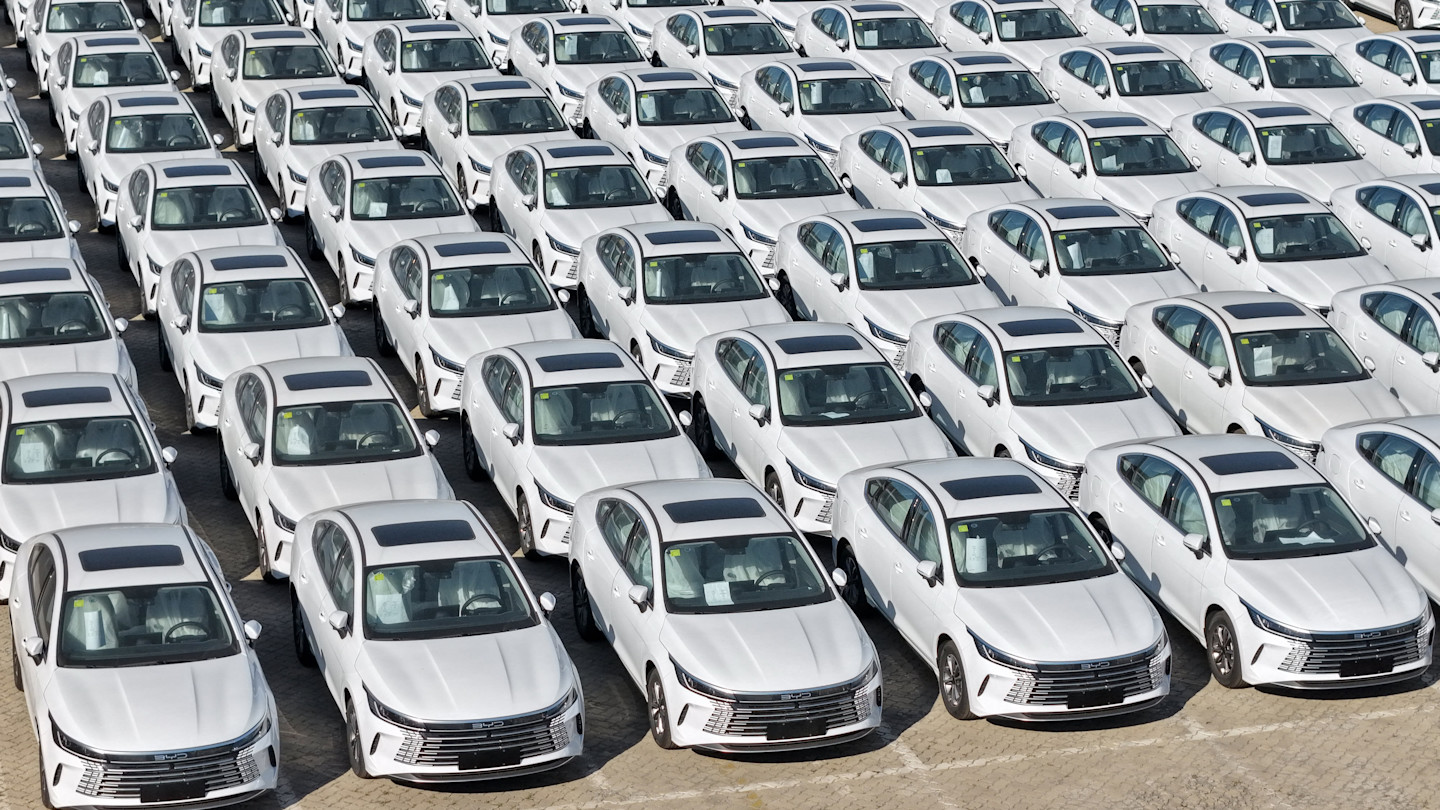
China has agreed to restrict its exports of hybrid vehicles to the EU, the bloc’s trade commissioner announced after high-stakes trade negotiations in Beijing.
After two days of talks that were seen as a last-ditch effort to avoid full-scale trade conflict, trade commissioner Maroš Šefčovič, told a press conference on Friday that Beijing’s acceptance of a central EU demand proved dialogue could work.
Šefčovič said China had agreed to restrain its hybrid car exports to the EU to a level half or less than that currently projected by the EU over the next four years, a commitment he said would prevent “several million” being shipped. However, that would still allow actual volumes to increase over the period.
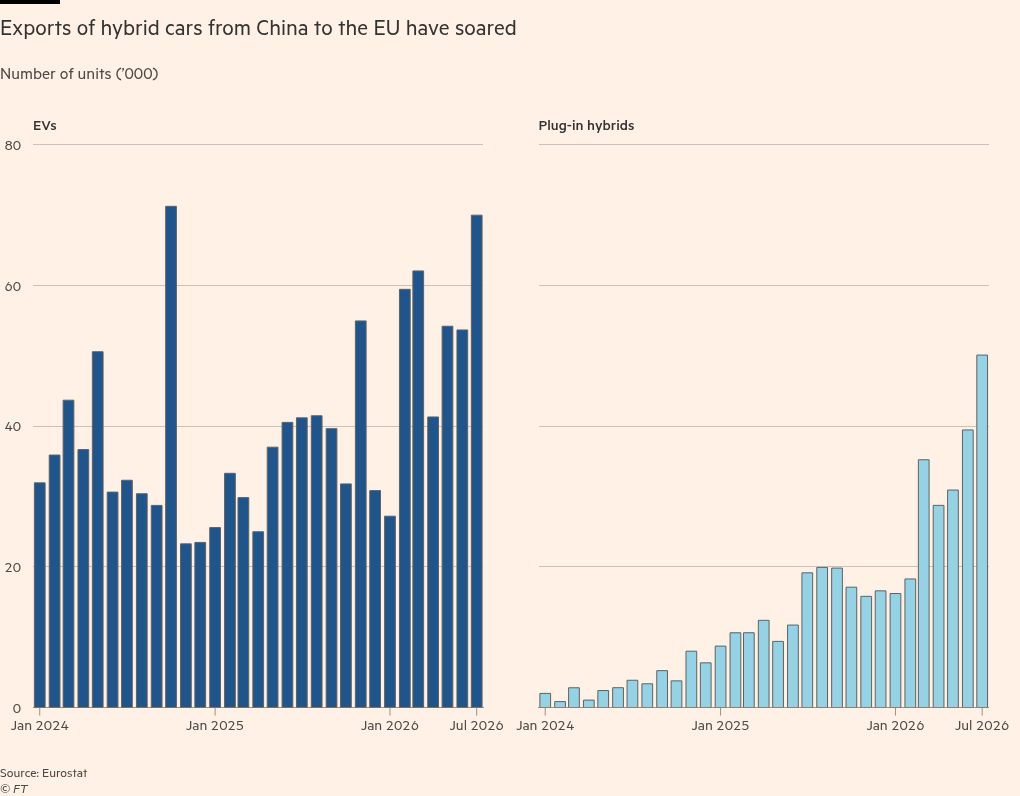
EU imports of hybrids have surged after the bloc imposed high tariffs on Chinese battery-only EVs. The FT has reported that China had rejected an EU request to limit exports of plug-in hybrid electric vehicles to roughly 15 per cent of the market.
China did not immediately confirm the details of the agreement on hybrid cars, but a joint statement issued by the two sides said they had reached an “understanding on trade in hybrid vehicles in a manner consistent with [World Trade Organization] rules”.
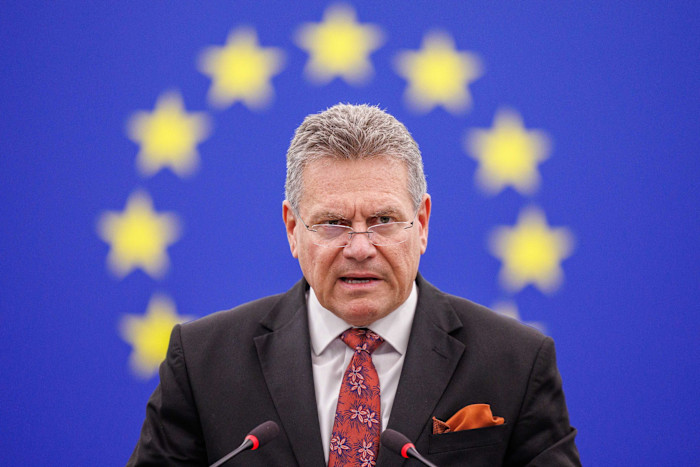
The talks between Šefčovič and China’s economy tsar, vice-premier He Lifeng, and commerce minister Wang Wentao had also yielded 15 other areas of agreement, the joint statement said.
Šefčovič said China had agreed to drop its tariffs on some products from all countries including car parts and olive oil. This covered levies of €225mn on €4bn of annual exports. China had a €370bn trade surplus with the bloc in 2025.
“This package proves that negotiations . . . bring results,” Šefčovič said, but he added that more needed to be done.
“The trade deficit is a mountain of a challenge for the EU, felt in every member state. It is unsustainable and it demands a credible path to rebalancing,” he said.
Šefčovič claimed European companies would get easier access to Chinese rare earths, crucial materials used in high-tech manufacturing, but the joint statement only mentioned continuing a “fast-track” licensing scheme.
The EU set an October deadline for progress on ways to reduce China’s trade surplus and Šefčovič said member states and the European Commission president Ursula von der Leyen would decide if the agreement was enough to forestall tougher trade defence measures.
Exports of Chinese hybrids to the EU hit to 50,000 units in July, more than double the 19,000 shipped in the same month of 2025. The European Automobile Manufacturers’ Association said Friday’s announcement was “a positive step in easing trade tensions”.
European officials had said a deal on hybrid cars was the minimum requirement for the EU to continue to rely on dialogue with China rather than resort to trade defence measures.
The joint statement said the two sides “reaffirmed their commitment . . . to properly handle differences within the framework of WTO rules, and to continuing to stabilise and balance bilateral trade and economic relations”.
European capitals, led by Paris and Berlin, are growing increasingly concerned that low-cost Chinese imports are costing the bloc tens of thousands of manufacturing jobs.
This week, France and Germany proposed introducing a last-resort trade instrument that could cut off China’s access to the EU’s single market in response to coercive measures, such as restrictions on critical materials.
In a letter to the European Commission, the countries cited the “weaponisation of trade, systemic market-distorting practices and global macroeconomic imbalances”, without naming China.
EU leaders meet next week to discuss what action to take.
As Šefčovič started his talks in Beijing on Thursday, the People’s Bank of China issued a note defending the level of the renminbi, in an apparent response to European claims that an undervalued currency was enhancing the competitiveness of Chinese exports.
“Attributing one’s decline in industrial competitiveness, weakened fiscal discipline, and complicated structural issues simply to others’ exchange rates is nothing but shifting the responsibility for adjustment on to others and dodging accountability,” the central bank said.