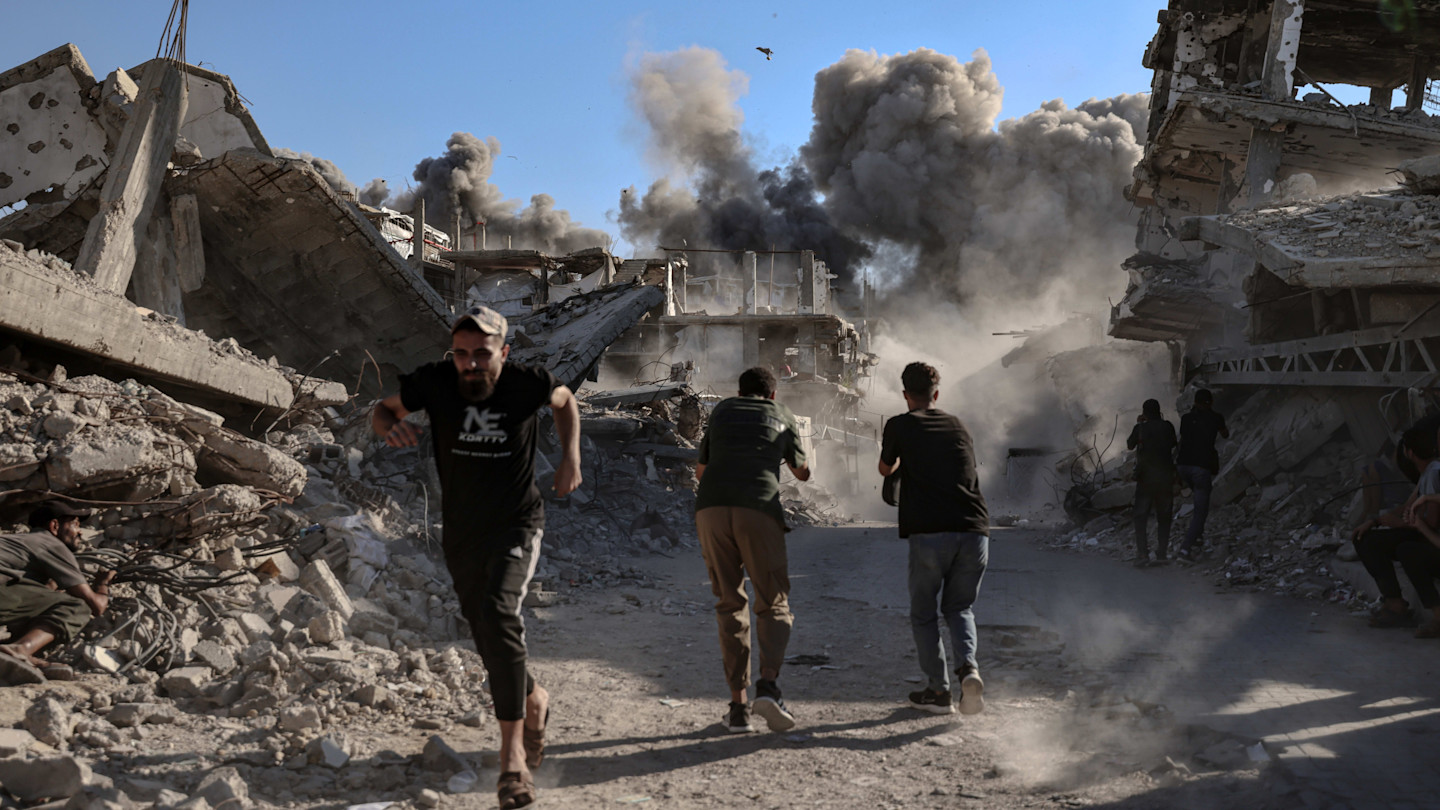
As families slept, an Israeli strike ripped through an apartment block in Rimal, leaving another pile of smouldering ruins in what had once been a relatively upmarket Gaza City neighbourhood.
The target, according to the Israeli military, was Ali Ahmed Al-Amoudi, a Hamas leader it described as one of the decision makers behind the group’s October 7 2023 attack. But when rescuers arrived, they found the bodies of Maisa Abu Dawoud, 55, and her 36-year-old daughter Mary Hafez, among the several Palestinians killed that day. There was no clarity on Amoudi’s fate.
While such scenes were repeated throughout the two-year war that ravaged Gaza after October 7, the air strike on Rimal happened on Saturday — nearly a year after a US-brokered ceasefire nominally brought the conflict to an end.
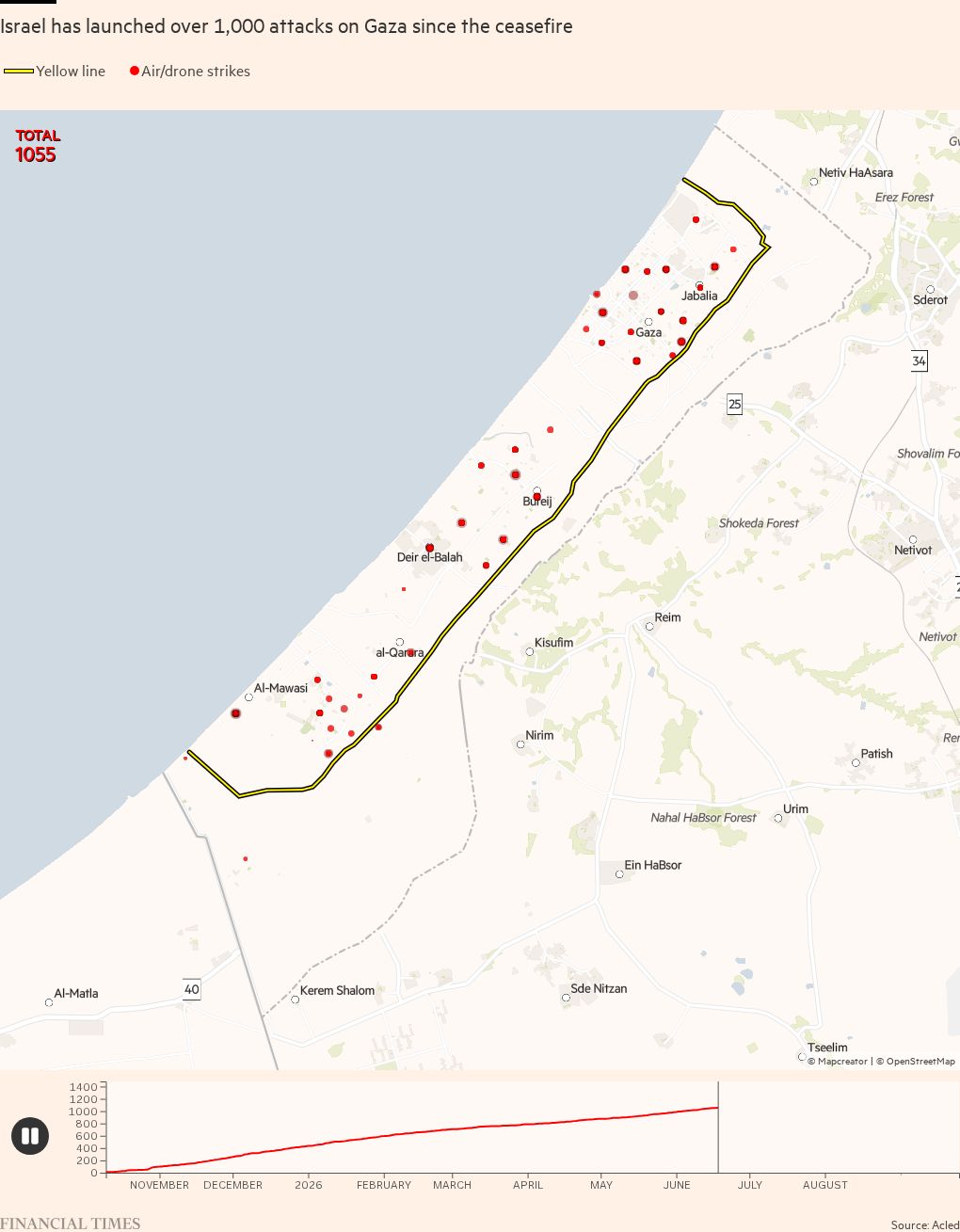
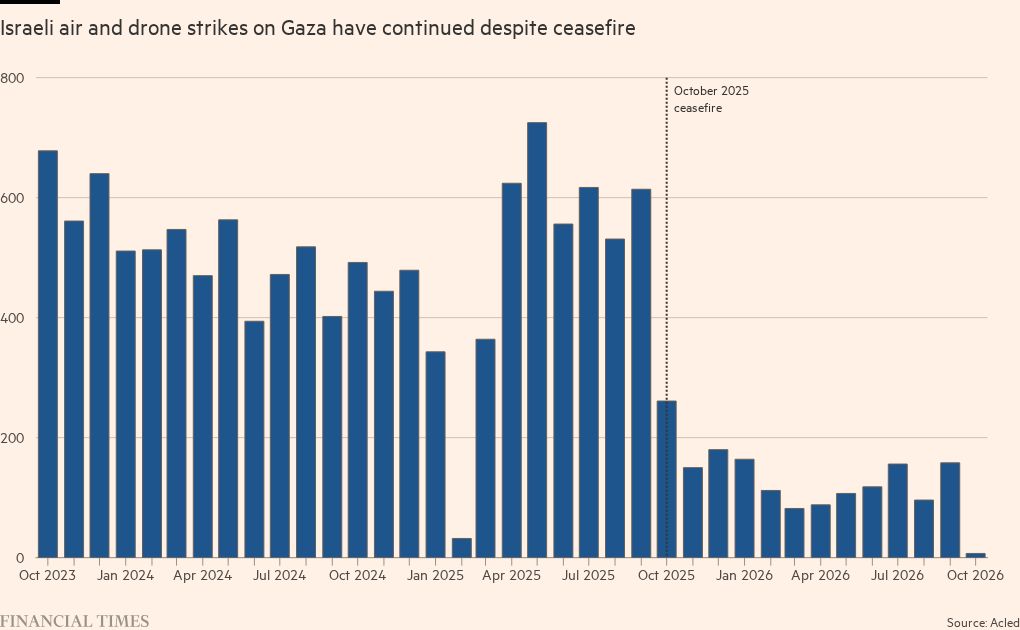
Far from stopping fighting, Israel has in that time continued a relentless military campaign in the devastated enclave. Its troops have conducted repeated air strikes, demolished buildings and fired on Palestinians they deem threatening to the soldiers positioned around the growing Israeli-occupied zone, which now encompasses more than 60 per cent of Gaza.
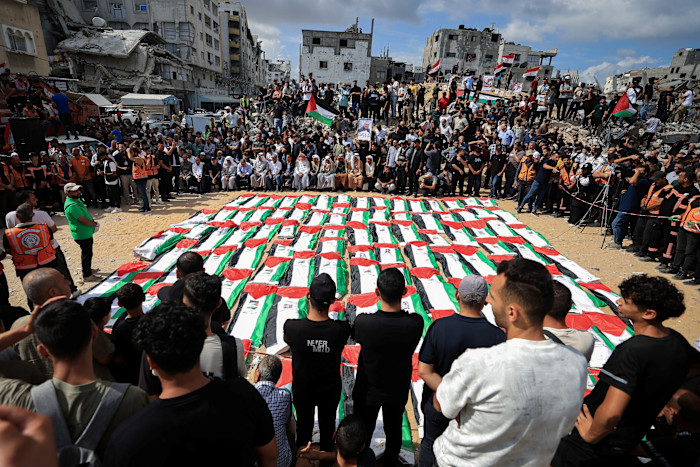
In all, over 1,400 people have been killed since the truce went into effect on October 10 2025, according to the Palestinian health ministry, equivalent to around four a day. It says that at least 300 children and more than 120 women are among the victims.
Israel has variously described these as attacks on militants, police, armed men or — often — given no explanation at all.
Video description
The aftermath of an Israeli airstrike on a vehicle in Deir al-Balah in the central Gaza Strip on October 4
“It’s very evident that Israel sees the ceasefire as a kind of cloak in order to advance its aims, rather than something to actually have to abide by,” said Amjad Iraqi, a senior analyst for Israel and Palestine at the International Crisis Group. “It is a weaponisation of the ceasefire in order to entrench the occupation.”
When it was agreed last year, the peace deal was touted by Donald Trump as one of his signature achievements. Under the terms of the 20-point plan, Hamas would disarm, Israeli troops would gradually withdraw from Gaza and reconstruction would begin.
But while the truce paved the way for more aid to enter Gaza and ended the worst of the fighting from Israel’s two-year offensive — during which nearly 73,000 Palestinians were killed — progress quickly stalled.
Trump announced in July that the militant group had agreed to a roadmap to disarm alongside a phased Israeli withdrawal. Israeli Prime Minister Benjamin Netanyahu rejected the plan, however, saying Israel would not pull back troops until the complete demilitarisation of Hamas.
The result for Gaza’s 2.1mn population, most of whom now live in tattered tents or ruined buildings in the portion of the enclave once again controlled by Hamas, is that death by a stray round or in an air strike is still a daily fear.
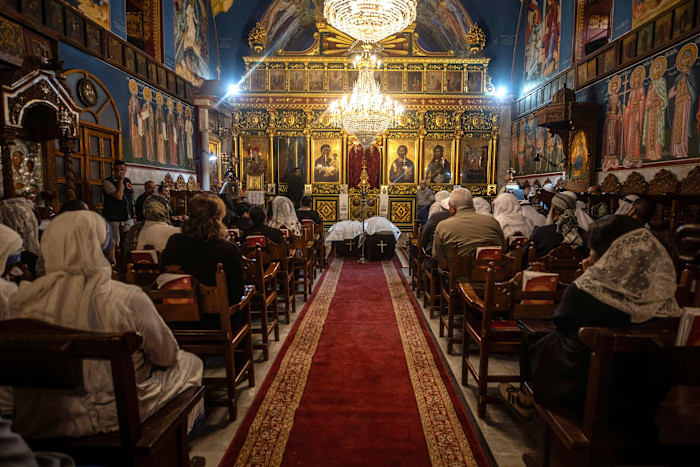
Maisa Abu Dawoud and Mary Hafez, who were killed on Saturday, were part of Gaza’s dwindling Christian community, and spent much of the conflict sheltering in the Holy Family Church in Gaza City, which was itself struck in an Israeli attack last year.
They had moved out earlier this year and into the flat in Rimal, Mary’s 14-year-old son Fouad said. “My mother was tired of sleeping on a mattress on the floor, so they found this apartment,” he said. “The day before she was killed she rang and said, ‘I miss you, come and have lunch with me and I will cook your favourite macaroni dish.’
“But by that time, she and my grandmother had been martyred.”
In response to questions, the Israel Defense Forces said it is “operating to remove threats, including through strikes against military targets ”, and accused Hamas of refusing to disarm and “rebuilding its military infrastructure”.
It described Saturday’s strike as “an attempt” to eliminate Amoudi, claiming “measures were taken to mitigate harm to civilians, including the use of precise munitions”.
Israel’s continued use of force in spite of the truce reflects what analysts see as the country’s new post-October 7 security doctrine, one in which it launches what it describes as “pre-emptive” attacks against perceived threats; seizes territory from neighbours to create depopulated “buffer zones” along its borders; and deploys constant force.
Video description
IDF forces target underground infrastructure in the Gaza strip in October
In Lebanon, Israel has continued attacking what it says are targets associated with militant group Hizbollah during multiple ceasefires since 2024. It occupies a large swath of the south, leaving hundreds of thousands displaced, and has systematically destroyed civilian infrastructure — portraying this as necessary to ensure militants can no longer reconstitute and threaten its borders.
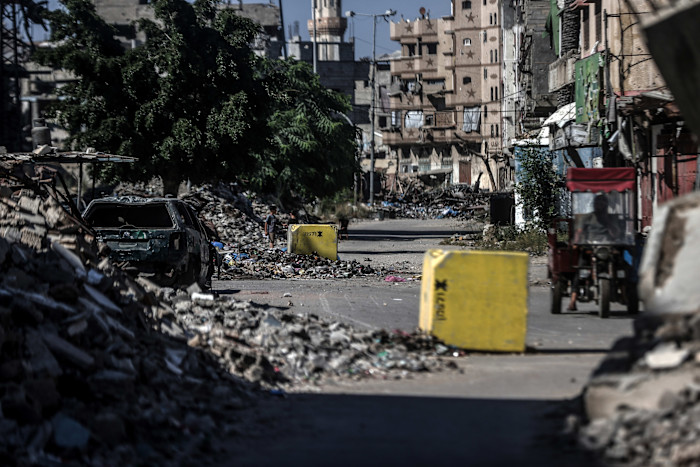
In Gaza too, Israel has continued to raze infrastructure in territory under its control, and actively seized more land by shifting the so-called “yellow line” that separates Israeli- and Hamas-controlled Gaza.
“They are conducting a scorched-earth policy,” Crisis Group’s Iraqi said. “They are basically erasing entire villages and towns and depopulating as much as possible to make it difficult for people to return.”
The ceasefire, Iraqi added, has served to provide Israel with “diplomatic cover that keeps it in the good graces of the United States” while it expands territorial control. The IDF said it strongly rejects this characterisation.
Video description
Animation showing cumulative building damage across Gaza in 12 day intervals from Oct 2023 to Aug 2026
It is often by venturing in the vicinity of the yellow line that Palestinians are in the most danger. Bahaa Abu Ajeen, an agricultural worker in his 30s, described how he picked up his three-year-old son Rayan and tried to flee after seeing Israeli soldiers emerge from a building near the makeshift boundary in June.
“The Israelis fired a shot to the ground behind me, so I stopped. But then they fired again, and it hit Rayan in the head,” Abu Ajeen said. Another shot, he added, shattered his leg and sent him to the ground. He was then detained by Israeli troops for several hours, he said.
The IDF said it “does not operate against civilians and does not use fire against individuals solely because they approach” the yellow line.
Netanyahu has made clear the strikes in Gaza will continue, portraying the campaign as revenge for the October 7 assault — in which Hamas killed 1,200 people, including families and young people attending a music festival, and took another 250 hostage — and vowing to assassinate anyone associated with it.
“We are hunting without let-up the human beasts who attacked us with shocking cruelty,” the prime minister said at a ceremony commemorating the victims of the attack this week. “We are eliminating them one by one.”
Michael Milshtein, a former Israeli intelligence officer, said that while the strikes played well with Israeli public opinion, they were more about settling scores than a broader strategic rationale, reflecting the fact that Israeli officials had so far failed to come up with a long-term plan.
“Unfortunately right now, except once again promising ‘total victory’ and speaking about the deradicalisation of the people of Gaza . . . there is no strategy,” he said.
Though Hamas has lost control of most of Gaza, the militant group runs a threadbare administration in the western, more populated portion of the strip, raising some taxes, controlling police and issuing birth and death certificates.
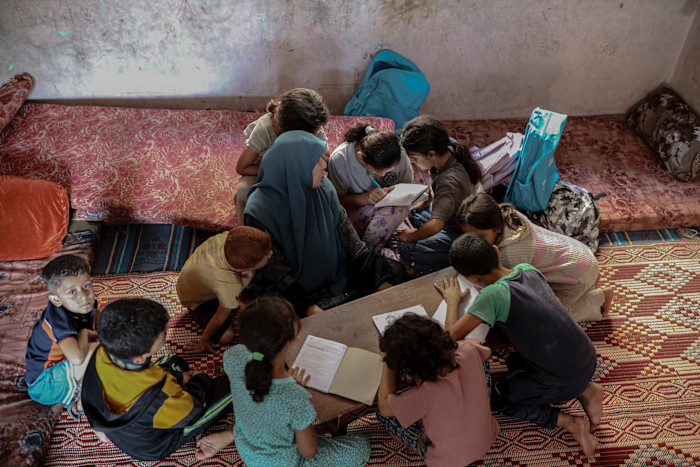
Amid the stalemate, conditions in Gaza remain dire. In addition to the ever-present threat of violence, many are now preparing for yet another winter in what the UN described as a “critical” public health situation, with infectious diseases spreading and inadequate water, sanitation and hygiene.
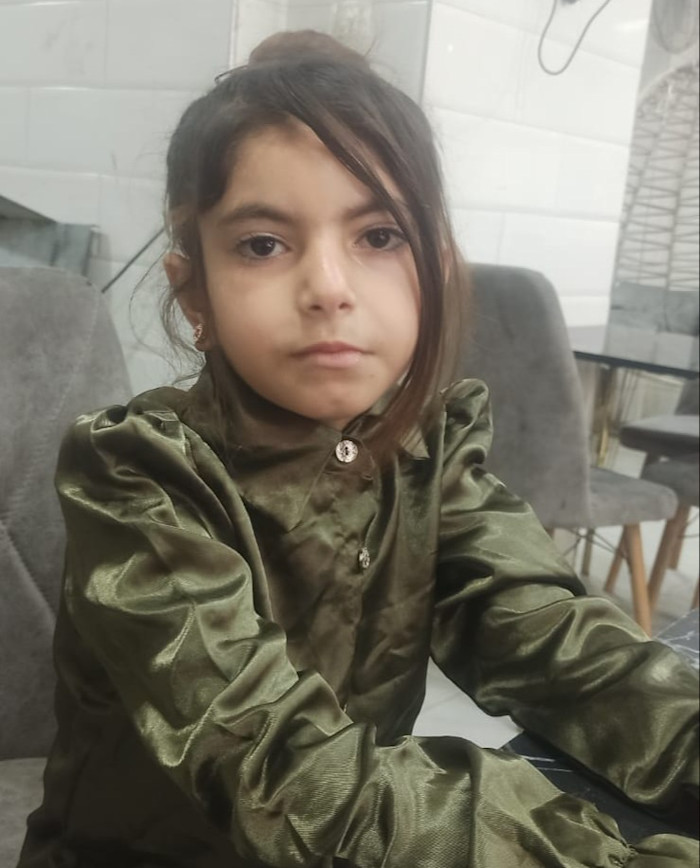
“We need a full ceasefire,” said Abdel Raouf Rihan, the father of nine-year-old Retaj, who was killed in April by a stray bullet at a teaching tent erected on the ruins of a school in northern Gaza. “Every day there are stray shots killing or injuring people.”
Cartography and data visualisation by Steven Bernard and Hiroshi Kuno