McDonald’s breakfast regulars will recognise that moment when the ordering screen asks the question: Do you want to make it a meal? Punters may only have been looking for a sausage and egg McMuffin, but the lure of something greater often takes over.
Bankers working on football club deals these days appear to be taking a similar approach to upselling. As you, an investor, discuss taking a stake in a football team, might your appetite expand?
On Friday, Everton became the latest Premier League club to go public with plans to explore “new investment options”, including a full sale. Crystal Palace is also seeking new shareholders, or perhaps a new owner altogether. It echoes what happened at Manchester United before Sir Jim Ratcliffe acquired a stake from the Glazers. Liverpool FC too tested the market in 2023, before selling a sliver to Dynasty Equity. Three years on, and a new group bought a much bigger chunk, which may well be a beachhead to a full takeover.
Bankers and investors quietly concede that the football M&A market is not full of vim right now — lots of browsing but not many ready to open their wallets. And just like those seeking a calorie-rich breakfast, potential buyers have an ever-growing menu of options. Will anyone bite?
This week we’re looking at a sobering few weeks for Gulf investment in sport. Plus, the NFL breaks with the rest of sport by pushing back against prediction markets. Do read on — Josh Noble, sports editor
Send us tips and feedback at [email protected]. Not already receiving the email newsletter? Sign up here. For everyone else, let’s go.
The Gulf and sport: is the tide going out?
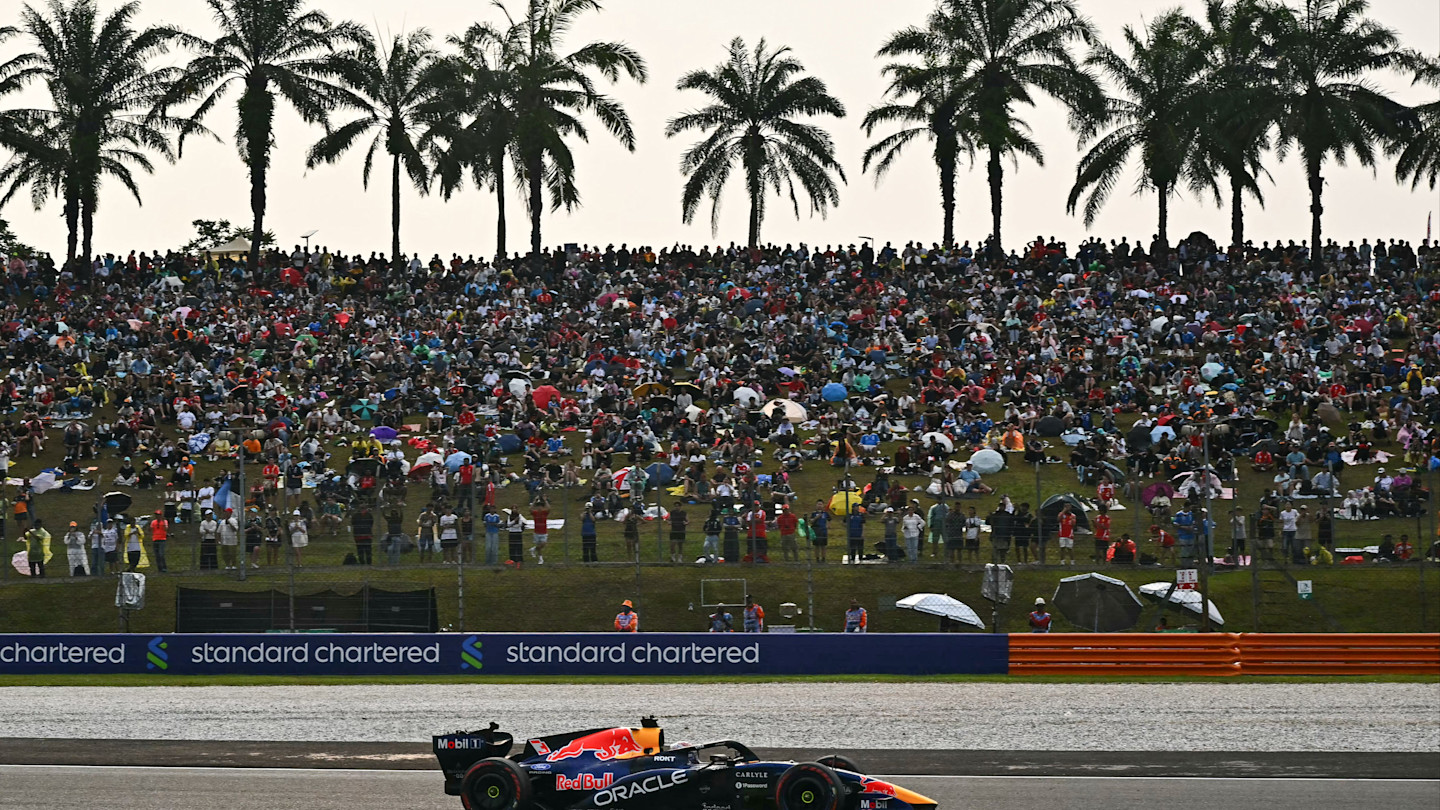
This weekend’s Formula 1 race in Singapore may be taking place in a soup of smog, but at least it is taking place in the right country. Last weekend’s chaotic race in Malaysia only happened because the conflict in the Middle East made it too risky to stage it as intended earlier this year in Bahrain.
F1 will face a dilemma soon as to whether the planned race in Qatar next month and Abu Dhabi’s season closer in December can go ahead. On Friday, three people died after a missile landed at Riyadh airport, highlighting the continuing risks on the ground in the region.
The uncertainty for F1 adds to list of big setbacks for Gulf investments in sport. This week the bankrupt LIV Golf tour accelerated talks with players in a bid to revive itself without Saudi backing. Jon Rahm, one of the competition’s biggest stars, has already walked away. Saudi Arabia’s Public Investment Fund spent $5bn on golf, and yet has nothing to show for it.
Meanwhile Manchester City’s woes show no sign of abating, as we detailed in Friday’s FT Big Read. There is rising chatter about whether the club’s Abu Dhabi-based owner may even decide to quit English football altogether and sell up. Quite the reversal for football’s original state-backed investment project.
Sport has been an important avenue for countries in the Gulf seeking to project soft power around the world, typified by the World Cup in Qatar in 2022. Just this week, the tiny gas-rich state confirmed its bid to host the 2036 Olympic Games (presumably to take place in winter), and the Saudi Arabia World Cup is firmly in the calendar for 2034. But the risks and tensions are becoming clearer, just as the potential rewards diminish.
As an industry, sport has enjoyed the largesse from the Middle East — through sponsorship, investment or just new liquidity in the market — for several years. But with the tide going out, some may soon find themselves looking rather exposed. Whether it’s geopolitics or simple sport economics, in the end it seems that reality bites.
Four more years of Gianni Infantino?
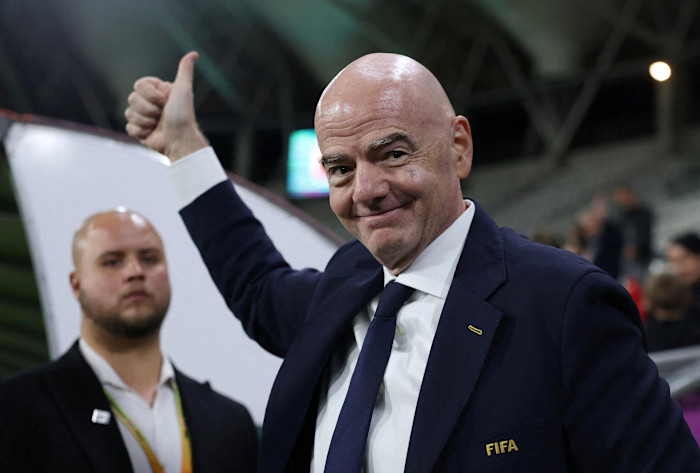
Was this the week that the Fifa president secured his position for another term? Gianni Infantino has been criss-crossing the globe for the past few weeks, popping up in a dizzying array of time zones to post a selfie holding a football with whoever heads the local federation.
It’s a not-too-subtle way of showing that — even with many of the most powerful people in football still outraged at his botched attempt to bring in private investment — many at the coalface of the sport still prefer to keep things as they are. In fact, as Simon Kuper argues in this FT Weekend essay·, Infantino may be exactly the kind of leader most federations want.
This week the heads of Concacaf and Uefa both announced their intent to seek re-election, ruling them both out of challenging Infantino directly. Critics of the Fifa boss have struggled to find a candidate to run against him, while legal challenges are getting bogged down in the US court system. Time is running out for a rival to emerge.
Having looked in real danger in the days and weeks after the World Cup, Infantino’s place at the top of global football is slowly starting to look unassailable.
NFL tries to tackle prediction markets
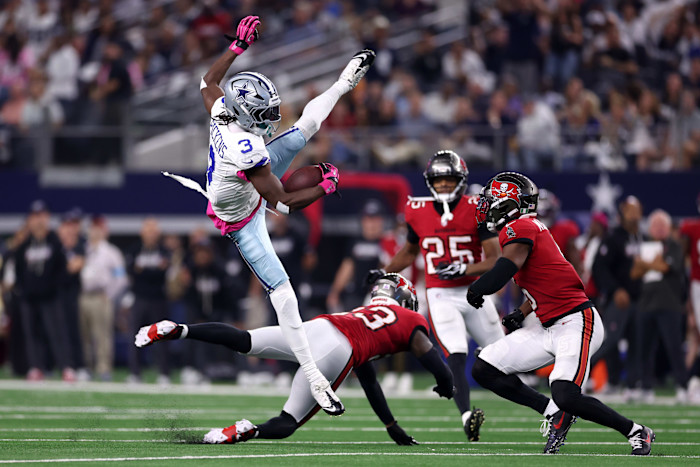
The return of the NFL season is causing another huge surge in volumes on US prediction markets. The two largest exchanges, Kalshi and Polymarket, traded a record $20bn last weekend, according to data from Piper Sandler.
Their popularity is yet another indicator that the NFL remains the heavyweight of US sports, but it’s not a state of affairs that is making those running the league happy. This week the NFL lobbed a brick at the prediction markets industry, telling the Supreme Court that companies like Kalshi were being incorrectly regulated and as it stands, they pose a threat to the integrity of the game.
Prediction markets have ballooned in popularity since the 2024 presidential election and sports account for most of the activity. But their arrival has kicked off a huge regulatory controversy. The bets are regulated in the US as financial market contracts, meaning the market is overseen by federal regulators and not by state regulators, who have traditionally monitored gaming. The tussle between financial regulator — in this case the Commodity Futures Trading Commission — and the states has become a national contest in itself and has ended up in the Supreme Court.
Many sporting bodies initially had reservations about prediction markets, fearing that contracts on actions by players, coaches and officials could be easily manipulated, while bets on player injuries would simply do nothing for the sport’s reputation.
But the ever-rising dollar sums changing hands on the back of their games increasingly made the market hard to ignore. The National Hockey League, Major League Baseball and Major League Soccer have all signed sponsorship deals with the prediction market operators to cash in on the boom and divide up the spoils, as have Fifa, La Liga and others outside the US.
Yet America’s two largest sports have held out. The National Basketball Association has been ambivalent, calling for tougher restrictions on the contracts that markets like Kalshi, Polymarket, Novig and Underdog can launch.
But there are rumours it will shortly announce a major sponsorship, which will probably set a new record in US sports. The industry yardstick is regarded as the MLB’s exclusive agreement with Polymarket, which is reported to be valued at $300mn over three years.
That leaves the NFL, which has consistently pushed back. This week it filed an amicus brief arguing that individual states should have authority over the bets placed on its sport. The NFL’s central argument is that prediction markets structure their offerings as swaps but don’t meet the definition set out in other federal laws.
“Billions of dollars will be bet on NFL games through prediction markets each season, and any delay from the Court will result in increasing consumer harm and risk to game integrity,” reads the brief.
The NFL’s stance is consistent but there are some in the prediction market industry who see it as an attempt by the league to gain leverage in discussions if the two sides sat down at the table. But the NFL is right about one thing; as the volume of bets on sports grows so does the urgency for regulator clarity.
The Business of Formula 1
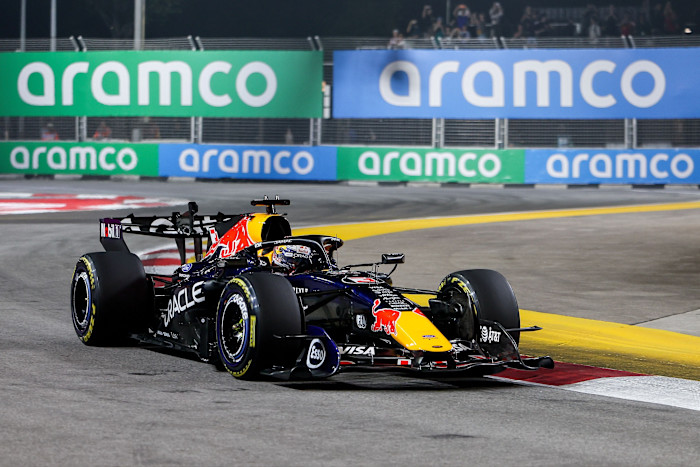
The Iran war has intensified competition for an additional race in Asia. But any new venue would have to replace one of the existing host circuits, according to Stefano Domenicali, F1’s chief executive.
A more competitive grid has produced a broader cast of potential winners, giving broadcasters, sponsors and the sport itself more stories to sell.
F1 is shifting away from Europe. Can Britain keep what’s left?
Read the entire Special Report here.
Final Whistle
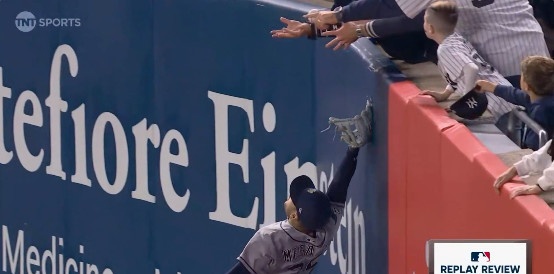
Yankees fans are quick to remind you their team has won 27 World Series titles — the most of any MLB franchise — even if the team hasn’t won a championship since 2009. The drought continued on Wednesday night when New York was swept out of the playoffs by the Tampa Bay Rays, whose payroll is roughly a third of the Yankees’.
To make matters worse, Yankees fans had a hand (literally) in extending the dry spell. A pivotal game-tying home run by Anthony Volpe was erased due to spectator interference, in effect sealing the team’s fate.
Scoreboard is written by Josh Noble and Samuel Agini in London, with contributions from the team that produce the Due Diligence newsletter, the FT’s global network of correspondents and the data visualisation team. It is edited by Benjamin Wilhelm in New York and Lee Campbell-Guthrie in London.