In Bishkek’s National Museum of Fine Arts, I’m too tired from a long flight to follow our guide unpicking the history of Kyrgyz textiles. So I slip away into another room, where a painting jolts me out of my daze. Called “Autumn 1941”, it depicts a horse tossing its nose in the air, a loose rein dangling from its head, the animal’s raw, pent-up energy offset by the bony ridges of mountains painted in moody greys. It’s spectacular, both the palette of the landscape and the feeling for how a horse moves.
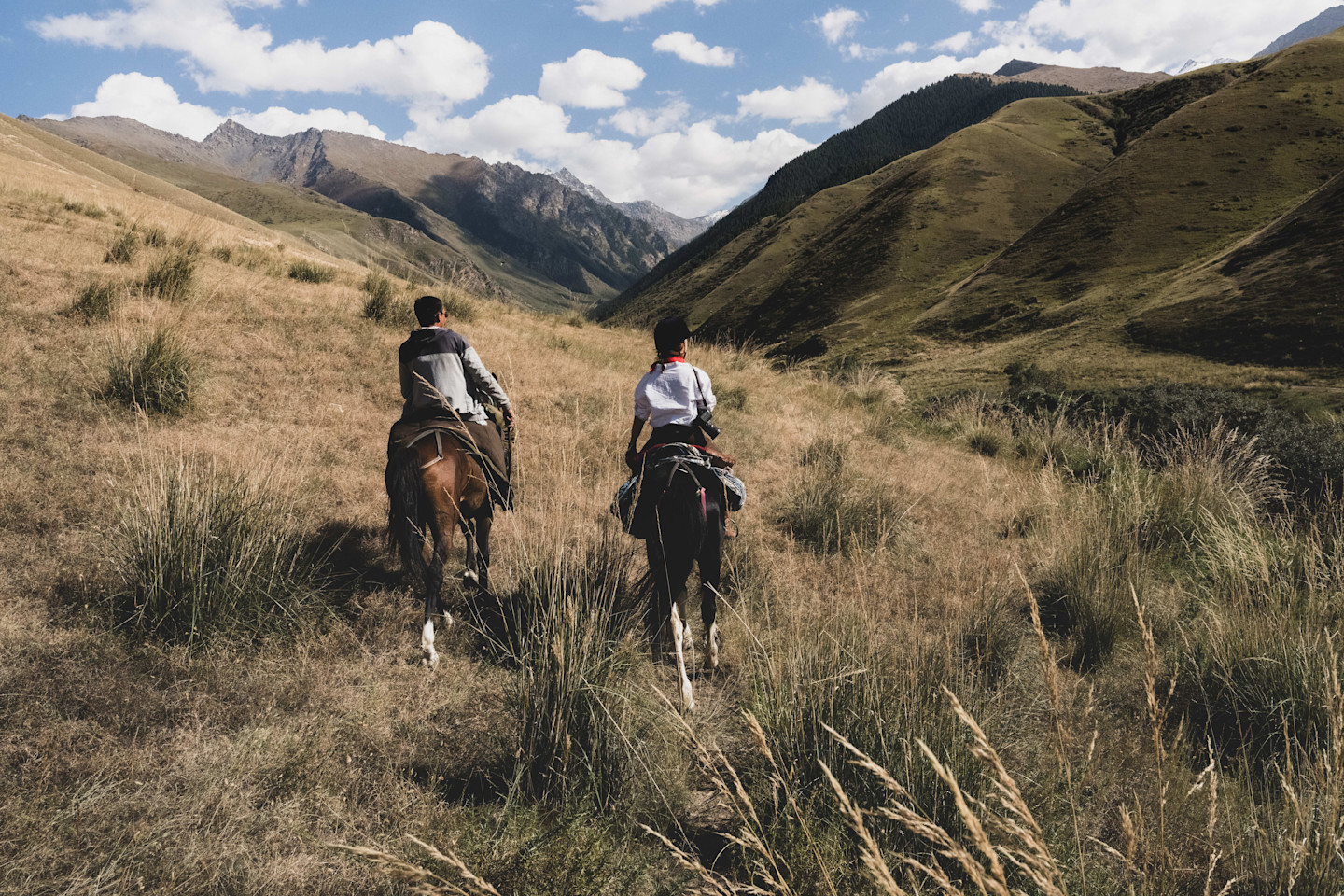
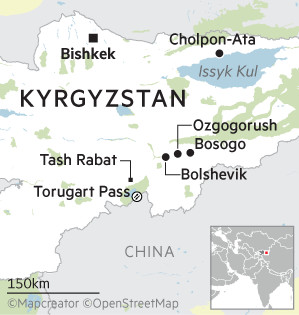
It’s September, and I’ve arrived in Bishkek at the start of a 180km-long trip on horseback. The plan is to drive out west to Issyk-Kul, the country’s largest lake, to catch the last couple of days of the biennial World Nomad Games. Then, at the village of Bosogo, we will pick up horses to follow the At-Bashi river upstream, camping at six remote locations along the way.
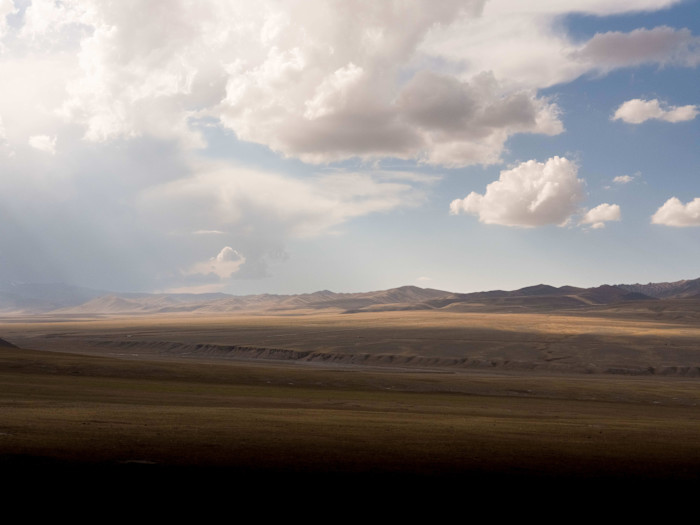
The itinerary, pioneered last year by the trip’s British host Alexandra Tolstoy, will take us through villages flanked by the 4,000-metre-plus peaks of the Tian Shan, or Celestial Mountains. We’ll finish at Tash Rabat, a 10th-century caravanserai 30km short of the Chinese border at the Torugart Pass.
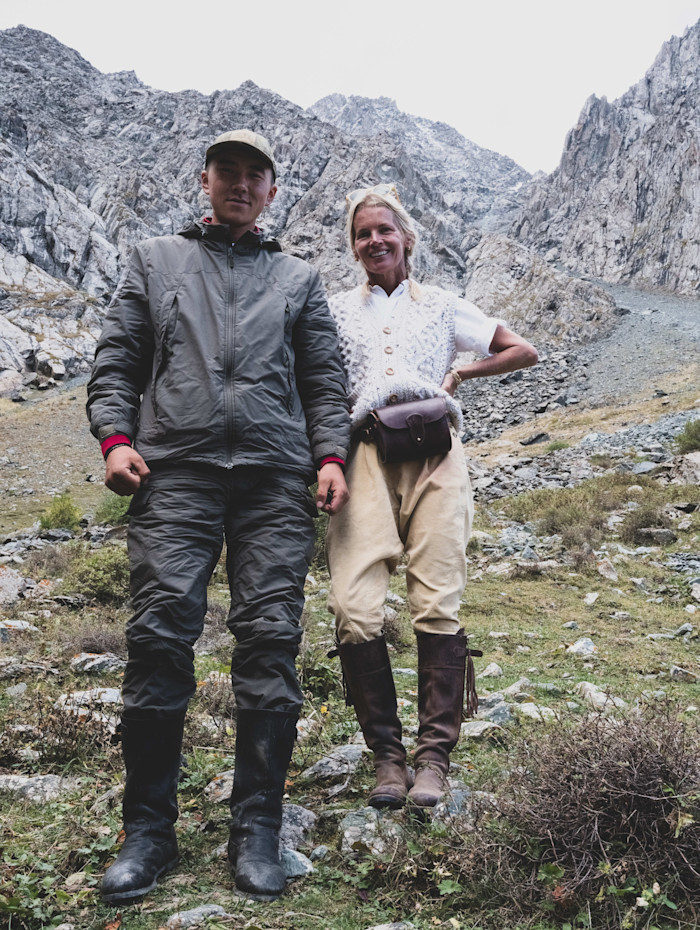
Having driven this way 20 years ago on a backpacking journey from Xi’an to Samarkand, I’m intrigued by this little-visited region, but also, to be honest, by Tolstoy’s story. A slight 53-year-old with shock-blonde hair, Tolstoy is the Dorset-born daughter of the historian and writer Count Nikolai Tolstoy (and a distant relative of the author Leo). After a shortlived stint on the Credit Suisse graduate scheme, she set off aged 25 to travel 8,000km of the historic Silk Road on horse and camelback. Four years later, she married the Tatar horseman who had helped guide her, and they started organising riding holidays in central Asia. Then in 2008 she met billionaire businessman Sergei Pugachev, who co-founded Mezhprombank in 1992 and who, at one point, was known as “Putin’s Banker”.
Tolstoy, originally hired to teach Pugachev English, switched rollmats under the stars for private jets and parties in St Barths. They had three children together and were the subject of a BBC documentary, The Countess and the Russian Billionaire, but Tolstoy’s life of extreme luxury soon fell apart. The couple split, while Pugachev’s high-profile falling out with the Russian state led to asset freezes and Interpol notices.
With three children to raise alone, she needed to go back to earning her own living, so in 2022, she started running riding safaris again (as well as an online lifestyle store selling clothing and homewares inspired by Russian dachas, English cottages and her travels in central Asia). When her rides, based in Sary-Chelek in western Kyrgyzstan, began filling up, she hired more staff and expanded her territory. Hence this new journey I’m taking, as one of 10 riders, three of whom are return guests.
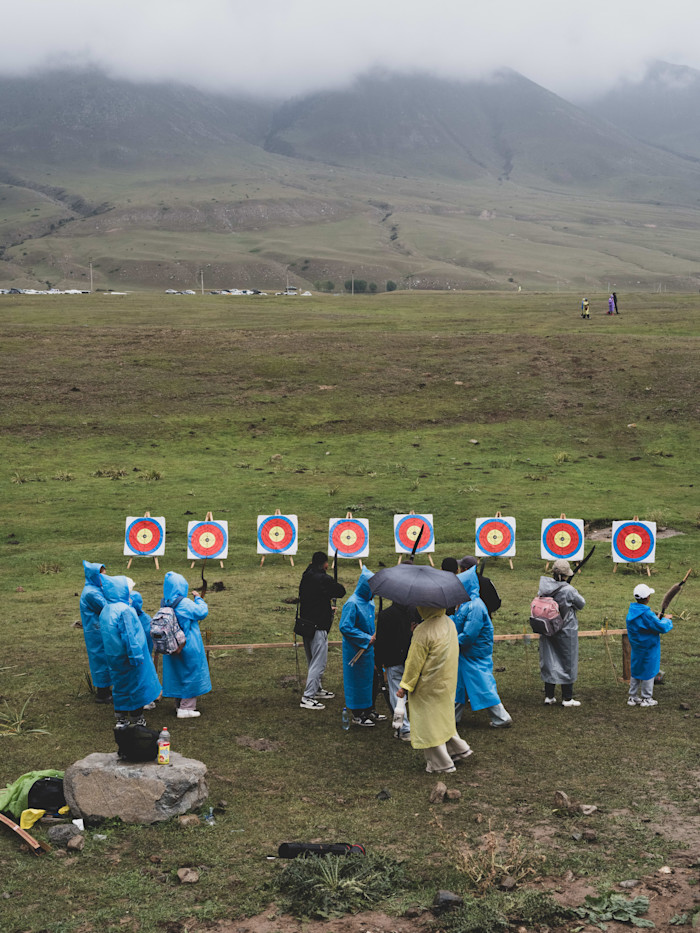
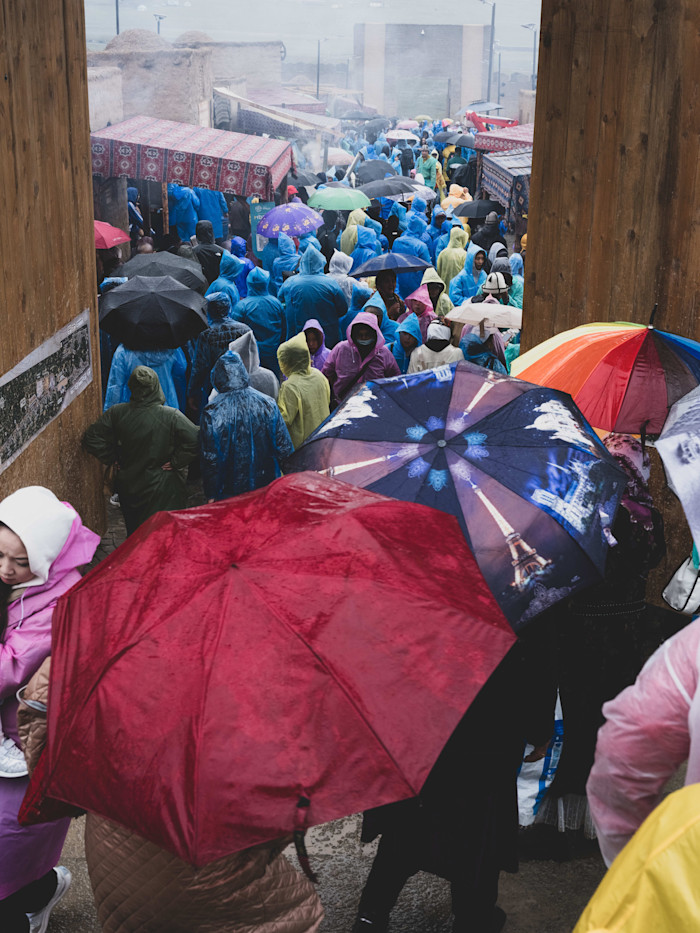
After the museum, I have a sleepless night on a hard bed with trains rattling past our hotel — how can Tolstoy bear it, I wonder? — followed by a four-hour drive to Cholpon-Ata, a resort town beside Issyk-Kul. We visit Kyrchyn, a nearby valley where many of the Nomad Games are being hosted. Tolstoy says the sporting displays have been called off in the mizzling rain, so I take off into the crowds alone. I get pulled into a sea of plastic ponchos. Around steaming food kiosks, people share nan bread cooked in hive-shaped tandyr ovens. I dance in the mud with locals partying beside noisy speaker systems. I talk with a Kyrgyz musician who carries a trumpet tucked under his arm.
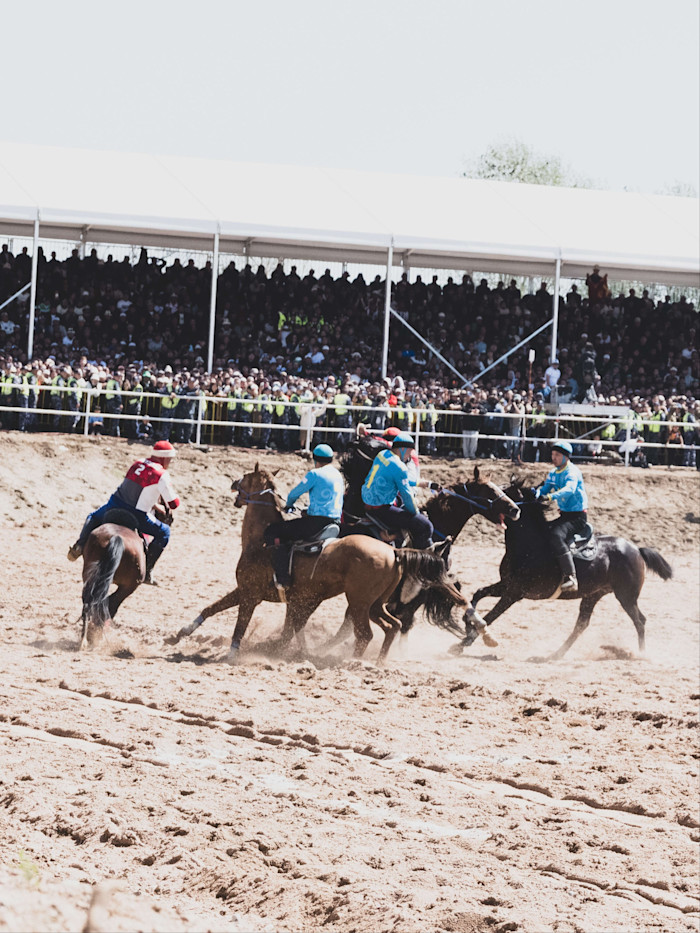
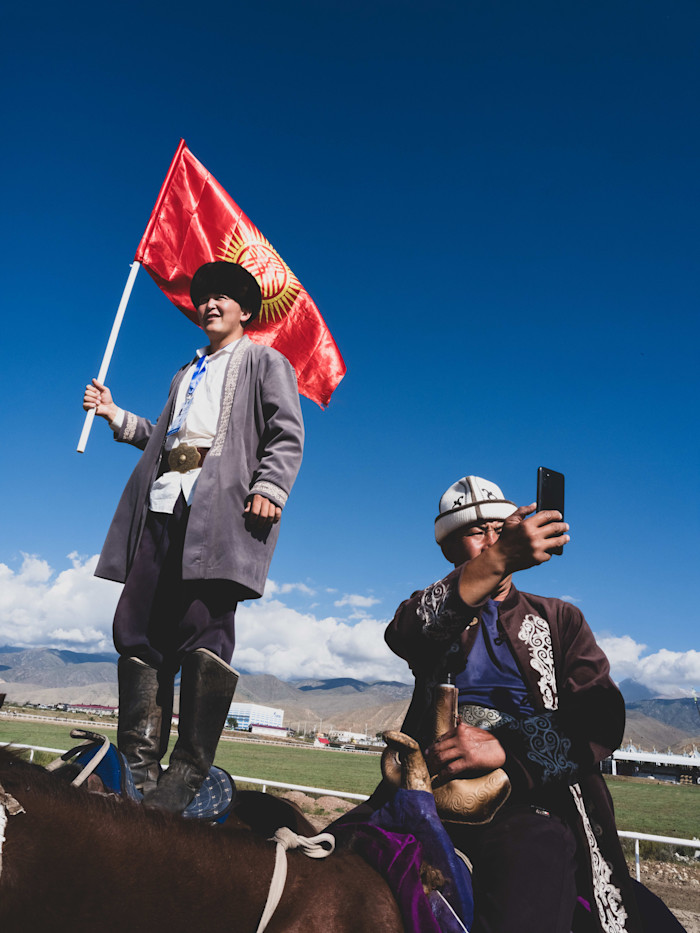
The following day, the sun comes out for the kok boru final, comprising two teams of 12 horsemen (four from each side on the pitch at any one time) who fight over a 32kg goat carcass. A goal is scored when the carcass is slung into a raised, bucket-like pit. I find the violence hard to watch — riders yanking at metal bits; crashing, tumbling horses — but to the Kyrgyz, kok boru is a source of immense cultural pride. When the home team’s Manas Niyazov scores against Kazakhstan, cheers sweep through the stadium. “The Ronaldo of Kyrgyzstan,” eulogises the commentator for the benefit of foreign tourists.
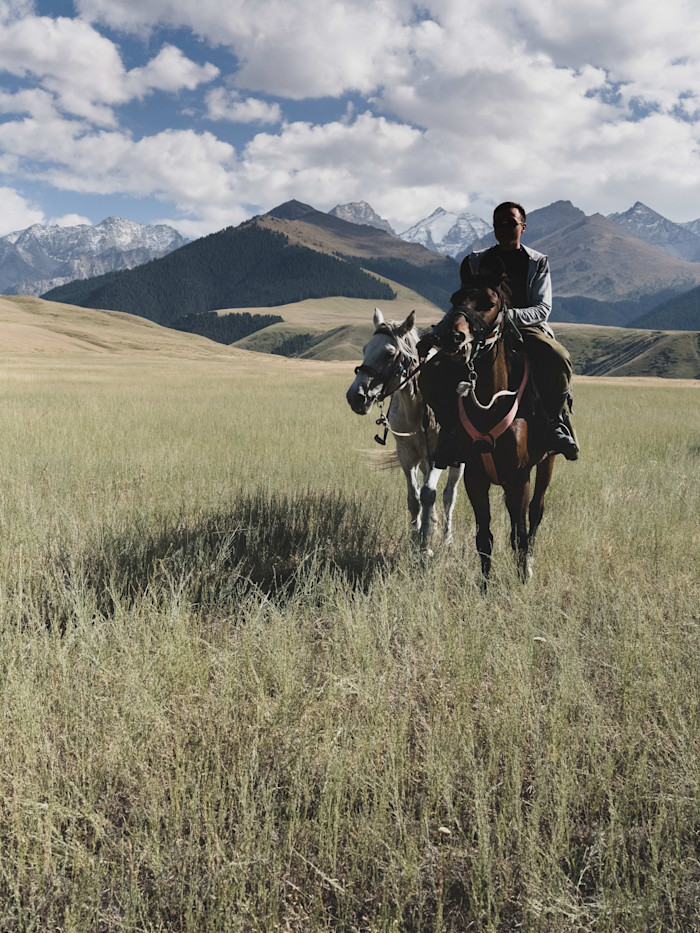
Despite all the applause and spectacle, the kok boru leaves me nervous about what kind of rider I need to be to survive this country. When we arrive at our first camp in Bosogo and I’m assigned my horse — a three-year-old piebald gelding — I’m expecting the worst. Instead, Kök-Ala turns out to be small, soft-mouthed and sure-footed. When goldfinches scatter from thickets in abundant flourishes, he doesn’t spook.
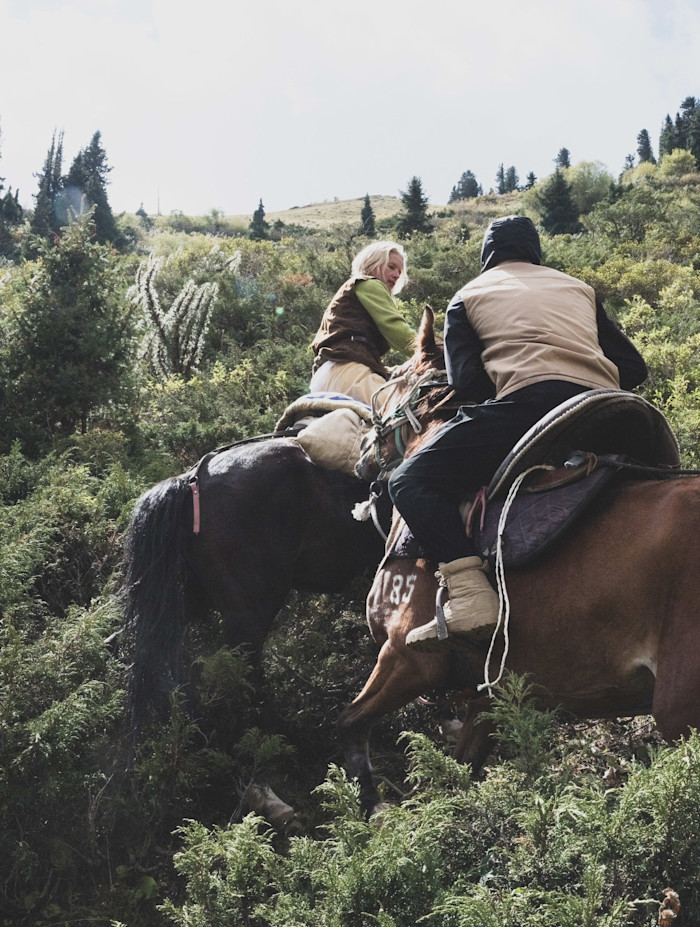
Given I’m more interested in absorbing the rural nuances than passing through Kyrgyzstan at a gallop, I soon find my place at the back of our group, riding with Adil Nurdinov, one of Tolstoy’s guides who is also a newly qualified vet. Tolstoy’s head horseman, Aitbek Mursalev, stays up front to control the pace. Another guide, Vadim Savin, floats around the middle. This is evidently what Tolstoy excels at — sourcing fantastic horses and local talent.
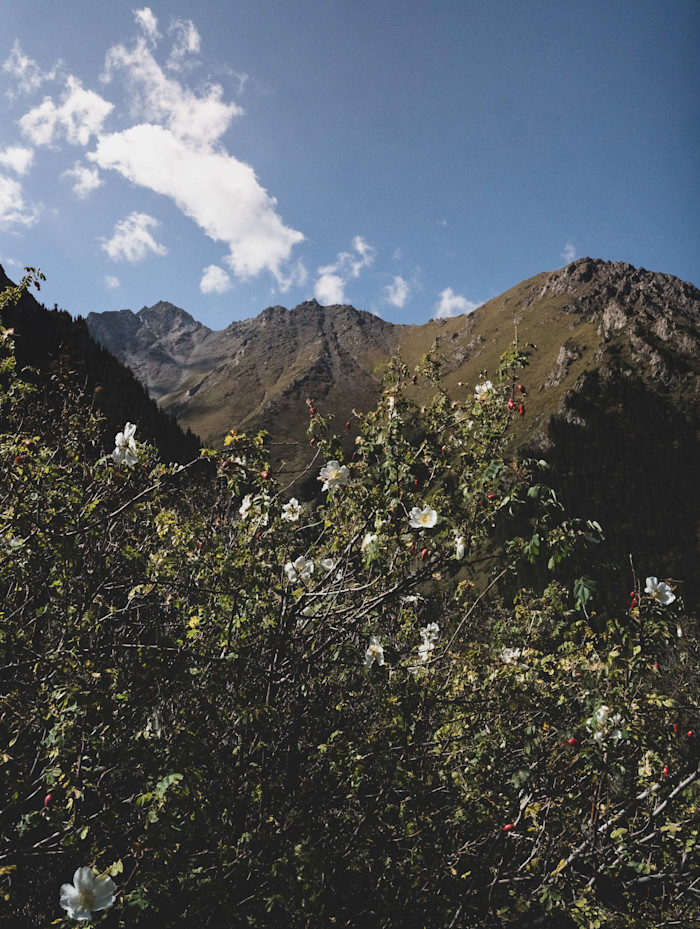
Nurdinov sings as he rides. He points out a dog rose here, a frill of starry asters there, and teaches me Kyrgyz words, which I exchange for English. He describes riding into the mountains at 10 years old to mind his father’s herds. When he vaults onto his stallion in a smooth balletic sweep, his ease reminds me of another Bishkek painting I snapped on my phone — “Waves and Horses” (1970) by AI Ignatiev. The impressionistic swirls of colour, the way the wind catches the horses’ tails, the poise of the rider coming up from the lakeshore — Ignatyev captures a spirit as true to Kyrgyzstan then as now.
I think of Jack Yeats’ astonishing paintings of Sligo boys riding bareback along Ireland’s wild Atlantic coast. With hours of silence in the saddle, I’m struck not only by how horses connect me to where I come from, but how my culture joins up with Russia and central Asia where the first horses were domesticated 4,000 to 5,000 years ago.
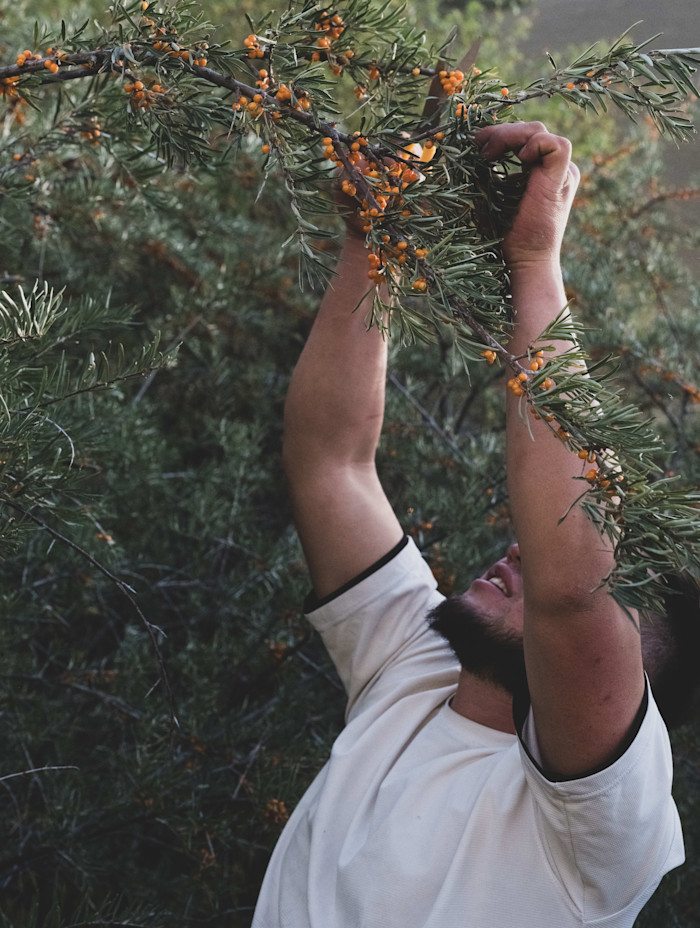
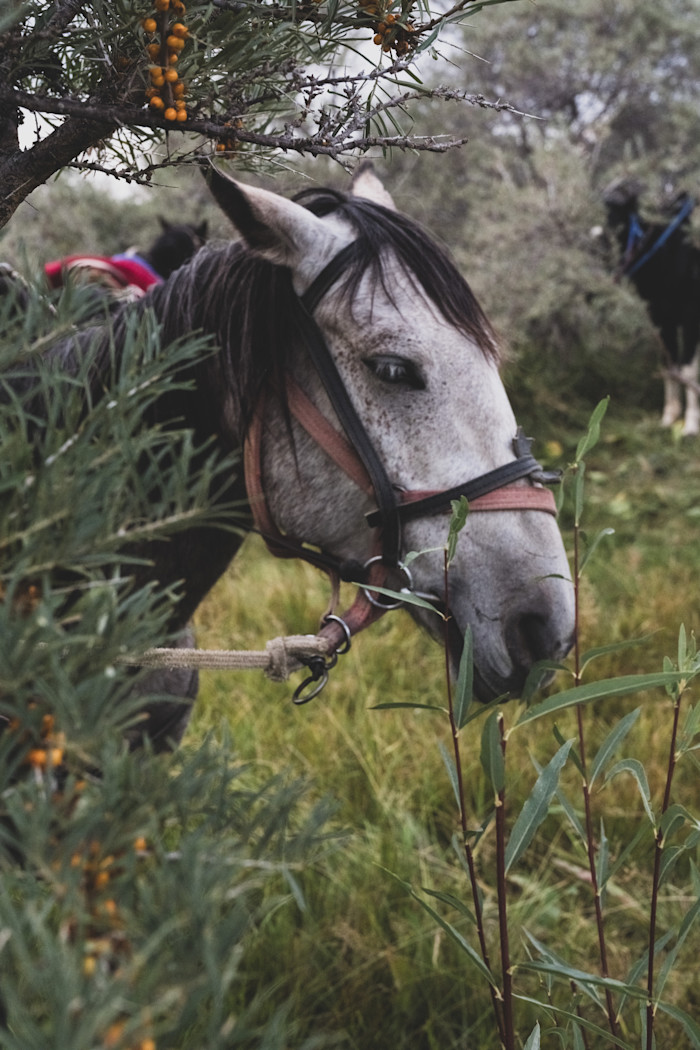
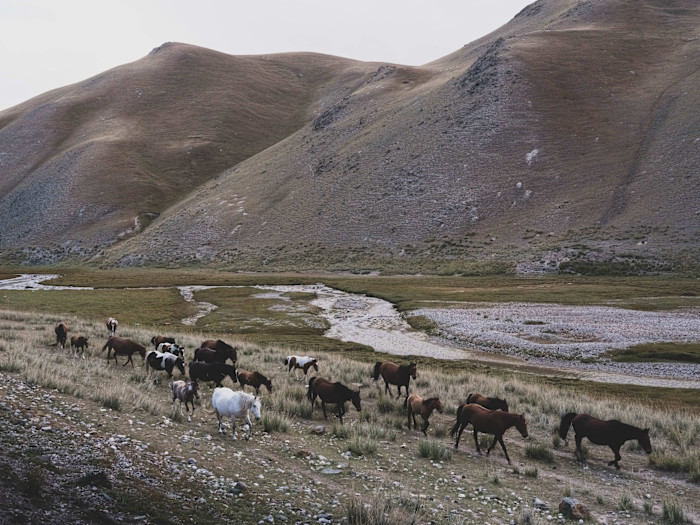
We climb to 3,000 metres, and pass a couple dismantling their yurt, the red wooden frame against the sky a stark reminder of a semi-nomadic life dictated by the seasons. The Tian Shan are on the brink of autumn. The sea-buckthorn berries are plump and orange, and the last of the meadow hay is being cut and baled.
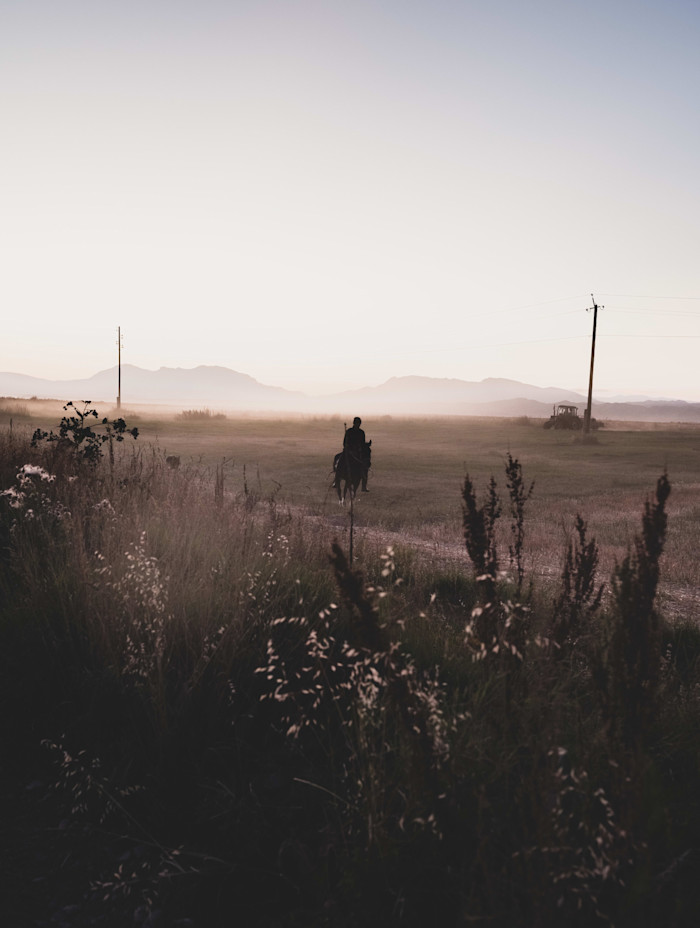
When we loop back down to the plain, we meet a horseman coming the other way. He stops, shakes my hand from his saddle, pulls out his binoculars to look for his horses near the tree line, nods, takes up his reins, and rides off silently. I eventually lose sight of him between a shaft of light and the gathering dark of encroaching rain.
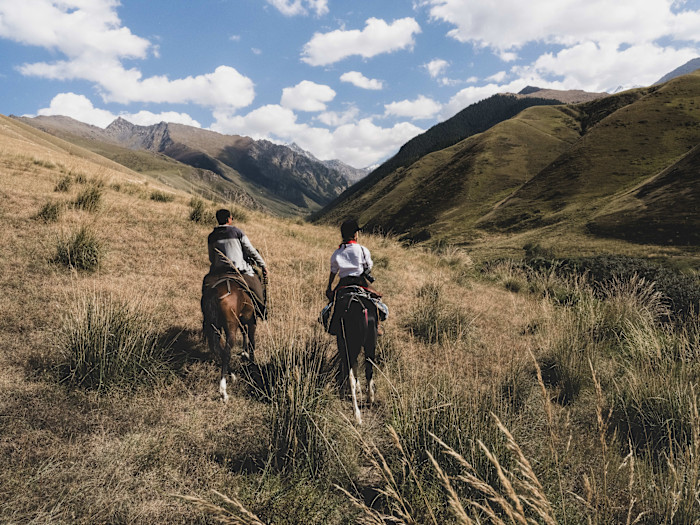
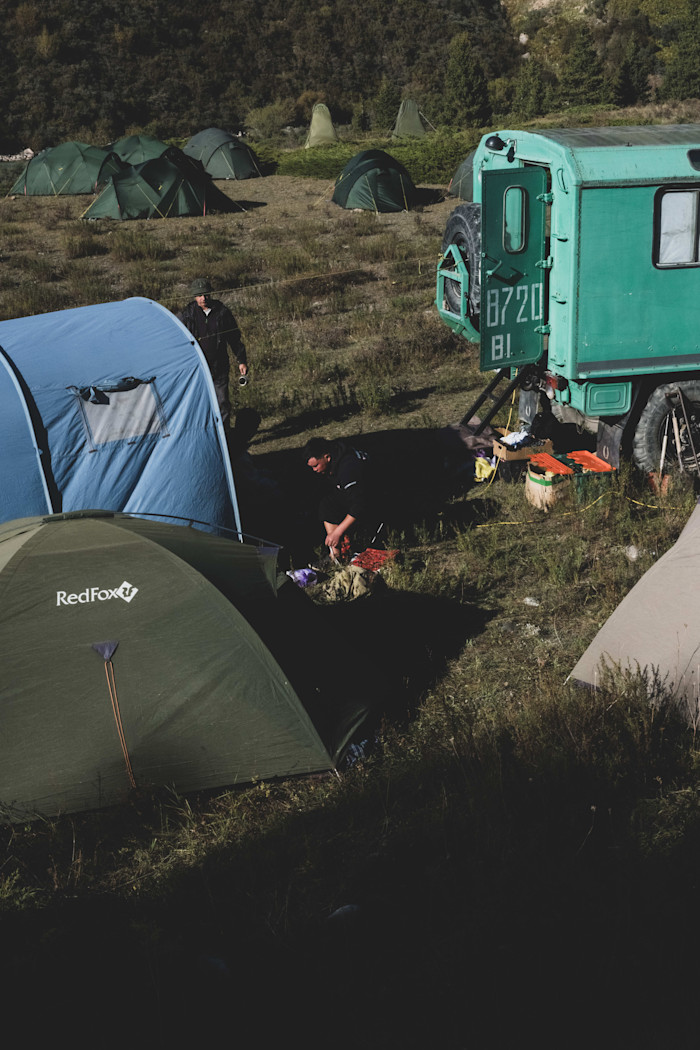
The next day, we ride past windowsills dressed with geraniums, gardens spilling with hollyhocks and cosmos, graves topped with Communist sickles and Muslim crescent moons, and winter stalls for animals, the hay piled high in pyramids. From November to April, this valley will be covered in snow, a change which feels hard to believe when we arrive at our second night’s camp near Ozgogorush, and I explore the village on foot in a summery, golden sunlight.
Men are coming in from the fields. A child plays a game throwing sheep knucklebones into a ring chalked on the street. A family invites me into their home and shares a barley drink that looks like porridge. As I listen to Tolstoy translate, I notice her ease, how she plays with the children, admires the family’s Belarus tractor, talks about who is abandoning village life, and who is not.
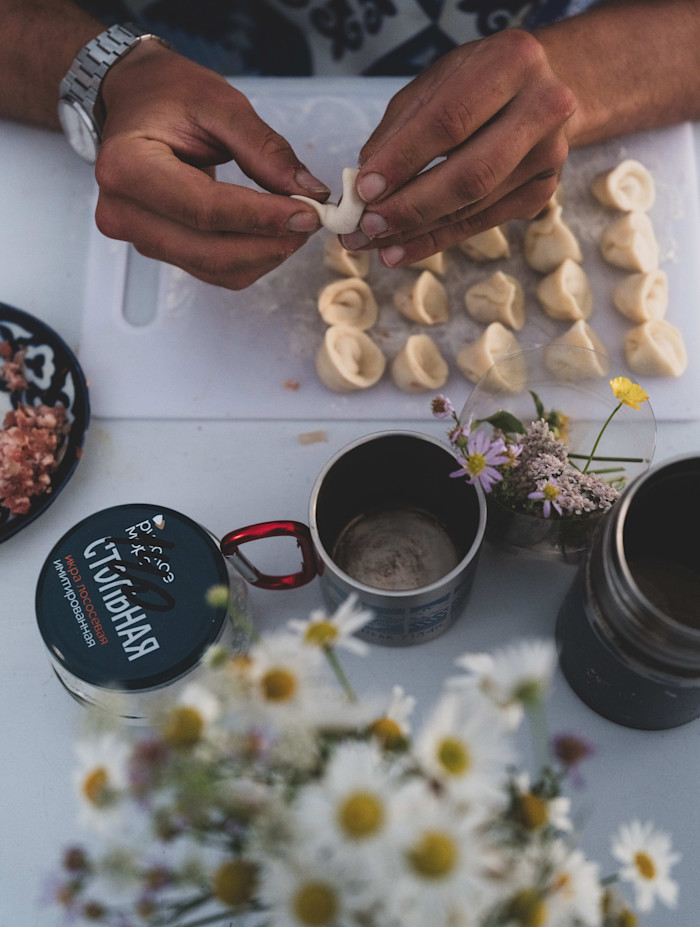
I begin to wonder if Tolstoy prefers being with the Kyrgyz than making small talk with clients over dinner. “I like the sophistications of the city,” she explains, “but I couldn’t live without being close to the countryside. To live in a simpler, happier way has been a lesson to me — the grounding I needed when I lost my way.” Back at camp, she sits with staff as they shape pelmeni dumplings for dinner. She’s drawn to the company of Alexandr Troschenko, who directs the camp crew; their friendship goes back over 20 years, to Tolstoy’s earliest days of horse safaris.
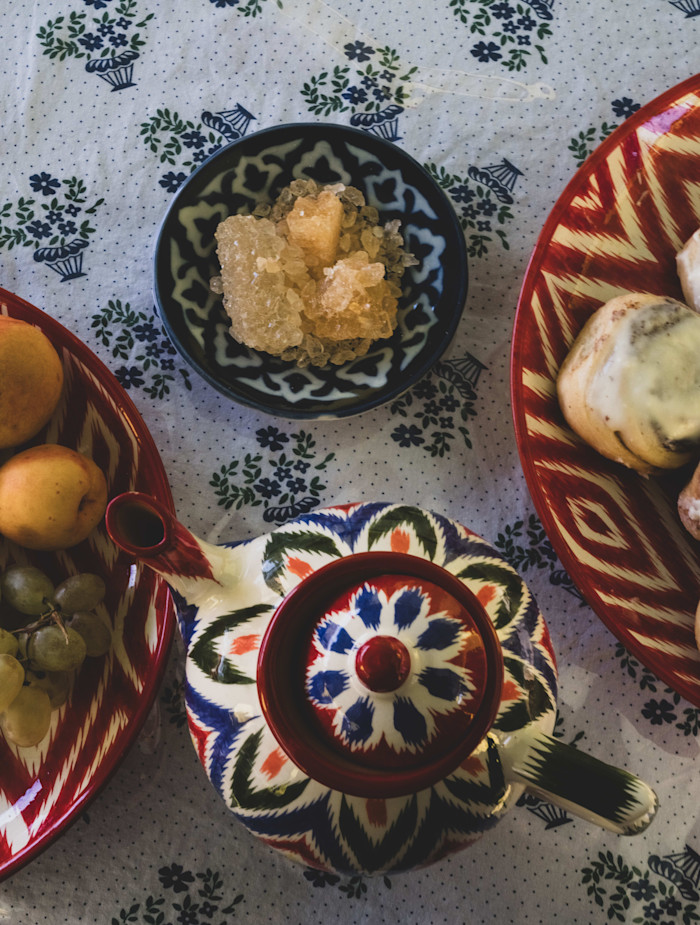
The breakfast table is piled with thick, pillowy syrniki pancakes made with a sweet curd cheese. Picnic lunches are perfectly pitched, with tasty, Thermos-warm stews. Camp dinners start with a nourishing soup — a borscht; a tangy, salty solyanka — followed by an aromatic plov or kuurdak, a meat stew served with waxy potatoes. Meals are served under a synthetic dome tent but with pretty painted kettles and buckthorn berries thoughtfully arranged in vases, the practical and the poetic fall into a satisfying balance.
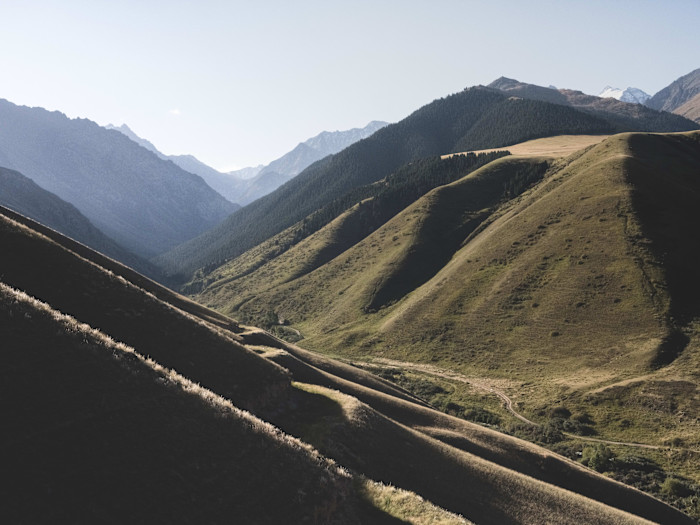
The next morning, we enjoy some fast canters until we reach Bolshevik village, where we start climbing into the mountains again. When we reach camp, a lame horse is swapped out with a local herder’s. In a river pool, I strip off and wash without waiting in a queue for the shower tents and buckets of hot water. The glacial sting also sets me up for the following day, when we’ll need to cover 48km by nightfall.
On our ascent to Shaar, central Asia’s highest waterfall, yaks graze on alpine pastures cradled by spikes of dark green spruce. Where the waterfall cascades from a crescent of slatey rock, I strike up conversation with two young men minding their horses and wearing traditional ak-kalpak embroidered felt hats. Wolves are the predator they fear.
After the waterfall, there’s a hard ride through more villages, these ones decrepit remnants of Kyrgyzstan’s Soviet past. Houses prop up frail corrugated roofs. There are fewer potted geraniums on the windowsills. Broken machinery and Lada cars clog up yards. Then the valley opens into grasslands rippling with nodding seed heads. We’ve already covered over 40km since the morning, but there are still more than 5km to go.
We’re not exactly lost but the shortcut we take isn’t straightforward either, with a river to cross, and a thorny woodland to cut through. It’s getting dark and exhaustion is setting in when one of the horses sinks in a bog and its rider falls. I can feel the collective surge of relief when Troschenko and his camp come into view.
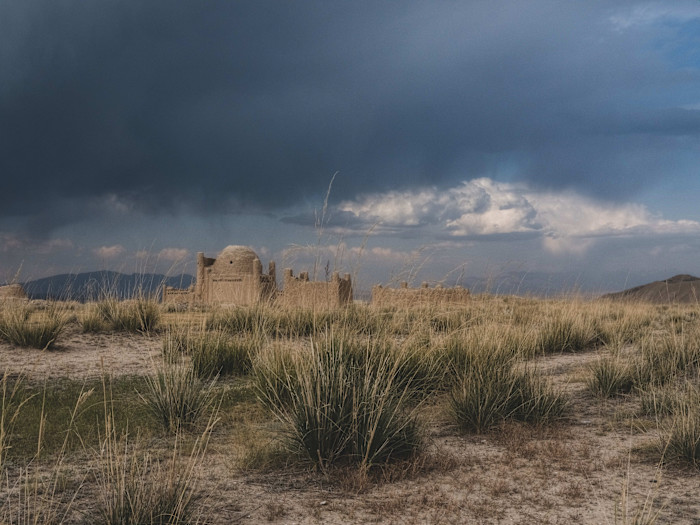
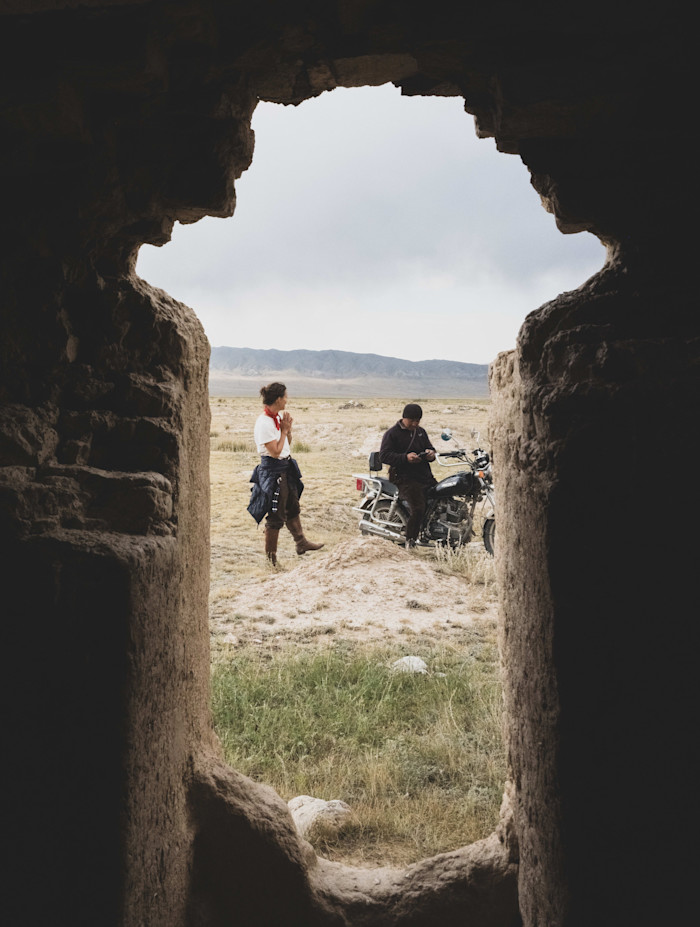
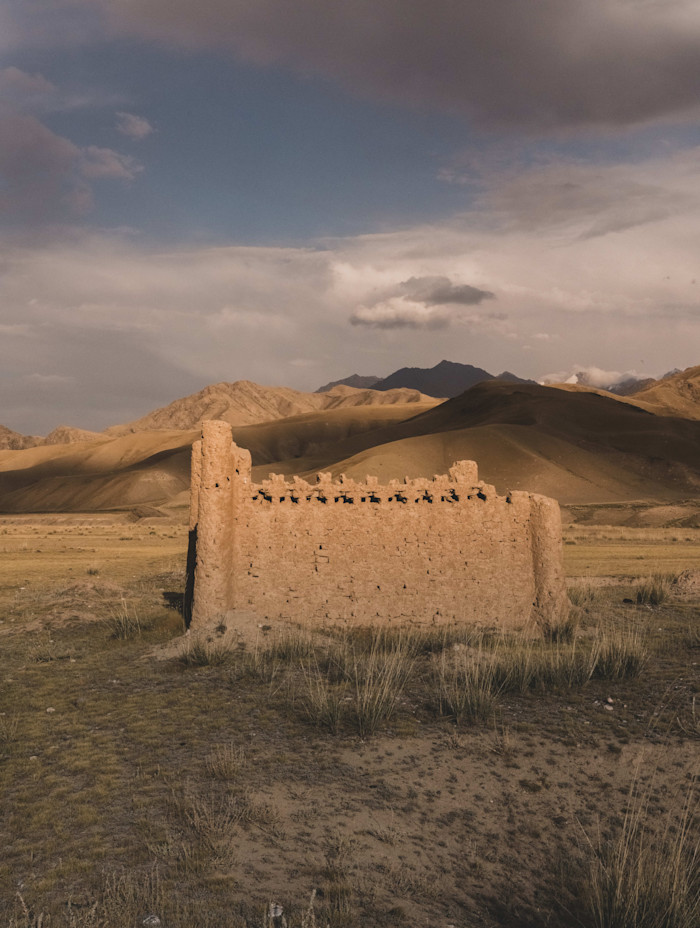
The next day, a slow morning, a village wedding, and some long gallops in the afternoon. Where the valley starts to narrow at Kara Koyum, which we’re told means “black tornado”, a sharp wind picks up as if on cue. We camp near a clifftop cemetery, where I poke around mausoleums, gazing up through brick cupolas, running my fingers over walls scored with Arabic graffiti. No one can tell me how old the ruins are, but they feel like they could belong to when the early silk merchants came through. When I fall asleep, it’s to the sound of the lisping river and our horses grazing.
The morning brings a shock: more than half our horses have disappeared. Since 7am, Nurdinov and his colleagues have been trying to hunt them down. When they eventually find them, five hours later, they are 12km back down the valley. This means they’ve covered 24km before we’ve even set out for our last ride — another 30km stretch to Tash Rabat.
One of our group packs some tequila in her saddlebag to help us with the final push. Another rider worries about her horse’s swollen belly. Nurdinov, who works nights as a courier in Bishkek to make ends meet, has barely had an hour’s sleep because of the runaways. Once or twice, I watch him nod off in the saddle, his body slumped on his horse’s neck. Only when we eventually turn away from the river valley for the last time does a new mood kick in — a dramatic shift, into a faster pace, thinner air and even more magical light as we enter a gorge flanked by black, teeth-edged crags.
I don’t have the energy to take a banya in the local yurt camp where we’ll sleep before our return to Bishkek. I’m filthy, bone-tired, but this ride has loosened something in me. When I turn in for bed with a last glance to the stars, not even sleeping next to a train could break this feeling of deep calm. It’s the serenity which comes from falling back in time with nature, from moving through a fenceless landscape to the rhythm of a horse’s gait.
Details
Sophy Roberts travelled as a guest of Alexandra Tolstoy Travel (alexandratolstoytravel.com); its 10-night At Bashi journey costs from £7,935 per person, with the next departure scheduled for May 8 2027