Just as cheese is often paired with ham, so cheesemaking has long gone hand in hand with pig rearing. The cheesemaker keeps the curds; the pigs get the whey.
Some of Europe’s best-known cheeses and cured meats owe their shared geography to this practical arrangement. In Italy, pigs destined for Parma ham were fed whey left over from making Parmesan, giving the meat its nutty sweetness.
Now, the protein craze is giving cheesemakers a more lucrative mouth to feed.
Dutch dairy co-operative FrieslandCampina, for example, no longer sells whey proteins for animal feed. Instead, it intends to turn more of the whey left over from cheesemaking into concentrated proteins for human nutrition.
For centuries whey has been seen as a byproduct of cheesemaking and used for fertiliser or animal feed. Now, says Guus Aerts, the co-op’s global director of marketing and product strategy, “to some extent, cheese has already become a byproduct of whey.”
This turnaround reflects a protein boom that is reshaping the food industry. From dairy co-operatives to meat processors, companies are extracting more valuable ingredients from materials they once sold cheaply, while food manufacturers compete to secure supplies. The appetite for protein is driving billions in factory investments and acquisitions.
“Protein is increasingly [dictating] what food companies produce, where they invest capital, and how they differentiate and grow,” says Brian Earnest, lead animal protein economist at agribusiness lender CoBank.
How much protein is too much protein? And can you taste the difference? Susannah Savage puts foods with added protein to the test
Yet the commercial enthusiasm rests on a proposition that nutrition scientists question: that eating more protein necessarily means eating better. While some groups may benefit from increasing their intake, researchers say protein deficiency is rare in countries such as the US. They warn that the pursuit of one essential nutrient to excess can crowd others out of people’s diets.
Companies must also distinguish a lasting change in eating habits from a passing enthusiasm for particular products. As they invest in new processing plants and supply chains, will customers tire of the novelty of protein-enriched popcorn and move on to something else?
Aerts believes protein mania is here to stay. “We’ve only seen a little bit of what it will mean for the food industry as a whole,” he says. “This will be a disruption, not just a trend.”
The era of protein-maxxing
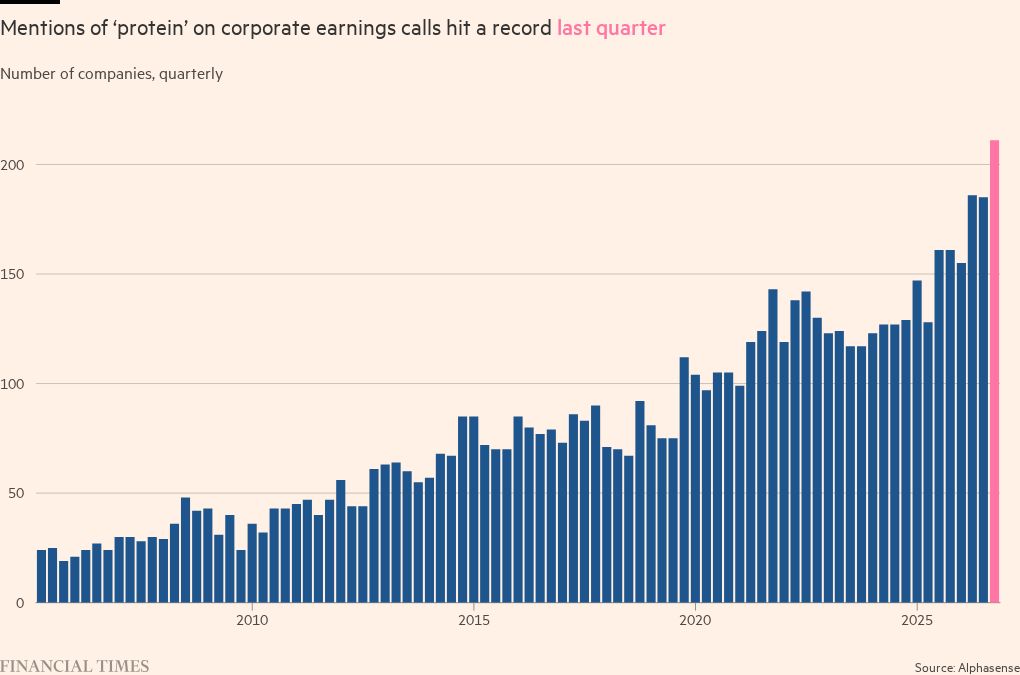
Demand for protein has been building for decades, but it has been turbocharged over the past few years.
“I think about it in three stages,” says John Lancaster, head of Emea dairy and food consulting at broker StoneX.
The first came in the noughties when gym culture took off and whey proteins and shakes were in vogue, he says. “It was a growth market, but it wasn’t setting the world on fire.”
Then came the “real watershed moment,” he says: weight-loss drugs, which studies have shown lead to reductions in muscle mass as well as fat. “You had people losing a lot of weight, needing to take in extra protein to try to minimise the muscle loss at the same time.” Finally, “popular culture took over. Everybody feels that they need more protein, and we’ve got this halo effect.”
The US government has amplified the message. Dietary guidelines unveiled in January by health secretary Robert F Kennedy Jr and agriculture secretary Brooke Rollins urge Americans to prioritise protein at every meal, setting a daily target of 1.2–1.6 grammes per kilogramme of body weight, 50-100 per cent above the longstanding recommended dietary allowance of 0.8g.
Kennedy himself has become the poster boy for the “carnivore diet,” which at its most extreme consists exclusively of meat, eggs and fermented foods. He credits it for his weight and fat loss.

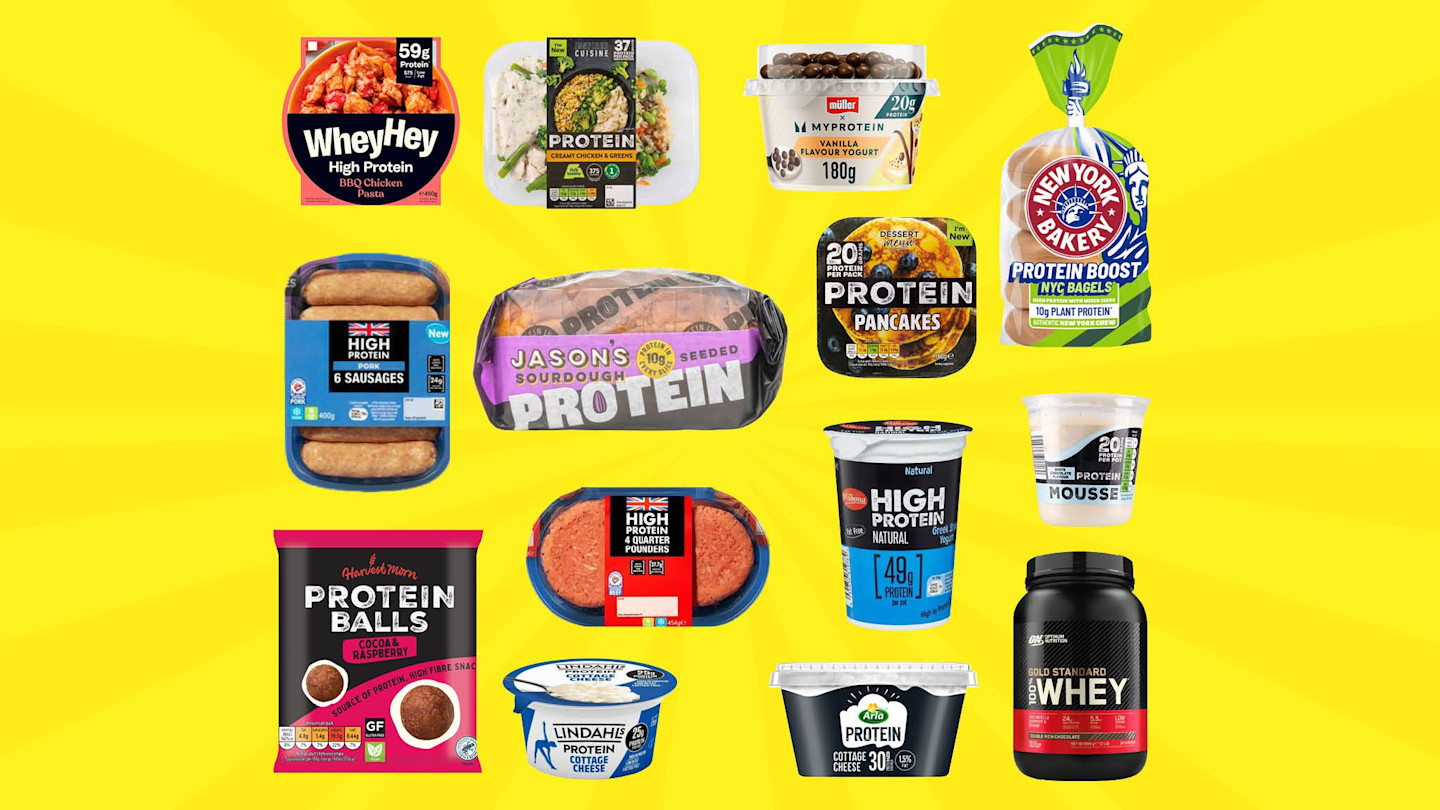
The protein craze gave meat and dairy a new selling point. In the supermarket, jokes Lancaster, “it’s not the dairy aisle anymore. It’s the protein aisle.”
US sales volumes of cottage cheese, once an unglamorous diet staple, grew by double digits in 2024 and 2025, according to the National Milk Producers Federation.
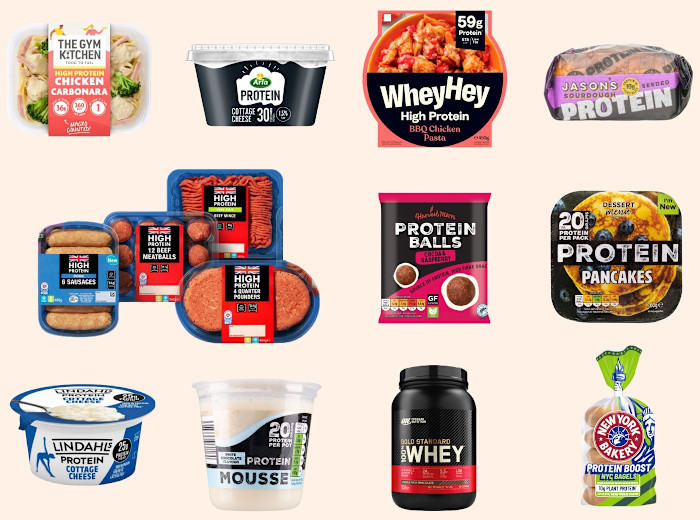
Food manufacturers have set about changing recipes to cash in on the hype. Consumers in the US can buy “PowerMac” mac’n’cheese and Pop-Tarts Protein, while British people can enjoy berry-flavoured protein collagen jelly or White Chocolate Protein Matcha Lattes.
PepsiCo has launched protein Doritos using casein, a milk protein, and Myprotein, an online sports nutrition brand, has expanded into supermarket foods through partnerships with Müller, Iceland and Mars.
US unit sales of snacks marketed as high in protein increased 9.6 per cent in the year to March 28, according to consumer intelligence company NIQ, compared with just 0.9 per cent for snacks overall.
More and more of the milk at Scandinavia’s largest dairy producer Arla is being used to make cottage cheese and the Icelandic cultured dairy product Skyr, says head of marketing Jakob Knudsen, as well as other protein products.
Sales of Skyr and cottage cheese have grown 33 and 25 per cent a year over the past three years across its European markets, he says. In October, the co-operative announced €63mn of investment to expand Skyr production in Germany and cottage-cheese production in Sweden, with additional capacity coming on stream through 2028.
“We are almost running a bit behind the competition,” says Knudsen.
Others are buying their way into the market. Danone completed its €1bn acquisition of Huel, the maker of powdered meals, shakes and bars, in September. Lactalis, the world’s largest dairy group, acquired Protein Works in June, adding a business that makes shakes, supplements and snacks at its Liverpool factory and sells directly to consumers online. The deals give the dairy groups specialist nutrition brands and established online customer bases.
For meat processors, the opportunity also lies in finding more lucrative uses for the materials produced alongside meat. JBS, the world’s largest meat processor, is developing its collagen and gelatin businesses to “convert co-products into super products”, says Ricardo Gelain, president of its new businesses division.
Once largely sold as a powder for consumers to add to shakes, collagen is increasingly being incorporated into foods and drinks. JBS’s customers in Brazil have used it in protein water, cheese spreads and non-alcoholic beer.
Dairies, too, are finding fresh value in what were once troublesome byproducts.
Whey has become important enough to influence whether, and where, companies invest in cheesemaking. But turning it into a premium ingredient requires expensive equipment and years of development work.
FrieslandCampina has announced three big investments in its Netherlands processing network over the past three years, each worth roughly €50-€100mn, as it extracts more protein from whey for concentrated ingredients. “It might be more profitable, but it also comes with a lot of investment,” Aerts says.
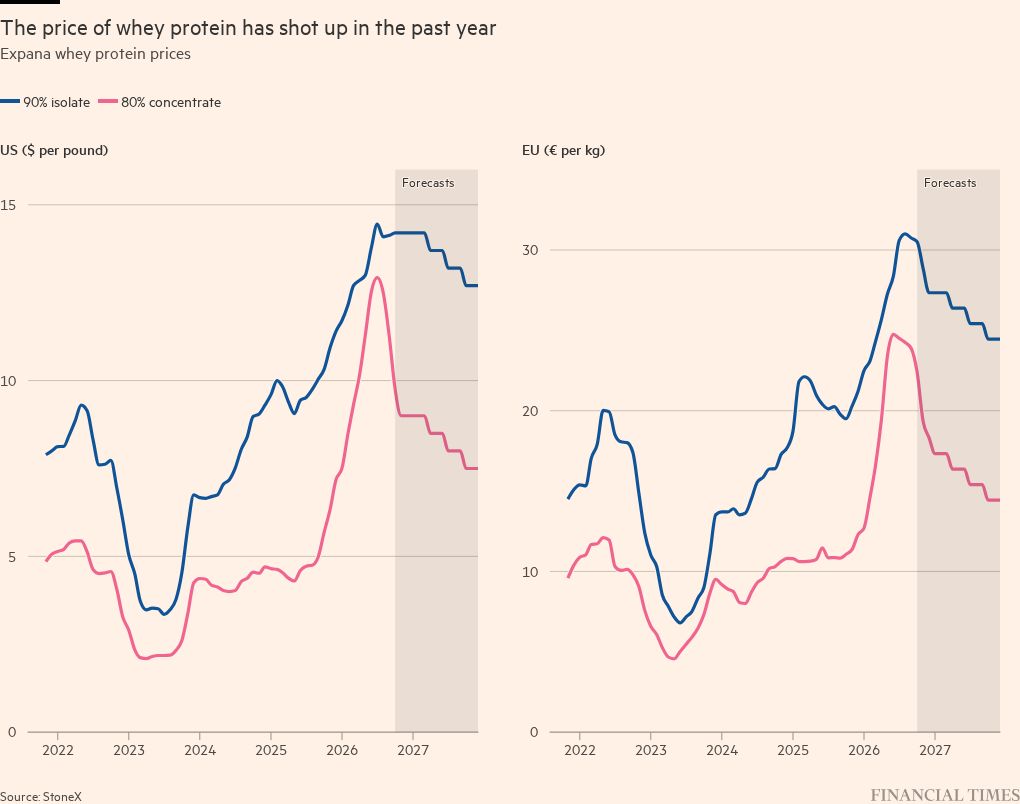
Those constraints have meant demand for whey has started to outpace supply. Prices “have gone absolutely ballistic over the past 18 months”, says StoneX’s Lancaster.
In September, European benchmarks stood at €23.875 a kilogram for whey protein concentrate, which contains 80 per cent protein, and €30.749 for isolate, a more refined form containing at least 90 per cent. That has more than tripled from €6.475 and €8.350 respectively two years ago.

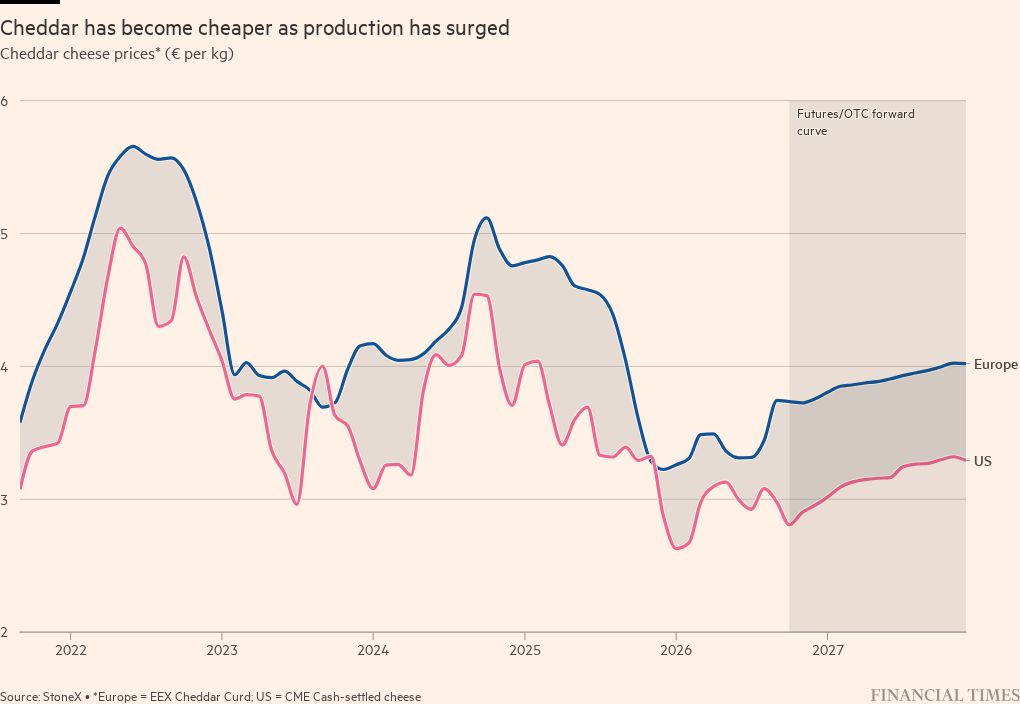
With more whey comes more cheese. New US plants have boosted output, with overseas markets absorbing about 90 per cent of the additional production this year, he says. The extra supply has put downward pressure on US cheese prices.
Higher whey prices benefit ingredient suppliers but squeeze the companies buying it for bars, shakes and snacks. At Simply Good Foods, which produces Quest protein chips and bars, chief executive Joseph Scalzo said in June that whey and milk protein prices were putting pressure on the business.
“They’re at historic highs right now, and there’s a lot of pressure in that marketplace,” he says.
As whey becomes more expensive, companies are testing milk-protein concentrates, soy and pea ingredients. Suppliers are expanding the choice available to them. Agrifood giant Archer Daniels Midland launched eight soy and pea ingredients in May, including proteins designed to mix smoothly into drinks.
Rival Louis Dreyfus also began commissioning a pea-protein isolate plant in Saskatchewan in March, alongside its existing oilseeds-processing complex. Using technology developed by its own researchers, it will extract protein from North American peas and also sell the resulting fibre and starch. James Zhou, its chief commercial officer, described the investment as part of a strategy to “diversify revenue through value-added products”.
But substitutes bring their own problems: some dissolve less easily, carry stronger flavours or produce a poorer texture. A cheaper ingredient is of little use if it makes the final product harder to sell.
How much protein do you need?
The most consequential question for the food industry is not whether consumers will try more protein. It is whether the change in appetite will last long enough to justify the factories now being built to supply it.
Aerts of FrieslandCampina and others are betting that the next wave of customers has yet to arrive. The spread of GLP-1 weight-loss drugs, he says, will create demand for protein products well beyond the markets where they have already taken off. Weight-loss drugs have yet to hit some markets in full, such as India and China.
It’s also become clear that while the industry initially expected consumers to use them for a few months, lose weight and return to their previous eating habits, now a much more lasting change is expected.
“There will be such a large group of consumers that will permanently, drastically change their eating habits that it will have a massive influence on the industry as well,” says Aerts.
But people taking GLP-1s do not necessarily need more protein overall, says Lindsey Smith Taillie, a nutrition researcher at the University of North Carolina. Rather, because they are consuming fewer calories, protein must account for a greater share of what they eat if they are to get enough of it.
Some content could not load. Check your internet connection or browser settings.
She acknowledges that proteins can help rebuild muscle shed during rapid weight loss. “However, I don’t think this justifies the proliferation of protein-infused ultra-processed foods.” Minimally processed foods such as beans, eggs, fish, lean poultry and dairy are better sources, she adds.
Beyond people with particular nutritional needs, the case for a broad increase in protein consumption is less clear than the commercial enthusiasm suggests.
Protein deficiency in the US is rare, according to nutritional surveys carried out before the government’s food guideline changes. While eating more protein might help specific groups such as older people, who process it less efficiently than younger counterparts, it is far from a population-wide need.
Some researchers have suggested that eating more than 2g of protein per kg of body mass might cause health damage such as kidneys, although this is contested. Less disputed are warnings that eating more high-protein foods risks displacing fruit and vegetables from the diet, leaving people short of other vital nutrients, such as vitamins, minerals and fibre. If the additional protein comes mainly from meat and dairy products, it can also increase consumption of saturated fats.
Some of those seeking more protein are also trying to eat fewer ultra-processed foods — an awkward combination for companies adding the nutrient to crisps, cereals and confectionery. Taillie sees the proliferation of protein claims partly as an effort by food companies to respond to concerns about processing. “They’re really trying to figure out how can we make these foods seem healthy,” she says.
The criticism comes from within the fitness world as well. Dan Go, a Canada-based fitness coach, has criticised bars that are high in calories, short on other nutrients and loaded with sweeteners and additives. They are often “expensive candy in disguise, offering little nutritional advantage over their sugary neighbours”, he says.
“We’re at this crossroads where protein and ultra-processed foods are meeting, and it’s not clear what’s going to happen over the next couple of years,” says Melissa Abbott, a consumer researcher at the Hartman Group, a consultancy. “More than anything, taste continues to be the most important thing.
“Consumers are willing to pay some level of a premium, but if the taste isn’t there, and it’s not at least as good as the original, they’re not going to repeat-buy it.”
For manufacturers, that means making products people want to eat, rather than simply putting a number on the front of the packaging. FrieslandCampina has established application labs across its five regions to work with customers on taste, texture and how different types of protein behave in different foods.
With a protein bar, says Aerts, there is a substantial difference between “chewing on a brick” and eating something that “almost tastes like a candy bar”. That distinction matters more if manufacturers want to reach beyond committed sports-nutrition consumers.
“Sometimes being available was enough,” he says. “We don’t believe that will be the case in the future.”
Thanks to social media, consumers’ understanding of protein is growing quickly — and with it their expectations, says Lucy Woods, a consumer insights specialist at agribusiness giant Cargill. “What we hypothesise is happening is Americans might be moving . . . away from ‘oh, I just want more’ to ‘oh, I want more variety’ . . . to ‘oh, what kind of protein is in that pasta or in that pizza?’”
With protein counts increasingly appearing on food packaging and restaurant menus, and consumers more engaged in nutrition, consumers may start asking a different question, says Woods: “Am I eating too much protein? How much protein should I be getting?”