The affordability crisis is dominating midterm election campaigns in the US ahead of voting in November.
People across the country are grappling with the high costs of basic needs — food, energy and housing — which have skyrocketed after the pandemic.
Worryingly for Republicans, President Donald Trump’s Iran war and his global tariff regime are further fuelling inflation.
Once one of Trump’s strongest issues, the high cost of living has become a liability for the president. In October, more than two-thirds of registered voters said the economy was heading in the wrong direction, according to an FT poll· conducted jointly with Focaldata.
How economic issues beyond headline inflation affect voters in battleground states will be crucial in determining who wins the House of Representatives and Senate this November.
The FT’s Affordability Tracker, which will be updated monthly, monitors price changes for basic groceries, petrol, electricity and housing both nationally and across battleground states.
National snapshot
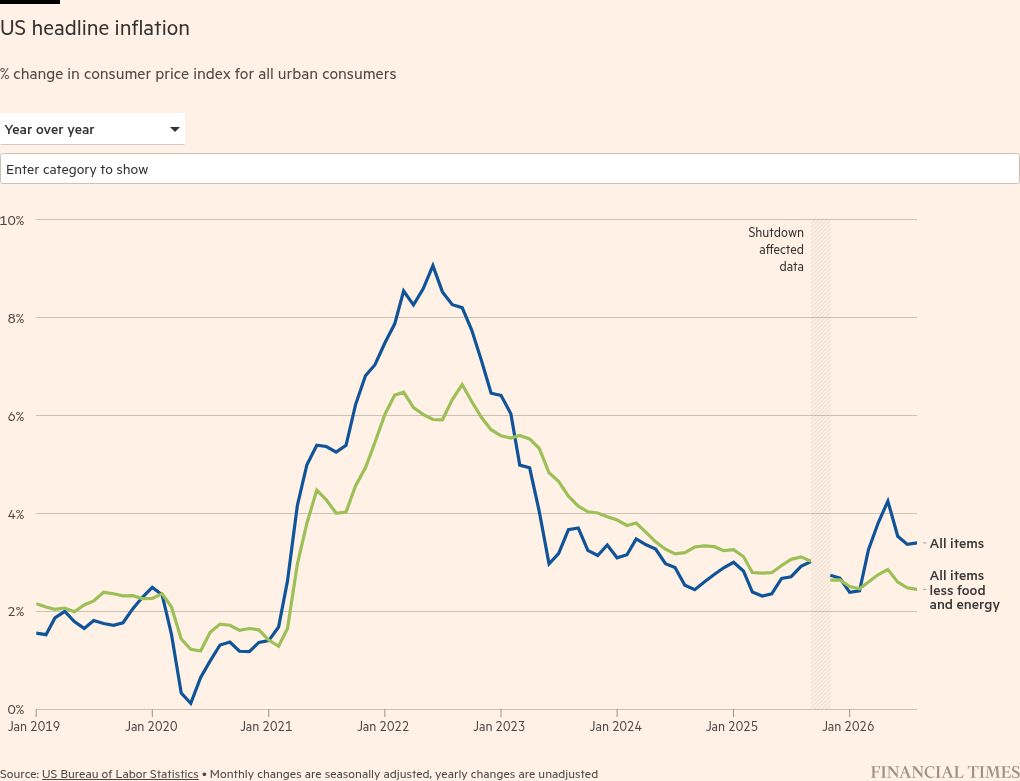
At the national level, the consumer price index shows the immediate inflationary impact of Trump’s Iran war, which he launched on February 28. It has been primarily felt in the higher cost of energy. But the conflict has also pushed up the prices of other goods, such as groceries, as higher fuel costs for truckers and farmers feed through to other parts of the economy.
Housing, petrol and electricity
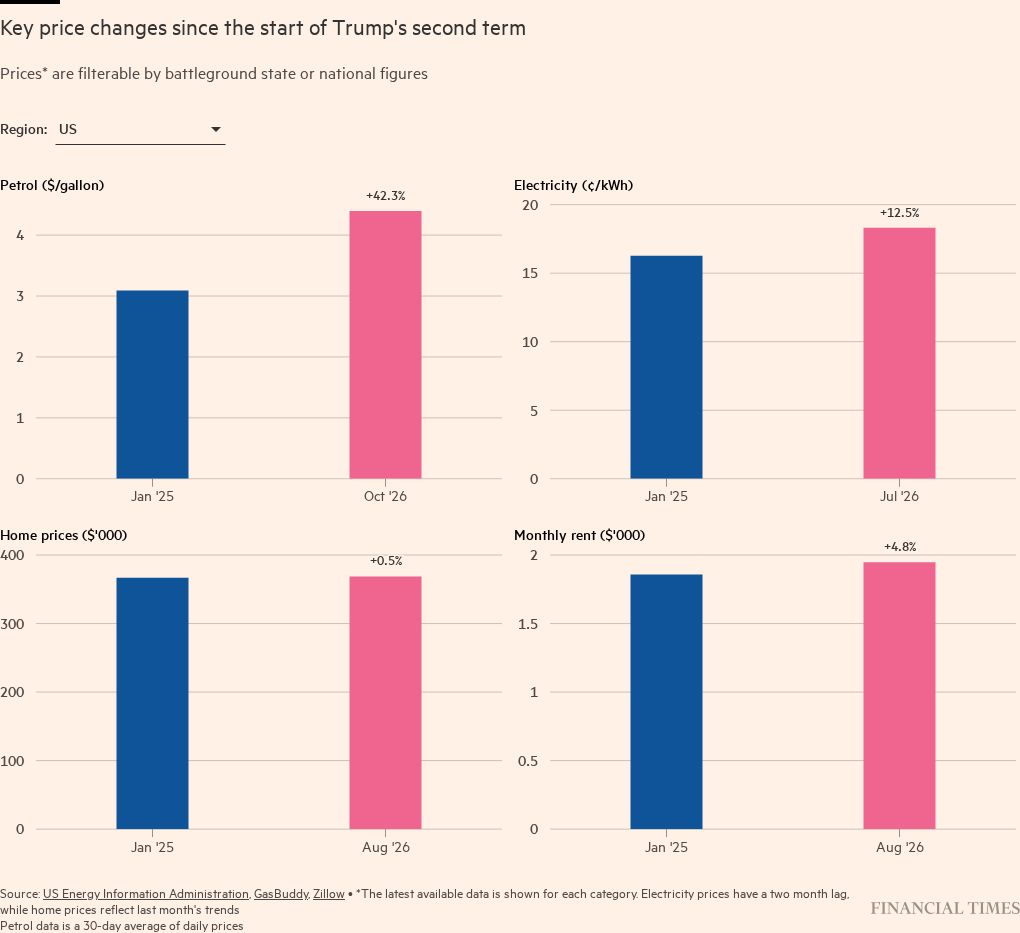
While CPI offers a helpful snapshot of national price trends, other data sources are needed to home in on state-level differences, especially in areas that will be competitive in the upcoming midterm elections.
While petrol prices have increased everywhere, certain states — such as Alaska and Michigan — have been especially hard hit. Voters in those states may be more sensitive to Trump’s handling of the Iran war and its effect on petrol.
Within states, consumers are also split, said Liz Buchanan, North America president of NielsenIQ, which provided food price data to the FT.
According to NielsenIQ, 39 per cent of Americans say they are worse off financially than they were a year ago — but 25 per cent say they are better off, highlighting “growing divergence”, said Buchanan. Some consumers remain focused on budgeting while others continue to spend with “relative confidence”, she added.
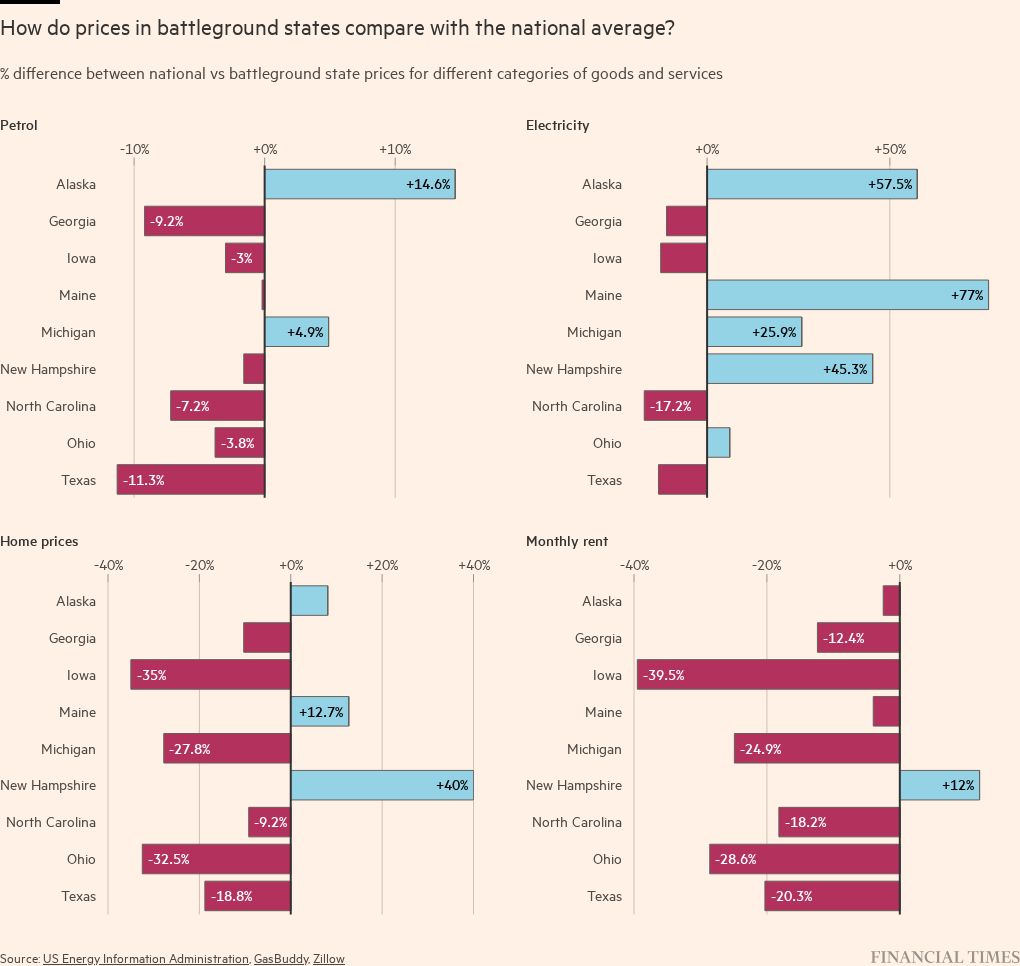
In battleground states, where neither party has a safe majority and race outcomes have the potential to tip the balance of power in Congress, there are outliers in price changes in both directions compared with the national average.
Food costs
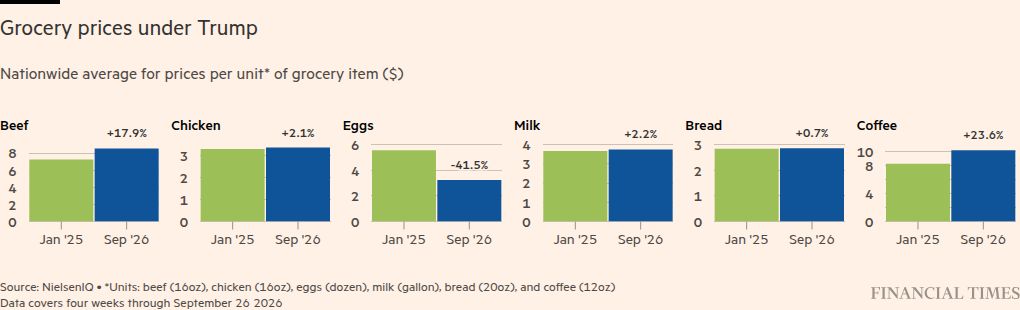
According to NielsenIQ, more than a third of Americans say their top concern for the next six months is the increasing cost of food.
Food prices have fluctuated throughout Trump’s presidency and not all changes are from executive decisions. Beef, for example, is at historic highs because of widespread drought as well as inflation, higher interest rates and expensive feed.
Egg prices, which soared at the beginning of Trump’s second term, have come down significantly as farmers have restocked egg-laying hens. The president has said declining egg prices are a sign that his policies have brought down costs across the board, which is not true.
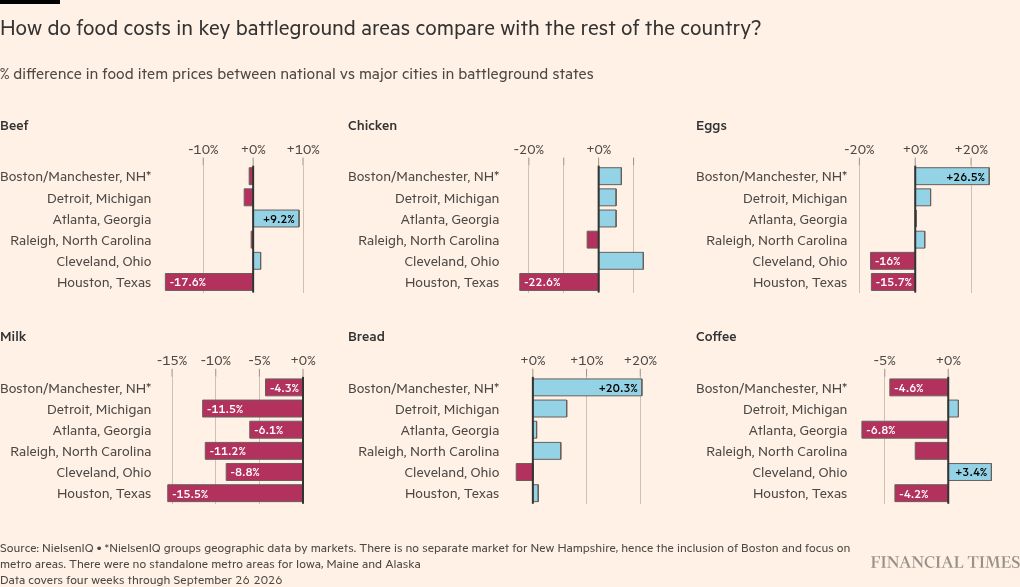
Food prices also vary significantly across the country. In Texas, for example, beef prices are lower than the national average because of the state’s proximity to the supply chain, including major feedlots and processing facilities.
High beef prices have motivated some consumers to opt for chicken, a cheaper meat alternative.
Price rises vs wage growth
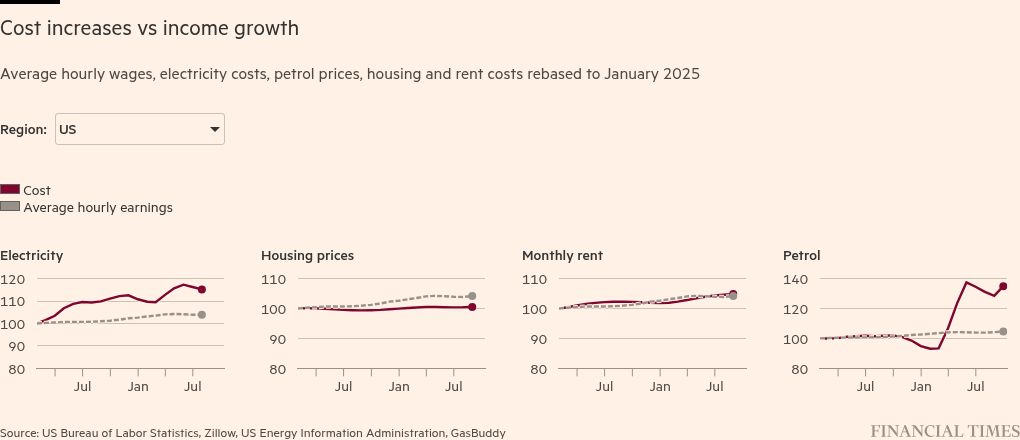
Whether or not wages keep up with increases in the cost of living is an important factor determining how keenly voters experience inflation.
Even though wage growth may be in line with, say, the change in housing prices, the latter can still be unaffordable.
Inflation sentiment: how bad do things feel?
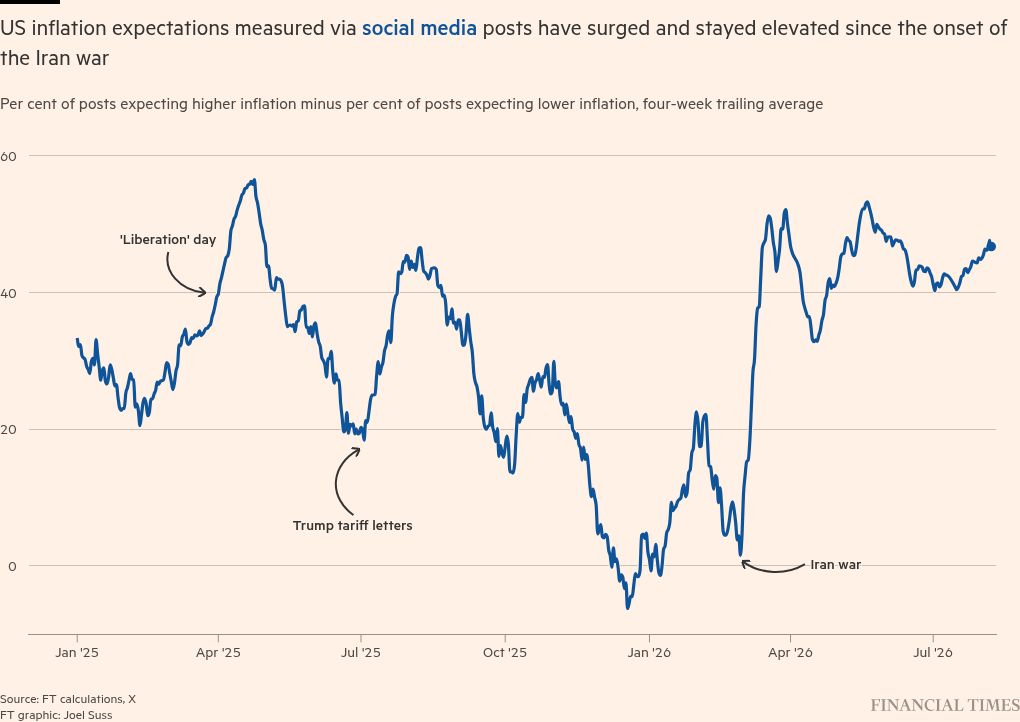
Beyond the numbers, how pessimistic Americans feel about the economy matters just as much as the prices they pay.
While inflation growth rates slowed after the Covid-19 pandemic, sentiment remained negative among Americans who were still struggling with price increases.
During Trump’s second term, inflation expectations have swung up and down after big policy announcements such as the launch of the president’s “liberation day” tariffs and the Iran war.