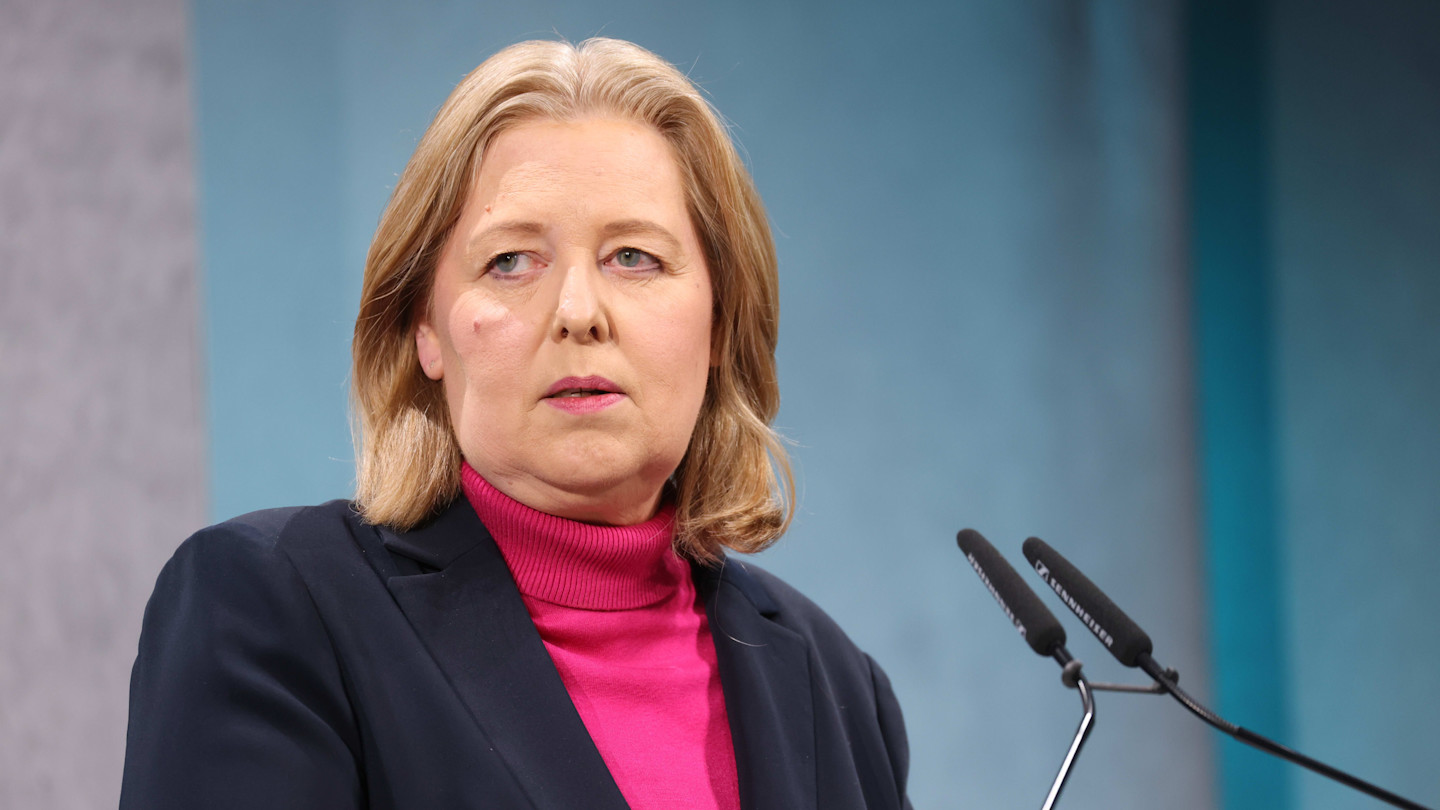
Germany’s Social Democratic labour minister abruptly resigned on Monday, triggering a government reshuffle just as Chancellor Friedrich Merz’s coalition struggles to agree on contentious pensions and labour market reforms.
Bärbel Bas said she would also step down from her role as co-leader of the Social Democratic Party (SPD). She cited the recent death of her stepdaughter and “intensifying” personal attacks including from Merz’s Christian Democrats.
She will be replaced by Alexander Schweitzer, the former Rhineland-Palatinate premier whose SPD was defeated by the CDU in regional elections this year. Schweitzer is “taking on draft legislation which I hope will be adopted in the cabinet and introduced in parliament quickly”, Merz said on Monday.
The change threatens to disrupt some of the most politically sensitive parts of Merz’s reform agenda, including an overhaul of Germany’s costly pay-as-you-go pension system, extending Sunday working hours and tightening the country’s sick-note system.
The resignation comes amid growing coalition tensions following strong gains for the far-right Alternative for Germany in regional elections in September. The CDU and SPD’s electoral setbacks have deepened the partners’ disagreements over the pace and scope of economic reforms designed to revive Europe’s largest economy.
“The new minister will want to review the reforms themselves, so this will probably delay progress,” said Henning Meyer, professor at Tübingen university and SPD member.
Beyond the immediate disruption, Bas’s departure removes one of the more reluctant reformers within Merz’s coalition. A politician from Germany’s industrial Ruhr region, she resisted some of the most painful proposed welfare cuts and clashed with vice-chancellor Lars Klingbeil over concessions he was ready to make, according to people familiar with the discussions.
Bas’s departure will also reignite a debate within the SPD over whether to abandon its co-leadership structure and leave Klingbeil as sole party chief.
“It creates a challenging situation both for the chancellor and the SPD leadership on several levels,” said Andreas Busch, a professor at Göttingen university. “In the government the central minister for the reforms has to be replaced; in the SPD the question of who to replace her with and whether to keep both roles in one person or divide them up will dominate.”
But Klingbeil himself faces growing discontent within the SPD, where some blame the government’s planned pension reforms for the electoral setback in the north-eastern state of Mecklenburg-Vorpommern, where the AfD came first.
“With Klingbeil in a weak position, the dual leadership is likely to be continued,” Busch said.
One potential successor to Bas as SPD co-leader is Manuela Schwesig, the state premier of Mecklenburg-Vorpommern, who is in a position to form a coalition with the far-left Die Linke party to remain in power in the state.
Schwesig, who is credited with mounting a strong campaign against the AfD despite its first-place finish, campaigned against the government’s planned pension reform.