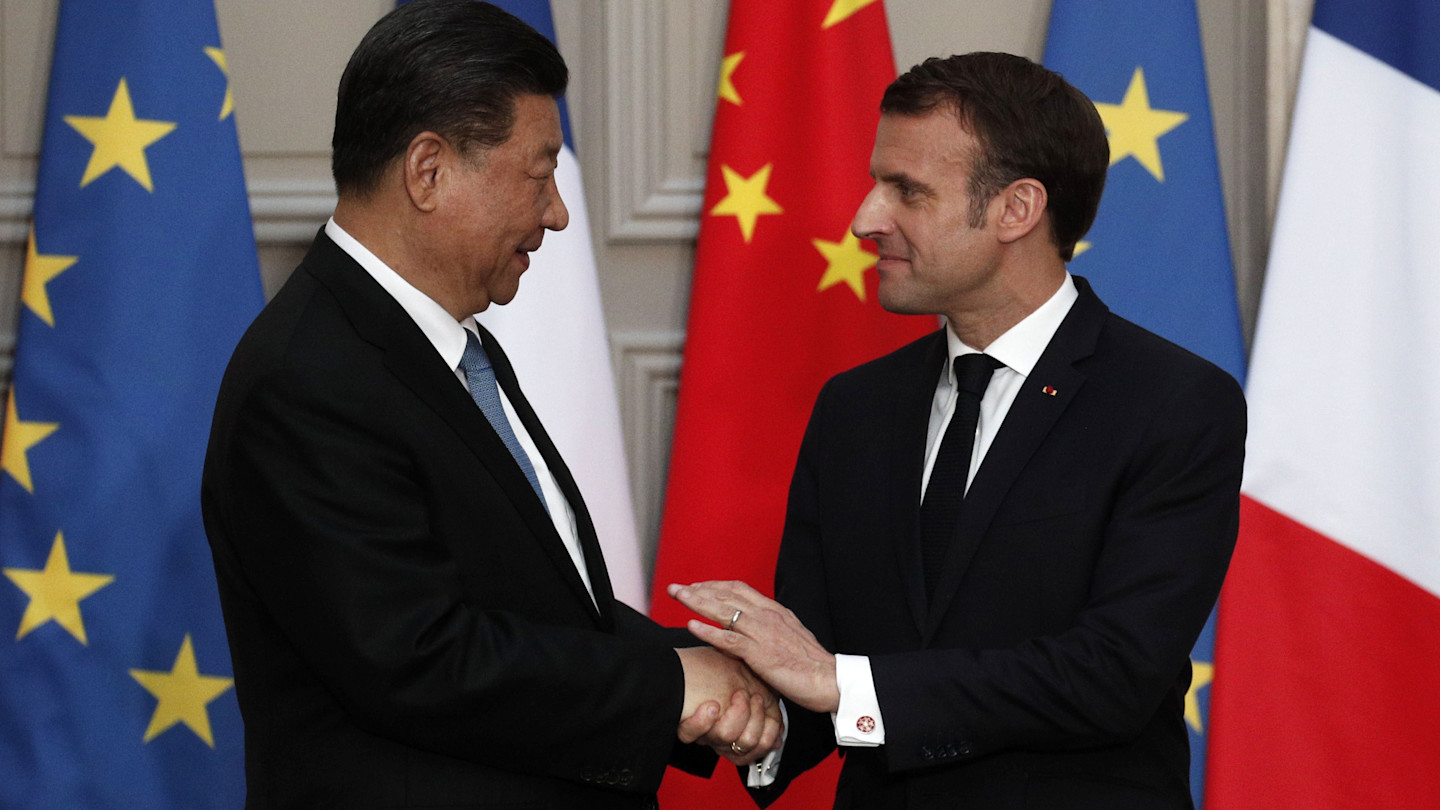
I was struck last week by how Europe is beginning to take Chinese mercantilism seriously. It’s been a long time coming, but the French and Germans are finally in agreement about pushing back on the weaponisation of trade by China, including things such as rare earth mineral bans. The two countries are arguing for a new mechanism that would allow the EU to retaliate quickly and unilaterally against such things, rather than wading through the usual long World Trade Organization process.
A South China Morning Post article from late September quoted former WTO head Pascal Lamy saying that Europe has three problems: a small one, a medium-sized one and a big one. The first is US President Donald Trump and his trade tantrums, which will eventually end. The medium-sized problem is that the WTO no longer works. And the big one is China. “It’s a problem for every country,” Lamy said, given the huge and intractable macroeconomic imbalances. He also noted that China’s desire to become largely self-reliant — in food, energy, technology, manufacturing and ultimately in services — makes the current global trade system unsustainable. It’s quite a moment when Lamy, who used to be Mr WTO, starts admitting what those on the left of the labour movement have been saying for years: China isn’t going to come into the existing system wholesale.
I’m guessing that those Biden administration officials who tried for years to get Brussels to arrive at this position are wishing the realisation would have come sooner. But in truth, Europe had to feel the kind of pain that America had taken for years in its industrial base to take a tougher stance towards China. Core European industries, such as automotives, aerospace, machine tools and chemicals are under pressure, and there’s new talk in both France and Germany about regionalising and de-risking away from China — as well as barring new Chinese acquisitions in key areas (note the recent barring of the Chinese acquisition of a logistics group in Germany’s biggest seaport).
This presents an important opportunity for the US Congress — which may turn blue after the midterms — and any new US administration post-2028 to push forward a new grand bargain on friendshoring to counter Chinese mercantilism. I’ve seen internal memos being crafted by French and German politicians that argue for just this: working with allies, including the US, to create shared industrial capacity and supply chains and new rules about how trade should operate. A post-Bretton Woods system built on fair labour and environmental standards is very much what former US trade representative Katherine Tai was trying to articulate during the Biden administration.
There’s a connection here to my latest column·, which is about what a new Democratic foreign policy should look like. Democrats are having big, closed-door conversations about how to move forward if they get a Congressional sweep in the midterms and a strong candidate for president. Grabbing the low-hanging fruit of industrial partnerships with both European and Asian allies must be a part of any new foreign policy.
My partner in the Swamp today is Steve Brock, who was a senior adviser to the former Navy secretary Carlos Del Toro, who articulated a new maritime strategy of building ships with allies and looking for shared economic and industry ties with overseas partners. He was an important source for my new book, Sea Change (which came out last week in the UK) and worked on how to blend domestic and foreign business interests in the maritime sector.
Steve, I’d love you to share details of some of your efforts with European and Asian allies and to tell us what the opportunities and challenges were. You can use the maritime sector as a stepping-off point for what a broader US/allied industrial policy can or should look like. Give us some ideas for Europe, but also Asia (Korea and Japan, principally) in this context. What should a new Democratic Congress — or a new president — be thinking about in terms of building capacity in a post-neoliberal world?
Recommended reading
I was struck by my colleague Pilita Clark’s column last week on how many men consider concern over climate change to be unmanly. I wonder if the way around this is to shift language: I wrote a column a while back on how conservatives actually do care about global warming when it is talked about in terms of “risk” — business and financial — rather than as a political topic.
I don’t typically pay attention to online influencers and don’t do much social media either — I tend to find it makes me feel dumber. But I was interested to see some influencers taking a political stand around outrageous healthcare bills. I’m hoping that if more people get on this bandwagon, we might start to realise as a society how absurd and inefficient our healthcare system is.
The topic of whether reading is becoming a lost art has been front and centre in the US recently, with a widely read Atlantic cover story on the issue and now a new book by James Marriott, The New Dark Ages, which was reviewed recently in the Wall Street Journal. While it’s true that far fewer people read for pleasure these days, it’s also true that societies in crisis can be highly literate — Nazi Germany had an extremely high literacy rate. For me, reading has become a competitive advantage: I find that I can often stay ahead of competitors simply by reading the full text of reports, analysis and books.
Steve Brock replies
Hi Rana. It’s great to join the dialogue. Engaging the collective industrial strength of our allies was the primary objective of our Maritime Statecraft initiative. We knew a new approach with allies was key to addressing our national crisis in naval shipbuilding and a rebirth in our international commercial shipbuilding and shipping industry that was outsourced 30 years ago.
The centrepiece of the strategy included incentives for allied shipbuilders and suppliers to invest in America’s maritime ecosystem. Introducing competition would shake up our moribund government shipbuilding landscape. Our direct request to bring allies’ expertise in commercial and government shipbuilding facilitated the landmark acquisition of Philly Shipyard by Korean shipbuilding giant Hanwha. Our engagement with new Nato member Finland and Canadian-Finnish firm Davie led to commitments to invest in US naval and coastguard shipbuilding. Most of the promised investments from allies, especially those by Korea and Japan, have not yet materialised. We must ensure that American supply chains and workforces benefit from these foreign investments. A new Congress and executive must also develop policy — foreign and domestic — to address allies’ conditions.
We recognised real economic security risks beyond naval shipbuilding. Today, over 90 per cent of global trade and communication transits the maritime domain and 99.7 per cent of US trade is carried via non-sovereign means. Less than 0.5 per cent of vessels engaged in international trade are built in the US. Since its entry into the WTO, China has unequivocally traded places with the US as the dominant full-spectrum maritime power in shipbuilding, containers, cranes, ports and maritime finance. To address that, we partnered with USTR on the first-ever trade sanctions against China’s unfair maritime industry practices. They were suspended last year. A future administration should reinstate USTR sanctions.
We also engaged Europe’s biggest global shippers, who order most of their ships from China, to discuss ways to diversify the sourcing of their future fleets. Having all eggs in the China basket is a risk to global trade. They agreed it would be advantageous to do so but only when others are able to deliver at China’s price, speed and quality. Absent government intervention to level the playing field, there is not sufficient demand for US or European-built ships. When free marketeers in the Reagan administration ended construction and operating subsidies to the US fleet, it quickly reflagged abroad. (Note even Adam Smith warned maritime was the one industry requiring government support to secure British trade in his defence of parliament’s Navigation Acts.) A new Congress and future administration should view a renaissance in full-spectrum maritime power as a security imperative in the way it views funding for the Pentagon. The money and political will to prioritise it will be difficult as a new Congress and executive tackle the fiscal challenges ahead.
To reframe the challenge as an allied foreign policy opportunity, I’ve proposed a grand bargain linking alliance burden sharing and integrated allied industrial policy to revive strategic industries necessary for our collective security and prosperity. If any number of Nato members bilaterally agreed to subsidise the shipment of some small portion of their exports only on US/allied-built ships, it would catalyse global shippers to shift those vessel orders to allied builders and scaled investment into the industry would follow. In return, those allies would receive credit for the subsidies towards their 5 per cent of GDP (1.5 per cent for enabling capacity) of Nato burden sharing. Nato would benefit from military sealift and secure shipping it does not have and all would benefit from greater maritime resilience, deterrent capacity and independence vis-à-vis China.
Your feedback
We’d love to hear from you. You can email the team on [email protected], contact Ed on [email protected] and Rana on [email protected], and follow them on X at @RanaForoohar and @EdwardGLuce. We may feature an excerpt of your response in the next newsletter