The United Arab Emirates shocked British diplomats last year by abruptly halting its longstanding sponsorship of Emirati students at UK universities over claims that they were at risk of Islamist radicalisation.
The decision fuelled fears that the UK-UAE relationship, already under strain after disagreements over the civil war in Sudan and a failed Abu Dhabi-backed acquisition of The Telegraph newspaper, was unravelling further. Billions of pounds in Abu Dhabi investments in British companies and infrastructure were potentially at stake.
Ultimately the UAE quietly reinstated sponsorship in August, officials said, in a sign of warmer relations since the UK provided defensive assistance against Iranian attacks earlier this year.
But an independent commission’s verdict that Manchester City, owned by UAE vice-president Sheikh Mansour bin Zayed al-Nahyan, was guilty of breaches of the Premier League’s financial rules risks souring bilateral relations once again.
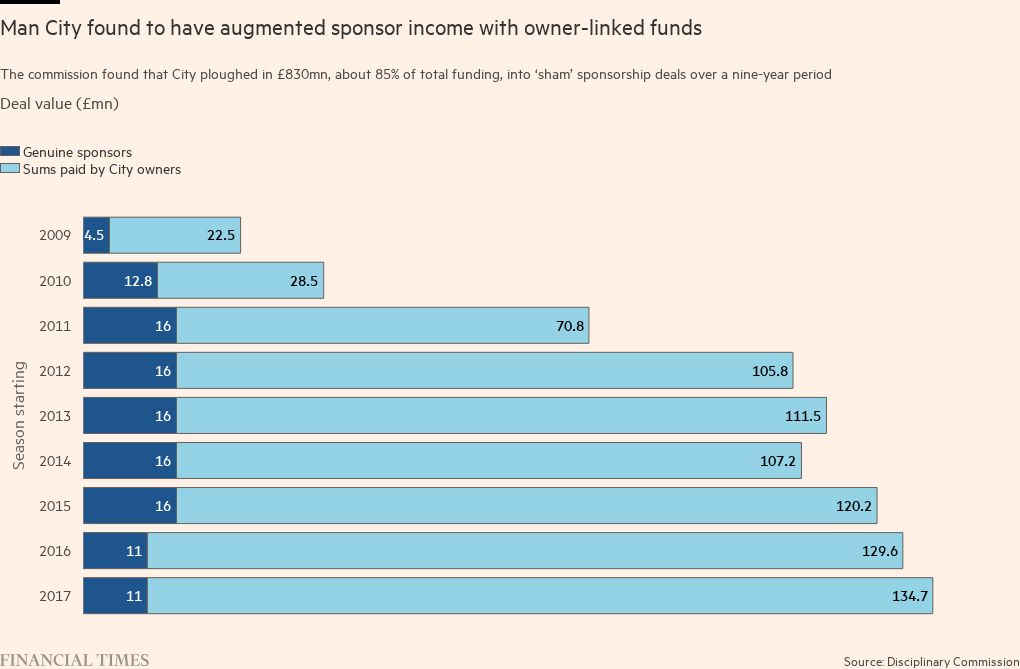
Man City was found to have artificially inflated its financial position by more than £900mn over nine years, principally through “sham” commercial sponsorship deals to disguise owner funding, in what has turned into the biggest scandal in Premier League history.
The club rejected the ruling and has lodged an appeal.
In the aftermath, the UK is trying to balance public outrage with a desire to keep investment flowing from the UAE to support Prime Minister Andy Burnham’s vision of revitalising economic growth in the regions. The Gulf state, meanwhile, is seeking to protect its reputation while bolstering strategic and economic ties amid the dangers of the Iran war.
Burnham said last month he would “be really concerned” to lose Man City’s owners as a result of the verdict, given their heavy investments in Manchester.
While the prime minister’s intervention was widely criticised at home, his willingness to recognise Abu Dhabi’s role in financing the city’s regeneration would “count for a lot”, said a former western official.
Senior officials on both sides have played down suggestions that the row could hit the UAE’s willingness to back big UK projects.
One UK official said there had been no direct or indirect Emirati threats to scale back investments: “It is obviously tricky but we have made it clear that this is a sporting matter, not one for government.” Another said: “They are serious people and they understand our political system.”
But Whitehall is nonetheless worried that forthcoming Premier League sanctions — which could include fines, huge points deductions and even Man City’s expulsion from the competition — could impair relations.
Abu Dhabi has a history of using commercial contracts to exert pressure on the UK, often over claims that it fails to rein in Islamism, a political movement to which the UAE is implacably opposed.
In the wake of the Arab Spring, when Abu Dhabi was furious about the UK’s refusal to publicly recognise the Islamist Muslim Brotherhood as a destabilising threat, BP was temporarily excluded from bidding for an extension to onshore oil concessions. The UK also failed to secure lucrative jet fighter sales.
“There is [Emirati] frustration with the UK system, of which [Man City] is the latest symptom,” said one former UK official.
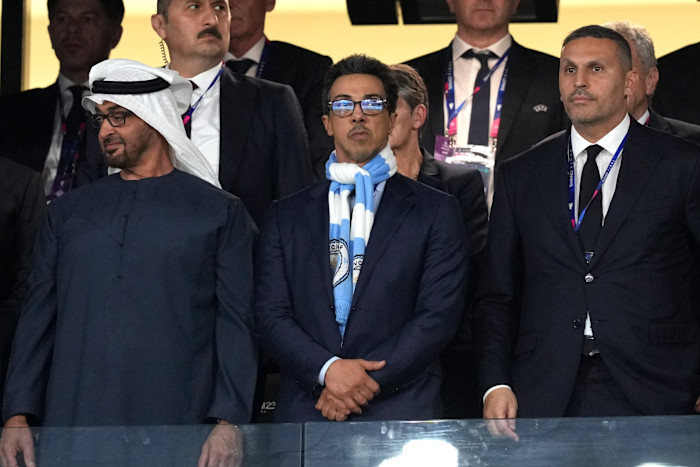
Fifty-five years on from independence, the UAE has a deep but volatile relationship with its former British protector. Its president, Sheikh Mohamed bin Zayed al-Nahyan, brother to Man City owner Sheikh Mansour, graduated from Sandhurst military academy in 1979.
The UK’s combustible politics — which have resulted in six prime ministers in the past decade — have not been conducive to nurturing international relationships.
Emirati decision makers have privately complained about the UK’s lack of an effective investment interlocutor since Lord Gerry Grimstone left his post as minister of state for investment four years ago.
But the underlying partnership — founded on geopolitical, economic and military co-operation — is bolstered by an affinity for London among the federation of seven emirates. In 2013, then London mayor Boris Johnson joked he was mayor of the “eighth emirate”.
The UK’s welcoming attitude to inward investment and stable regulation is attractive to the UAE, as it diversifies away from oil and gas into sectors including life sciences, renewable energy and financial services.
“Business is business — if UK companies and industries remain competitive and the returns are acceptable, investment will flow,” said Simon Penney, a former UK trade commissioner for the Middle East. “That’s not to say there might not be a short-term reaction, but it will be just that — short term.”
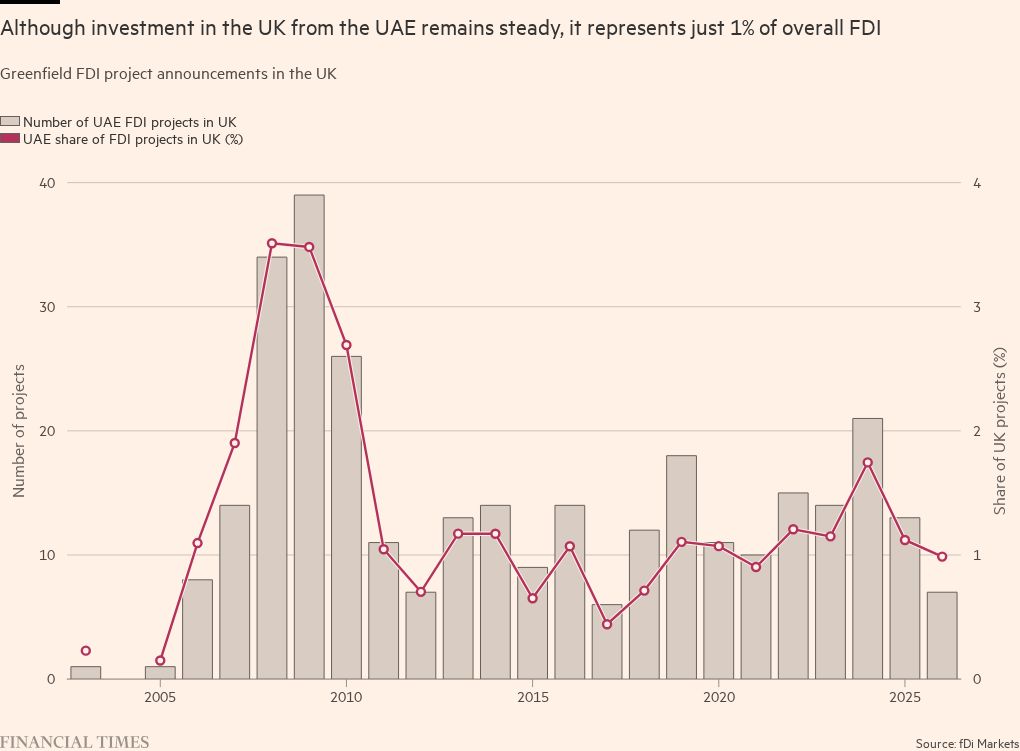
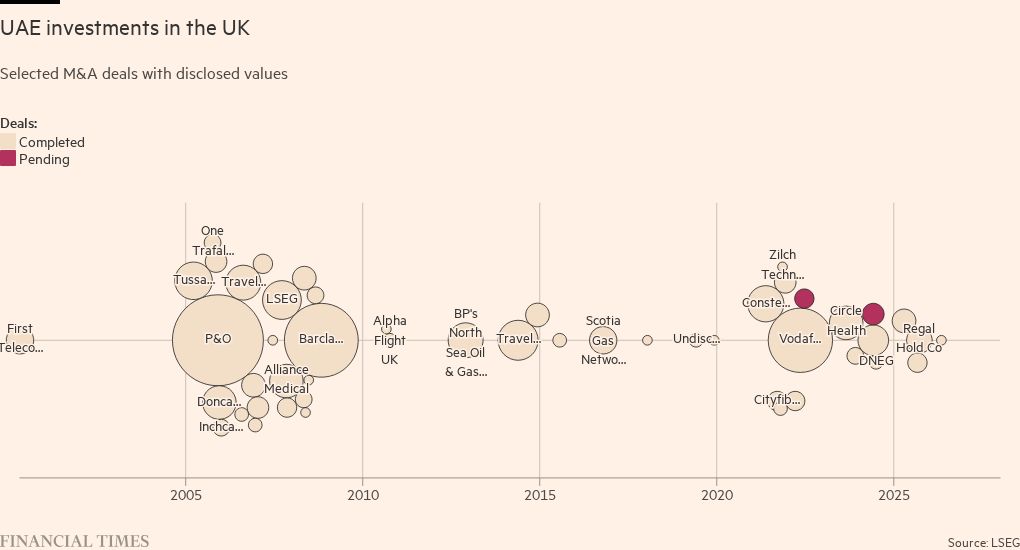
Emirati interest in the UK expanded during the global financial crisis with a £3.5bn emergency injection into Barclays led by Sheikh Mansour, who had acquired Man City earlier in 2008. Various funds then spread into everything from ports to fibre optic networks and offshore wind farms.
The UK-UAE sovereign investment partnership, launched in 2021, had clocked up nearly £30bn of Emirati allocations by April. Despite wrinkles in relations, that was triple its target of £10bn over five years.
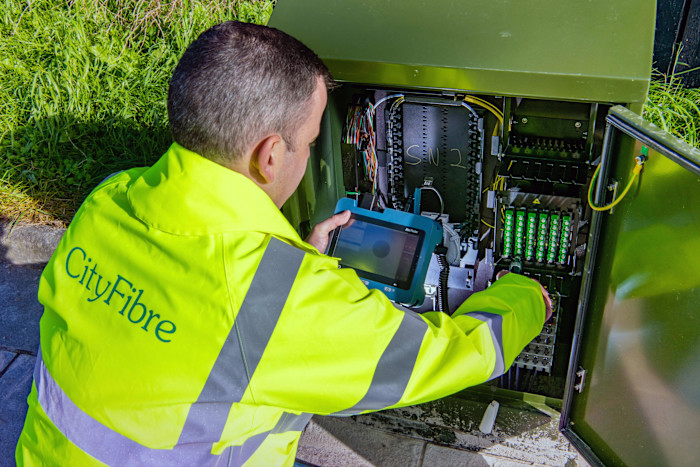
For now, investment is continuing. A proposed £900mn equity injection into broadband provider CityFibre by its shareholders, including Abu Dhabi’s Mubadala, is not at risk as a result of the Man City charges, according to two people familiar with the matter.
“The issue has been compartmentalised for now,” said another person briefed on the UAE’s position, who added that could change if senior UK politicians “jump on the bandwagon” and denounce the UAE.
They have form. An Abu Dhabi-backed bid to acquire The Telegraph in 2023 triggered sharp criticism from politicians, prompting the then Conservative government to legislate against foreign state ownership of British newspapers. UAE officials felt the criticism veered into racism.
The furore brought relations to their lowest point since Abu Dhabi detained British academic Matthew Hedges on spying charges in 2018, a decision that “perplexed” the then MI6 chief. Hedges, who said he was tortured during his six months in solitary confinement, was released after being convicted by an Abu Dhabi court.
“It’s like a game of snakes and ladders,” a former western official said. “The relationship tumbles and you just have to wait for the next ladder.”
The Iran war prompted an upturn in relations. The UK assisted the UAE’s defensive operations against drone and missile attacks by sending fighter jets and specialist advisers to the region. In May, they agreed to enhance military co-operation, industrial collaboration and capability development.
Former UK officials said the war delayed the agreement of a renewed investment partnership, which was due to be signed during a marquee visit by Sheikh Mohamed to London this year.
With potentially severe punishments still to be handed down to Man City, Whitehall is left to fret over whether the grand signing will take place at all.
Additional reporting by Lucy Fisher, George Parker, Kieran Smith and Jennifer Williams