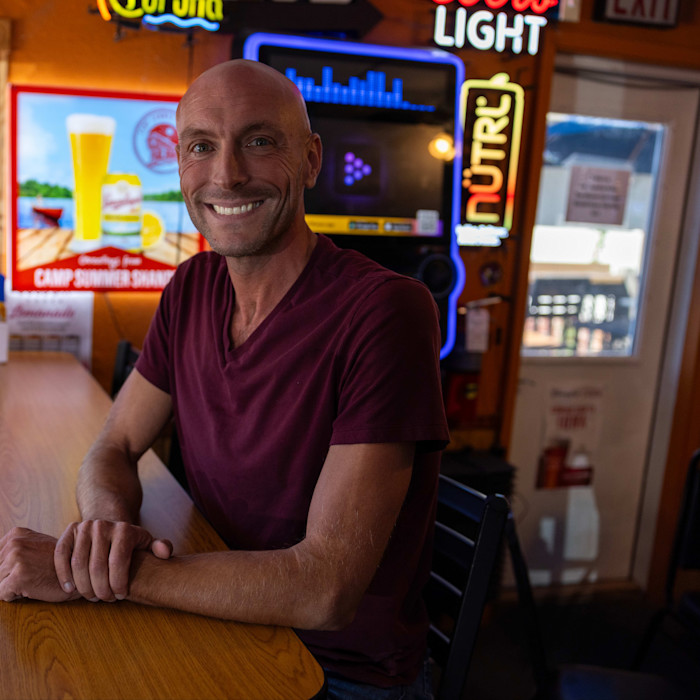
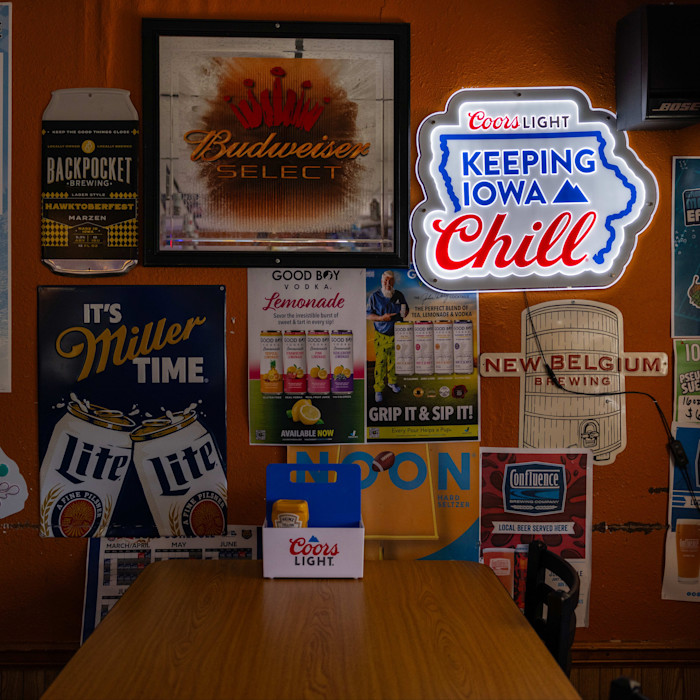
Stopping for lunch in late September at the Polk City pub, smack in the centre of Iowa, Mike Pearson, a 42-year-old broadcaster for the agricultural community, says the political mood has been shifting quickly in the Midwestern state.
“I work with a lot of farmers, and I would have said back in February that Republicans were a lock in Iowa,” he says. “It was gung-ho, gung-ho, gung-ho all the way until about midsummer.”
But after diesel prices soared to over $6 per gallon in the state on the back of the Iran war, Pearson started to detect some wariness about Donald Trump and his party — just ahead of the November midterm elections. Even, he says, among farmers who believe “in their hearts” that the president is “on their side”.
“The last three months have started to pull some scales from people’s eyes,” he adds. “The excitement that some Democrats and the left are feeling for some potential pick-ups in Iowa, I don’t think it’s unfounded.”
Widespread Republican losses at the November 3 midterms — including in a crucial contest for a US Senate seat in Iowa — would be a damning rebuke of the president’s tumultuous second term in office.
Some content could not load. Check your internet connection or browser settings.
Some content could not load. Check your internet connection or browser settings.
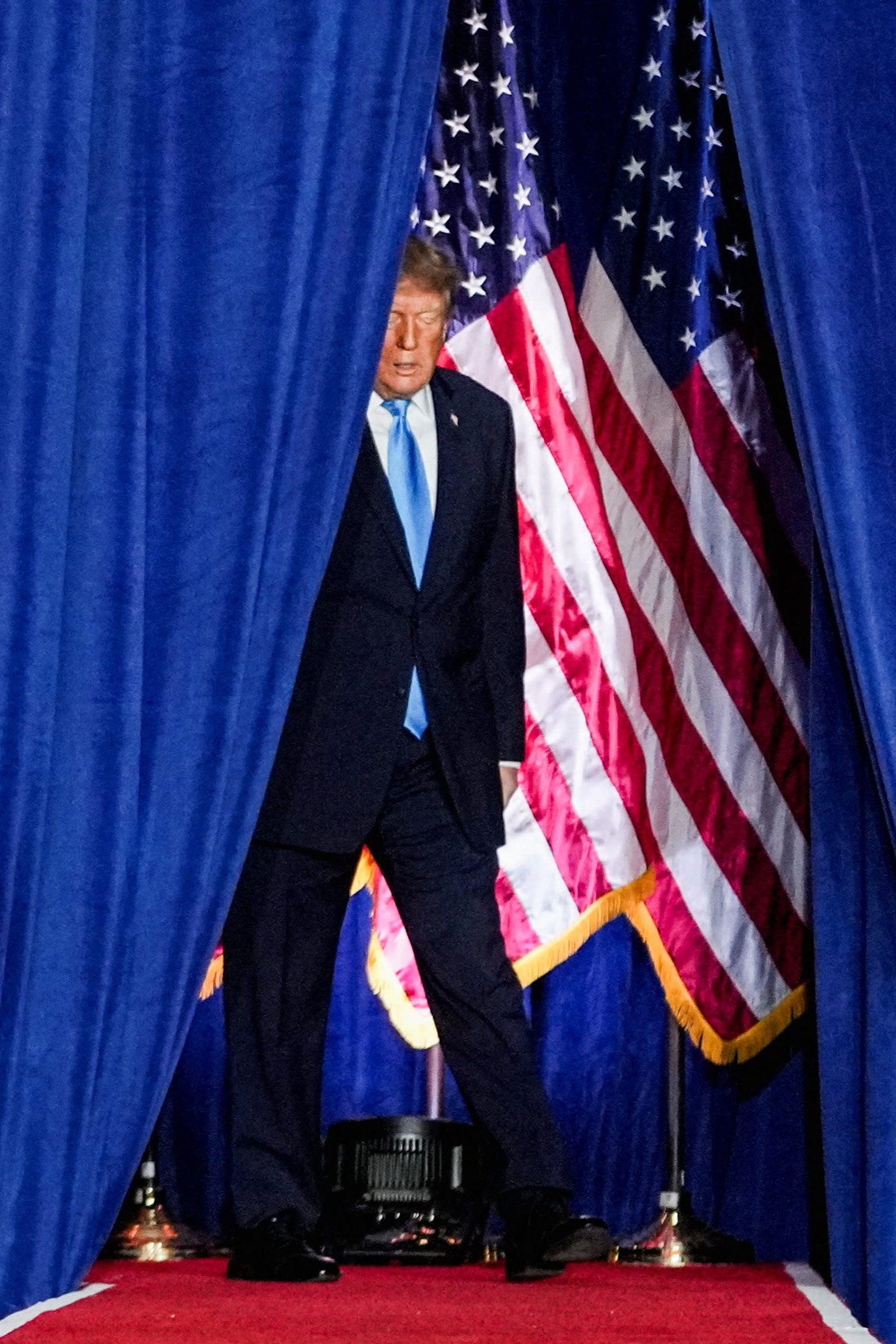
A decade after Trump exploded on to the political scene, voters in the Republican heartlands are now expressing disappointment with the president, while some of the party’s candidates seek to distance themselves from him.
Democrats are already widely expected to win back control of the US House of Representatives, the lower chamber of the American legislature, which would repeat the historical pattern of presidents suffering a backlash in the midterm elections.
But a loss of the Republican majority in the US Senate would be far more bruising for Trump. Close races have sprung up in the Iowa heartland and neighbouring Kansas, as well as from the industrial state of Ohio to Texas and the Alaska frontier — all currently held by the president’s party.
Such a scenario — which would mean worse midterm results for Trump compared to 2018 — seemed like a stretch at the start of the year. It requires a string of upsets by Democrats in deeply conservative states like Iowa that have backed Trump in the last three presidential elections.
But in recent weeks, the battle for the US Senate has turned into a momentous political brawl that is going down to the wire and could tip either way.
A rush of money is pouring into key battlegrounds from both Democrats and Republicans. From September 1 through to election day, political action committees, the main vehicle for campaign spending in the US, have reserved over $1.4bn to advertise in Senate races, according to AdImpact, and that does not take into account canvassing operations, print mailers and radio adverts.
Practically, a loss of Republican control in Congress would place a significant straitjacket on Trump’s ability to govern even for a president who believes in strong executive powers, exacerbating his status as a presidential “lame duck”.
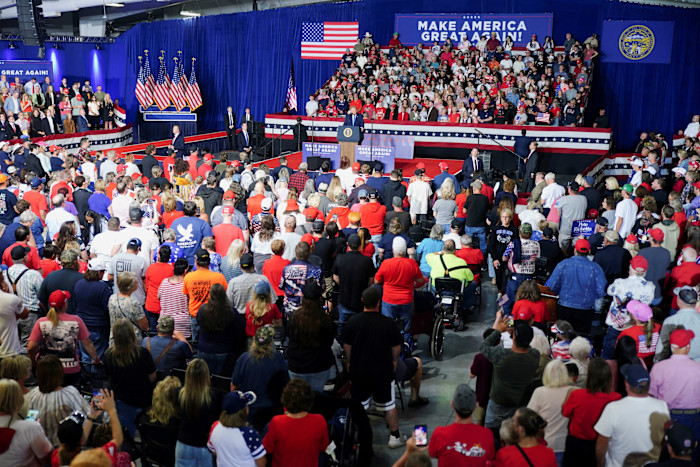
“All the things that we did . . . it could all be taken away,” Trump warned during a rally in central Nebraska last week.
A Democratic Senate majority would be in a position to block key legislation as well as appointments to top government posts and judicial nominations, while opening up a new congressional path for investigations into the administration and the president’s family.
“At this point, the question isn’t whether Democrats will gain seats, but how many,” Jessica Taylor, a Senate analyst at the non-partisan Cook Political Report, wrote last week in a note that predicts the Democrats will flip between two and six seats. They need to clinch four for a majority.
‘Iowans are hurting’
Democratic optimism has been buoyed by recent polling that shows the party’s candidates gaining support in a swath of contests that would normally be out of reach for the centre-left.
Republicans currently hold 53 of the 100 seats in the Senate — compared to 47 for the Democrats. A 50-50 split would preserve the Republican majority because vice-president JD Vance would cast a tiebreaking vote.
In Iowa, Josh Turek, a 47-year-old Paralympian basketball player turned healthcare worker, is leading Ashley Hinson, his Trump-backed Republican rival and a sitting congresswoman, by 0.5 percentage points, according to the RealClearPolitics.com polling average. That suggests a big swing from Trump’s 13 percentage point win in the state in 2024.
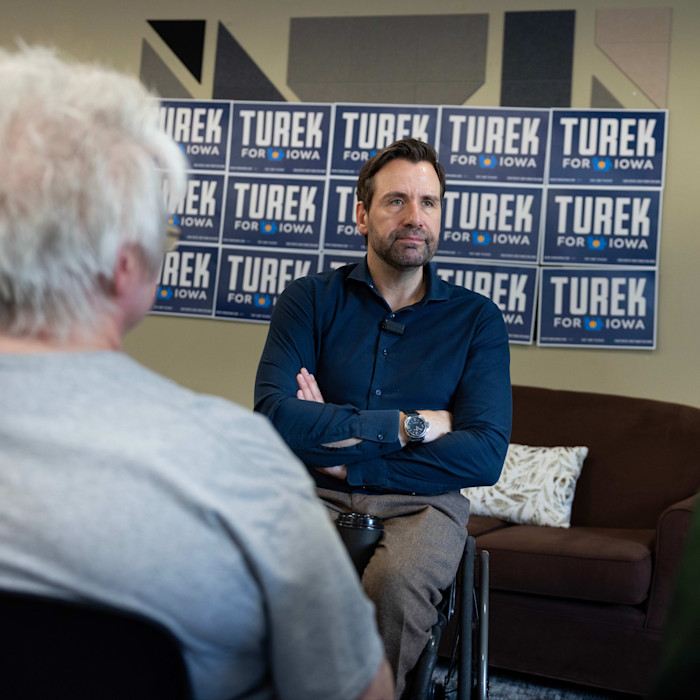
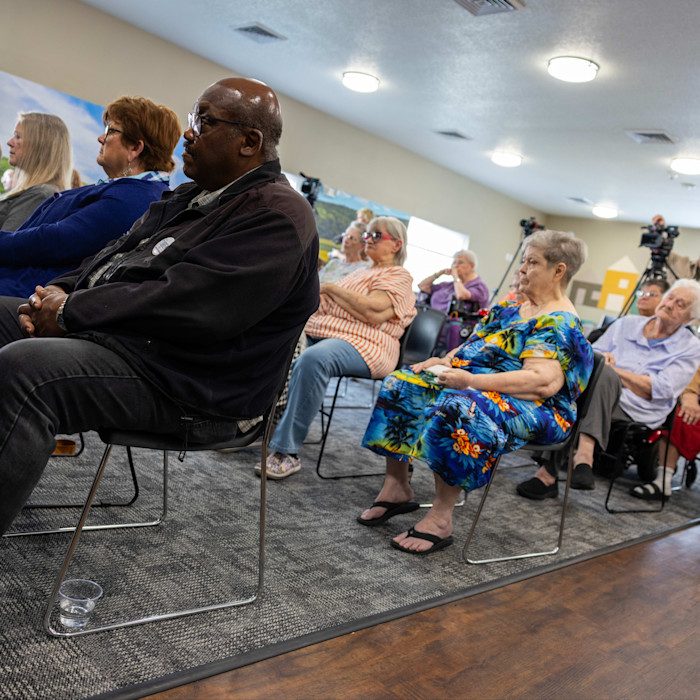
“Iowans are hurting, they’re struggling and they are ready for change,” the Democrat, who has described himself as a “prairie populist”, told a small crowd of roughly two dozen voters, mostly women, who were in attendance at one of his events designed for older people.
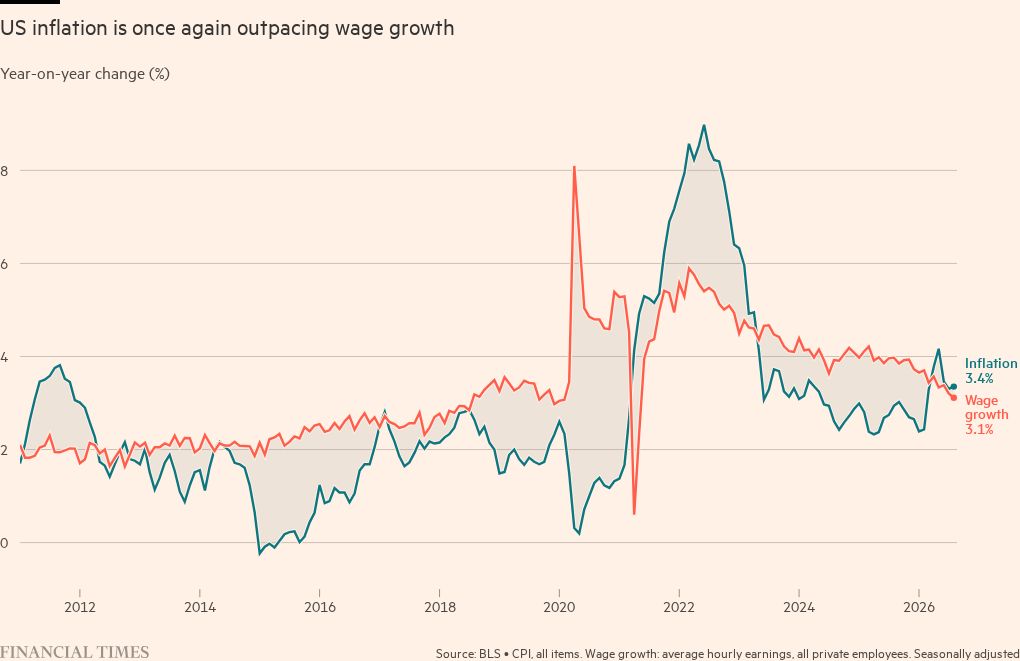
In the state, as in much of the rest of the country, inflation and its consequences are one of the main sources of pain for voters.
Fuel costs and the Iran war have pushed inflation further above its 2 per cent target, US mortgage rates have hit their highest level since 2023 and the US Federal Reserve is expected to increase borrowing costs still more before year-end.
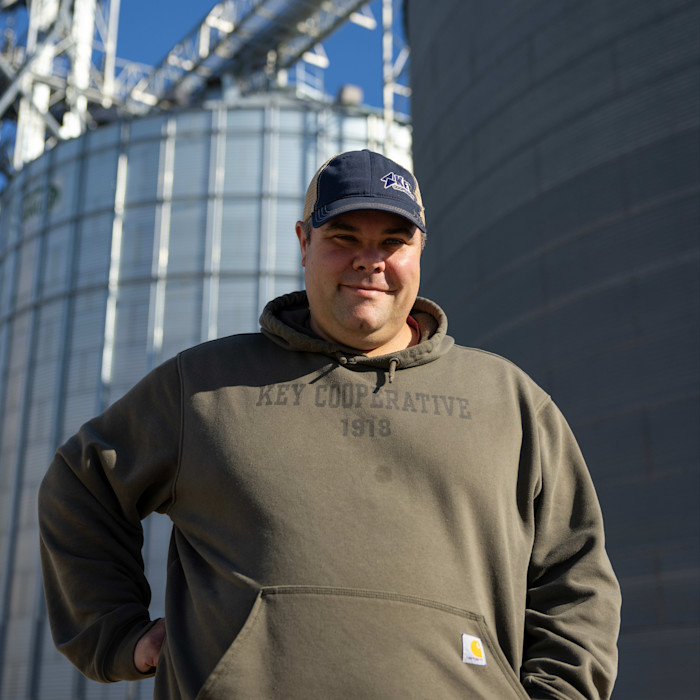
Ben Hollingshead, the right-leaning manager of the Key Cooperative grain elevator near Polk City, says high prices are top of mind for farmers but cautions that they are not necessarily changing people’s votes. “Everyone’s got a different opinion on how we got there — it’s not a broad brush,” he says.
As early voting begins in the midterm races, the issue is rarely far away.
Nationally, “the map is expanding in all kinds of directions” in favour of the Democratic Party, says Margie Omero, a strategist and principal at GBAO, a polling and advisory company. As for the Republicans, “when it goes wrong, it all goes wrong . . . that’s why you’re seeing Republicans really worried not just in Iowa, but everywhere.”
Not all the indicators are pointing in the direction of a Democratic wave sweeping across America. Despite the surprising advances in Trump-friendly areas, Democrats have not yet secured a clear edge in a number of states that former vice-president Kamala Harris won in 2024, including Maine, New Hampshire and Minnesota, complicating their bid for a majority and forcing them on the defensive in some states they should be winning comfortably. In Michigan, which Trump won in 2024, Democrats are battling to keep one of their own seats in the face of a Republican challenger.
In midterm elections, voter turnout is lower than in presidential years, leaving both parties with the formidable task of drawing their own base voters to the polls. Trump has been especially successful at motivating those who participate infrequently in elections, but he has struggled to do so when he’s not on the ballot.
In Iowa, Cordt Holub, a corn and soyabean farmer who supports Hinson and has featured in some of her ads, believes the race will be “extremely tight” but expects her to keep the Senate seat in Republican hands. “People are confident in what she’s done and what she’s going to do,” he says, adding, “I think that farmers in general and the majority of Iowans are still pretty Republican.”
“A lot of these voters, especially the farmers and the ag people, a lot of them are unhappy with where the economy is at, writ large,” said one Republican official. “But they still support what Trump is doing in the long term.”
As recently as May, Trump had quipped that he did not “care about the midterms” as he weighed his next steps in the Iran war, which was already unpopular then and is even more so now.
But the US president has taken a much bigger interest in the November races recently. He is hitting the campaign trail regularly for events — mainly in conservative states — while Republicans are pouring millions of dollars of advertising into backing his preferred candidates. Trump has also used US government funding for controversial campaign-style ads touting the administration’s accomplishments.
Some content could not load. Check your internet connection or browser settings.
“Having one or more chambers flip control would really put a damper on [Trump’s] agenda, I think it would be really impossible to get anything done,” one Republican official close to the White House says. “That’s why you’re seeing the president barnstorm the country the way that he’s doing for the next 30 days.”
In the scramble, Trump has made promises that have at times strained credulity, such as providing $5,000 for each adult US citizen if Republicans keep control of the legislature or ending the war in Iran after the elections.
He has also promoted big investment plans in battleground states, such as a new steel factory to be built in eastern Iowa. “Everyone is building their plants here, because they don’t want to pay tariffs, it’s really not that complicated,” Trump said last month at an Oval Office event, surrounded by Iowa Republicans including Hinson.
Talk to your base
As Republican Senate candidates battle for their political lives, their proximity to the president and his policies has turned into a glaring vulnerability. Some have distanced themselves from the White House — as much as they can without drawing Trump’s wrath.
In Michigan, Mike Rogers, the Republican candidate for Senate, last week called for a halt to the US trade war with Canada, which has disproportionately hit his state, after calling for an end to the Iran conflict last month. “Canada is not our enemy. We need to end the tariff war — now,” Rogers said in a short video posted on X on October 5.
In audio leaked to Axios, Ken Paxton, Trump’s handpicked Republican candidate for Senate in Texas, revealed his frustration with his lack of sway over Washington. “So many factors in this federal race are uncontrollable,” he said when prompted about the Iran war. “I don’t make the decisions and I don’t . . . know what’s behind some of the decisions.”
During a debate for the US Senate seat in Maine, Republican Susan Collins questioned Trump’s promise to visit the New England state to help her campaign. “I’ve heard nothing from his office and I’m not exactly his favourite senator,” she said, adding: “I would say that he is not coming to Maine.”
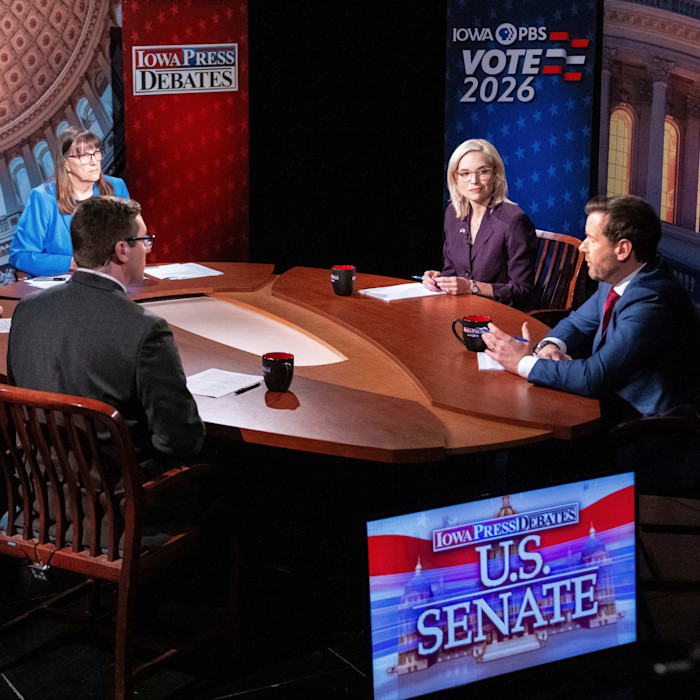
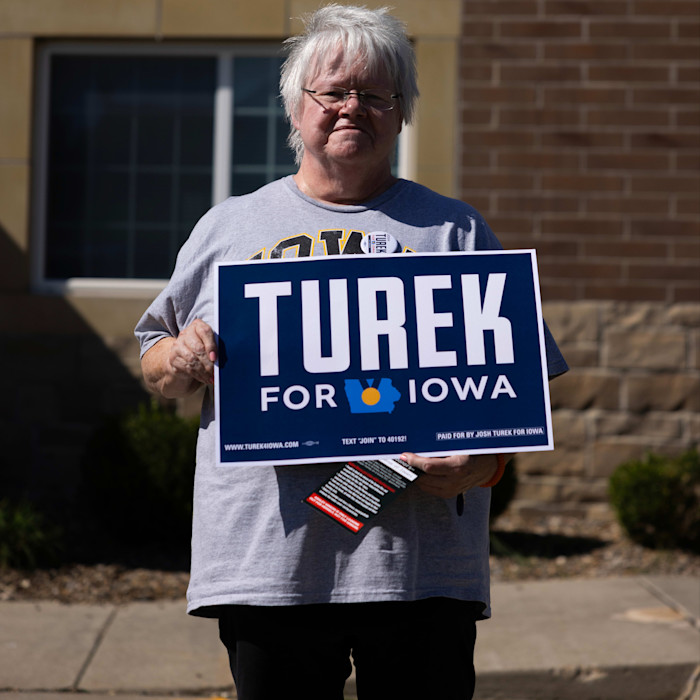
In her campaign, Hinson of Iowa has called for an end to the Iran war, and criticised Trump for allowing more beef imports this year — which drew anger from the cattle industry in the state. She has also cast herself as a model of bipartisanship, despite a voting record that is heavily aligned with the president and Republican leadership.
“There’s going to be a couple of instances where she’s going to take a little bit of a walk from Trump and just show that she’s an independent voice and that she’s going to ultimately represent Iowa, not just go there and vote for everything Trump does,” one Republican official said, adding: “But she’s still not running as an anti-Trump Republican.”
During his event in Des Moines, Turek, Hinson’s Democratic opponent, mocked her efforts. “She has been up there just supporting her party, supporting the tariffs, the war, the cuts to healthcare and food assistance and social security, just to get tax breaks to billionaires,” he said. “Iowans know the difference.”
Now, top Republicans have been forced to pump money into the state to prop her up. Senate Leadership Fund, the Super Pac aligned with Republican leader John Thune, said last month it would spend an additional $20mn on Iowa. “I think it indicates we have a fight on our hands here,” said Ryan Rhodes, a conservative Republican who ran for a US House seat representing Iowa but dropped out in March.
If Republicans are successful in beating back the Democrats and hold the Senate, it will probably be because they have managed to portray their rivals as captive to the socialist left, which has been on the rise during Trump’s second administration, including with Zohran Mamdani’s ascent to New York City mayor.
In Michigan’s Senate race, Democratic candidate Abdul El-Sayed is closely aligned with the progressive wing of the party after defeating a moderate in the party primary and is more vulnerable to such criticism.
But it is a harder case to make against other candidates in the Democratic field. Many, including Turek in Iowa, are steering away from contentious social issues and focusing their campaigns on cost-of-living problems where they can present a common front against Trump without splitting their own base.
James Talarico, the Democratic candidate in Texas, and Adam Hamilton, the Democratic candidate in Kansas, have put their religious faith at the heart of their campaigns, reinforcing their appeal to moderate and swing voters.
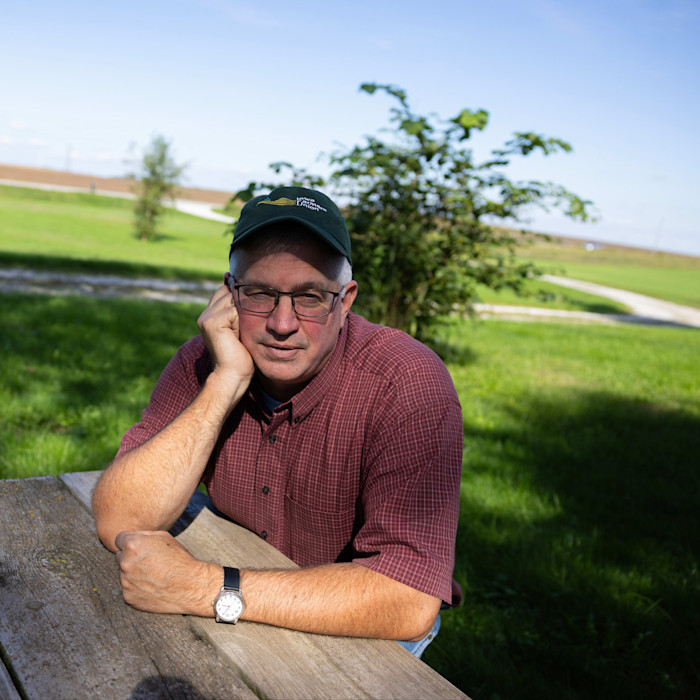
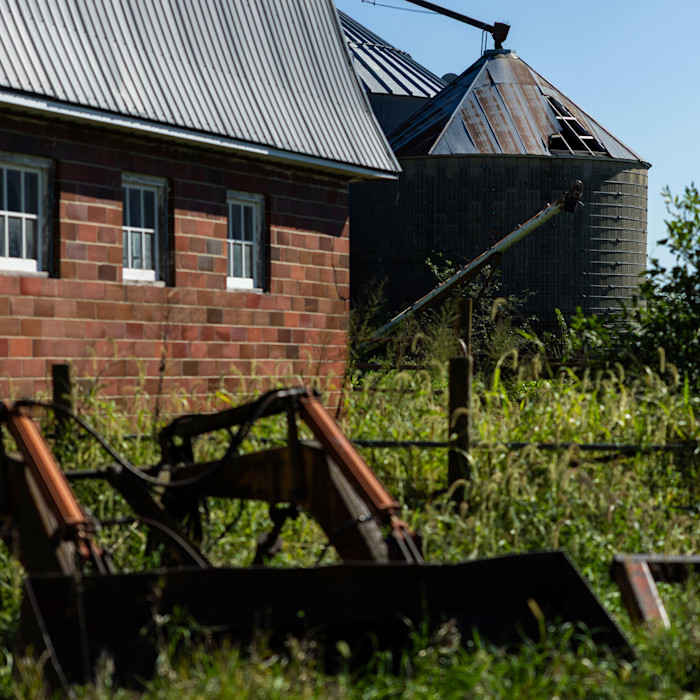
In Iowa at least, the prevailing factor in the contest remains the economic distress driven by rising costs during Trump’s second term, which Republicans are struggling to escape. “We’ve been let down for almost two years, and it’s just really disappointing to see that,” says Amy Kenyon, a nurse in the area.
Even a small dip in turnout, or disappointment with Trump, in rural Iowa could determine the fate of the race — and American politics.
“Farmers in rural communities don’t like to be ignored politically, they also don’t like to be manipulated,” says Aaron Lehman, president of the Iowa Farmers Union, which has endorsed Turek. “They don’t like flowery language but no action, and I think that’s a growing sentiment.”
Additional reporting by Ian Hodgson
Data visualisation by Chesca Taylor and Ray Douglas