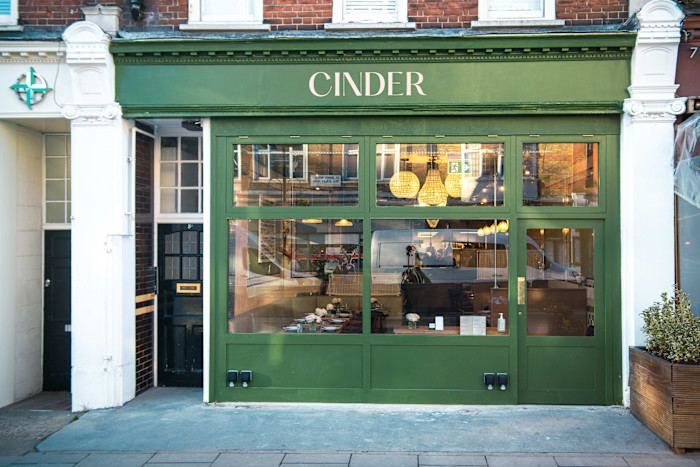
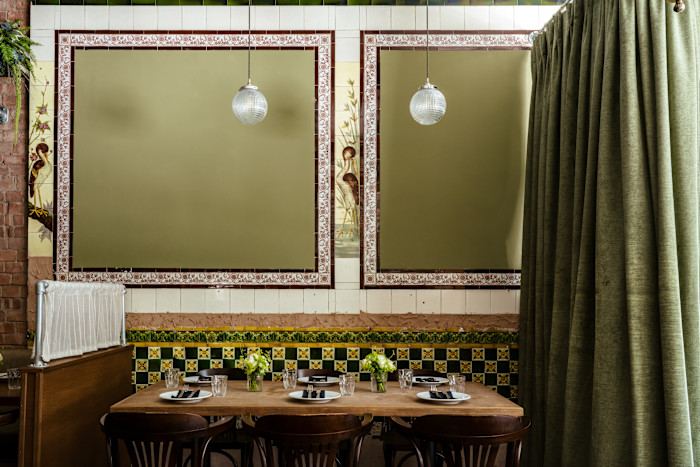
Jake Finn was weighing up where to open a second branch of Cinder, his Belsize Park restaurant serving Mediterranean cuisine cooked over open fire. St John’s Wood seemed the perfect distance for a sibling. But “I was warned against it,” he says. Back then, in 2021, this north London neighbourhood, despite its sizeable, elegant homes, was considered “a graveyard for independent restaurants. The High Street resembled airport amenities,” recalls the 38-year-old Ritz London protégé. Still, he ignored the advice.
Two years later, St John’s Wood High Street was remodelled, introducing a one-way traffic system and pavement widening. A small flurry of top-end homes was also being built. Finn’s gamble began to pay off. Now, a cool young crowd frequents his 48-cover restaurant, ordering spicy crab doughnuts with kombu crack and charred cauliflower with parmesan whip. “We’ve seen the demographic evolve,” he says. This summer, he doubled down with an additional local restaurant, No. Forty Nine.
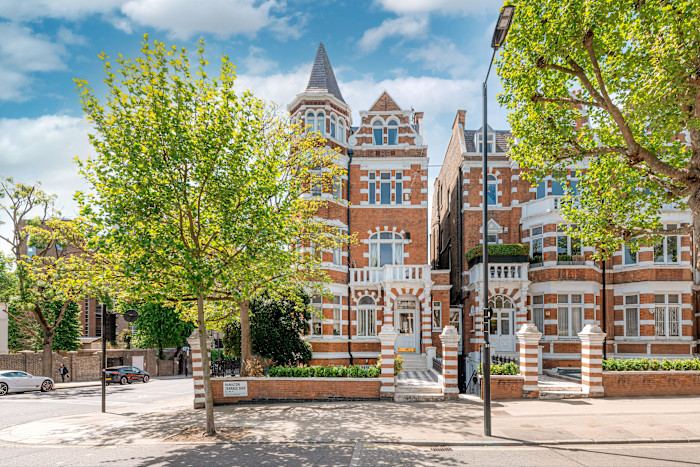
This leafy, low-density residential pocket of roughly one square mile has lots going for it, yet until recently has kept a low profile. Its highly international community is anchored by The American School, London Central Mosque and synagogues including the Saatchi Shul. Bounded by Regent’s Park, Primrose Hill, Swiss Cottage, Hampstead and Marylebone, it is close to a wide variety of green spaces and chic shopping destinations. Many residents live in elegant 19th-century white stucco-fronted villas and high-ceilinged red-brick mansions with “carriage driveways” and private gardens — generous homes developed by the landowning Eyre family in the late 18th and early 19th centuries; their scale and location still hold the key to its allure.
“St John’s Wood is the nearest you can be to the West End and live in a detached 20,000 sq ft house with a garden,” says Rupert des Forges of Knight Frank of the 45-minute walk. “If you wanted Mayfair proximity but didn’t want Mayfair prices, you’d consider St John’s Wood,” adds Marc Schneiderman at Arlington Residential, who is selling a two-bedroom garden apartment on Hamilton Terrace for £1.375mn and a four-bedroom flat for £2.97mn on Avenue Road — two of the most sought-after streets in the neighbourhood.
But while famous for Abbey Road Studios and Lord’s Cricket Ground, St John’s Wood has flown under the radar in part because “it was less mainstream, lower key,” says Stephen Lindsay, director at Savills. Without destination shops and restaurants, “it was not somewhere people visited that much”.
Rather than headline-grabbingly dynamic, “NW8 is a resilient postcode,” says Des Forges, “as you don’t get the churn of Knightsbridge and Mayfair — partly because there’s never been a big prime apartment scheme”. This year to date, the average sale price of a prime property is £2mn — a number that has barely budged in a decade. This is 28 per cent below the prime central London average per sq ft, according to data provider LonRes — and less than half of the approximately £4.5mn of Knightsbridge and Mayfair. Average rental prices are a fifth cheaper than those in prime central London.
But a few recent home sales, including one to Star Wars film-maker George Lucas for a reported £40mn, together with conversions of notable historic landmarks into residences, are shifting the gear from low profile to high.
The timing is notable. Average prime central London prices have dropped by 5 per cent since 2016 according to Hamptons, but NW8 has closed the gap with the likes of Belgravia and Knightsbridge. In 2016, the average NW8 price was around 33 per cent of that in SW1X. This year, it is 73 per cent, say Hamptons.
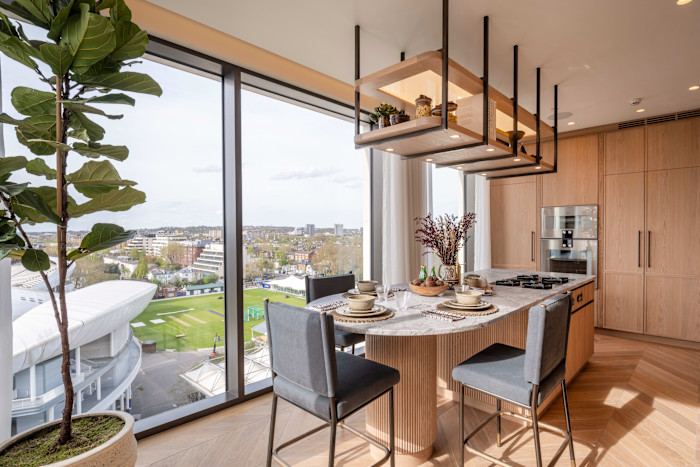
North London, “while not completely immune” to market forces, is bucking the trend, says buying agent Camilla Dell, founder of Black Brick Property Solutions: “St John’s Wood is pretty hot.”
“The large domestic buyer base in St John’s Wood — more than 50 per cent British — has made it more resilient than places such as Belgravia and Knightsbridge, which are around 10 per cent domestic,” says Dell, and where top-end buyers have been put off by increased stamp duty for non-UK residents purchasing a second home, and the end of the favourable tax set-up for non-doms.
Set for a two-year phased opening from 2028 is the £1.5bn St John’s Wood Square, the conversion of the Royal Horse Artillery barracks, which vacated its 5.5-acre plot in 2012 when the Eyre Estate sold it to a Malaysian tycoon, the late Ananda Krishnan. The 120 residences (with two-beds starting at £5.25mn) and a members’ club will be housed in the former Grade II-listed riding school. Sales launched this month.

Sir George Iacobescu, the 80-year-old former chair of Canary Wharf Group, was persuaded out of retirement to become executive chair of St John’s Wood Square. “Retirement is overrated,” he laughs. He had a soft spot for the project — when he and his family moved from New York to London in 1987, his daughter attended The American School and he joined the board. Now, his grandchildren go there. “Living in St John’s Wood is like living in an elegant diaphanous village in the country,” he says.
“The appeal of St John’s Wood is that it is really lived in and there is not currently a ‘lights out’ issue, unlike other parts of London,” says Rosy Khalastchy, Beauchamp Estates director and head of the St John’s Wood office.
“We’re looking at people who want to live here — and enjoy it,” says Iacobescu of the new development. It is doubling down on artisanal crafts; all the facades are being made in Stoke, using traditional London Stock brick and natural Portland stone. The twisted metal balustrades on the balconies are sculpted to resemble the leather straps of horse tack — a nod to the former occupants. Inside, bathrooms are made in Brescia, Italy, from buttery, ochre-veined Calacatta Oro marble.
“It won’t sell like hot cakes, but it will sell,” says Dell. “If this was in Kensington I’d be worried who would buy it. But there are long-term families here who want to downsize.”
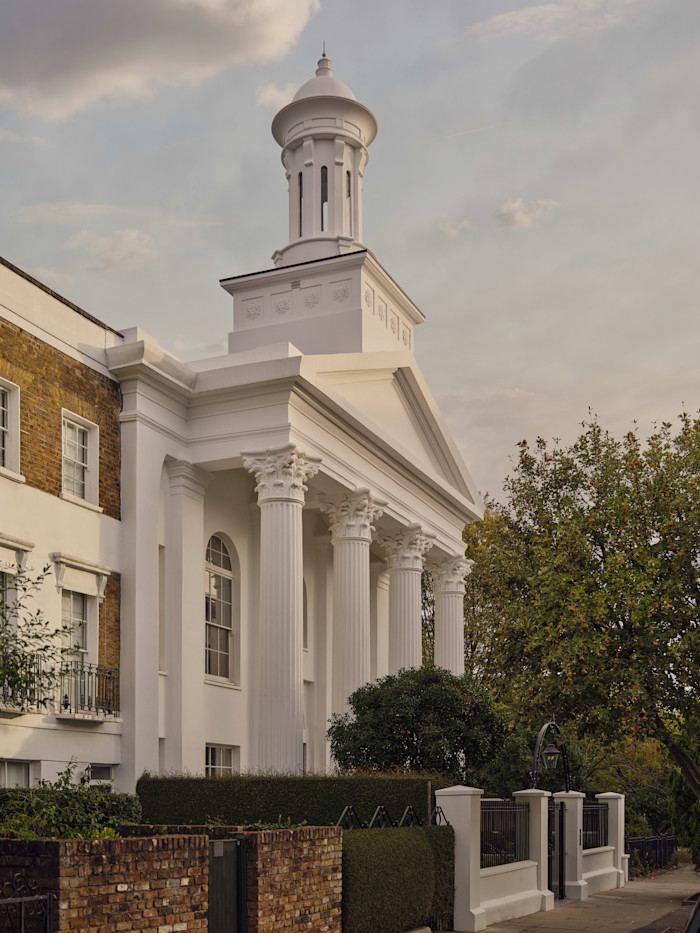
On St John’s Wood Terrace, Connaught House is the Grade II-listed former chapel where the music video for Queen’s “Radio Ga Ga” was filmed. Developers Valouran and Marcus Cooper Group have turned it into five private residences of two, three and four bedrooms, with airy, contemporary interiors by Gunter & Co. Four are for sale, priced from £5.5mn.
Some are thinking bigger. Opposite Lord’s Cricket Ground, Innovo, the developer behind St Regis Residences in the UAE, has bought a long-dormant brownfield site. Plans are approved to build 89 apartments with a swimming pool, sauna, children’s playroom and gym, set for completion in 2029.
“There’s a real risk of oversupply,” cautions Dell. “New developments must be priced to appeal to families who want to actually live here,” adds Khalastchy at Beauchamp Estates. “Family houses and big flats are what’s selling. There’s very little demand for two-beds or smaller.”
Others see a precedent for triumph. Des Forges compares the potential trajectory of St John’s Wood to Marylebone’s revitalisation. Hailed as one of London’s greatest success stories, the unloved neighbourhood was transformed into an “urban village”, with property values increasing 232 per cent from 2004 to 2024 as a result.
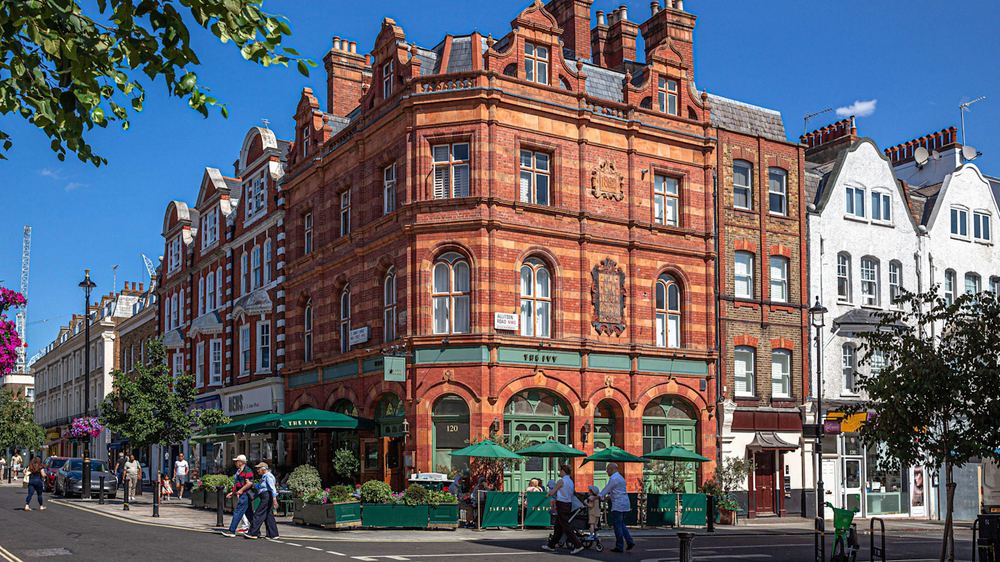
Stroll down St John’s Wood High Street today and an outdoor café culture has come to life. The area always had an in-the-know cachet through the presence of cult deli and greengrocers Panzer’s on Circus Road, with its Italian tomato water and wild Jara honey, but now the High Street has Soutine, Cinder, The Ivy and Babbo spilling patrons and potted plants on to the pavement. Visitors browse “destination shops” including Drake Algar florists, Kent & Sons butchers and the Cecilia Colman Gallery. A Waitrose is rumoured to be opening.
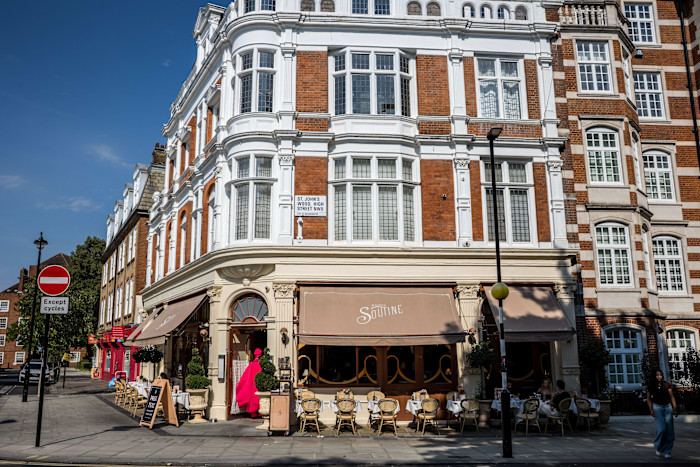
Not everyone is happy with the step change. “The High Street used to have family-run restaurants and shops that didn’t change so frequently, if at all. It had a wonderful village atmosphere,” says 70-year-old Londoner Annabelle Mitzman, a renowned Tarot reader who has lived in a Georgian semi-detached villa on Ordnance Hill for 36 years. “Very sadly, we have seen a decline in the number of young families living in the neighbourhood, which was the norm when we moved here,” she adds.
Her daughter, Tanya Barrington, an interior designer, also lives in St John’s Wood and has noticed a shift towards buyers “who don’t necessarily live in the homes year-round, they are often second homes”.
“There is a strong village community and we are protective of it,” adds Zimbabwe-born Christine Cowdray, the chair of the planning and licensing committee at the St John’s Wood Society, who has lived in the area for 26 years and raised her children here. “Not in a Nimby way, but we want to welcome good things.” The society comments on 25 per cent of the 300-odd applications it receives annually, and objects to 15 per cent.
She’s helped by the fact that planning rules are becoming more stringent. Westminster city council issued a revised Code of Construction Practice this year introducing stricter oversight and limiting basement construction to one storey deep, while new builds are restricted to 200 sq metres.
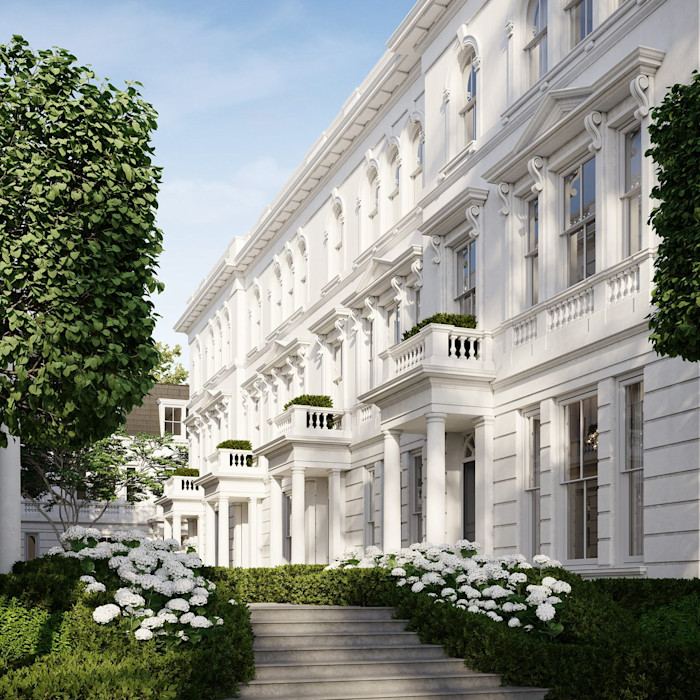
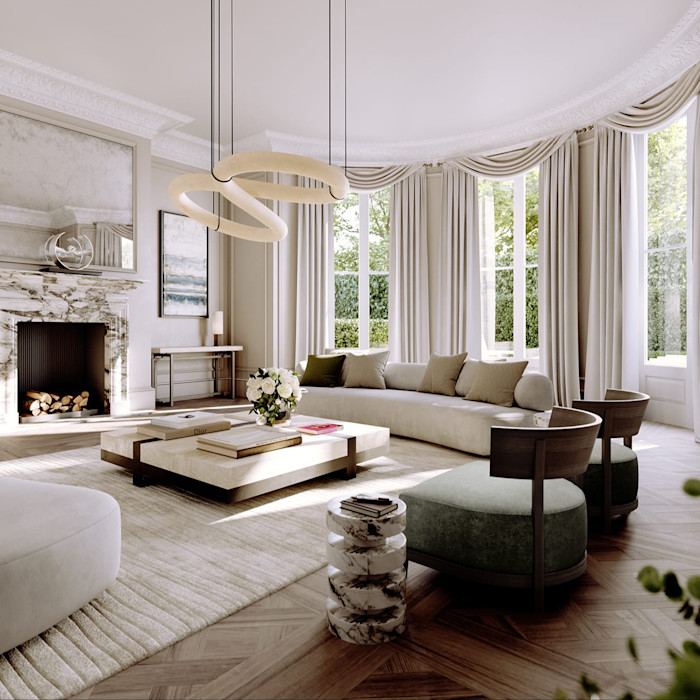
But there are ways of getting around this. In neighbouring Camden, developments can be granted double basements and are less restricted in size. One side of the prestigious Avenue Road falls under the Westminster purview, while the other is Camden, which is where Jon O’Brien, founder of developer Domvs London, is selling a dozen new white stucco mansions averaging 535 sq metres, priced from £22mn. At 52 Avenue Road, these fully serviced turnkey homes have access to a wellness centre and amenities in the double-height basement, including a 25-metre pool. Set for move-in next February, seven have sold to Asian, American and European buyers. No buyers so far are British residents.
For all the changes and pangs of nostalgia, sometimes, if you can’t beat ’em, join ’em. Despite the TikTok vloggers becoming more common, Mitzman admits The Ivy is now one of her favourite restaurants. She meets there on Monday nights with a group of female friends who call themselves “The Ivy League Club”. “We all have a soft spot for the French manager, Vincent. And the grilled halloumi is delicious, too.”
Find out about our latest stories first — follow @ft_houseandhome on Instagram