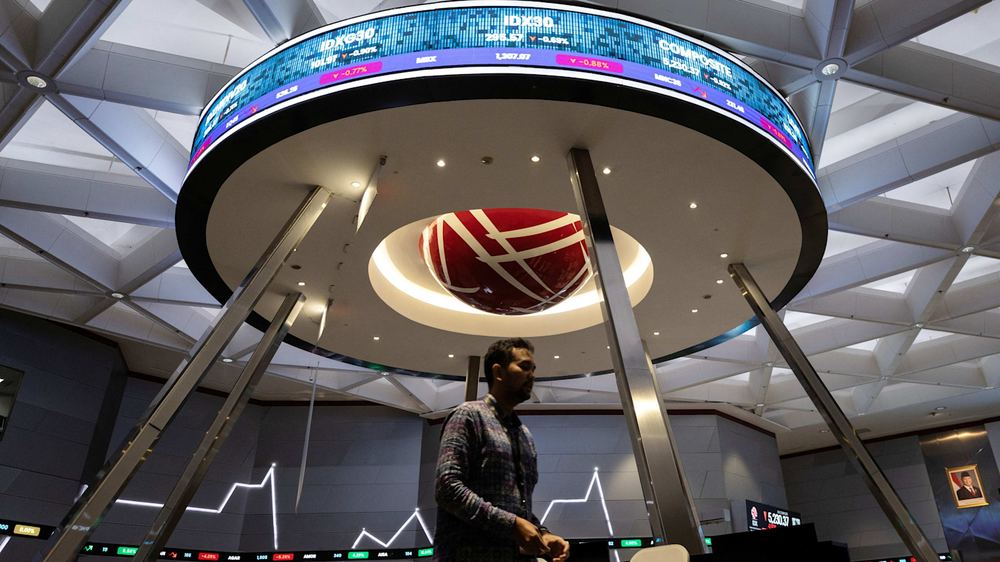
Too much deep-fried food can cause nasty indigestion. Indeed, Indonesia’s saham gorengan, or “deep-fried” stocks, have become a scandal that south-east Asia’s largest economy cannot stomach. The term describes a range of thinly traded shares, with heavily concentrated ownership tied to some of the country’s richest men, that are often inflated by pump-and-dump schemes. When MSCI, an influential index provider, warned in January that it could demote the country from emerging to frontier status over concerns about market integrity, it was bad enough.
But last week the company went further and said that it may kick the country out of its indices altogether, and reclassify it as a “standalone market”. That is a sanction normally reserved for countries with severe capital controls. While MSCI will not make a final determination until June, the threat is significant. This year Jakarta’s stock index is already down more than 40 per cent and foreign investors have already pulled out around $5bn. Removal from the benchmark could trigger billions of dollars more of outflows.
That would put further pressure on the already fragile rupiah. But more important would be the lost opportunity for Indonesia’s companies. The world’s fourth most populous nation, and a major supplier of everything from nutmeg and nickel to thermal coal and Barbie dolls, accounts for less than half a per cent of MSCI’s emerging markets index. Its banks and other large companies languish at meagre valuations, already struggling to attract the international capital that an economy of Indonesia’s size and potential ought to command.
Two years into a disappointing term marked by erratic policymaking and the centralisation of power, President Prabowo Subianto thundered this week that Indonesia “will not be intimidated” by MSCI. Many foreign fund managers are even more incandescent, feeling blindsided by MSCI’s escalation.
The critics· argue that MSCI is too influential. There is a risk that index firms are slow to spot problems, only to rush towards a downgrade to save their blushes. MSCI kept clearly overvalued stocks in its Indonesia gauge long after many active managers ran a mile from them. Still, there is hardly a conspiracy to intimidate Indonesia. FTSE Russell, MSCI’s rival, kept the country as an emerging market this month while it monitors its planned reforms.
Indeed, authorities are responding to the pressure. They already plan to double the minimum amount of shares that companies make available for trading in the market. On Monday, the stock exchange said it would expel tightly held companies from its flagship index. But more is needed to restore confidence and convince MSCI. Regulators must shed more light on who ultimately owns listed shares, crack down on market manipulation and ensure that trading volumes reflect genuine liquidity. They could also aim for even higher free floats. India raised its minimum public shareholding requirement to 25 per cent in a landmark reform in 2010, helping to broaden participation in its stock market.
Such reforms will require more patience than Prabowo, a tough former general, has shown with his finance ministers (he is already on his third). But even if MSCI retreats from its threat, the effort would be worthwhile. Indonesia needs to convince its own savers, not just foreign fund managers, that its stock market is no longer a rigged game. Enamoured as he is of the theatrical gestures of state capitalism, Prabowo should focus on giving the country’s struggling middle class a greater stake in its economy ahead of elections in 2029. The MSCI crisis offers an opportunity to do so.