Hundreds of French high schools were shut on Tuesday as teacher unions joined what has become a nationwide student-led movement demanding more money for education.
The protests, calling for smaller class sizes, building renovations and a reform of the system that allocates university slots, started in the Paris region in September before unexpectedly gaining steam last week.
While not directly linked to worries over the country’s political and fiscal future that have sparked a sharp selloff in financial assets over the past few months, the student protests bring with them a sense of generational upheaval and highlight the difficulty the government faces in trying to rein in public spending while also providing all of the core services its citizens demand.
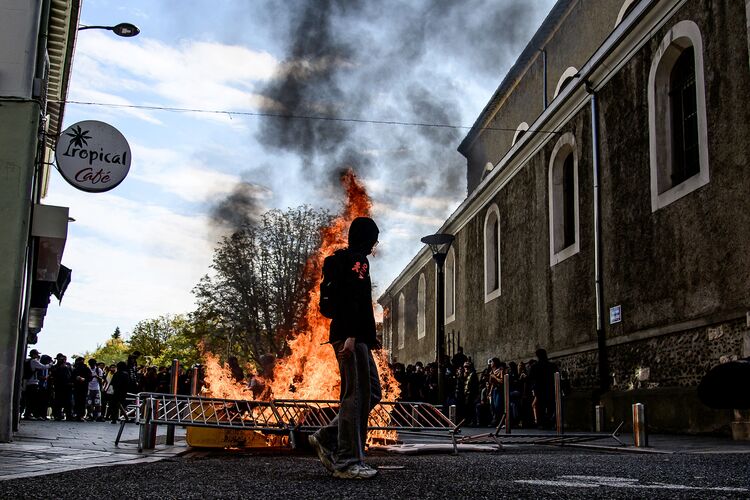
The government warned last week that the unrest, with hundreds of high-school blockades, some marred with fires and violent clashes with the police, had turned into “urban violence.” It blamed the far left for being behind the movement. About 6,000 individuals have been arrested, Interior Minister Laurent Nunez said in an interview on Tuesday on France Inter radio.
The level of intensity of the protests is “unprecedented,” with a “lot of violence,” coming from the perpetrators, Nunez said.
The Interior Ministry estimated there were some 86,000 protesters outside of the Paris region on Tuesday morning. It said it would give an update later in the day that includes the capital, where the main march began at about 2 p.m.
Nearly 900 high schools — or lycées — were closed on Tuesday, out of about 3,700, Agence France-Presse reported, citing the Education Ministry. An Odoxa poll for Le Figaro published Thursday showed that 62% of the French support the student mobilization.
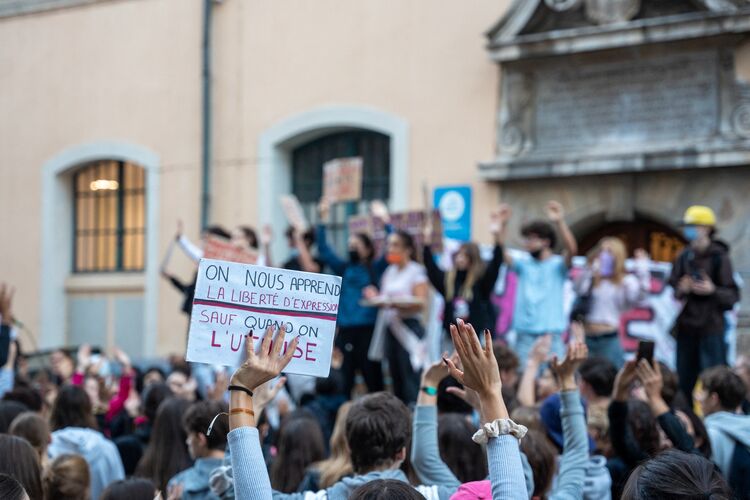
In an effort to ease the tensions, Prime Minister Sébastien Lecornu sent a letter on Sunday to his ministers, calling on them to make proposals on the issues raised by the students. The letter noted that the government’s initial budget proposal contained an increase of €1.2 billion ($1.3 billion) next year for education.
Tensions on markets
Yet there’s little room for costly reforms. The unrest comes against a backdrop of heightened scrutiny in financial markets as investors dump French assets on concerns over a bloated budget deficit and political instability.
The government is trying to get parliamentary backing to sharply restrain public spending to pare the fiscal shortfall to 5% of economic output in 2027 — the target it missed this year. But opposition groups who have twice toppled prime ministers over budget plans in the last two years are reluctant to compromise with less than seven months until presidential elections.
Read More: How Macron’s Decade in Power Left France Europe’s Weakest Link
On Tuesday, far-right French presidential candidate Marine Le Pen proposed a sharp deficit reduction and called on the European Central Bank to intervene to bring down surging debt costs as she seeks to assure investors of her financial credentials ahead of the election next year.
Le Pen’s proposed reduction · in the deficit would far outstrip any effort France has made in the recent past and has drawn criticism from her opponents running for president. Far-left candidate Jean-Luc Mélenchon wrote on social media that Le Pen was trying to win the approval of speculators and that her plan would “paralyze the economy and worsen the deficit and debt.”
On the immediate issue of the 2027 finance bill, Le Pen’s National Rally party has indicated its willingness to cooperate but not offer a “blank check,” lawmaker Jean-Philippe Tanguy said on Sunday.
“We want to avoid the worst - an escalation of the bond market crisis,” he said on Europe 1 radio. “It’s obvious that censuring the government could contribute to the escalation and we don’t want that.”
The student unrest adds to a wider cost-of-living crisis in the country, linked to a surge in fuel prices sparked by global conflicts. Fishermen blockaded several ports in late September. Meanwhile, calls are multiplying on social media to resume the Yellow Vest protests, a grassroots movement that started in 2018 and later morphed into nationwide riots.
Another day of general protests is planned for Oct. 17, touted by Mélenchon’s France Unbowed party. And five unions have called for a nationwide day of strikes on Nov. 5 in support of higher pay, public services, jobs and industry.