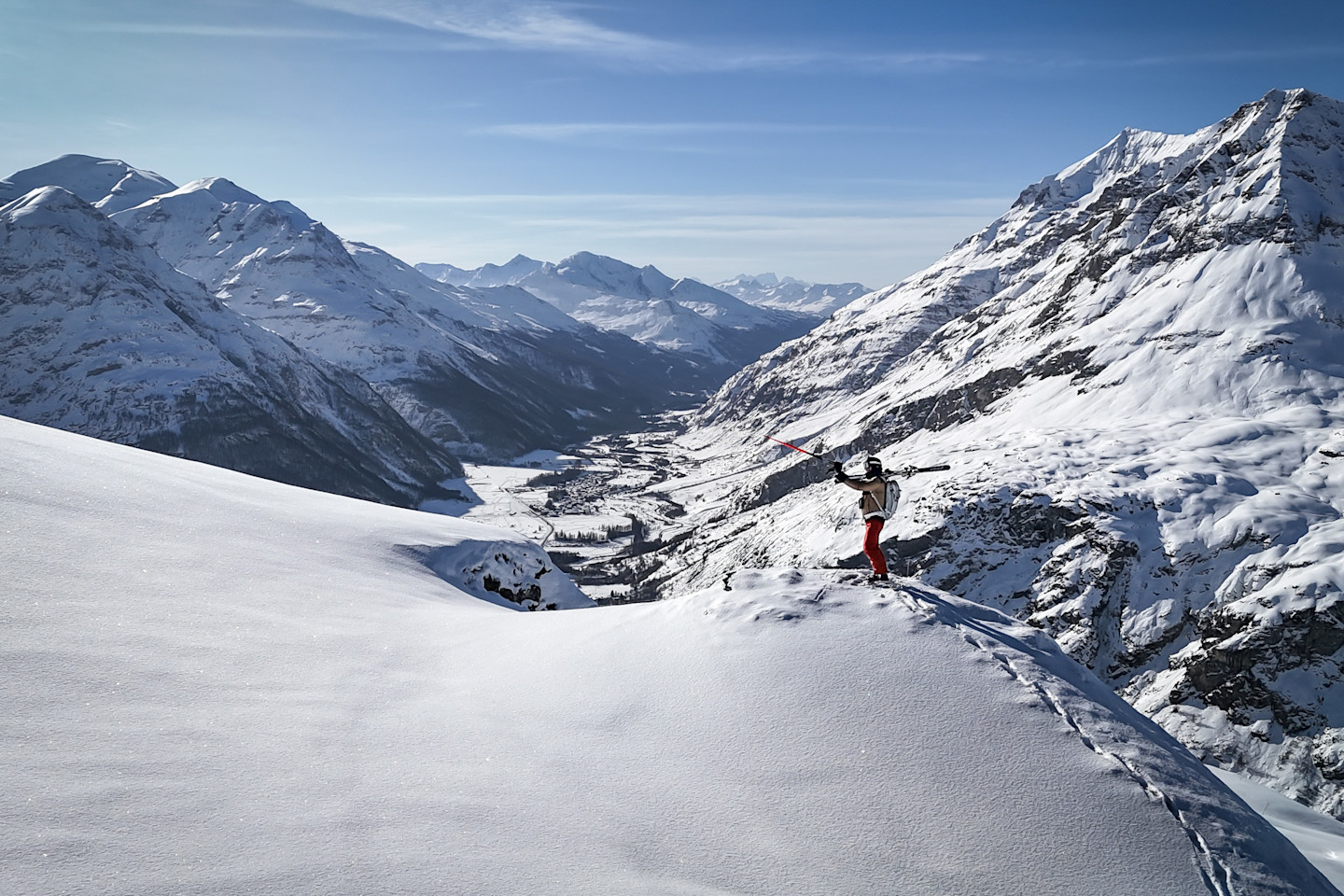
It was 4pm on a sunny afternoon in the Easter holidays, a couple of days after the last snowfall. From high on the mountainside, I looked across the valley to the upper slopes of Val d’Isère, the ski lifts clearly visible and yet belonging to a different world.
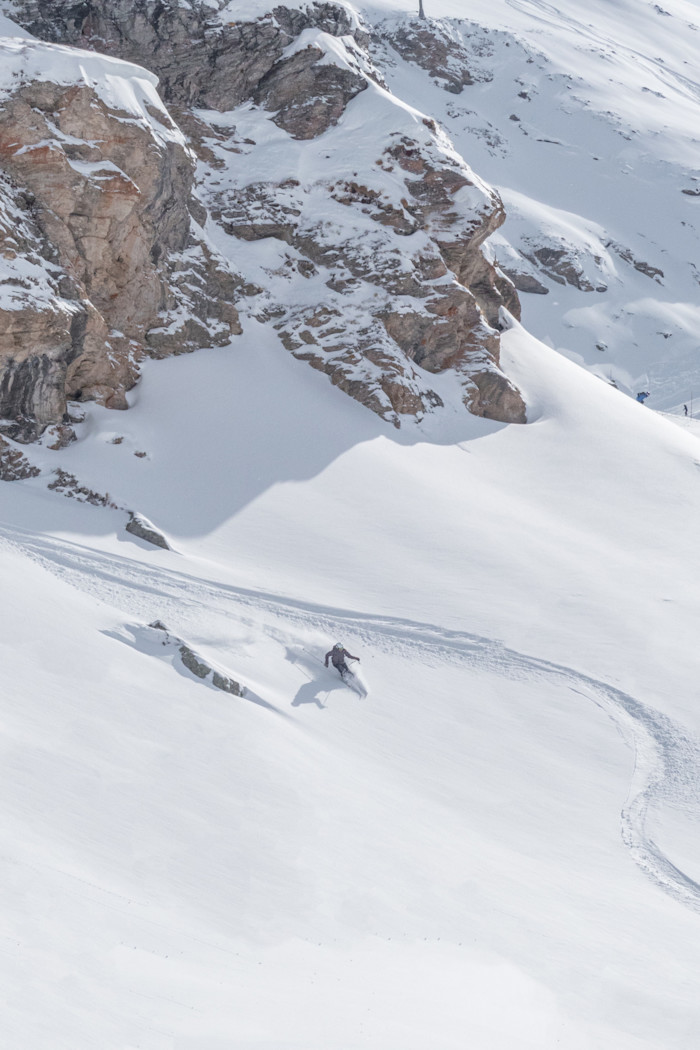
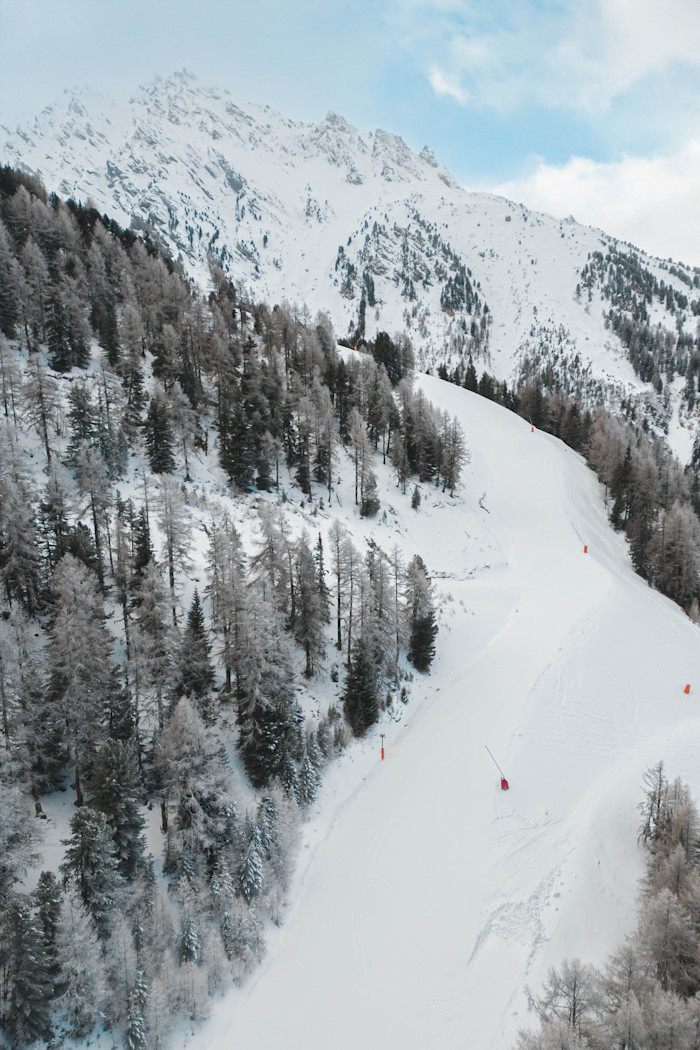
In that celebrated resort, the race for powder means the slopes can get skied out within hours; by now attention would be turning to the terrace of the Folie Douce, where the champagne corks would be popping and DJs ramping up the volume. Here, above the little village of Bonneval-sur-Arc, we were alone, enveloped in silence, standing at the top of a slope of deep, unskied snow that dropped for 700 vertical metres. It was the kind of prospect you might expect on a heliski trip, or as the climax of a long back-country tour, but we’d come straight off a chairlift. We dropped in, relishing the knee-deep powder that sparkled in the sun as it was thrown up around us, and the seeming miracle of having it all to ourselves.
Seen on the map, Bonneval and Val d’Isère are neighbours — just 10km apart as the Alpine chough flies — but they sit at the top of different valleys: Bonneval the highest village in the Maurienne valley, Val d’Isère the highest in the Tarentaise. In summer, they are linked by a narrow road that snakes up and over the Col d’Iseran, the Alps’ highest paved pass. But from November to May, when the road is submerged by snow, they become the dead-ends of their respective valleys, which is where any similarities end.
The Tarentaise, which zigzags west to Albertville, is home to the world’s greatest concentration of ski resorts. As well as Val d’Isère, there are big hitters including Tignes, Les Arcs, La Plagne, Courchevel and Méribel. Together they offer about 475 lifts (more than the total mustered by every resort in Colorado), at least 50 five-star hotels, 17 Michelin stars and a decent chance of rubbing shoulders with a Beckham, a Clooney or a royal.
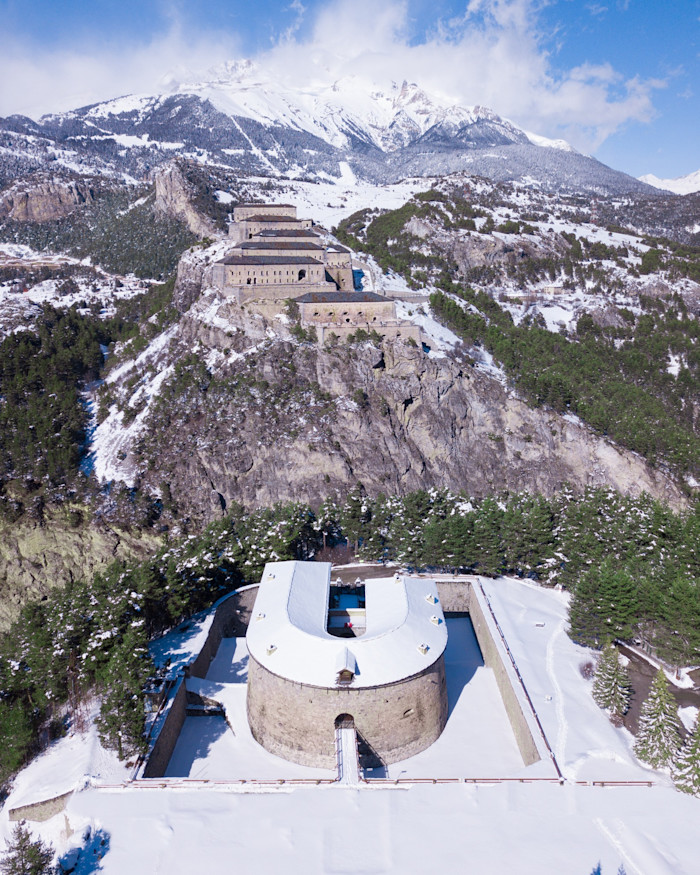
Meanwhile, the Maurienne curves like a giant U through an altogether less glamorous, less-celebrated realm, also dotted with ski areas but places you’re much less likely to have heard of: Bessans, Val Cenis, Aussois, La Norma, Valfrejus. There are no five-star hotels — in fact, the most famous buildings are five early-19th-century forts, built to cut off the upper valley (then owned by the king of Sardinia) from the rest of France. The closest thing to a celebrity is probably local son Joseph Opinel, the late inventor of the wooden-handled pocket-knife (who even has his own museum). But what it lacks in luxury and gastronomy, the Maurienne more than makes up for in other ways.
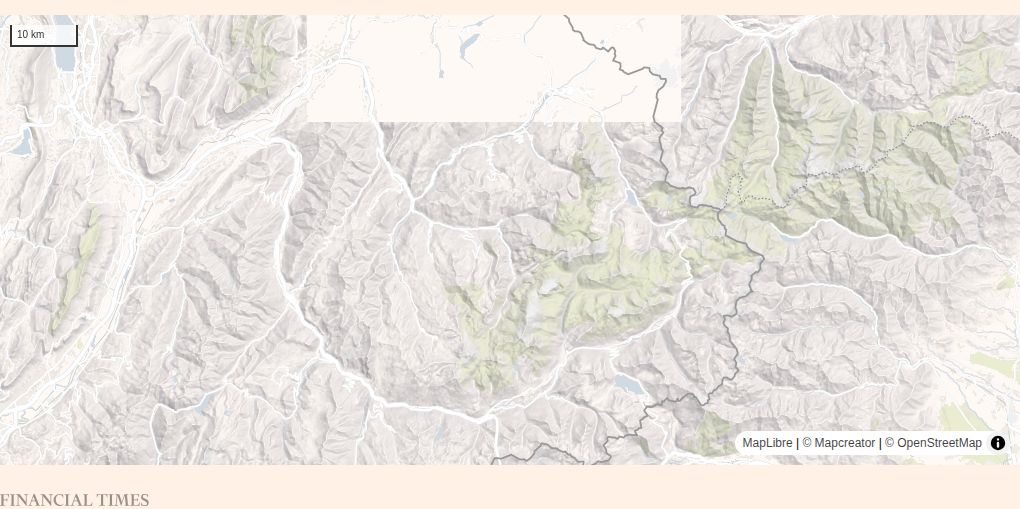
I drove with my family from London, via the Eurotunnel and a night spent just outside Cambrai. Entering the Maurienne, we followed the motorway south until, at the bottom of the U, it disappears into the Fréjus tunnel (then pops out in Italy). Instead, we turned north on a local road into the Haute Maurienne, the upper valley getting wilder all the time. Through a forest of spruce and larch we got glimpses of the monumental limestone walls of the forts, the white peak of the Dent Parrachée behind, then finally some skiers, slaloming across snow-covered pastures to the village of Termignon.
You could easily come by train — direct services from Paris to Modane, near the entrance to the Fréjus tunnel, take as little as four hours — but it’s useful to have a car. For rather than a conventional ski holiday, based in one resort, the unique thing about a trip here is that you have the whole of the upper valley to explore. Since 2018, the six laidback Haute Maurienne ski areas have offered a deal whereby any six-day lift pass includes a free day at each of the other resorts. Together they claim 350km of pistes (actually more than Val d’Isère/Tignes, though the lift pass is half the price).
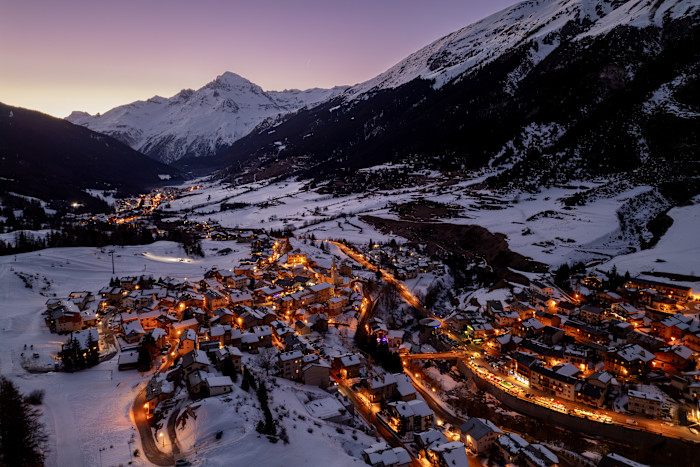
It makes sense to base yourself in the biggest, Val Cenis, itself an amalgamation of three villages, Termignon, Lanslebourg and Lanslevillard (joined by lifts and pistes since 2007). For a first-time visitor or idle website scroller, such a blizzard of unfamiliar names can be off-putting but in practice it couldn’t have been simpler. We were staying at Les Chalets de Flambeau, a collection of self-catering apartments with balconies overlooking the pistes, an indoor swimming pool and sauna — not chic but very comfortable, welcoming and good value, much like the valley as a whole. We arrived in time to pick up our rental skis from the little parade of shops next door — a restaurant, a bar, a pizzeria and a tiny Sherpa mini-market where we sent the kids to buy bread in the mornings.
The next day, we stepped out straight on to the slopes. Val Cenis is a decent “mid-size” area, with 125km of pistes rising from 1,300 to 2,800 metres, so a good mix of above and below the tree line. It’s also north-facing — though it was the end of March, the snow was still in excellent condition and we shot about exploring, from the forests of Lanslevillard up to the Lac du Mont Cenis, a half-frozen high-altitude reservoir beside the Col du Mont Cenis and the Italian border. We only stopped for lunch when we caught the smell of hot cheese coming from La Ferme du XXIII, a cosy restaurant next to the piste serving Savoyard classics, where kids can finish the meal with a trip to feed the goats in the barn downstairs.
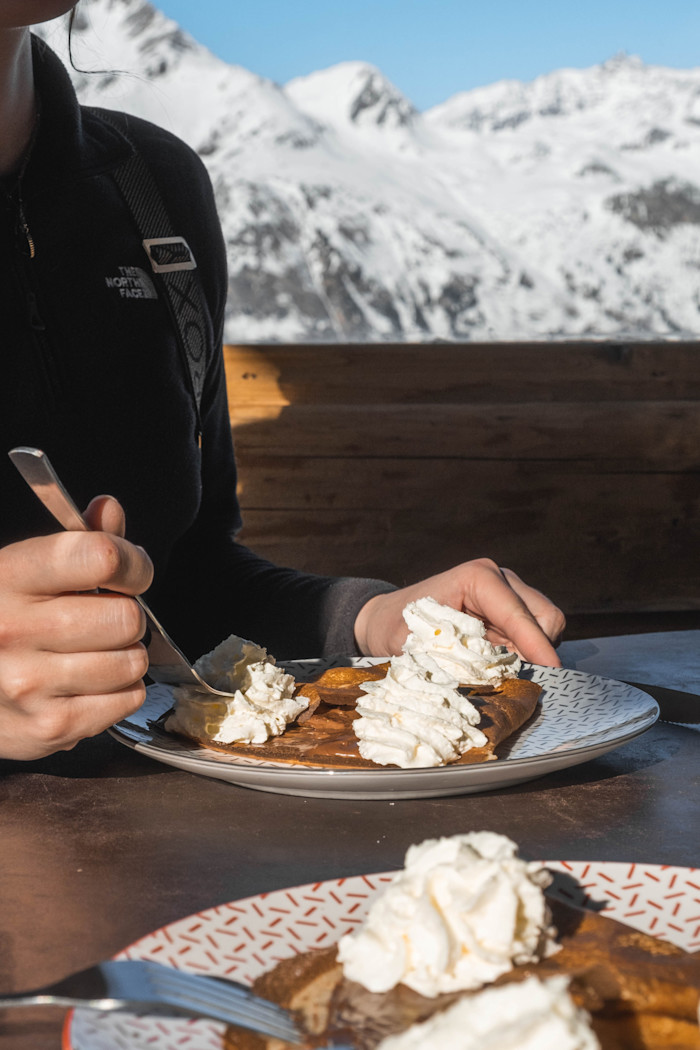
For anyone used to slopeside restaurants of the Tarentaise, the prices were a welcome surprise — €7 for a plate of cheeses from the local co-operative, €3.50 for a crepe, €8 for a half-bottle of local red. A nice surprise too to be able to walk in without a reservation, on a Sunday lunchtime, and have a choice of tables.
In fact, the biggest surprise of the day was the lack of other people. Not only did we not have to queue for the lifts, but at the top, we’d often find we had the entire piste to ourselves — a mystery, when just to the north, the Tarentaise would be packed.
In the coming days I tried to unravel that mystery, in which geography, history and state interventions all played a role. Partly though, it was simply a quirk of the calendar: this was the first week of British schools’ Easter holidays but French pupils would be stuck at their desks for at least another week. So Brit-favourites in the Tarentaise would be flooded with families, while the more francophone Maurienne stayed quiet. (In Val d’Isère, for example, UK tourists make up 40 per cent of the market, outnumbering even the French, at 34 per cent; in Val Cenis, 78 per cent of overnight visitors are French, only 4 per cent British.)
All of which would be of little interest to those outside the industry, except the school calendars are the same at Easter next year: for British families in search of silent pistes, opportunity knocks.
But why did the two valleys develop such different clienteles and personalities? Ironically, the Maurienne was once the better connected and more international of the two. Lanslebourg was a busy staging post for travellers heading to and from Italy over the Col du Mont Cenis, a route used by Charlemagne, Napoleon and JMW Turner. In winter, local guides or porters known as “marrons” would bring them back down to the valley on a “ramasse”, a chair set on two wooden skis. A 1643 account describes a group of diplomats from Tuscany climbing back up to the pass on mules in order to make the thrilling descent a second time — possibly the earliest recorded example of alpine wintersports.
In 1868, a British company opened a steam railway up and over the pass, designed to offer a direct connection to the Italian rail network and thus cut two days from the time taken to send mail between London and colonial Calcutta. Edward Whymper devoted a chapter of Scrambles Amongst the Alps in the Years 1860-69 to this “marvel . . . an important portion of the high road to India”. His enthusiasm was unsurprising. After all, this was 20 years before a railway reached Zermatt, and Courchevel was nothing but a patch of rough grass known only for its tendency to scratch cows’ tongues.
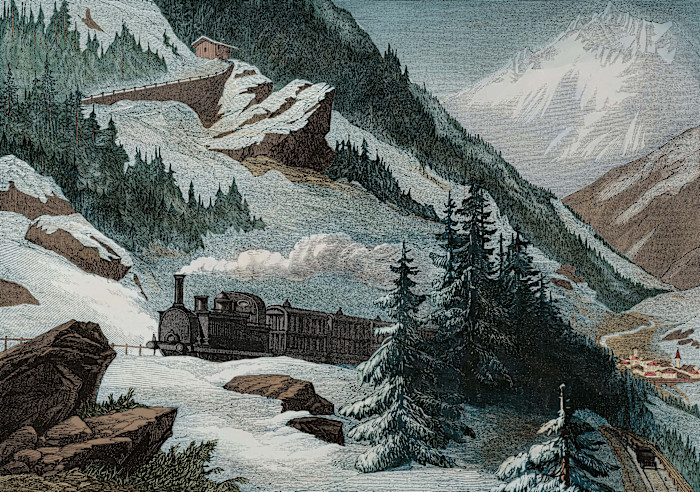
The ingredients were there for tourism to take off, but when the Fréjus rail tunnel — then the longest in the world — opened in 1871, the Mont Cenis mountain railway was abandoned and Lanslebourg found itself bypassed, its innkeepers and porters suddenly without work. The population collapsed — by a third within a decade, and 50 per cent by the 1920s — leaving the upper Maurienne an obscure backwater. Worse was to come in the second world war: most of the residents evacuated when the area was occupied by Italian soldiers, then shelled and set on fire by retreating Germans.
The mountain railway was completely dismantled — most of it sent to Brazil — but, at the end of our first day, we skied down its route, now the 11km-long Escargot, which the resort claims as Europe’s longest green (beginner) run, the kind of modest superlative that sets the tone for the place.
Another morning, we drove the 25 minutes across to Aussois on the southern flank of the Dent Parrachée. Ordinarily, there’s enough hassle involved with skiing to make the idea of moving between resorts deeply unattractive but this was easy: we parked at the side of the road (for free), put on our boots and walked five metres to the piste. Aussois is home to fewer than 700 people and felt even more peaceful than Val Cenis, a fresh blanket of overnight snow muffling any sounds. With no one around we didn’t even bother going into the back-country, instead simply skiing the powder that lay deep on the pistes. When the weather closed in and we retreated into the Montana restaurant, at the top of the main chairlift, we found it empty — beaming staff ushering us in like long-lost friends.
While the residents of Lanslebourg were returning at the end of the war to find their town destroyed, in the Tarentaise grand plans were afoot. Courchevel was founded in 1946 as France’s first purpose-built resort, backed by the national and local governments, designed to stimulate the postwar economy of a depopulating rural area, to compete with the resorts of Switzerland and Austria, and (ironically) to make skiing accessible to people from all walks of life. The topography of the Tarentaise was ideally suited to big, interconnected resorts, with high plateaus and multiple side valleys — rather than the mainly much steeper-sided Maurienne.
Courchevel was a success and prompted the launch of successive state “snow plans”, using subsidies, cheap loans and planning support to encourage rapid ski resort development. There were projects across the Alps and Pyrenees but the Tarentaise was the centre of activity. Gradually the new resorts’ webs of lifts and pistes grew so big they intermeshed to create vast linked domains: Les 3 Valleys, Paradiski and the Espace Killy. When the Olympics came to the Tarentaise in 1992, it supercharged their international appeal.
And all the while, the Haute Maurienne was snoozing, or at least developing far more slowly. We spent the week alternating between Val Cenis and the other resorts of the valley. Up above the 19th-century forts, La Norma was a revelation — purpose-built, pedestrianised, billing itself as somewhere family-focused, but with a cult following among freeriders. As we skied empty, easy runs under blue skies, we looked across at tracks dropping from the ridge above us, steep, sinuous and like something from an Alaskan ski movie.
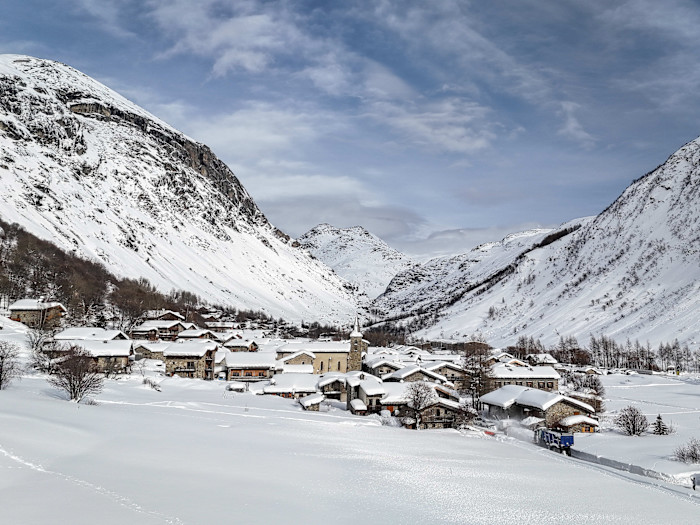
But the jewel is Bonneval, hidden from view, 20km up the valley from Lanslebourg. The drive there started with steep switchbacks up and over an ancient rockfall, then dropped down across the wide Bessans plateau (a centre for cross-country skiing, with 120km of groomed trails). Afterwards the valley narrowed again, the road running alongside the river Arc through groves of alder and ash. We saw a group of chamois on a high flank, then drove through the remains of an old avalanche, a gap cut for the road between white walls towering above the car, like a portal to an upper world.
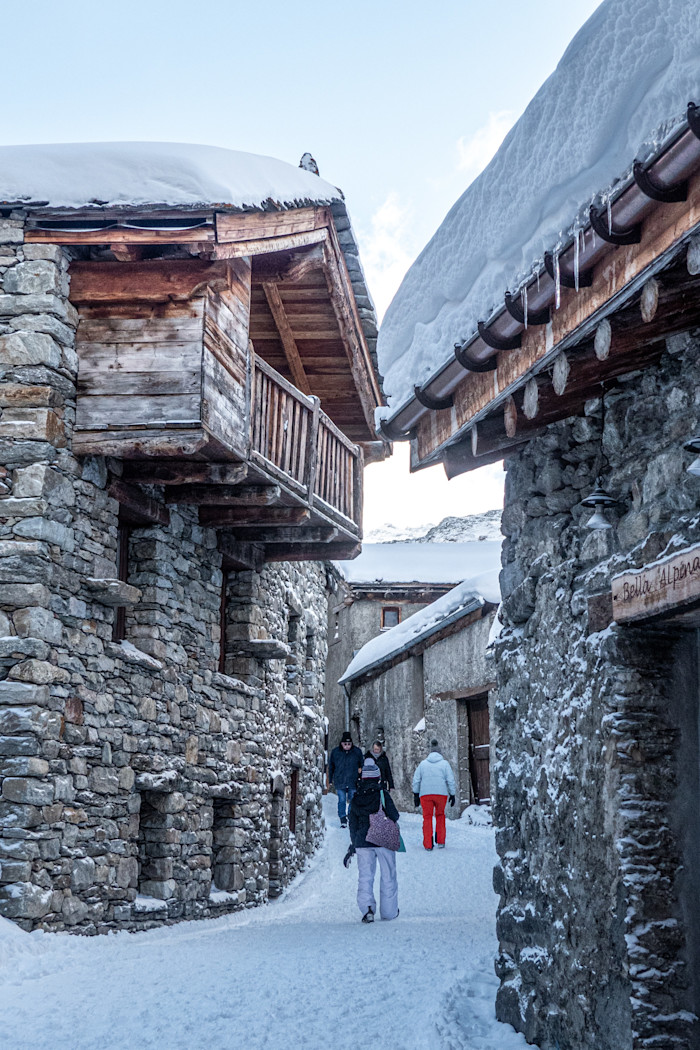
Arriving in harsh sunlight, Bonneval felt positively Himalayan — in fact prayer flags flew from more than one balcony. While the villages of Val Cenis, rebuilt after the war, are not going to win beauty contests, secluded Bonneval was spared from destruction. Clustered around a 17th-century church, its old stone houses have larch rafters topped by lauze slabs; the whole village has been protected as a listed natural monument since 1971.
Above rise nine ageing lifts and 32km of pistes but though small, it is exquisite — high, north-facing, with abundant off-piste opportunities. There’s one restaurant on the mountain, Le Criou, a cosy spot with thick stone walls, a wood-burning stove and a sunny terrace hemmed in by snowbanks.
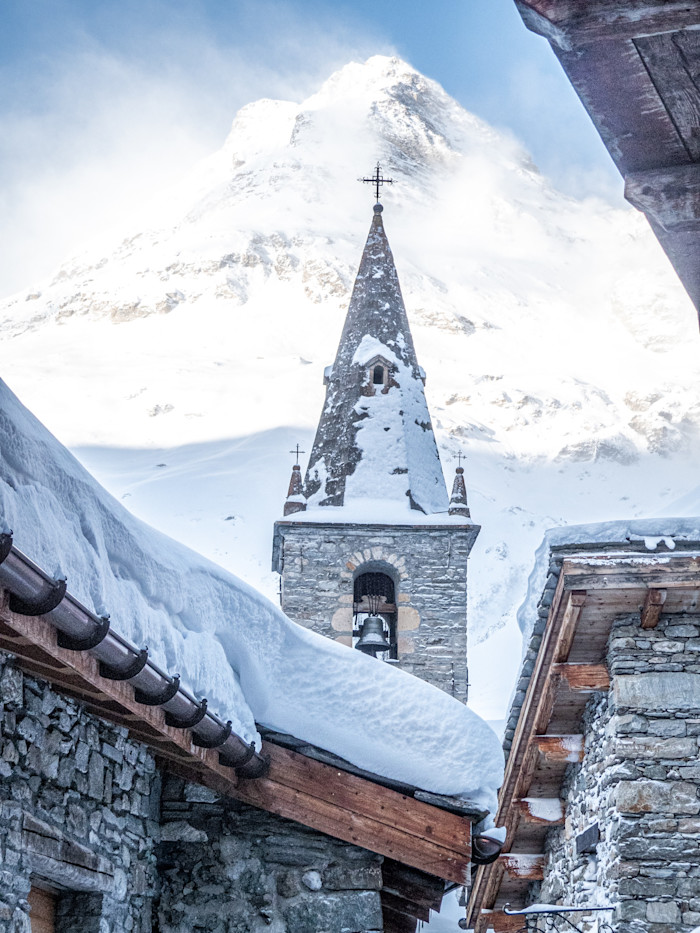
The stone bell tower of the church in Bonneval-sur-ArcLater, Jérémie Silva, the director of the valley’s tourist office told me that when a journalist had previously named Bonneval as their favourite resort, he’d had complaints: “People just don’t want to see it change.” So far, there’s little evidence of that. Bonneval is too small to tempt mainstream tour operators, while the rest of the Haute Maurienne stays happily hidden in the shadow of its illustrious neighbour.
Handing back my skis in the rental shop, I got chatting to one of the staff, a keen young ski mountaineer about to set off to ski the east face of the Dent Parrachée. It’s a beautiful route — the kind you might see on posters and in ski movies, feted on pro skiers’ bucket lists — why wasn’t it more famous, I wondered? The reply was simple: “Ah well, this is the Maurienne . . . ”
Details
Tom Robbins was a guest of Peak Retreats, a UK-based operator specialising in the French Alps, and the Haute Maurienne tourist board. Peak Retreats offers a week in a two-bedroom apartment at Les Chalets de Flambeau from £396 per person, based on four sharing, including a return “FlexiPlus” Channel crossing on Eurotunnel LeShuttle, or from £426 during the 2027 Easter holidays. Dalcin Shop has a week’s ski rental from €84. Lift passes are dynamically priced; a six-day Haute Maurienne pass, with unlimited skiing at one ski area and a day at each of the other five, currently ranges from €158 to €237
Find out about our latest stories first — follow FT Weekend Magazine on X and FT Weekend on Instagram