
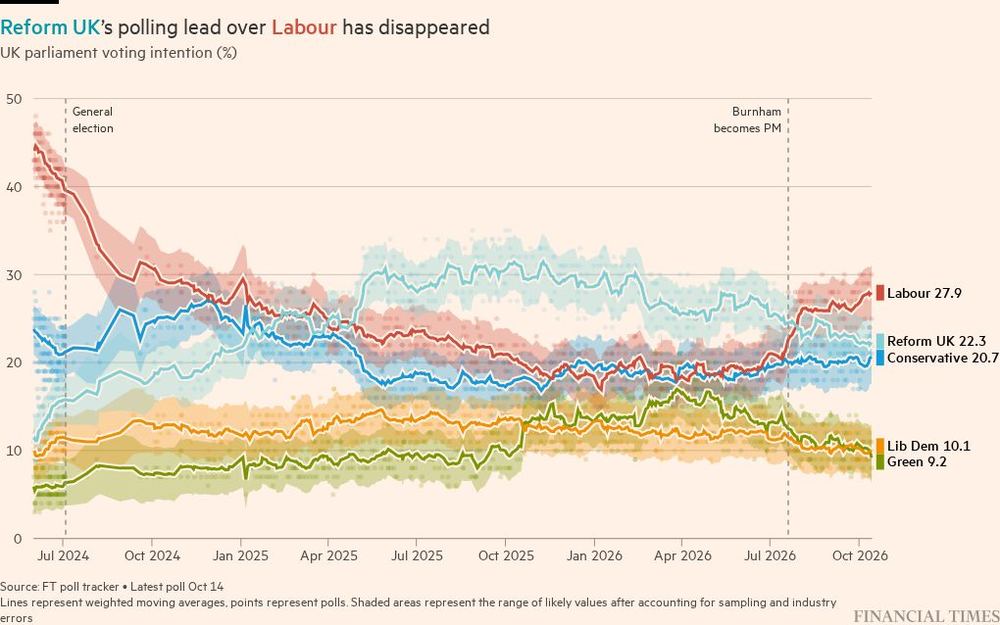
According to the latest polls, the combined share of people intending to vote for the Labour and Conservative parties in a parliamentary election is a mere 48.6 per cent (with Andy Burnham’s Labour on 27.9 per cent and Kemi Badenoch’s Conservatives on 20.7 per cent). Given this, it is arguably a mistake to focus too much on what each leader said at their recent party conferences. Nonetheless, the speeches were fascinating, partly because they were good, but also because they harked back to the past.
Of the two, the speech by Badenoch was the more powerful because, in a break with Tory tradition, she was not just harking back to Margaret Thatcher.
The Tory leader did not mention him, but Benjamin Disraeli came to my mind. Although he had a foreign heritage, he created the modern Conservative Party. So I cheered when Badenoch declared, of a possible alliance with Reform and Restore, that: “People deserve better than that and we are going to give them better than that. Character, conduct and standards matter. I don’t want to live in a country run by people who . . . debate whether my mixed-race children are English.”
This was, to my mind, an ideal form of harking back to the past. Yes, there are questions about her policies. Not least, exempting the “family home” from inheritance tax would make the housing market less fluid when it needs to be more so. But she did at least articulate a strong alternative to the inward-looking xenophobia of Reform and Restore.
This brings us to the intriguing case of Burnham. He is a talented politician who speaks well and appeals to traditional Labour values of working-class aspiration. These are indeed essential to the health of modern democracies. But he went further in his speech, in stating that “Britain has been on the wrong path for a long time. Deindustrialisation. Deregulation. Privatisation. Austerity. Brexit.” He also complained of “Homes. Water. Energy. Transport. Care. Broken up and sold off.”
This is not altogether wrong. But some of it definitely is.
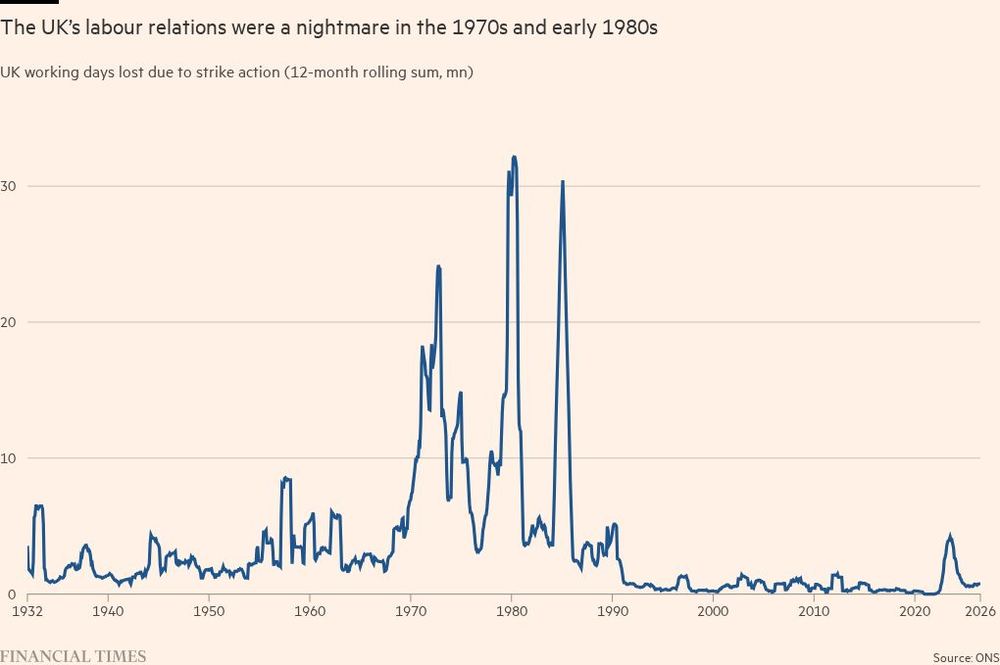
Did the pre-Thatcher UK of the 1970s work well? No. British manufacturing had become notoriously strike-prone and internationally uncompetitive. British Leyland Motor Corporation, by then the resting place of most of the UK’s automobile industry, was partly nationalised in 1975.
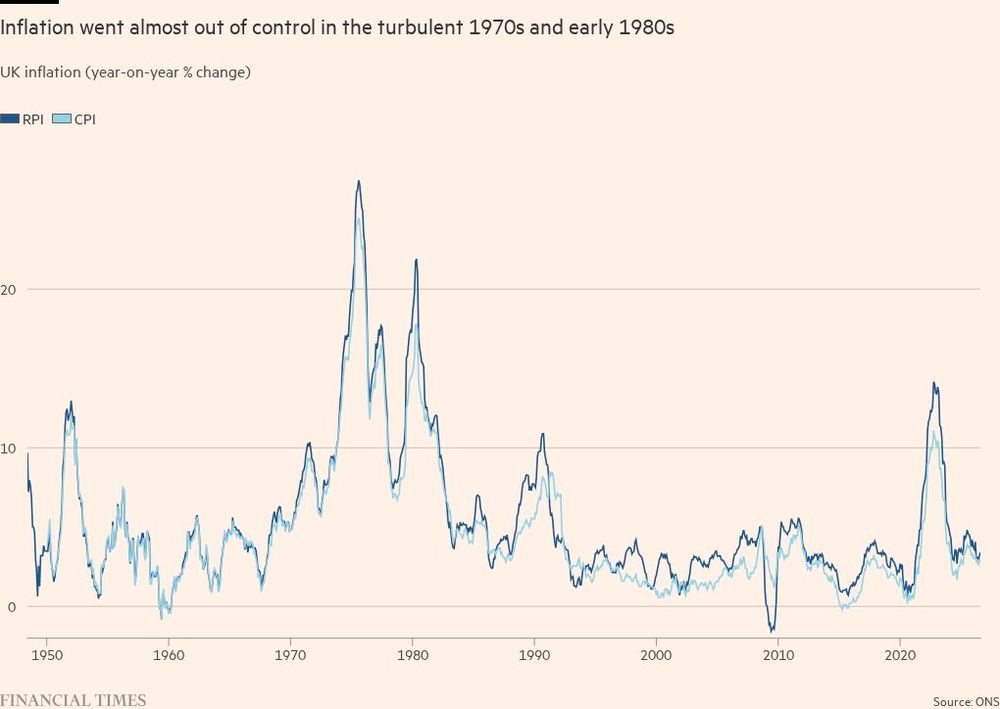
Labour relations were a catastrophe in many sectors, including the nationalised industries of coal, steel and railways, but also in other public services. Days lost to strikes reached extraordinary levels in the early 1970s, 1979-80 and the mid-1980s. Annual retail price inflation peaked at 27 per cent in August 1975. Thatcher did not cause these ailments; her election was rather a symptom of them. People were fed up.
Nor were the nationalised railways, telephone, electricity and air services marvels of efficiency. They suffered, instead, from many problems, among them the Treasury’s tight control of investment — politicisation, in other words. The experience was that service improved, often dramatically, wherever the privatised company operated in a competitive market.
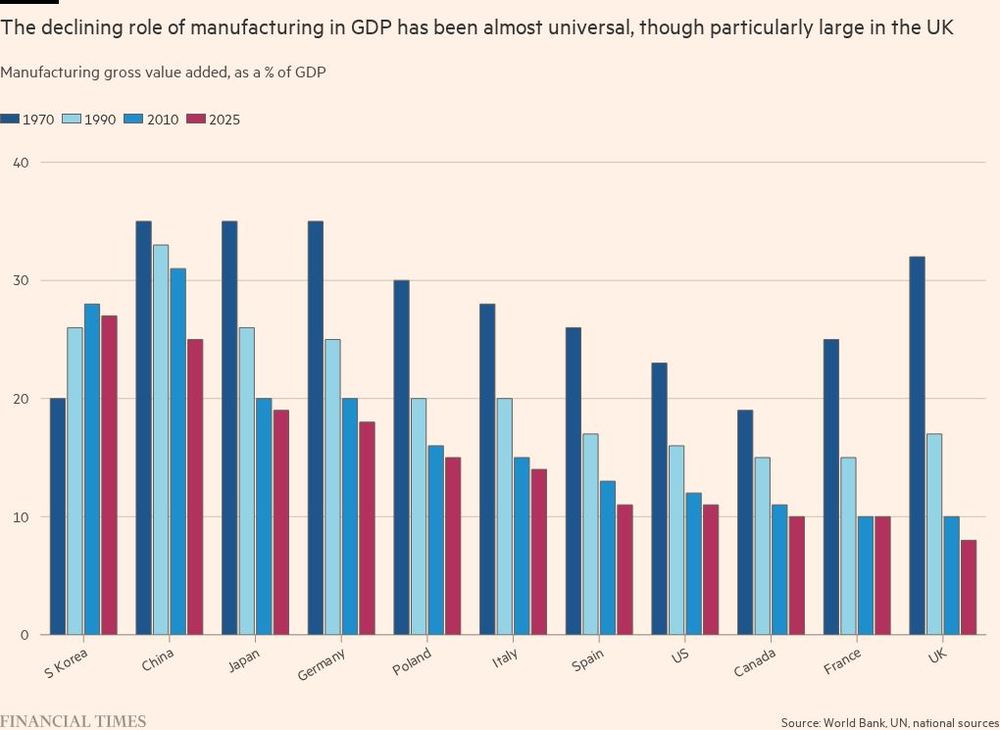
Moreover, the loss of jobs in manufacturing has not been unique to the UK. Yes, it was larger than in most other countries, partly because of the mistaken macroeconomic policies of the 1980s, but even more because of the fundamental weaknesses of many British manufacturers. Nothing, in short, could have stopped much of the UK’s deindustrialisation. Nothing can now substantially reverse it either. In the age of AI, factory jobs will surely fall further.
Last but not least, Burnham’s complaint about “deregulation” is also misguided, for two reasons.
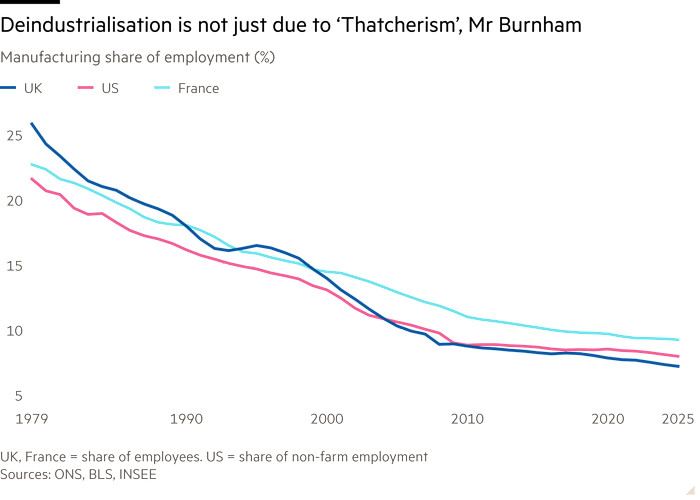
The first is that the interaction of re-regulation with mistaken welfare policies is very much not helping the labour market. Incentives, as he himself has noted of the number of young people not in education, employment or training, do matter. As I have previously argued, the “Old Labour” (or “dirigiste”) instincts of the Keir Starmer government were already problematic. If Burnham is not very careful, over-regulation could become far worse.
The second reason is that so much of what we would like to do — notably, build things — is prevented by regulations, old and new. We need more deregulation, in many areas. Indeed, the idea that the UK is a deregulated economy is, in essential respects, the reverse of the truth. If it were true, it would already be covered with high-speed rail, nuclear power stations, wind farms, airport runways, housing and so forth. It is not. Getting anything built is a nightmare, as Britain Remade rightly argues.
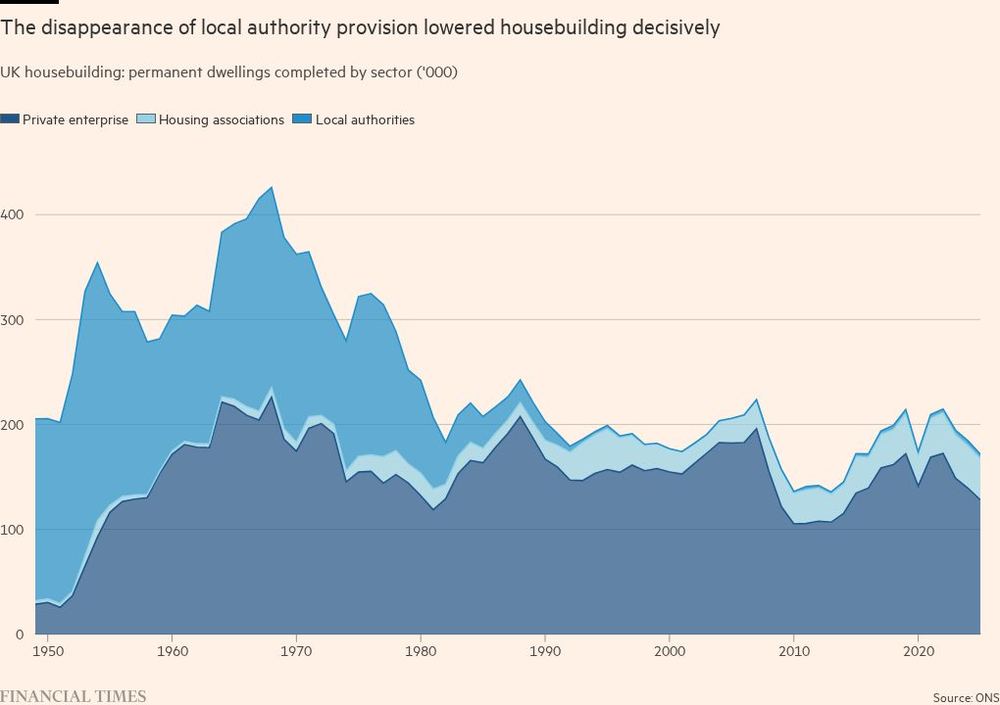
Yet Burnham is also not entirely wrong. The privatisation of a natural monopoly, such as water, was not necessarily an improvement. More important, the decline of building by local authorities did indeed result in a huge and permanent fall in the construction of new housing: from 1960-80, inclusive, the UK built 7mn houses; from 2005 to 2025, it built fewer than 4mn. Given how high house prices have become in some areas, notably London and south-east England, this must be largely due to over-regulation. Local authorities might indeed be able to get round this problem more easily.
Nevertheless, bewailing Thatcherism is not a growth strategy. Neither, on its own, is the slogan of “re-industrialisation”. Nor, in and of itself, is “devolution”. Does Burnham’s government have a coherent strategy for economic growth? Maybe the Budget next week will tell us. But it is not clear what it is. Returning to the 1970s is not a growth strategy: we cannot go back to the past.