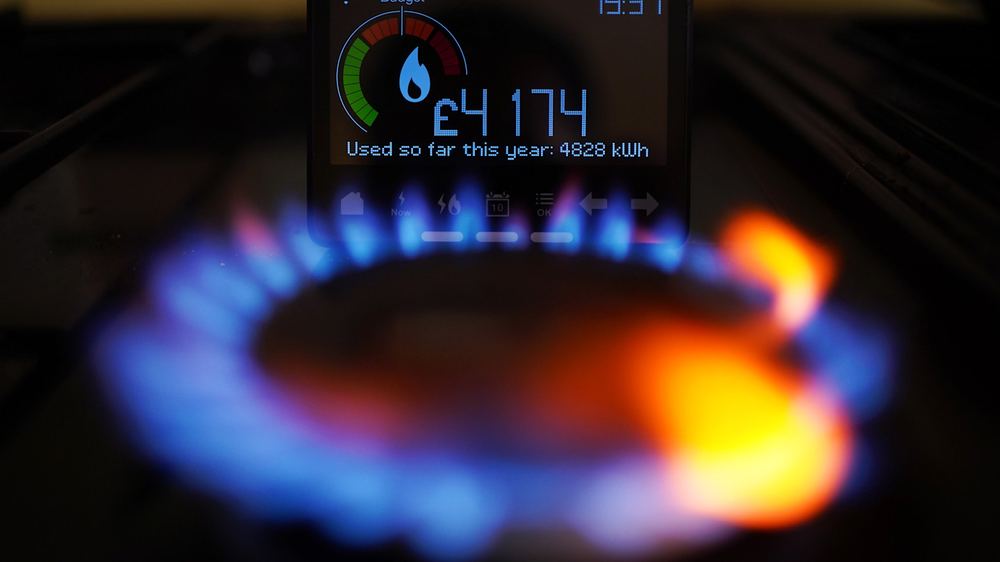
Andy Burnham has set out plans to scrap fixed daily fees from household gas bills as part of efforts to cut energy costs this winter, as the UK prime minister seeks to show voters that his government has a grip on the cost of living.
Speaking in the House of Commons on Wednesday, Burnham said he had asked chancellor John Healey and energy secretary Miatta Fahnbulleh to report back on the removal of standing charges from gas bills “at the earliest opportunity”.
Standing charges are daily fixed charges consumers pay on their energy bills regardless of how much they use, to cover network upgrades and some other costs.
Burnham did not provide details about the proposals, but energy experts said such a change would probably involve recovering the same costs via the unit rate of gas rather than a daily fixed fee.
The change could help lower bills for households that do not use significant amounts of gas, but the cost savings would be limited and the policy could also penalise households that use a lot of gas, meaning the change would need to be carefully considered.
Analysis by Nesta, a research foundation, has shown that typical households could save £27 a year under such a policy.
Andy Burnham says he has set out plans to remove standing charges from gas bills
Madeleine Gabriel at Nesta said: “Abolishing the gas standing charge and moving those costs on to the unit rate would help those worst hit by rising energy prices. This is because the gas standing charge currently takes up a bigger chunk of the bills that lower-income households have to pay.”
The move could also close the gap between gas and electricity unit costs, encouraging more people to take up heat pumps.
“We see this as a positive step,” said Ben Westerman, director of policy and advocacy at campaign group Electrify Britain. The high cost of electricity relative to gas is seen as a key barrier to greater uptake of heat pumps at present.
Burnham announced the plan hours after the government gave the formal go-ahead for Jackdaw·, a large new gasfield in the UK North Sea, a move welcomed by much of the energy industry.
The decision on Jackdaw, which is 150 miles east of Aberdeen, follows years of legal and political wrangling after the project’s development consent was quashed in 2025 following a landmark ruling on carbon dioxide emissions.
It was immediately criticised by environmental campaigners and opponents including Green Party leader Zack Polanski, who described the gasfield’s approval as a “betrayal of all of our futures”.
But Burnham told MPs that if the project had been rejected, gas would “just be imported from somewhere else if we didn’t use our own reserves”.
Speaking in the Commons, he added: “In these difficult times, when we have resources, the public would expect us to use them to help people get jobs secured in Aberdeen.”
The UK government framed the decision as part of efforts to boost energy security, following severe disruption to global fossil fuel supplies in the wake of the Iran war.
Cornwall Insight, the consultancy, predicts the energy price cap dictating typical household bills will rise by 16 per cent in January owing to the global disruption, putting pressure on the government to intervene.
Healey has already drawn up plans to help the poorest households in the Budget next week by boosting the Warm Home Discount Scheme for people on benefits from £150 to £250 at a cost of about £600mn, according to people familiar with the negotiations.
This targeted support would apply to 6mn out of 29mn households in the UK. Healey has already given help with energy bills through the current six-month scrapping of VAT on electricity, saving an average of £45 per household.
But some ministers have been pushing for broader support to tackle the expected big jump in energy bills.
The FT reported last week that Fahnbulleh has been pushing Healey for various levies to be removed from energy bills to help households in the Budget on October 28.
The levies that the government could cut range from gas bill standing charges to subsidies for renewable energy schemes including feed-in tariffs.