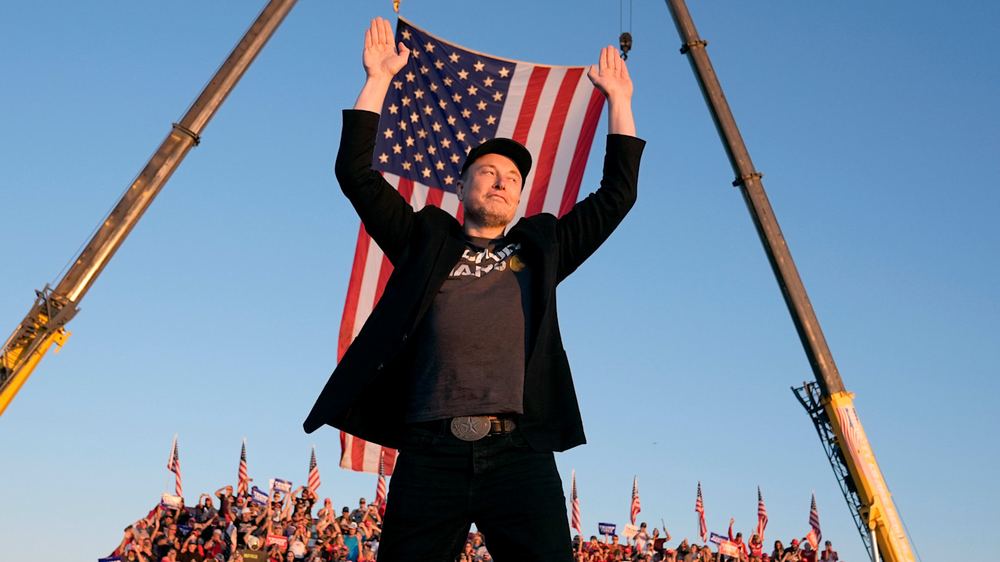
The world’s richest man is preparing for the “AI singularity” by trying to fold SpaceX and Tesla together into a single company spanning rockets, satellites, internet service, chatbots, social media, robots and cars.
Elon Musk said on Tuesday· that both companies had set up special committees of independent directors to study a tie-up, which he called “a good idea”.
Being the key shareholder and executive at both companies, Musk conceded that, as a “conflicted party”, he “can’t be in the discussions” and cautioned that there was no guarantee the two companies would even come to terms.
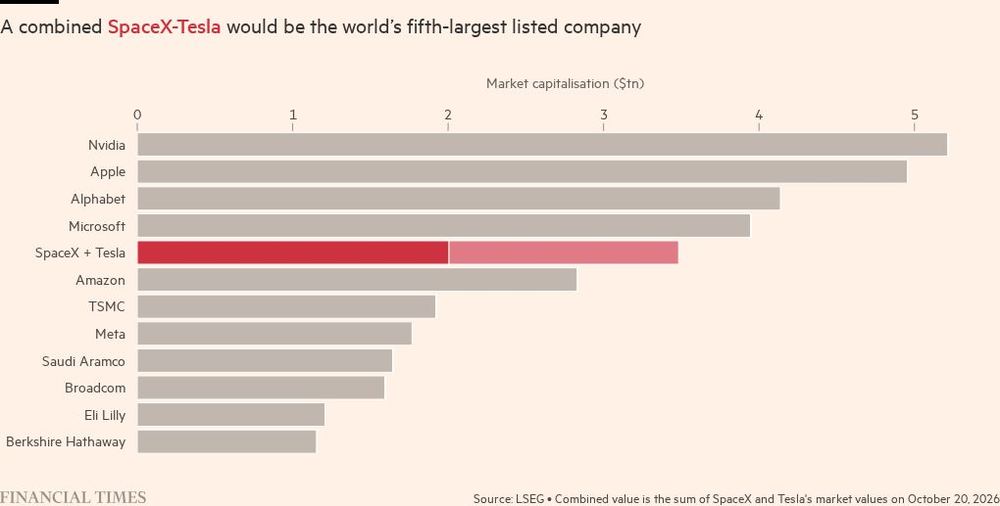
If Musk pulls off his most audacious deal yet, the combined group would be worth about $3.6tn at current prices, putting it among the world’s five most valuable companies alongside Nvidia, Apple, Alphabet and Microsoft.
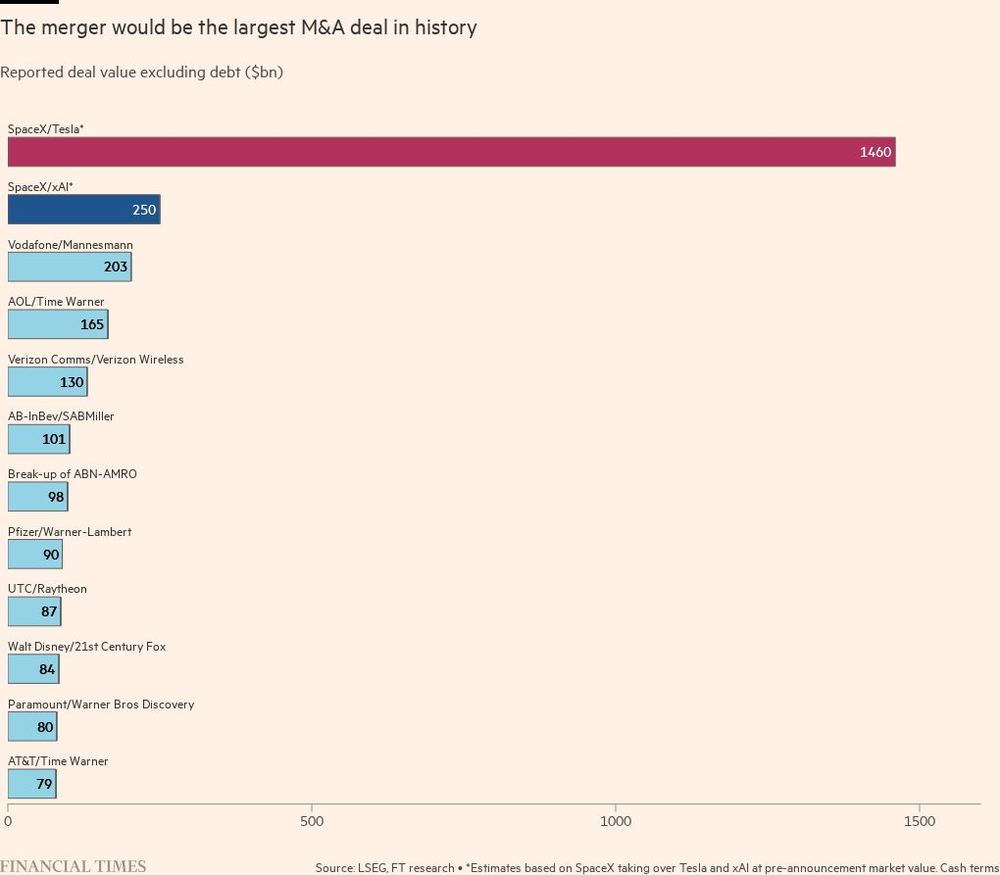
But any combination faces serious hurdles, from shareholder concerns over Musk’s power to clearance from authorities in the US and China that are set to scrutinise what would be the biggest merger of all time.
Shares in SpaceX surged 9 per cent in early trading on Wednesday while Tesla stock was up 2.5 per cent.
Video description
Elon Musk comments on a possible merger of SpaceX with Tesla
What would the combined company look like?
The Musk conglomerate would have a sprawling catalogue of business lines. SpaceX would bring the world’s dominant rocket business and Starlink satellite communications network.
The combined company would employ more than 155,000 people and generate a combined $153bn in revenue this year, according to analyst forecasts compiled by Visible Alpha. But it would also have negative free cash flow of at least $54bn, those analysts expect, with Musk’s spending plans on AI infrastructure, chip fabs and rockets growing by the day.
The deal would also tighten Musk’s grip on Tesla. He controls about 84 per cent of the votes at SpaceX through super-voting shares, compared with roughly 20 per cent at Tesla, where each share carries one vote.
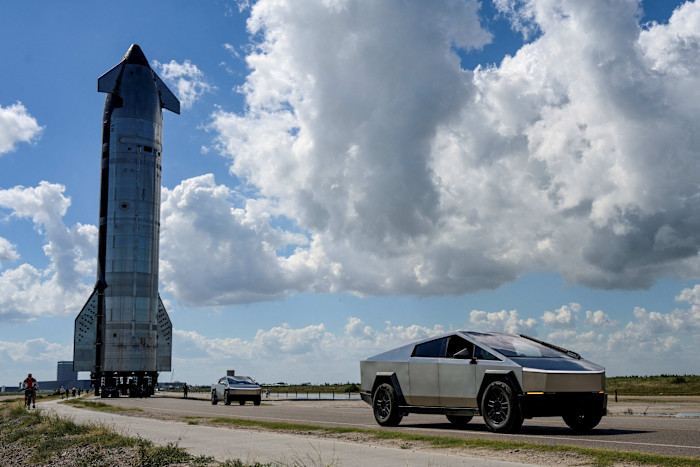
Analysts expect Tesla to sell more than half a million Model 3 sedans, more than 1mn Model Ys and 22,000 Cybertrucks this year. Tesla also has a growing self-driving business and an Optimus robot line that Musk predicted could one day make Tesla worth $25tn.
On Tuesday, Musk made clear that AI was his priority, saying the merger made sense as “we are pretty much in the superintelligence singularity”, meaning the moment when AI surpasses human intelligence.
He said SpaceX would have about 3GW of computing power online by the end of this year and 13GW by the end of next year, with a “non-zero possibility” of exceeding 20GW.
That would let SpaceX rival the biggest cloud providers, including Amazon Web Services, Microsoft and Google. At the slightly more than $50 per watt that SpaceX says it is charging, 20GW would bring in about $1tn a year if it rented out every watt, the top of the $500bn to $1tn revenue run rate Musk projected for the end of 2027.
Longer term, Musk wants to turn Starlink into a major mobile carrier beaming phone service from space, put data centres in orbit and colonise Mars.
Investors have long raised questions about Musk’s ability to focus across his empire. “Right now, he spends some time at Tesla and some at SpaceX, and shareholders cannot tell where he is spending most of his energy or money,” said a top Tesla investor.
The near-trillionaire said he was often spending four days a week in Memphis, Tennessee, bringing new computing clusters online and argued that SpaceX’s team of rocket engineers could build data centres faster than anyone else.
“This is a bit like the New York Yankees playing in Little League,” he said. “It’s not fair.”
Why bring the companies together?
Under Musk’s leadership the two companies have already been converging.
“There’s a lot to be gained from co-operating on developing superintelligent software, chip design, the Terafab, obviously robotics, mass to orbit,” he said on Tuesday.
In March, Musk announced a joint venture between the two called Terafab, a massive semiconductor manufacturing plant in Texas, which could ultimately cost $119bn and will produce chips for his autonomous vehicles, humanoid robots and orbital AI data centres.
The two companies have also teamed up to produce a “flying” sports car called Roadster, unveiled last week. It performed a series of inverted backflips and jumps using cold-gas thrusters developed by SpaceX. Musk’s AI model Grok is provided for free in many Tesla vehicles.
The Tesla Roadster drives towards a line of parked vehicles and then ejects gas from thrusters underneath the car to fly and flip over the parked cars
The companies already do business together. SpaceX has bought almost $1bn of Megapack batteries and Cybertrucks from Tesla, including $131mn of the slow-selling trucks last year. Tesla, in turn, became a SpaceX shareholder when its $2bn investment in xAI converted into SpaceX stock after the two Musk companies merged.
“Look at the level of collaboration commercially,” said a person close to Tesla, pointing to the Roadster, Terafab and joint research into materials, fuels and manufacturing.
A combination would create “a vertically integrated company bringing computing power into the physical AI world”, the person said. “It’s already happening.”
Could shareholders stand in the way?
Musk said the two companies’ special committees had not agreed terms and that “there’s no guarantee that they will”. Tesla would also need the backing of a majority of all its shares, not just those voted, which Musk called “quite a high hurdle”.
Musk has a long history of getting his way, though. A decade ago, he merged his then-listed clean energy company SolarCity into Tesla, a transaction that drew a shareholder lawsuit from investors in the EV maker Tesla who believed Musk pursued the all-stock deal only to have one leg of his empire improperly bail out another division.
The judge in the case eventually rejected the shareholder claims but not before criticising Musk’s close ties to the Tesla independent directors and his involvement in the negotiations.
Crucially, Musk has since redomiciled both Tesla and SpaceX to Texas, from Delaware, the small mid-Atlantic state where the billionaire had faced multiple shareholder lawsuits over Tesla’s corporate governance practices.
Experts told the FT that both Tesla and SpaceX would have many important decisions to make about how to set up the process around merger negotiations and shareholders’ approvals, in order to assuage concerns about one Musk company being favoured over the other.
However, Texas corporate law is much more deferential to board judgments and even can limit certain types of shareholder lawsuits to only very large shareholders.
“Under Texas law, shareholders may only bring lawsuits against corporate officers or directors for breach of fiduciary duty if they demonstrate the managers engaged in ‘fraud, intentional misconduct, an ultra vires act, or a knowing violation of law’,” said Ann Lipton, a corporate law professor at the University of Colorado who has long followed Musk’s dealmaking.
“That’s a much higher bar than simply a showing that a director stood on both sides of a transaction.”
Will the merger be blocked?
Regulators around the world will also want to closely scrutinise the deal and lawyers said that beyond the US, the tie-up would almost certainly need sign-off in major jurisdictions including the EU, UK and China.
Nowhere may the merger cause more consternation than in China, where Tesla generated $21bn of revenue last year, about 22 per cent of its total, and runs its largest car factory in Shanghai. Beijing has long viewed SpaceX, a US defence contractor, with deep suspicion.
SpaceX signed 18 new US national security launch missions in the latest quarter alone and builds Starshield military satellites for the US government. Chinese military researchers have labelled its Starlink service a threat since SpaceX supplied terminals to Ukraine after Russia’s 2022 invasion.
“Approval in China could be a particular hurdle given the potential national security sensitivities,” analysts at JPMorgan wrote in a note on the tie-up.
They suggested Tesla might have to ringfence its China business or hand control of it to a Chinese consortium, a “mirror image” of the deal that put TikTok’s US operations in American hands, with Tesla earning licensing fees for its brand and self-driving technology.
In the US, the person close to Tesla said that closing the deal before Donald Trump left office was key. “This deal is going to happen,” they added. “But not as soon as everyone thinks.”
Additional reporting by Mari Novik in London