Good morning. Today, our correspondents report on the EU trade commissioner’s tense trip to Beijing and the British premier’s first EU visit as he heads to Berlin.
Peace talks
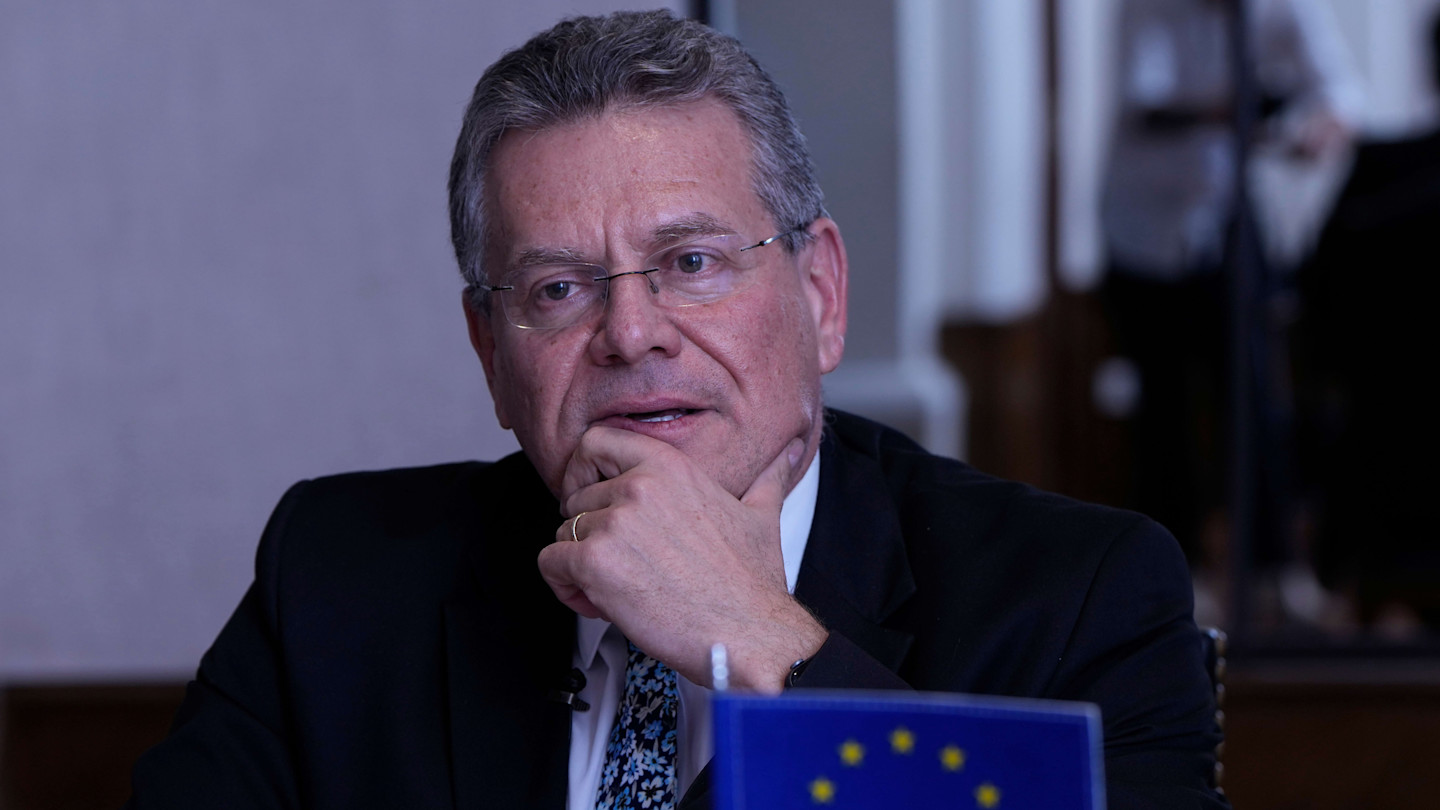
Maroš Šefčovič has 48 hours to prevent a serious trade conflict with China, after it rejected his demand to limit exports of hybrid vehicles, write Andy Bounds and Ed White.
Context: The EU’s trade commissioner will hold two days of negotiations· with Chinese commerce minister Wang Wentao, and needs a “proof of concept” that words rather than deeds can curb the ballooning Chinese trade surplus with the EU.
Šefčovič is now trying to get the Chinese to accept a safeguard measure, which would hit exports with a tariff above a cap agreed with Beijing, according to diplomats.
Officials say they want a hybrid car import level equivalent to about 15 per cent of the EU market, compared with more than a third today.
The bloc also wants China to drop barriers to its own exports, enshrined in its “made in China” policy. The combined effect of the EU selling less in China and buying more from it since the Covid pandemic has led the trade deficit to hit €1bn a day and tens of thousands of job losses. Šefčovič has said China is threatening Europe’s social model as well as its industry.
Brussels is also pressing Beijing to loosen its export restrictions on some rare earth magnets and critical minerals that are vital to the automotive, clean tech and defence industries.
There has been no signal that Beijing is likely to make significant immediate concessions. Instead, China appears so far only willing to expand direct investment into the EU and allow expanded imports — moves that are unlikely to satiate Brussels at this stage.
The fact that, so far, Chinese vice-premier He Lifeng has not played a central role in the talks is also viewed by some as reflecting that the issue has not yet been elevated to the highest levels. He was dispatched by Xi Jinping to lead China’s talks with the US ahead of the leader’s summit with Donald Trump last month.
EU ambassadors were told on Tuesday by Commission officials to prepare for failure. Šefčovič will debrief them again on Sunday and it will be up to their bosses at a leaders’ summit next week to decide whether to keep talking or wield the big stick.
“These so-called voluntary export restrictions seriously violate WTO rules and run counter to the laws of the market economy and the principle of fair competition. China firmly opposes this,” a spokesperson for the commerce ministry said in a statement last month.
Chart du jour: ‘Bottom fishing’
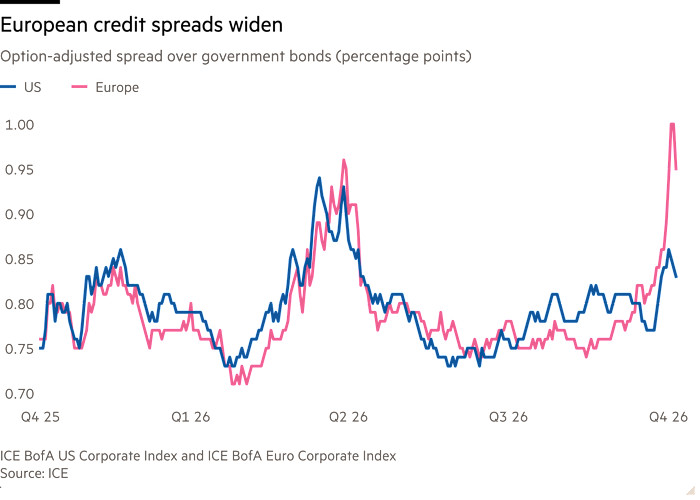
A sell-off in Eurozone markets has lured big investors to beaten-down assets including Italian bonds and corporate debt, on a bet that contagion fears are overdone·.
Burnham goes to Berlin
Andy Burnham makes his first trip to an EU capital since becoming UK prime minister in July, and it’s little surprise that it is to Berlin, a potential ally as he attempts to shield Britain from the EU’s new “Made in Europe” rules, write George Parker and Anne-Sylvaine Chassany.
Context: “Made in Europe” policy is still being negotiated but Burnham said last month that Britain risked suffering “collateral damage” from efforts by Brussels to protect EU industry from Chinese competition, including harm to cross-channel supply chains.
Burnham will meet Chancellor Friedrich Merz in Berlin today for talks described by Number 10 as mainly about defence and security co-operation. But officials in London confirmed that industrial policy will be high on the agenda.
Downing Street said that Burnham would discuss “economic resilience” and policies to “deliver shared prosperity”, using the visit to send a not particularly coded message about the importance of UK-German industrial co-operation.
Germany has often pushed to include the UK in EU programmes, battling Paris, which argues that these should be reserved for member states only, and is also advocating including London in the “Made in Europe” rules.
Brussels’ so-called Industrial Accelerator Act will set local content and low-carbon requirements for public procurement and subsidies in a handful of key manufacturing sectors. Berlin is advocating for a broad “trade partner” approach that would include the UK.
Another topic of discussion will be whether Berlin could join the UK-Italy-France GCAP project to build a sixth-generation fighter jet, after Merz chose to terminate the Franco-German project, FCAS.
Both leaders are expected to stress the need for close industrial co-operation to counter hybrid threats from Russia, pledging to act together including information-sharing and building resilience against cyber attacks, sabotage and threats to critical infrastructure.
“Attacks on our infrastructure, our businesses and our democracies are not a distant threat,” said Burnham ahead of the visit. “They are designed to make us weaker and more divided. Britain and Germany are joining forces to find, expose and disrupt this activity.”
What to watch today
Eurozone finance ministers meet in Luxembourg.
EU chief diplomat Kaja Kallas meets Lebanese President Joseph Aoun in Beirut.
Now read these
Meloni vote ultimatum: Giorgia Meloni has threatened to resign· if lawmakers reject her contested redesign of the country’s voting system.
German spy accusations: Azerbaijan has reacted angrily to reports that a former German spy chief may have shared state secrets with Baku·.
Siberian plague: What we know about the suspected Russian plague case after the death of a research institute worker.
Are you enjoying Europe Express? Sign up here to have it delivered straight to your inbox every workday at 7am CET and on Saturdays at noon CET. Do tell us what you think, we love to hear from you: [email protected]. Keep up with the latest European stories @FT Europe