This article is an on-site version of our FirstFT newsletter. Subscribers can sign up to our Asia, Europe/Africa or Americas edition to get the newsletter delivered every weekday morning. Explore all of our newsletters here
Good morning and welcome to FirstFT. In today’s newsletter:
Iran war blows £12bn hole in Britain’s public finances
EU and China set for last-ditch trade talks
The online life of the Flydubai attacker
Why people choose not to have children
The Iran war has blown a near-£12bn hole in Britain’s public finances, according to FT estimates, forcing chancellor John Healey to lean on Budget tax rises and spending cuts to fund efforts to ease the cost of living.
Higher borrowing costs and rising inflation have probably cut the UK chancellor’s fiscal room for manoeuvre from the £23.6bn forecast by the Office for Budget Responsibility in March to about £12bn, according to the estimates.
The reduction in headroom means Healey could be forced to announce painful tax increases and spending cuts in the Autumn Budget to retain the confidence of the bond markets and pay for measures to ease the cost of living for households. Read the full story·.
Property pain: UK house sales, prices and demand fell in September after benchmark mortgage rates· surged to their highest level in three years.
‘Europe’s Silicon Valley’: Andy Burnham’s government pledged to push on with linking up Oxford and Cambridge in an effort to reassure investors and reaffirm its commitment to the south of England·.
Here’s what else we’re keeping tabs on today:
European Central Bank: The ECB releases the minutes of September’s rate-setting meeting.
Iceland: The three-day Arctic Circle Assembly begins in Reykjavík.
Results: PepsiCo, Tesco and Unite Group report earnings. See The Week Ahead for the full list.
Nobel Prize: The award for literature is announced.
What is driving the global bond sell-off? Alphaville editor Robin Wigglesworth and senior markets correspondent Ian Smith will answer reader questions in a live Q&A today at 8am ET. Submit a question here.
Five more top stories
1. Exclusive: China has rejected an EU request to voluntarily restrict its surging exports of hybrid cars to the bloc as the two sides enter last-ditch talks to avert a trade conflict. The European Commission now hopes to get Beijing to accept a unilateral EU measure to cap hybrid imports instead, two diplomats briefed on the plan said. European trade commissioner Maroš Šefčovič is in Beijing for talks.
2. European borrowing spreads have widened as concern deepened over the potential fallout from a French debt crunch, luring big investors to “bottom fish” among beaten-down assets· on a view that the region was unlikely to be heading for an economic blow-up similar to the Eurozone bond crisis more than a decade ago.
US Treasuries: A sell-off in US government debt eased after strong demand at an auction of 10-year notes signalled that investors were seeking to lock in record-high yields·.
3. A measure of credit risk at SpaceX rose to a record high while its bond prices dropped after plans to raise $40bn in debt to buy Nvidia chips spooked investors. The spread on the rockets-to-AI group’s five-year credit default swaps widened to 194 basis points· after the FT reported on the deal, meaning it now costs $19,400 annually to protect $1mn of its debt against default. The CDS began trading at around 110 basis points in June.
China’s AI ambition: Energy-rich Inner Mongolia has become the engine room for Beijing’s push to build data centres at rapid speed·.
Samsung Electronics: The world’s largest memory-chip maker estimated its operating profit surged nearly ninefold· to $80.2bn in the third quarter on strong demand for memory chips from AI companies.
4. European diesel prices jumped as much as 8 per cent yesterday after the International Energy Agency said member states would not add to the 400mn barrels of crude and refined products they committed to release in March. The announcement caused benchmark European futures· to rise to $1,435.25 a tonne before later falling back to $1,389.50, up 4.5 per cent on the day.
Big Oil’s ambitions: Oil majors are looking past the chaos and losses caused by the war in the Middle East as they target greater access· to the region’s reserves.
5. Azerbaijan has strongly denied reports that it may have obtained state secrets from Germany’s former spy chief, who was arrested for treason. In a statement yesterday, Azerbaijan’s state media and broadcasting council said: “Information disseminated by a number of foreign media outlets linking Azerbaijan to the ongoing investigation concerning August Hanning . . . is fake and is considered part of an intensive smear campaign·.”
Subscribers can register here for season two of the FT’s stock picking game and compete for the £1,000 prize.
Why people don’t want to have children

Across the world, parenthood is on the wane. There are many factors behind the baby bust, but social contagion can explain the remarkable similarities between falling birth rates across very different places and cultures. It also offers a way to reverse the decline by making having children attractive again, writes Camilla Cavendish·.
We’re also reading . . .
Who is the Flydubai attacker? The pilot who tried to hijack a flight to Tel Aviv did not listen to music and gravitated towards the “manosphere”, according to an FT analysis of his online presence·.
‘Dirty’ gold: The London Bullion Market Association has been accused of causing the deaths of two miners in Tanzania, as it fights for its future· as the setter of standards in the world’s largest gold market.
‘Consultants’ under fire: Donald Trump has distanced himself from two campaign strategists after it was revealed they had travelled to the Balkans to advise a pro-Russia government· less than a month before the US midterm elections.
Climate scepticism: Research suggesting many men brush off the global warming problem for fear of seeming too feminine points to the need for a rethink in messaging·, writes Pilita Clark.
Chart of the day
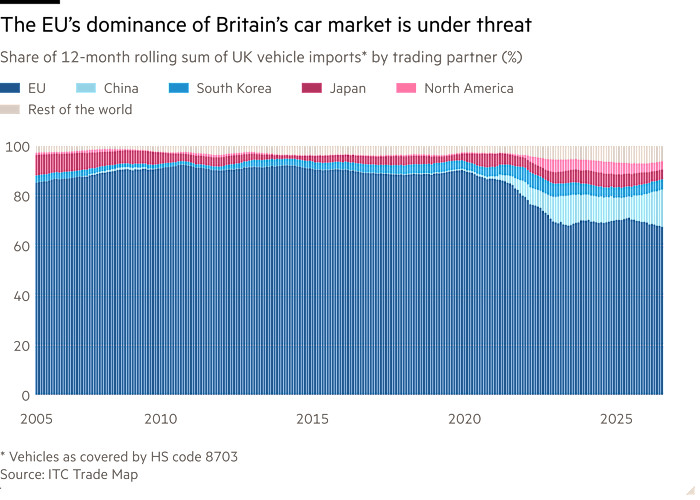
For years, the EU was the undisputed champion of Britain’s car market. But since the pandemic and Brexit, the bloc’s dominance has waned. In the 2010s it contributed some 90 per cent of UK vehicle imports by value, but over the past year its share has been below 70 per cent·, writes Soumaya Keynes.
Take a break from the news . . .
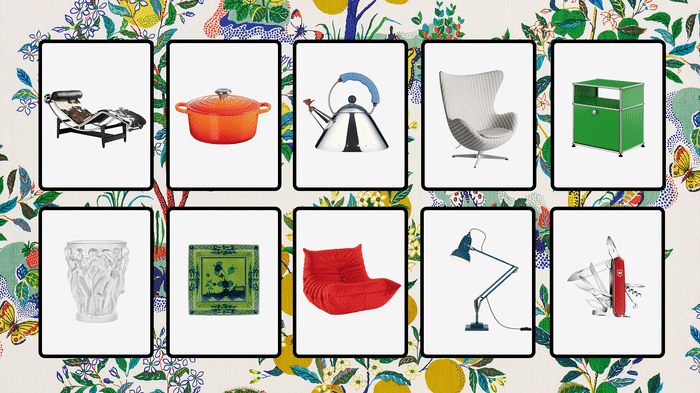
Does Victorinox’s pocket knife trump Alessi’s bird-whistle kettle when it comes to heritage credentials? Would Isamu Noguchi’s ethereal Akari lights outscore Arne Jacobsen’s sculptural Egg chair? Clara Baldock selected 14 design classics· and compared the brands’ years in business as well as the longevity of their signature creations.
You can also listen to today’s top news stories in the FT News Briefing podcast·.
Thank you for reading and remember you can add FirstFT to myFT. You can also elect to receive a FirstFT push notification every morning on the app. Send your recommendations and feedback to [email protected]
Recommended newsletters for you
The State of AI — A series of conversations between the FT and MIT Technology Review on the geopolitics of tech. Sign up here