This article is an on-site version of our FirstFT newsletter. Subscribers can sign up to our Asia, Europe/Africa or Americas edition to get the newsletter delivered every weekday morning. Explore all of our newsletters here
Good morning and welcome to FirstFT. In today’s newsletter:
SpaceX and Tesla boards explore potential merger
Benjamin Netanyahu pushes to resume strikes against Iran
Could Michigan elect the first Muslim senator?
The doctors turning to AI to treat patients
SpaceX and Tesla are studying a deal to unite Elon Musk’s two public companies in a multitrillion-dollar combination that would be the largest merger of all time.
The world’s richest man yesterday said both companies had formed special committees to study a tie-up·. It marks the biggest step towards a merger that would create a sprawling conglomerate oriented around AI and potentially worth more than $3tn.
“Do I think it would be a good idea? Yes. But at the end of the day the shareholders have to be supportive of this,” Musk said, adding that as chief executive of both companies he could not participate in the discussions.
“The special committees have not reached agreement on the terms of any transaction and obviously there is no guarantee that they will.”
SpaceX shares rose as much as 11 per cent in pre-market trading following Musk’s comments while Tesla shares were up 3 per cent.
Musk was speaking after SpaceX reported revenues that doubled in the third quarter, swinging the company into profit. Tesla reports results after the market closes later today.
More AI news: Shares in NextDC, one of Australia’s largest data centre companies, tumbled earlier today after fierce local opposition surrounding a new site triggered a damaging profit warning·.
OpenAI: The ChatGPT maker said yesterday “agents” turned off monitoring systems and safeguards· intended to spot misbehaviour by the autonomous AI bots in the latest incident likely to heighten global concern about the safety of the technology.
Here’s what else we’re keeping tabs on today:
Jensen Huang: Nvidia’s chief executive will deliver the keynote speech at the GTC Berlin AI Conference.
Results: Meta Platforms, IBM, Texas Instruments, AT&T, Southwest Airlines, Philip Morris International and Abbott are among the companies reporting earnings.
Economic data: Argentina’s statistics agency is due to release August economic activity data.
Russia-Ukraine war: Donald Trump’s envoy Steve Witkoff travels to St Petersburg for talks with Russian President Vladimir Putin, following a day of discussions yesterday in Oslo· with Ukrainian President Volodymyr Zelenskyy.
Could Anthropic’s public listing mark a turning point for the AI boom? Join us tomorrow for a live Ask an Expert Q&A with Richard Waters and George Hammond, who will be answering your questions about Anthropic’s IPO.
Five more top stories
1. Exclusive: Israeli Prime Minister Benjamin Netanyahu is pushing to resume large-scale strikes against Iran and has instructed his military to plan for a fresh offensive earlier this month. The Israeli military had prepared for a multi-day bombing campaign to take place on the weekend of October 10, according to three people familiar with the matter.
2. France’s long-term borrowing costs have hit 5 per cent, a benchmark last hit in 2002, as investors grow increasingly concerned· about the stability of the country’s politics and the state of its public finances. A fresh bout of selling pushed French 10-year bond yields up 0.06 percentage points to 4.98 per cent, taking the jump so far this week to 0.19 percentage points.
Is France spinning out of control? The country faces multiple crises and the political class seems incapable of responding, argues Sylvie Kauffmann.
3. Andy Burnham’s government has approved the development of the Jackdaw gasfield in the UK North Sea, 150 miles east of Aberdeen, to boost Britain’s energy supplies this winter. The UK government also announced the creation of a new Energy Wealth Fund·, which will invest tax revenues from the North Sea into renewables and low-carbon energy.
4. Lana Nusseibeh, a senior official from the United Arab Emirates, is emerging as a contender to be the next secretary-general of the UN, electrifying the succession battle as it becomes mired in geopolitical infighting. UN insiders anticipate Nusseibeh, a minister of state at the UAE’s foreign ministry, could enter the race as early as this week.
5. Luiz Inácio Lula da Silva’s government is fast-tracking welfare payments to poorer Brazilians before a presidential run-off vote, as the veteran leftwinger makes a last-gasp effort to close the gap on his rightwing rival. Ahead of the tiebreaker ballot on Sunday, the 80-year-old leader is slightly trailing in polls to Flávio Bolsonaro, the 45-year-old senator who topped the first-round vote earlier this month.
Is China turning Japanese?

China’s economy increasingly resembles that of Japan during a period of stagnation after its property bubble burst in 1990. The parallels are everywhere, from deteriorating demographics, persistent deflation and weak consumer spending to moribund stock and property markets. Beijing has studied Japan’s experience to avoid making mis-steps, but signs of malaise are proliferating.
We’re also reading . . .
Netflix: For years the streaming giant was the envy of Hollywood but after two decades it is facing a familiar industry problem: a lack of hits·.
Climate change: The world is running headlong towards a long-term temperature rise of 2.8C, the latest UN report shows·.
Medical chatbot: Nearly two-thirds of US doctors are turning to an AI-powered search engine, prompting a $15bn valuation for its owner but also a debate about patient care·.
Legal services: Sullivan & Cromwell is doubling its London office space as US law firms snap up some of the UK capital’s most expensive sites.
Putin’s American friends: Those applauding Trump’s pro-Russia tilt come from the Maga right and what used to be called the tankie left, writes Edward Luce.
Chart of the day
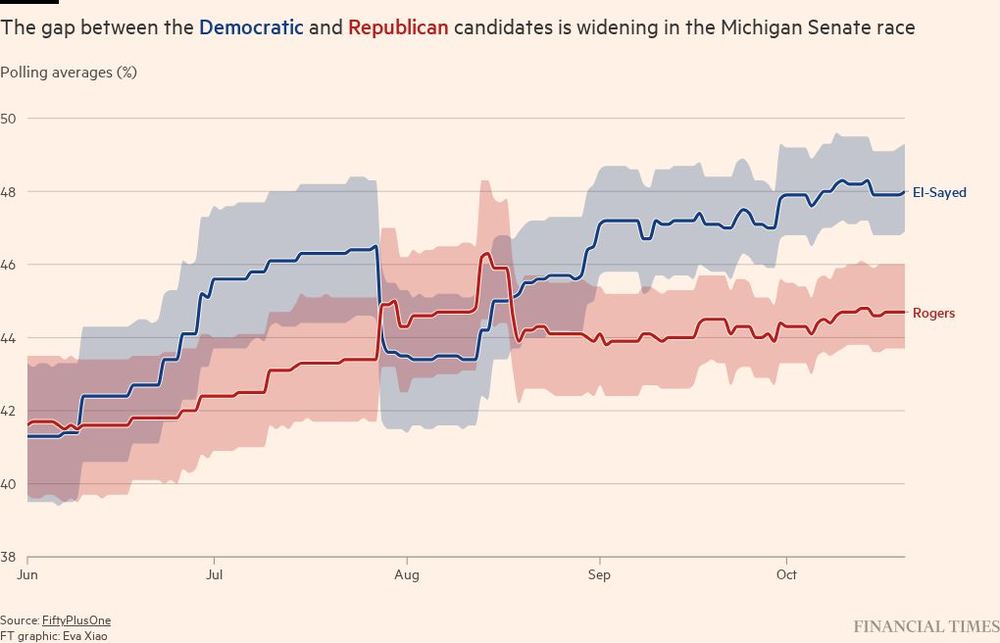
Abdul El-Sayed, Democratic candidate for the US Senate in Michigan and son of Egyptian immigrants, will become the first Muslim senator in US history if he beats Republican rival Mike Rogers on November 3. The political neophyte has electrified the Democratic base across the state with a mix of machismo and progressive policies· in the closely watched race.
Take a break from the news . . .
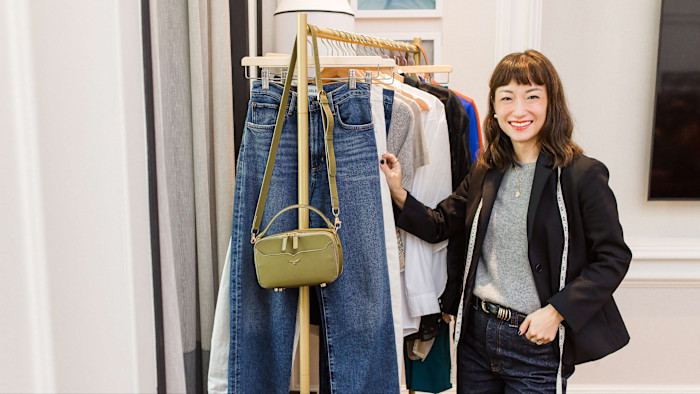
From sourcing rare Hermès bags to organising last-minute gifts, independent personal shoppers will go the distance to keep wealthy clients satisfied. Annachiara Biondi takes a look at how the service became a big business·.
Thank you for reading and remember you can add FirstFT to myFT. You can also elect to receive a FirstFT push notification every morning on the app. Send your recommendations and feedback to [email protected]
Recommended newsletters for you
The State of AI — A series of conversations between the FT and MIT Technology Review on the geopolitics of tech. Sign up here